




Ethiopian Gold Mine Gravitation Concentrator—How Should the Gravitation Line Be Configured?
Wiring Guide for Gold Ore Re-selection Plants in Ethiopia
Key Findings at a Glance
- Ethiopian gold deposits vary widely in type, with placer gold, quartz vein, and shear zone deposits each having distinct characteristics. The configuration of gravity separation lines must be based on the properties of the ore; there is no one-size-fits-all solution.
- Placer gold lines follow a three-stage “screening—roughing—concentration” process: jigging for coarse gold, spiral chutes for fine gold, and shaking tables for concentrate; the use of a centrifuge depends on the proportion of fine-grain gold.
- For rock gold processing lines, the role of gravity separation is pre-recovery; it is integrated into the grinding and classification circuit to prioritize the recovery of already liberated coarse-grained gold and should not be expected to handle the entire recovery process.
- On-site conditions—high temperatures, the rainy season, unstable power supply, and a shortage of operations and maintenance personnel—influence equipment selection just as much as the ore properties themselves. These are also the variables most easily underestimated when designing the circuit layout for gold gravity separation plants in Ethiopia.
- Before designing the process flow, screening and gravity separation tests should be completed to determine the types and quantities of equipment based on data; only then should equipment selection and process integration be addressed.
When configuring a gold gravity separation plant in Ethiopia, the first step is not selecting equipment, but understanding the ore.The types of gold deposits in this country are more complex than many people anticipate: the southern Adola region is home to extensive alluvial gold deposits, while the western and northern regions are dominated by primary rock gold, where gold is hosted in sulfides such as pyrite, galena, and chalcopyrite, with grades ranging from low-grade to high-grade sections.The gravity separation lines for placer gold and vein gold share almost nothing in common, from feed methods to the number of units required. The logic behind configuring gravity separation lines for gold processing plants in Ethiopia must be based on an accurate assessment of the ore\'s properties.
There is another scenario that is often overlooked: deposits where placer gold and vein gold occur together. Coarse, free gold from riverbed sediments is intermixed with vein gold enclosed within quartz veins, with gold grain sizes ranging from coarse sand to very fine particles.Such ores cannot be adequately processed using only placer gold sluices, and relying solely on grinding and gravity separation for vein gold wastes the advantage of coarse-grained gold\'s free liberation. Therefore, it is necessary to combine the approaches of both lines. When Ethiopian gold gravity separation plants encounter mixed ore types, process design often requires more detailed particle size classification and a more carefully planned number of processing stages.
Placer Gold Recovery Line: Capture Coarse Grains First, Then Focus on Fine-Grain Recovery
The advantage of placer gold deposits is that the gold is already liberated as individual particles, eliminating the need for crushing and grinding and thereby saving on investment and energy consumption. However, this is also the challenge with placer gold lines—fine-grain gold is prone to being lost in the tailings. A well-designed placer gold processing line is typically organized into three stages:
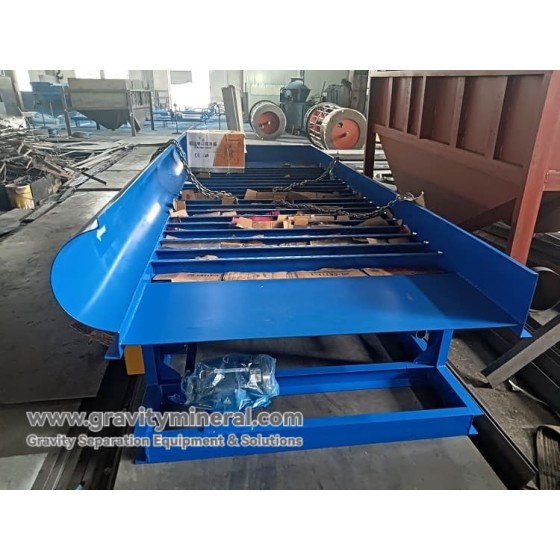
Stage 1: Screening and impurity removal. A trommel screen or vibrating screen removes gravel larger than 20 mm, and the undersize material proceeds to the roughing stage. Screen mesh selection is critical; riverbed placer gold often contains clumps of clay. When the clay has not dispersed, the gold is encapsulated within mud balls, making recovery difficult using both jigs and sluices.During the rainy season in Ethiopia, the raw ore has a high moisture content, making the clay even harder to break up. The screening process should therefore incorporate high-pressure water washing; the thoroughness of this washing directly determines the success or failure of subsequent gravity separation.
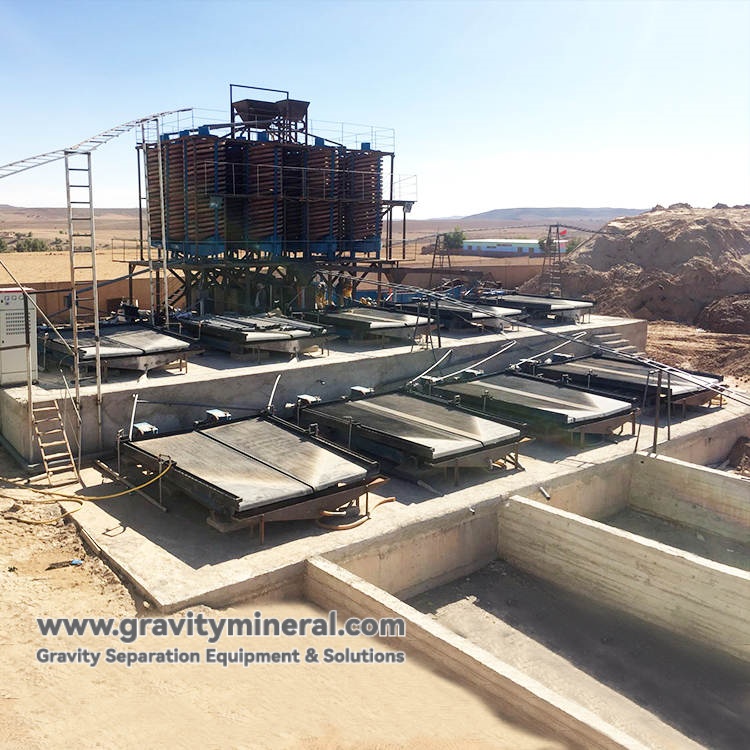
Second stage: Rough selection and stream division. The material is divided into two streams based on particle size: the +0.5 mm coarse fraction is fed into a jig, which provides stable recovery of coarse gold and handles high throughput; the -0.5 mm fine fraction is routed to a spiral chute, which features a simple structure, requires no power, and has low operational and maintenance requirements—a practical advantage in mining areas with unstable power supplies.If screening analysis indicates a high proportion of gold in the -0.1 mm fraction, consider adding a centrifugal separator to the fine-grain circuit. Centrifuges are highly effective at capturing ultrafine gold particles but require stable feed material and skilled operation; their installation should be approached with caution if operational resources are limited.
Third stage: concentrate recovery. The coarse and concentrate streams are combined and fed into a shaking table. Shaking tables offer high separation precision among gravity separation equipment, producing qualified concentrate in a single pass with a substantial enrichment ratio. A 6-S shaking table is suitable for a placer gold processing line; the short operator training period aligns well with local labor recruitment conditions.For small-scale placer gold sites with low daily processing capacity, a simplified configuration of “drum screen → spiral chute → shaking table” can be adopted; as scale increases, jigging and spiral separation can be considered. When designing a placer gold line for a gravity separation plant at an Ethiopian gold mine, sufficient margin should be allowed for scaling up and the corresponding increase in equipment units.
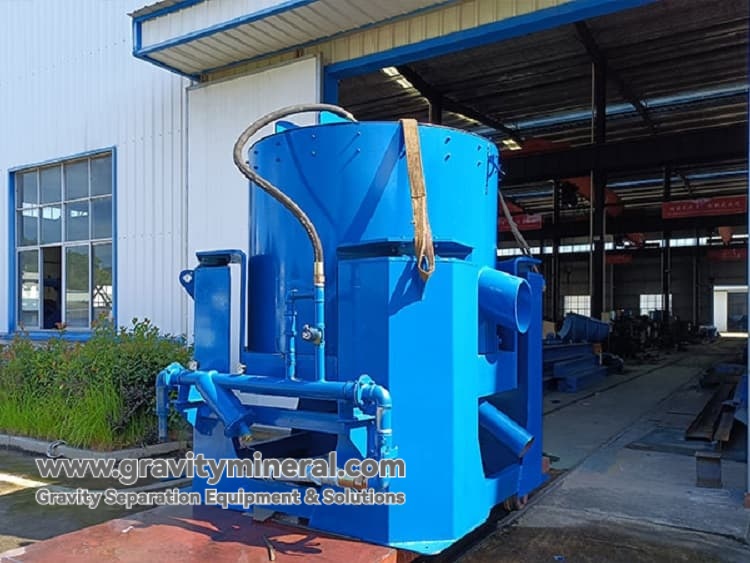
Rock Gold Gravitational Separation Line: Positioned as a pre-recovery process, not intended for full-process recovery
The role of rock gold gravity separation must be clearly defined: it serves as a pre-recovery method, not a final recovery method.In Ethiopian gold mines where ore-based gold predominates, the role of the gravity separation section is to recover liberated coarse-grained free gold as early as possible within the grinding circuit, thereby reducing the burden on subsequent cyanidation or flotation processes while preventing incomplete reaction of coarse-grained gold in the leaching tanks.
Coarse gold is difficult to recover in a cyanidation system; when gold particles are too coarse, leachate penetration is insufficient, and extending leaching time yields only limited improvements in recovery rates. By incorporating a gravity separation stage into the grinding and classification circuit to pre-recover already-dissociated coarse gold—while reserving subsequent cyanidation for the fine-grain fraction—overall efficiency is optimized.This approach has been repeatedly validated in rock gold projects: embedding a jig in the grinding circuit to “recover as early as possible,” followed by sending the gravity separation tailings to leaching or flotation, is a sound strategy that balances recovery rates and energy consumption.
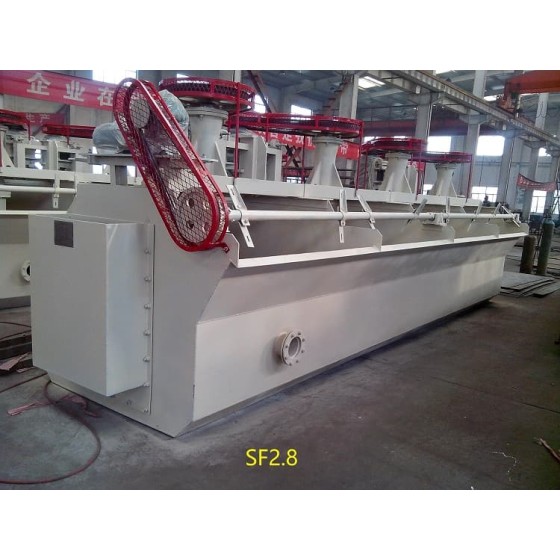
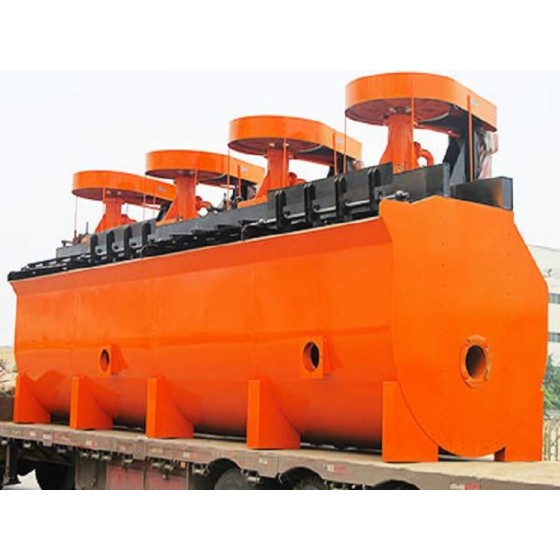
A typical gravity separation configuration for rock gold projects is as follows: the discharge from the ball mill enters a hydrocyclone, and the sand from the hydrocyclone is fed into a jig or centrifuge. The jig handles the coarser particle sizes, while the centrifuge processes the finer particles.When selecting a centrifuge, attention must be paid to the upper limit of feed particle size; the actual effective recovery range is concentrated in the finer particle sizes, and feed that is too coarse will affect equipment operation and concentrate yield control.Concentrate processing for placer gold is more complex than for alluvial gold; concentrates often contain sulfides, and since the grade is insufficient for direct smelting, further purification via shaking tables or sluices is typically required. When sulfide content is high, a washing or magnetic separation stage may also be necessary; accordingly, sufficient labor and space should be allocated when designing the process flow.When configuring a gravity separation section in the rock gold process at a gold mine in Ethiopia, the integration of the concentrate processing stage must be planned in advance.
Equipment Selection: Data-Driven Decisions with Consideration for On-Site Adaptability
The parameter tables provided by equipment manufacturers are typically measured under ideal operating conditions; when applied to actual field conditions in Ethiopia, several additional factors must be taken into account.
| Equipment | Applicable Particle Size | Feed Requirements | Operational Complexity | On-site Adaptability |
|---|---|---|---|---|
| Jig | Wide particle size range | Not sensitive to feed fluctuations | Low; diaphragms require periodic replacement | High; high throughput and durable construction |
| Spiral Chute | Fine particle size range | Slurry concentration must be stable | Extremely low; no power required | Extremely high; operation is not affected by power outages |
| Shaking table | Wide particle size range | Feed rate must be uniform | Moderate; the bed surface must be leveled | Moderate; high precision but requires a large footprint |
| Centrifugal Mineral Separator | Primarily for fine-grain fractions | Stable feed rate; particle size within limits | Relatively high; sensitive to operating parameters | Medium to low; requires operation by experienced personnel |
On-site Adaptability This assessment is based on actual conditions in Ethiopia and does not represent the manufacturer\'s official stance.Spiral chutes rank first because they require no electricity; their fiberglass construction with wear-resistant linings ensures durability even in humid, high-salinity environments. Jig machines feature a robust structure with controllable replacement cycles for spare parts, and local mechanics can easily maintain them. Centrifuges are not underperforming; rather, they require higher operational skill and have a relatively longer commissioning period.
Important note regarding throughput parameters: The throughput values listed in the catalog are typically measured under ideal feed conditions. Given the high clay content in Ethiopian ore and high moisture levels during the rainy season, the actual throughput often requires adjusting the number of units based on a discount from the catalog values, while allowing for a margin of safety.When selecting equipment for a heavy-medium separation plant at an Ethiopian gold mine, incorporating a processing capacity margin should be a fixed principle rather than an optional consideration.
Another aspect of equipment selection that is easily overlooked is the compatibility of interfaces between equipment. If the processing capacities of the jig and the shaking table do not match, material jams or idle operation will occur in the intermediate stages; details such as how concentrate from spiral chutes is further processed and how concentrate from centrifuges is integrated with the shaking table are most prone to problems under a bulk procurement model.If an Ethiopian gold mine\'s gravity separation plant relies on a patchwork of equipment from multiple suppliers, the risk of interface conflicts increases as the number of units grows.
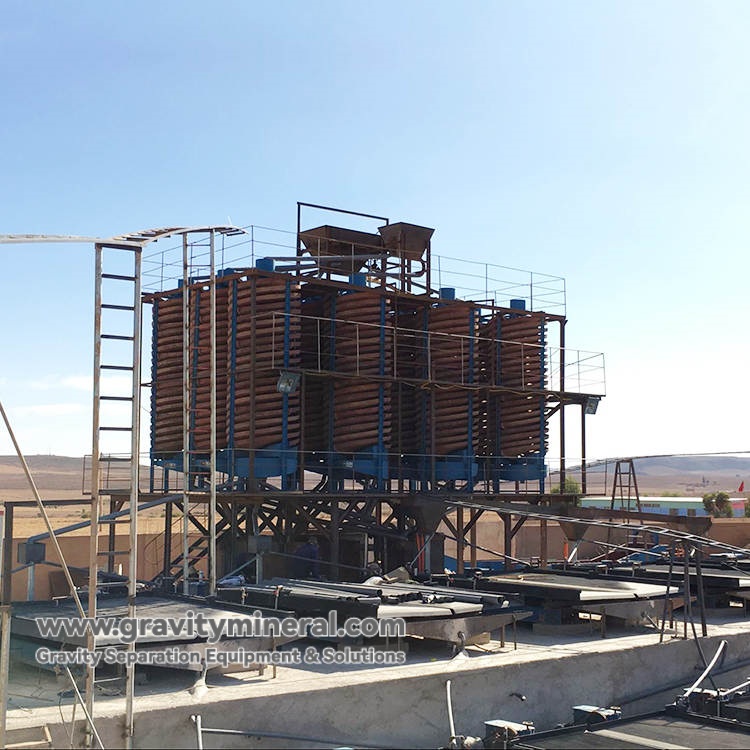
Site Conditions: Just as Important as Ore Properties
When configuring a gravity separation line in Ethiopia, ore properties account for about half of the decision-making weight, while on-site conditions account for the other half.High ambient temperatures, high humidity, tight fuel supplies, and a shortage of skilled operations and maintenance personnel—when these factors combine, equipment durability and maintainability take precedence over technological sophistication. Rubber diaphragms have a shorter service life in high-temperature, high-humidity environments, so spare parts must be stockpiled in advance; motor protection ratings must be adapted to local rainy season conditions, and junction box sealing is a critical factor.
Water consumption must also be factored into the design. Water is used throughout the gravity separation process; the water consumption per metric ton of ore for a placer gold line differs from the water recirculation requirements of a hard rock gold grinding circuit. Since water sources are scarce during the dry season in most Ethiopian mining areas, the thickener and recirculation system should be considered together when designing the line.Spiral chutes are relatively adaptable to water quality, while shaking tables are more sensitive to fluctuations in water volume; the separation efficiency of shaking tables is affected when the recirculation system is unstable. Dry tailings disposal plans should also be incorporated during the design phase, and the selection of dewatering screens and filter presses must align with the production capacity of the gravity separation section.
Regarding personnel, local processing plant operators have limited experience; therefore, equipment should have as few adjustment points as possible. Once the stroke and frequency of the shaking tables are set, they should remain fixed; the stroke of the jig diaphragm should be secured with定位销; and the feed concentration for spiral chutes should be controlled using a simple flow stabilizer box.The operational stability of gravity separation plants at Ethiopian gold mines often depends on whether operational procedures have been simplified to a practical degree, rather than on the precision of the equipment itself. The same applies to the installation phase: it is common practice to organize local installation workers and have manufacturer engineers on-site to provide technical guidance, which helps control labor costs while ensuring installation quality.
Common Technical Issues
Before Laying Out the Process: Base Decisions on Test Data
Before drawing up flow charts, requesting quotes, or signing contracts, representative ore samples should be sent to a laboratory capable of conducting gravity separation tests to complete screening, heavy-liquid separation, and shaking table washability tests. These three sets of data form the foundation for plant layout.
Ethiopian gold deposits vary significantly from south to north and from sand to rock. Directly replicating successful configurations from other projects at a new site may result in poor feed flow or recovery rates that fail to meet standards.While there is no universal template for gravity separation lines at Ethiopian gold mines, there is a standardized process: ore characterization, screening and analysis, parameter adjustment based on site conditions, and allowing for operational and maintenance margins.If equipment manufacturing, process design, and on-site commissioning can be managed as a closed-loop process within a single team, interface compatibility and accountability will be more seamless—this is the practical guarantee for transforming a gravity separation line from blueprints into a production line that meets standards.
For projects that already have ore screening data or gravity separation test reports, these can be used to further determine the process configuration and equipment list; for projects that have not yet conducted tests, it is recommended to first complete ore sample analysis before proceeding to the equipment selection phase. The configuration of gravity separation lines at gold mines in Ethiopia must ultimately be based on decisions constrained by both ore data and on-site conditions.
About Us
GravityMineral has specialized in the field of gravity mineral processing for twenty years, integrating mineral analysis, mineral processing flow sheet design, equipment manufacturing, and installation and commissioning. Our core gravity separation equipment is produced at our own manufacturing facilities,Our products are exported to more than 50 countries and regions, and we have accumulated extensive project experience in the gravity separation of placer gold, bedrock gold, and various other mineral types.
If you are developing a gravity separation plant for a gold mine in Ethiopia or any other gravity separation project, please provide us with the ore type, processing capacity, feed particle size, and site conditions to receive preliminary process recommendations and equipment configuration suggestions. If you have representative ore samples, sending them for beneficiation testing will enable us to develop a solution that better aligns with the specific properties of your ore.
📩 Contact Us · Get a Gravity Separation Solution