Hard-Rock Zircon Beneficiation Plant (Gravity + Magnetic + Electrostatic Separation): Primary zircon ore (hard-rock/lode zircon) and heavy mineral sand (HMS) present a distinct metallurgical challenge: zircon (ZrSiO₄) almost always occurs in association with ilmenite, rutile, xenotime and apatite. Because these associated heavy minerals have very similar specific gravities, a gravity-only plant cannot produce a clean, commercial-grade concentrate.
GravityMineral’s zircon beneficiation production line solves this with an advanced three-stage flowsheet — gravity pre-concentration + magnetic separation + high-tension (HT) electrostatic upgrading — a turnkey EPC solution that exploits not only mineral density but also magnetic susceptibility and electrical conductivity. The result is high recovery and a premium zircon concentrate (ZrO₂ ≥ 65%).
What Is Zircon Ore?
The main industrial mineral of zircon ore is zircon (ZrSiO₄), followed by baddeleyite. It is relatively dense (4.6–4.7 g/cm³), non-magnetic and non-conductive, and is widely used in ceramics, refractories, the nuclear industry and precision casting. Zircon typically occurs in coastal heavy mineral sands or primary alkaline igneous (hard-rock) deposits, associated with ilmenite, rutile, monazite and others.
The core difficulty in zircon beneficiation is that zircon and rutile have nearly identical specific gravities and are both non-magnetic, so neither gravity separation nor magnetic separation alone can separate them. GravityMineral’s standard zircon beneficiation flowsheet therefore uses a combined circuit — gravity roughing & pre-concentration + magnetic separation to remove ilmenite + high-tension electrostatic separation to split zircon from rutile — rejecting the bulk of light gangue while ensuring the final concentrate meets grade specification.
20 YearsFocused on gravity concentration equipment
50+ CountriesZircon lines exported & commissioned
500+ ProjectsGlobal gravity concentration case library
35%China gravity-separation equipment market share
Five-Stage Zircon Extraction Flowsheet
GravityMineral’s engineers designed this flowsheet to economically reject the bulk of waste rock by gravity first, leaving only a small heavy-sand fraction to be treated by high-intensity magnetic and electrostatic separators.
Stage 1: Crushing Circuit
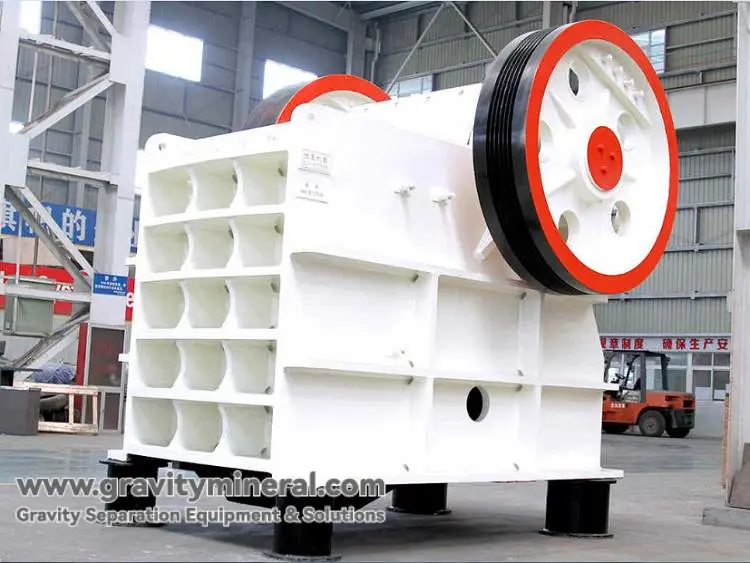
For primary zircon ore, the feed is first coarse-crushed by a jaw crusher to 50–80 mm, then fine-crushed by a cone crusher to 10–15 mm. The circuit uses a two-stage closed-circuit crushing arrangement with a circular vibrating screen to strictly control product size and improve crushing efficiency.
Stage 2: Grinding & Classification Circuit
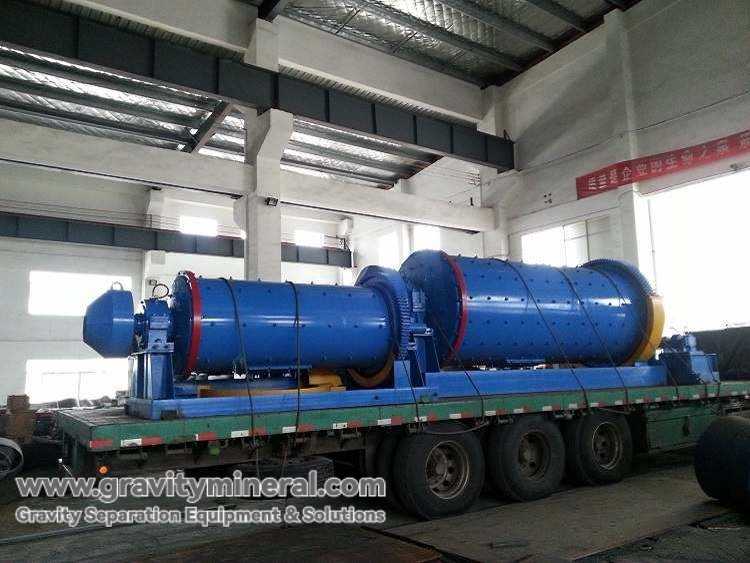
The crushed ore is ground in a rubber-lined ball mill to prevent over-grinding of the zircon crystals. The ground product is classified by hydrocyclones. Grind fineness is strictly controlled to ensure 75–85% passes a −200 mesh sieve. The cyclone overflow feeds the gravity separation stage, while the underflow sand returns for regrinding.
Stage 3: Gravity Pre-concentration
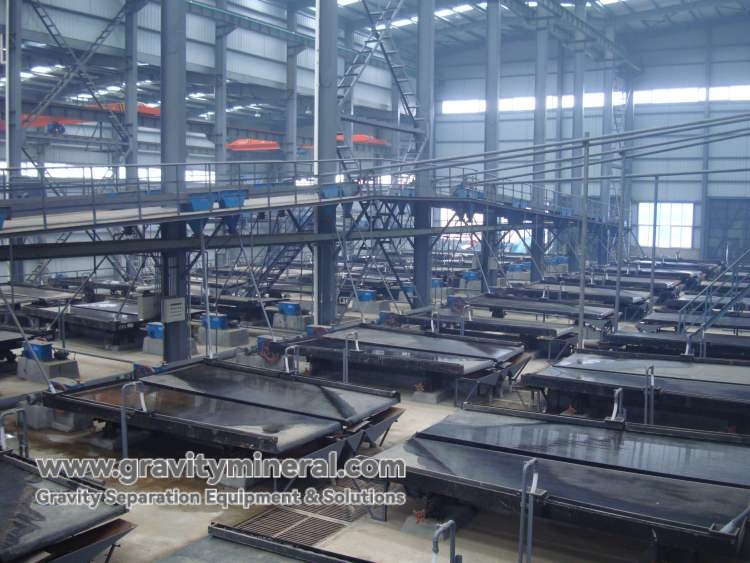
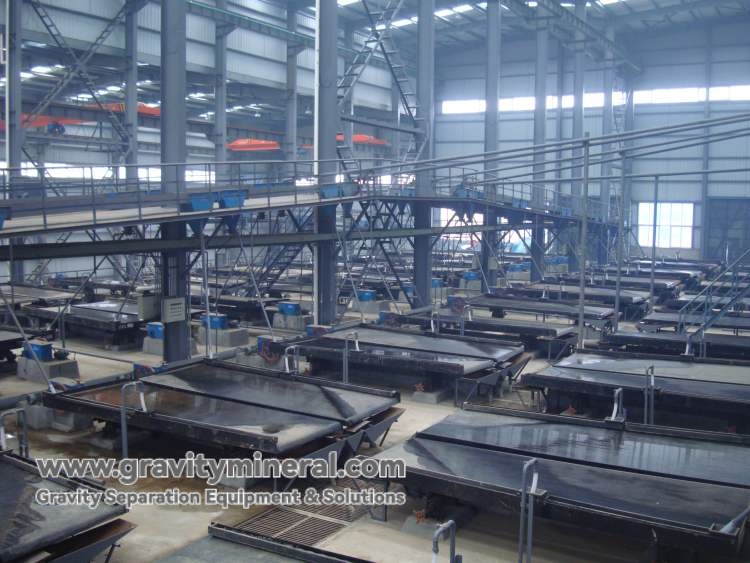
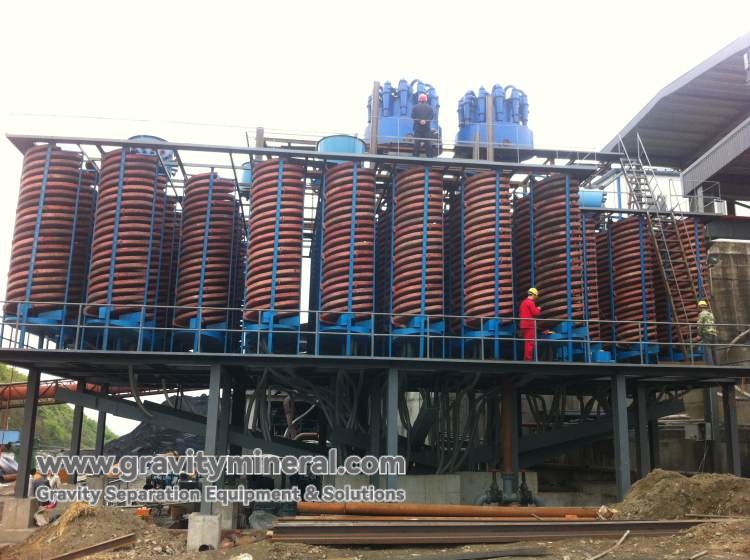
The classified slurry is bulk-roughed on banks of fiberglass spiral chutes, discarding light siliceous gangue. The rougher heavy concentrate is then further upgraded on the 6-S shaking table to reject middlings. This stage produces a mixed heavy mineral sand (zircon + rutile + ilmenite).
Stage 4: Drying & Conditioning Circuit
The electrostatic separation circuit requires the feed to be fully dry. The gravity concentrate is indirect-heated (80–120°C) in a dryer to reduce moisture below 0.5%. It is then cooled and screened to strictly control the size to within −1 mm, creating ideal conditions for electrostatic separation.
Stage 5: Magnetic & Electrostatic Upgrading
- Magnetic separation: The dried sand passes through a dry magnetic separator to instantly remove magnetic ilmenite and iron impurities.
- Electrostatic separation: The remaining non-magnetic mixture (zircon and rutile) enters a high-tension (HT) electrostatic separator. Because rutile is a conductor and zircon is a non-conductor, the high-voltage corona field readily splits the two minerals, yielding the final high-purity zircon concentrate.
Core Equipment Selection for the Zircon Beneficiation Line
The key to zircon beneficiation lies in efficient pre-concentration in the gravity circuit and precise separation in the magnetic & electrostatic circuits. The table below lists the core equipment and duty stages commonly used on a zircon beneficiation production line.
| Process Stage |
Core Equipment |
Function & Features |
| Crushing & Screening |
Jaw Crusher, Cone Crusher, Vibrating Screen |
Two-stage closed-circuit crushing for uniform, controlled particle size. |
| Grinding & Classification |
Ball Mill, Hydrocyclone |
Staged grinding and precise classification to prevent over-grinding of zircon crystals. |
| Gravity Concentration |
Fiberglass Spiral Chute, 6-S Shaking Table |
Covers coarse and fine particles, delivering a high initial enrichment ratio. |
| Drying & Conditioning |
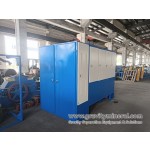
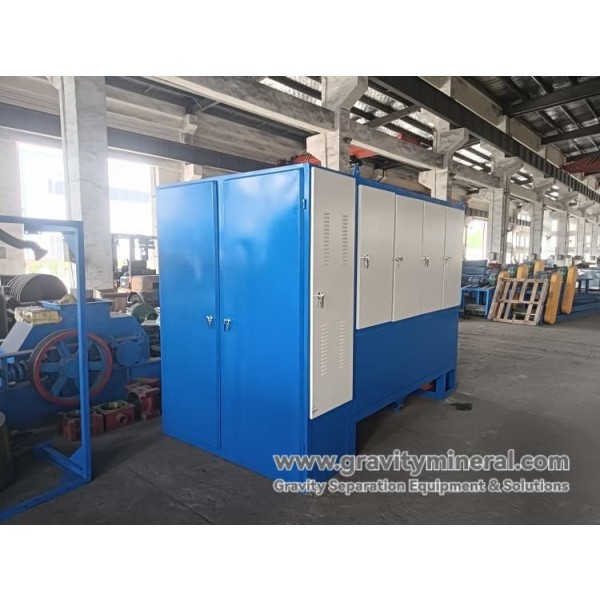
Dryer |
Low-temperature indirect drying to prepare the feed for downstream dry separation. |
| Magnetic Separation |
Dry Magnetic Separator |
Upgrades zircon concentrate grade by removing magnetic minerals (ilmenite, magnetite). |
| Electrostatic Separation |
High-Tension (HT) Electrostatic Separator |
Separates conductive rutile from non-conductive zircon by electrostatic sorting, defining final product quality. |
Target Technical & Economic Indicators
Target Technical Metrics
- Throughput: 10 to 100+ tpd (fully modular and scalable).
- Final zircon concentrate grade: ZrO₂ ≥ 65%.
- High-efficiency separation: The gravity + magnetic + electrostatic combination achieves recovery well above any single process.
- Green production: 100% physical sorting. No chemicals are used and wash water is safely recycled.
System Advantages
- Smart scaling: Spiral chutes immediately reject up to 95% of barren sand (gravity pre-concentration), saving substantial power and capital expenditure.
- Precise separation: Multi-roll magnetic separator + high-tension electrostatic separator precisely control the magnetic and electric fields — removing ilmenite first, then splitting rutile from zircon.
- Fast payback: The modular design ensures a fast return on investment (typically 1–2 years).
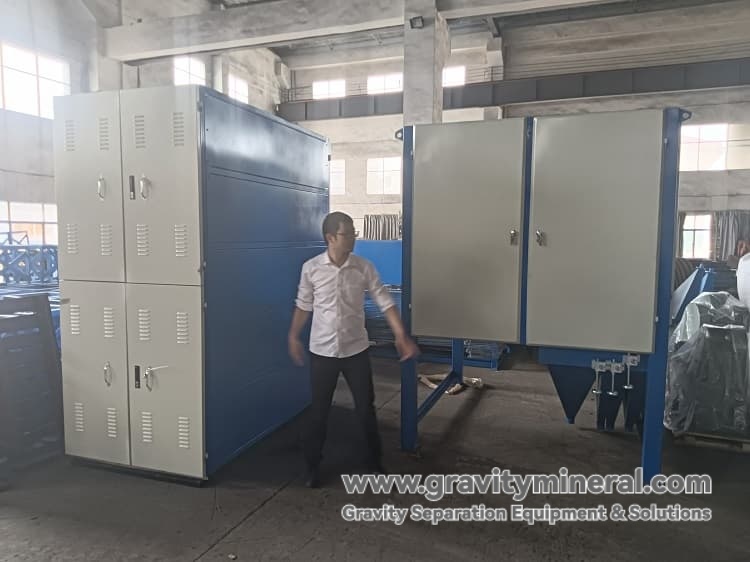
Why Choose GravityMineral to Build Your Zircon Beneficiation Plant
Zircon projects typically face highly variable mineralogy, difficulty separating zircon from rutile, and demanding impurity-removal requirements. The beneficiation industry is short of equipment; what it truly lacks is a partner that understands both gravity pre-concentration and magnetic & electrostatic impurity removal and can make the whole flowsheet interlock.
| Common Challenge |
GravityMineral’s Solution |
| Zircon and rutile have the same specific gravity, so gravity separation cannot split them |
A dryer and high-tension electrostatic separator are placed after gravity to achieve precise separation based on conductivity differences. |
| Ilmenite is highly conductive and disrupts electrostatic separation |
A dry magnetic separator is placed before electrostatic separation to remove magnetic ilmenite first, keeping the electric field clean. |
| Coastal high-salinity, high-humidity environments accelerate equipment corrosion |
Spiral chutes use fiberglass with a corundum lining — wear- and corrosion-resistant, suited to harsh operating conditions. |
- 20 years focused on gravity concentration: We have built spiral chutes and shaking tables for 20 years, so we can match equipment to ore conditions and flowsheets to particle size, drawing on a proven track record.
- Full gravity / magnetic / electrostatic coverage: GravityMineral supplies not only gravity roughing and pre-concentration but also deep impurity-removal equipment such as dry magnetic separators and high-tension electrostatic separators.
- 50+ countries, 500+ projects worldwide: Real sites such as Australian heavy mineral sand and Southeast Asian coastal placer deposits are the best proving ground for equipment reliability and adaptability.
- Six official certifications: ISO 9001, S-certified supplier, National High-tech Enterprise, Jiangxi Province Specialized & Innovative SME, “Contract-Abiding & Creditworthy AA-level Enterprise,” and “Top Taxpayer.”
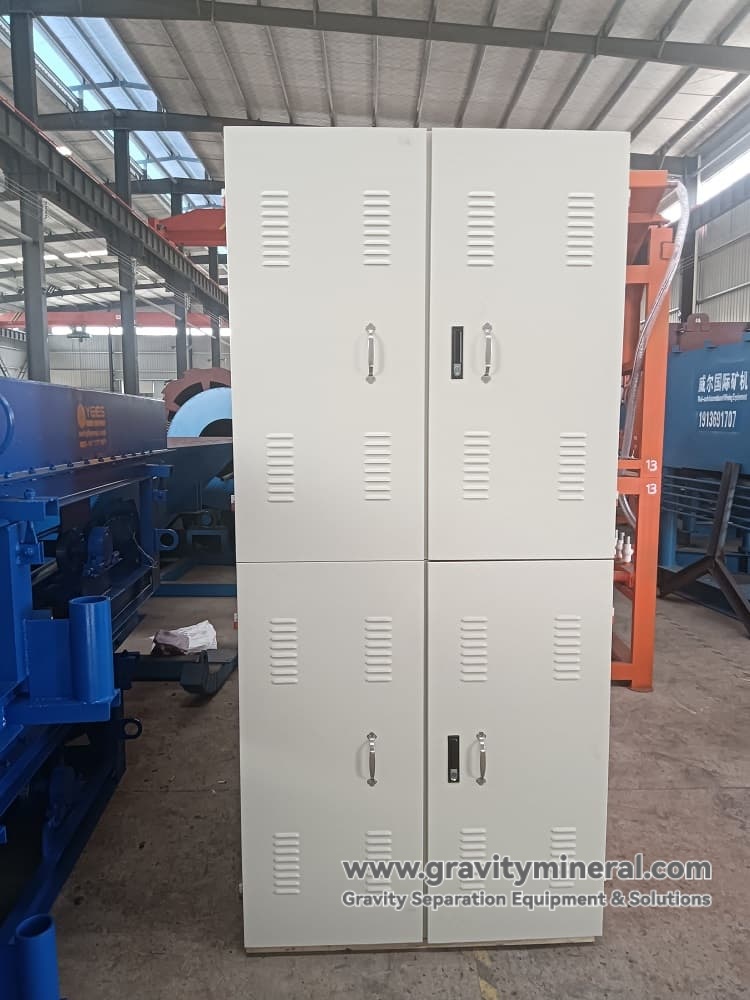
Zircon Beneficiation Plant Price & Investment Reference
There is no one-size-fits-all quotation for a zircon beneficiation plant — for the same throughput, the head grade, mineral assemblage and site conditions vary so much that equipment configuration and cost differ enormously. GravityMineral does not quote a “ballpark price” detached from the orebody; instead we work out the total cost with you based on the cost structure below:
- Equipment investment: Washing & screening stage, gravity stage (spiral chute / shaking table), magnetic stage (dry magnetic separator), electrostatic stage (high-tension electrostatic separator), and drying stage. The modular design lets you phase the investment to fit your budget.
- Free process design: Flowsheet design, equipment selection and plant layout are handled by GravityMineral’s in-house design team — no external design institute needed.
- Civil works & installation labor: Civil construction and general installation labor are organized locally by the customer, with GravityMineral engineers on site providing technical supervision.
- Operating cost (OPEX): Gravity separation uses zero reagents and no chemicals, with high water-recycle rates, so overall operating costs are low and the payback period is typically 1–2 years.
- Lead time & cash-flow rhythm: Core standard equipment takes about 40–60 days to manufacture; a full EPC turnkey project usually takes 7–12 months from contract award to on-spec production.
Tell GravityMineral the ore type, head grade, target throughput (t/h), feed particle size and site conditions, and our engineers will draw on the 500+ global project library to provide a transparent equipment list and quotation.
From Process Design to On-Spec Production: GravityMineral’s Service Flow
GravityMineral does not just sell equipment; we provide full-cycle services from mineral analysis and process design through equipment manufacturing to on-site installation and commissioning. Zircon projects can be advanced along the following milestones:
- Requirements consultation (3–7 days): You provide the ore type, head grade, target throughput, feed particle size and site conditions; GravityMineral gives a preliminary solution direction. This stage is free of charge.
- Process design & selection quotation (7–15 days): Engineers combine the orebody conditions with the 500+ global project library to finalize the gravity-magnetic-electrostatic combined route, then issue the equipment selection package and quotation together.
- Engineering drawings (7–15 days): Process flow diagram, equipment list, plant layout and civil interface drawings are produced by our in-house design team — design is never outsourced.
- Equipment manufacturing (40–60 days): Scheduled across our two own manufacturing bases, with full quality control from raw material to factory test-run.
- Shipping & logistics (30–60 days) + on-site installation & commissioning (60–150 days): Engineers on site supervise installation, individual and linked test-runs, and operator training; delivery is only complete once commissioning meets target.
A standard beneficiation EPC turnkey project typically takes 7–12 months from contract award to on-spec production.
Other Gravity-Magnetic-Electrostatic Combined Solutions
The core of zircon separation is “gravity pre-concentration + magnetic & electrostatic separation.” If the ore you process also involves a complex heavy-mineral assemblage, the following solutions may be useful references:
Frequently Asked Questions on Zircon Processing (FAQ)
Q1: Why is separating zircon from rutile so difficult?
A: Zircon (specific gravity ~4.6) and rutile (specific gravity ~4.2) have nearly identical specific gravities, which means shaking tables and spiral chutes cannot effectively separate them. In addition, both minerals are non-magnetic, so a magnetic separator is of no use here. The only way to achieve a clean separation is a high-tension (HT) electrostatic separator, which exploits the fact that rutile conducts electricity while zircon does not.
Q2: Why must the ore be completely dry before electrostatic separation?
A: Electrostatic separation works by spraying a high-voltage charge (up to 60 kV) onto the minerals. If the sand is even slightly moist, the moisture conducts current across all particles, completely disrupting the separation. That is why GravityMineral’s flowsheet requires a dryer to bring moisture below 0.5%.
Q3: Roughly how much does a complete zircon beneficiation equipment set cost?
A: The exact cost depends on your throughput (t/h), head grade and target concentrate requirements. Once GravityMineral understands your ore conditions, we issue a transparent equipment list and quotation covering the jaw crusher, ball mill, spiral chute, shaking table, magnetic separator and electrostatic separator.
Q4: If the feed has a high clay content, will it hurt gravity separation?
A: Yes. A high clay content severely interferes with gravity separation. GravityMineral places a rotary scrubber or trommel scrubber at the front of the flowsheet to wash and deslime the feed first. Only the washed slurry enters the spiral chutes and shaking tables, preventing fine slime from coating the zircon and causing losses.
Q5: How are the fine slimes in the tailings handled? Will they pollute the environment?
A: No. GravityMineral places a thickener and a filter press at the end of the flowsheet. The clay-bearing tailings water is thickened and settled, the slurry is filter-pressed into a cake for dry stacking, and the clear water is returned and recycled. This achieves “zero discharge” and saves a large amount of water.
Q6: Can you supply a single high-tension electrostatic separator? What if I want to expand later?
A: Yes, single units are available. GravityMineral supports “modular” procurement: you can start with a gravity + magnetic unit and add the electrostatic stage later as funds allow. Because the initial design reserves the interfaces, expansion does not require a complete rebuild — you simply scale up the equipment proportionally.
Q7: The head grade fluctuates a lot. Can your flowsheet adapt?
A: Yes. We account for the ore variability range and operating tolerance during process design. In the gravity stage (spiral chutes and shaking tables), throughput, stroke and slope can all be adjusted to the head grade. If the variability exceeds normal limits, our engineers set the operating parameters for different scenarios during on-site commissioning.
Q8: For projects in Africa / Southeast Asia, can you send people to install on site?
A: Yes. GravityMineral products and services have been exported to 50+ countries. We station site engineers to supervise equipment setting, individual and linked test-runs, and recovery commissioning, and to train your local operating team until the line runs smoothly and meets target.
Global Zircon Project Installations
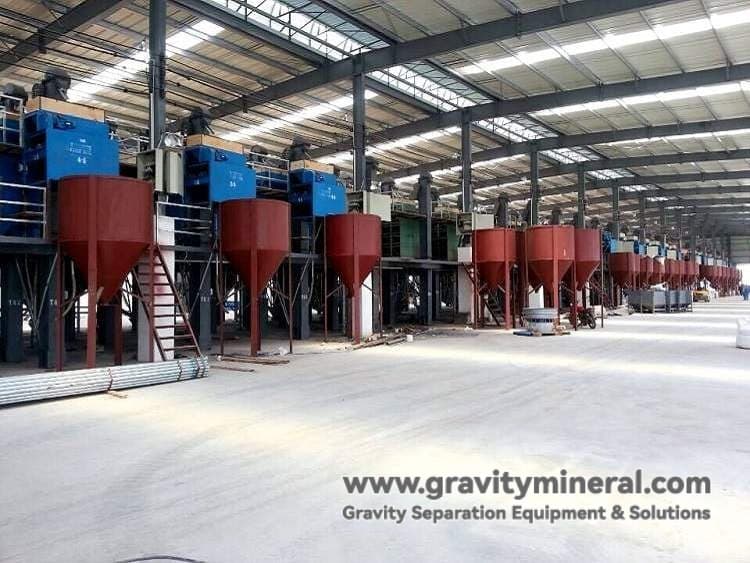
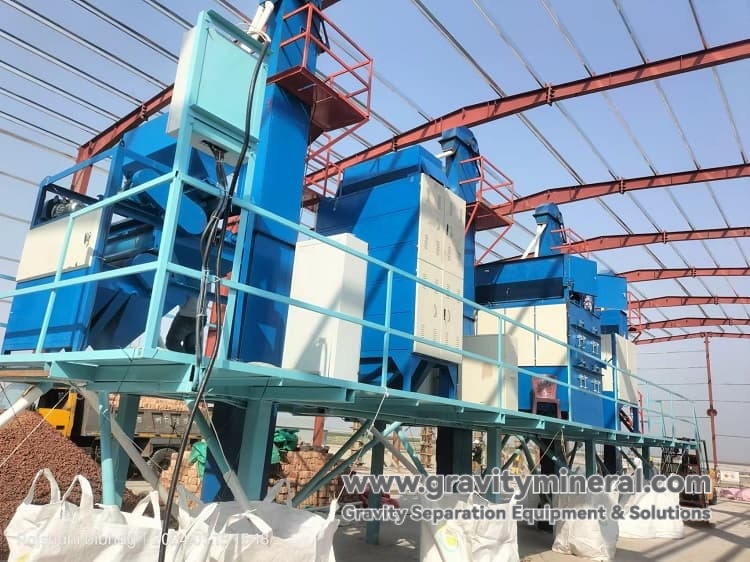
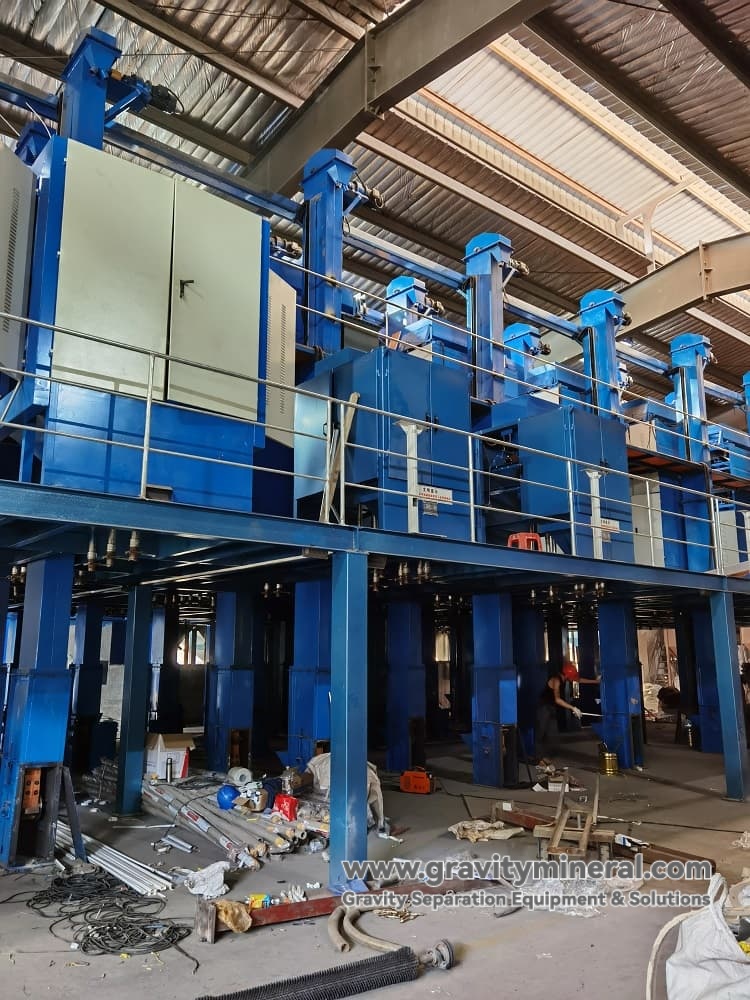
EPC Turnkey: End-to-End Zircon Gravity Concentration Engineering
GravityMineral delivers end-to-end zircon beneficiation solutions. With a throughput range of 10 to 100+ tons per day, GravityMineral’s modular design ensures a fast return on investment (typically 1–2 years).
- Solution design: Precise laboratory testing is used to design a customized flowsheet for your specific mineral composition.
- Engineering services: Production-line planning and 3D drawing design completed in-house, saving mid- and large-scale projects hundreds of thousands of dollars in design fees.
- Equipment manufacturing & supply: Core gravity, magnetic and electrostatic equipment is produced at GravityMineral’s two own manufacturing bases, with full quality control from raw-material procurement to factory test-run.
- Installation & commissioning: Site engineers are dispatched worldwide to supervise installation, individual and linked test-runs, and recovery commissioning, and to train your operators; delivery is only complete once commissioning meets target.
- After-sales & optimization: Quality guarantee during the warranty period, then spare-parts supply, technical consulting and process optimization afterward, with response within 24 hours.
Talk to the GravityMineral engineering team to get a customized plant layout and equipment quotation.