Self-Priming Flotation Machine (SF, BF, XJK Series) | Mechanical Agitation Flotation Equipment With No Blower Required
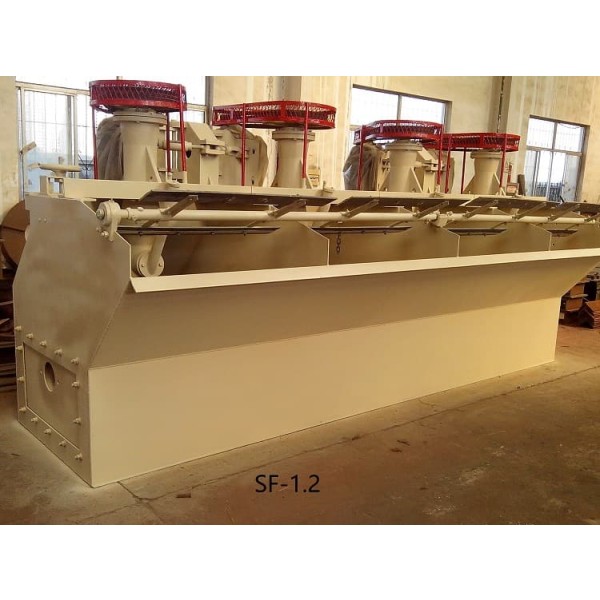
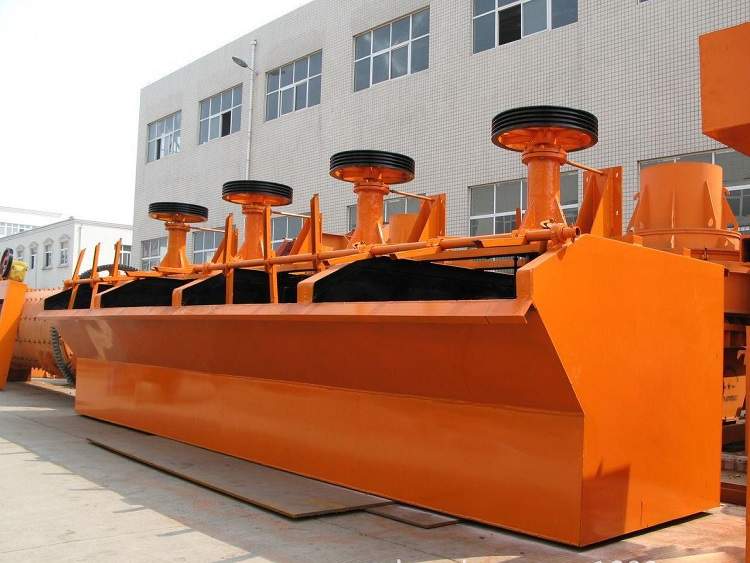
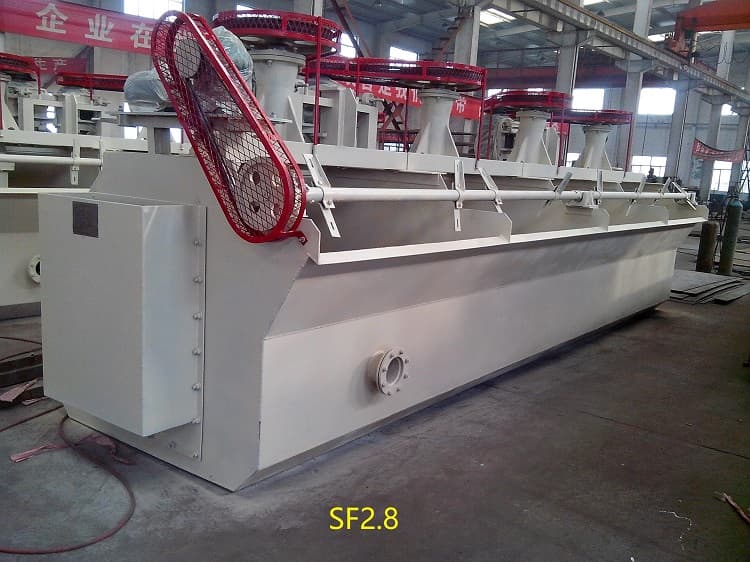
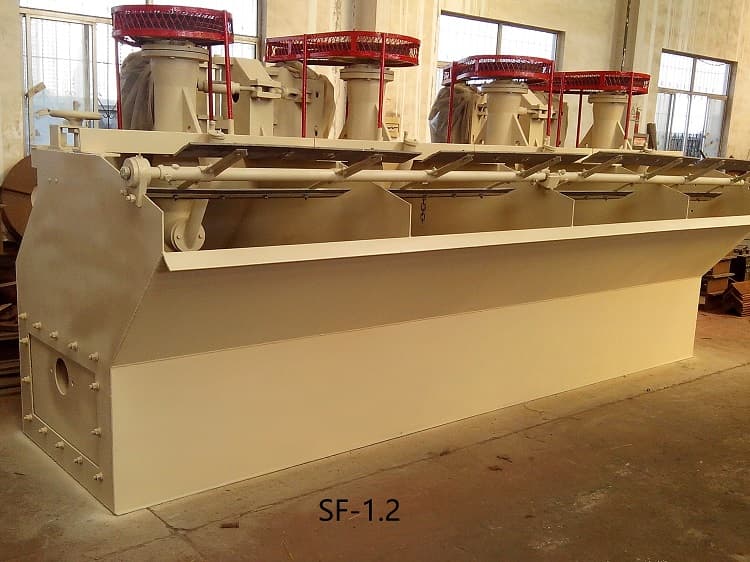
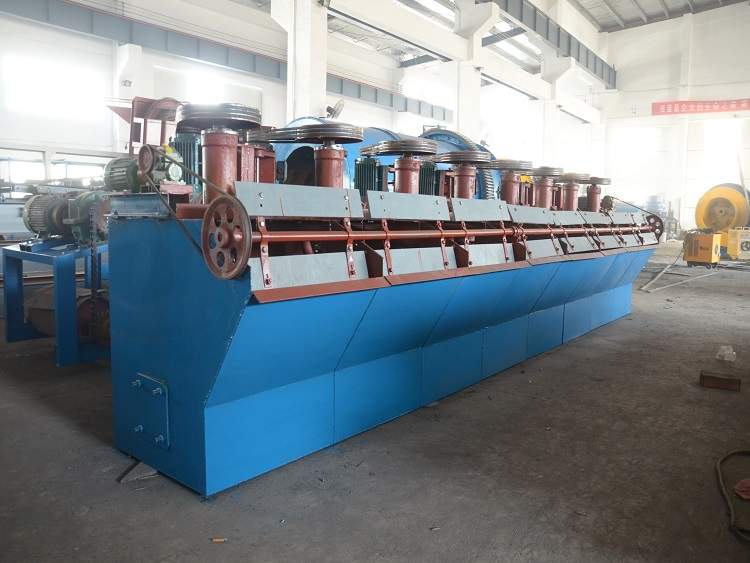
self-priming flotation machine (mechanical agitation type) is a core piece of equipment in the modern mineral processing industry. Unlike pneumatic flotation cells that need an expensive external blower, this self-priming flotation machine uses a unique “self-priming” design. High-speed impeller rotation creates a strong negative-pressure zone that automatically draws in both atmospheric air and pulp.
By integrating aeration, pulp suction and mechanical agitation into a single self-contained unit, this self-priming flotation cell greatly simplifies plant design. It eliminates complex external air piping and costly slurry pumps between flotation stages, so the cells can be installed directly on a flat, level floor.
Our proven SF and BF series and the classic XJK series offroth flotation equipment are the preferred solution for small and medium mines, complex multi-stage washing circuits and the efficient recovery of copper, lead, zinc, gold and fluorite. In mineral processing flowsheets, they often serve as the flotation equipment for antimony ore processing plant solution, barite gravity separation plant solution.
How a Self-Priming Flotation Machine Works
The whole process relies on the strong hydrodynamic force generated by the double-layer impeller.
- Pulp feeding:Finely ground and chemically conditioned pulp flows into the cell.
- Negative-pressure generation:The motor drives the impeller at high speed; slurry is thrown toward the outer edge by centrifugal force, forming a deep vacuum (negative pressure) at the impeller center.
- Self-priming action (air and pulp):This vacuum instantly draws atmospheric air into the hollow central shaft, while the lower impeller blades suck pulp up from the cell bottom.
- Mineralization and frothing:Air is sheared into fine bubbles and vigorously mixed with the pulp. Hydrophobic minerals attach to the bubbles and rise to the surface, forming a scrappable mineralized froth layer as the concentrate.
Core Advantages and Economic Benefits of the Self-Priming Flotation Machine
- No external blower:The hollow main shaft and purpose-built impeller automatically draw in ample atmospheric air, removing the blower and air ducts and cutting equipment investment by up to 40%.
- Flat-floor installation:The self-priming flotation machine draws pulp from the preceding cell by itself, needing no stepped foundation or intermediate transfer pump and greatly reducing plant construction cost.
- Intelligent central recirculation:Tank hydrodynamics let middlings (semi-finished minerals) return to the impeller center naturally by gravity, forming efficient internal circulation.
- Modular, durable cell design:The reinforced U-shaped cell uses ultra-wear-resistant composite rubber or polyurethane lining, extending cell and impeller life by over 50%.
Self-Priming Flotation Machine Model Selection and Applications
To meet your specific circuit requirements, we offer three different self-priming flotation machine series:
| Technical feature |
The SF enhanced series |
the BF professional series |
the XJK classic series |
| Suction method |
Self-priming (air and slurry) |
Self-priming (air and pulp) |
Self-priming (air and slurry) |
| Slurry handling |
Enhanced suction |
Super suction |
Standard suction |
| Typical application |
Modern plant upgrades, coarse grinding and cleaning |
Complex circuits, special mineral separation |
Small and medium traditional concentrators |
| Technical highlight |
Precise air-flow adjustment |
Industry-leading high recovery |
Stable, reliable and easy to maintain |
This self-priming flotation machine is widely used in the flotation recovery of copper, lead, zinc, gold, fluorite and other minerals:
In process integration, a self-priming flotation machine usually serves as the core equipment of the flotation stage. Upstream grinding can use a ball mill and a spiral classifier; flotation concentrate dewatering can use a GX high-efficiency thickener and a plate and frame filter press.
From a Single Self-Priming Flotation Machine to Full-Line Flotation Integration, We Take Full Responsibility
The separation performance of a self-priming flotation machine depends on the match of pulp density, air intake, impeller speed and reagent regime. GravityMineral has focused on gravity separation and flotation equipment manufacturing for 20 years; equipment is produced at two of our own manufacturing bases, and process and mechanical engineers work as one team —— the impeller-stator structure, cell configuration and self-priming system of each flotation machine are set from process data and share the same source as the full-line design drawings, avoiding the problem of “mismatch between flotation equipment and grinding/dewatering circuit interfaces”.
- Own manufacturing bases:Core equipment is produced at GravityMineral's two own manufacturing bases, with full quality control from raw-material procurement to machining, assembly and no-load test runs; every machine carries strict inspection records before leaving the factory.
- ISO9001 quality system:The company holds ISO9001 quality management certification, and its products have earned S-certified supplier, national high-tech enterprise and other qualifications.
- Full-line interface matching:The self-priming flotation machine is capacity-matched with a ball mill, spiral classifier, thickener to reduce blockages and tailings loss.
- Global delivery experience:Products have been exported to 50+ countries, and we know the logistics and customs-clearance procedures of major markets in Africa, Southeast Asia, South America, the Middle East, Central Asia, South Asia and Australia; a 500+ global case library supports flotation equipment selection.
- Delivery and after-sales:Engineers provide on-site installation and commissioning guidance, lead single-machine and interlocked test runs and train client staff; a 1-year warranty plus long-term spare parts and process optimization support.
- Flexible cooperation models:Buy equipment only, commission drawing design only, or hire engineers for on-site commissioning only; we also deliver full-process EPC turnkey projects, all at your pace and to your budget.
Self-Priming Flotation Machine FAQ (SF, BF, XJK Series)
Q1: How much does a self-priming flotation machine cost? How is the price calculated?
The price depends on the cell volume, series (SF/BF/XJK) and number of cells. Because the blower and air ducts are removed, equipment investment falls by up to 40% for excellent overall value; provide your mineral, capacity and number of flotation stages so our engineers can issue a complete quotation for a self-priming flotation machine.
Q2: What is the difference between a self-priming flotation machine and an air-inflated flotation machine (XCF-KYF, BS-K)? How to choose?
Self-priming machines rely on impeller negative pressure to draw in air and pulp automatically,need no blower, and can be installed on a flat floor;XCF-KYF, BS-K and other air-inflated types need a blower, disperse bubbles more evenly and suit large rougher-scavenger duties; small and medium plants and multi-stage washing circuits should prefer the self-priming type.
Q3: Does a self-priming flotation machine need a blower? Does it need a stepped layout or a froth pump?
No blower is needed——the hollow main shaft + purpose-built impeller draw in air automatically.It can be installed on a flat floor, self-primes pulp from the preceding cell, needs no stepped foundation or intermediate transfer pump, greatly reduces plant construction cost and greatly simplifies the circuit.
Q4: How to choose among the SF, BF and XJK series? What are the differences?
The SF enhanced series suits modern plant upgrades and coarse-grinding/cleaning duties with precise air-flow adjustment; the BF professional series suits complex circuits and special mineral separation with leading recovery; the XJK classic series suits small and medium traditional concentrators with stability, reliability and easy maintenance. Select by circuit complexity and investment budget.
Q5: What is the capacity? How many cells are needed per circuit?
Single-cell capacity is set by volume, and multiple cells can be connected in series to form a flotation circuit. The cell count is determined by the number of separation stages (roughing/scavenging/cleaning) and the target recovery, with the final layout verified by flotation tests and throughput.
Q6: What if air intake is insufficient or the froth layer thins or disappears?
First, check whether the top hollow shaft (air inlet pipe) is blocked; second, if the impeller-stator gap has widened too much through wear, reduced negative pressure weakens air suction, so adjust the gap or replace the parts; also check pulp density and reagent regime.
Q7: Do the impeller and stator wear quickly? How often should they be replaced?
Adjust the impeller-stator gap regularly to maintain optimal vacuum pressure; depending on ore abrasiveness, the impeller and stator are usually replaced as a set every 12-18 months. The cell uses ultra-wear-resistant composite rubber or polyurethane lining, extending cell and impeller life by over 50%.
Q8: Which minerals can be processed? Can it handle copper, lead, zinc, gold and fluorite?
It suits the flotation recovery of copper, lead, zinc, gold, silver, fluorite and barite and polymetallic associated ores, as shown in rock gold gravity separation plant solution, barite gravity separation plant solution.
Q9: How is it integrated in the circuit? What equipment comes before and after?
It often serves as the core equipment of the flotation stage: upstream, a ball mill + spiral classifier handles grinding and classification; for concentrate dewatering, a GX high-efficiency thickener + plate and frame filter press.
Q10: Can I send samples for flotation tests and request non-standard customization? How are lead time and after-sales guaranteed?
Representative ore samples can be sent for flotation tests to determine cell count and reagent regime. Standard equipment manufacturing takes 30-60 days, with longer lead times for non-standard customization and a contractually agreed delivery schedule; the warranty period is 1 year, followed by long-term spare parts, technical consultation and process optimization; engineers provide on-site commissioning and training, and products have been exported to 50+ countries.
Get a Self-Priming Flotation Machine Selection Plan and Quotation
Tell us your mineral name, feed size, pulp density, target capacity (m³/min) and number of flotation stages, and GravityMineral engineers will provide a self-priming flotation machine selection plan, flotation flowsheet and transparent quotation.
Reach us through the contact details on our website or speak directly with a sales engineer for selection advice; representative ore samples can be sent for flotation tests.