Arc Plate Electrostatic Separator | High-Purity Mineral Dry Electrostatic Separation Equipment
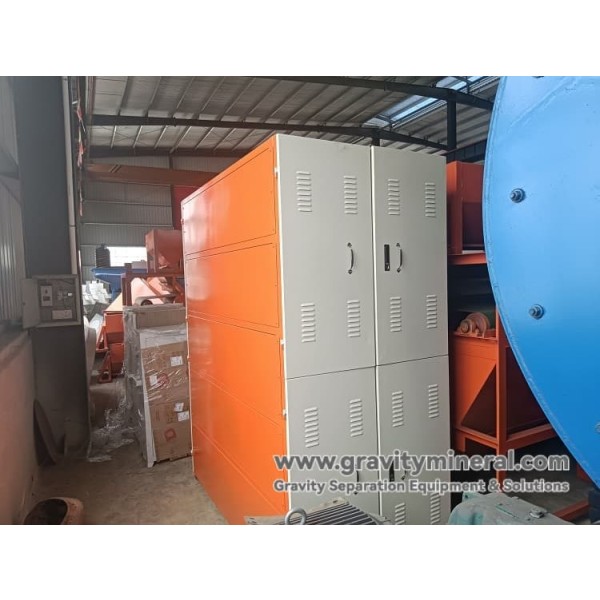
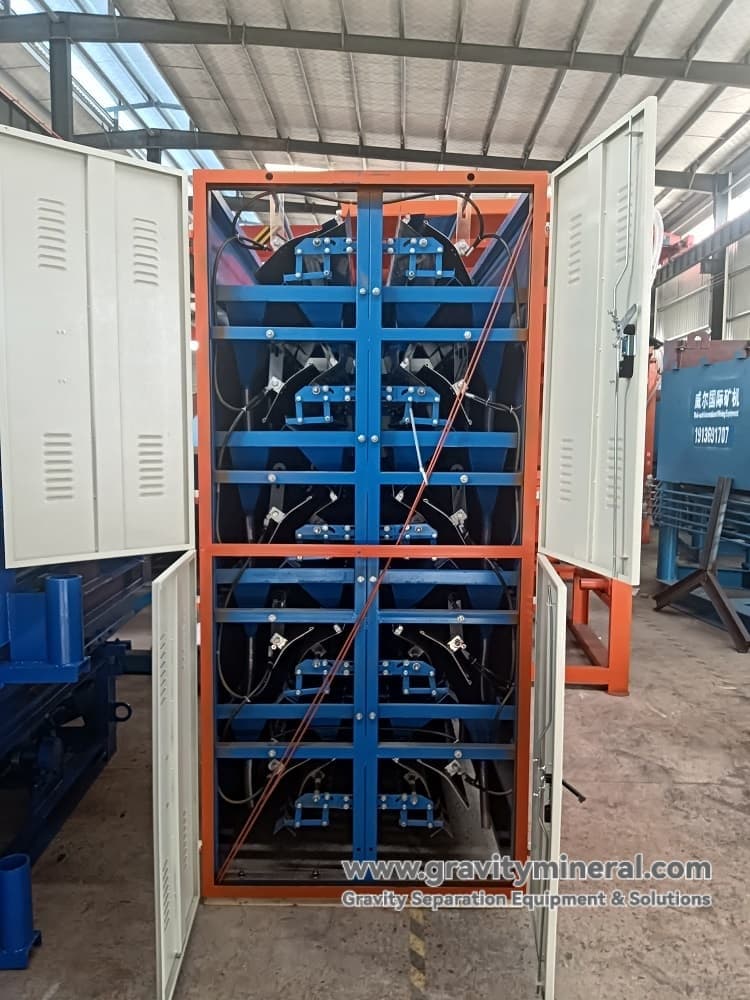
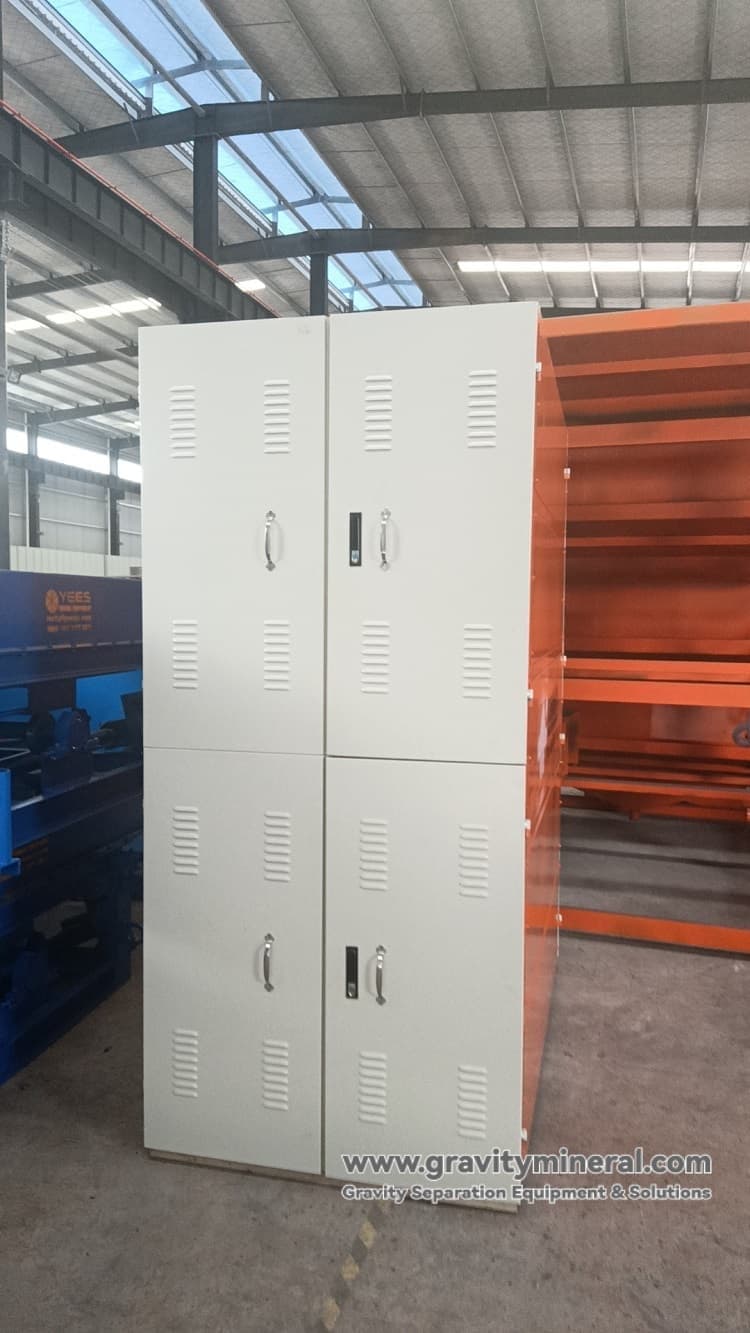
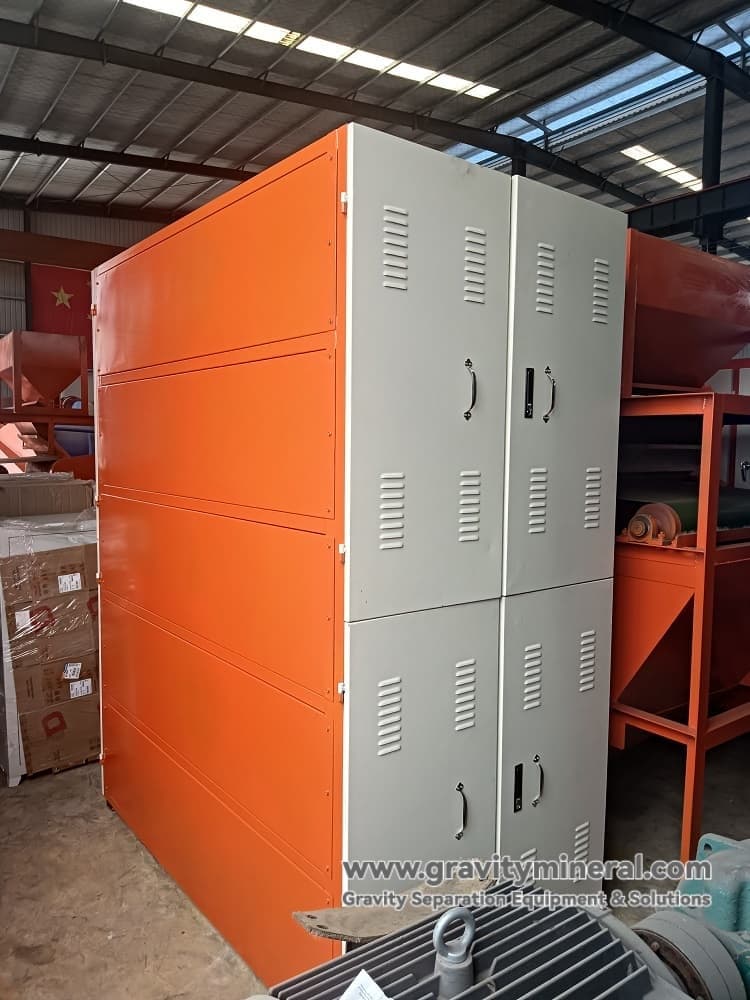
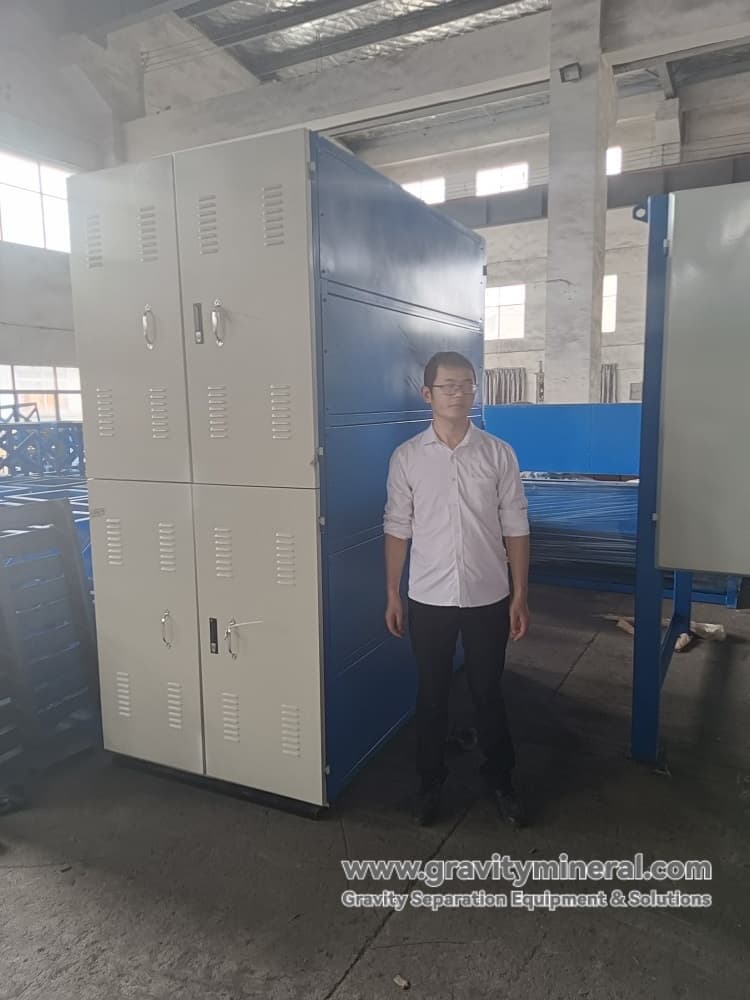
The arc plate electrostatic separator (also called the arc plate electrostatic separator or plate electrostatic separator) is a high-efficiency mineral separation machine. It combines a multi-layer curved-plate structure with a high-voltage electrostatic field to separate dry fine minerals through differences in conductivity. Material falls by gravity from the hopper onto the conductive plates; as it slides down, conductive particles are attracted by the electrostatic field of the upper oval electrode and deviate from their original falling trajectory to be separated, while non-conductive particles continue sliding along the conductive plates.
This arc plate electrostatic separator is widely used in the final refining stage of heavy mineral sand processing and performs excellently in separating conductive minerals (such as rutile and ilmenite) from non-conductive minerals (such as zircon and quartz). Its free-fall and sliding-trajectory design replaces the rotating drum and achieves extremely high final purity. It is used in large quantities in coastal placer deposits in Australia, where small amounts of rutile and ilmenite are separated from zircon rough concentrate.
This electrostatic separator can achieve conductive mineral purity above 90%, making it indispensable for the commercial extraction of strategic rare metals and high-value mineral resources. In mineral processing flowsheets, it often serves as the final cleaning equipment in the titanium-zirconium placer gravity and magnetic/electrostatic separation solution and the heavy alluvial gravity, magnetic and electrostatic separation solution.
How an Arc Plate Electrostatic Separator Works
The separation principle of the arc plate electrostatic separator is based on inducing an electric charge on particles and changing their falling trajectory.
- Feed preparation: Completely dry, preheated mineral is fed evenly onto the grounded stainless-steel curved plates at the top.
- Electric-field induction: As minerals slide down the plate surface, they pass through a high-voltage electrostatic field (up to 60 kV) generated by opposing aluminium electrodes.
- Trajectory deflection (conductors): Conductive minerals rapidly absorb surface charge from the field. Because they carry the same polarity as the high-voltage electrode, they are strongly repelled outward (deflected) and fall into the front discharge hopper.
- Natural sliding (non-conductors): Non-conductive minerals cannot effectively absorb charge and are not affected by repulsion; they keep their natural gravity sliding trajectory and slide directly off the end of the plate into the rear hopper, or cascade to the next stage for deeper cleaning.
Core Advantages and Structural Innovation
- Multi-stage separation design: A double-row, 4-5 stage cascade separation structure is used. Material is continuously re-separated as it descends stage by stage, raising overall efficiency by 30% compared with single-stage equipment.
- Combined electrode system: A grounded stainless-steel curved plate is combined with an aluminium high-voltage electrostatic plate. Both electrode gap and angle are fully adjustable, allowing operators to fine-tune the field for specific mineral characteristics.
- Wide particle-size adaptability: Excellent separation performance for fine material from 0.1mm to 3mm.
- High-purity output: By controlling the free-fall trajectory of particles, the final separated product (especially conductive minerals) can reach over 90% purity and can be exported or sent for smelting directly.
- Extremely low energy consumption: Power consumption is only 125W-150W, with no rotating drum or brush components and minimal maintenance requirements.
Applications and Full-Line Support
The arc plate electrostatic separator is mainly used to recover small amounts of conductive minerals from large volumes of non-conductive products, and is especially suited to the separation and purification of placer minerals:
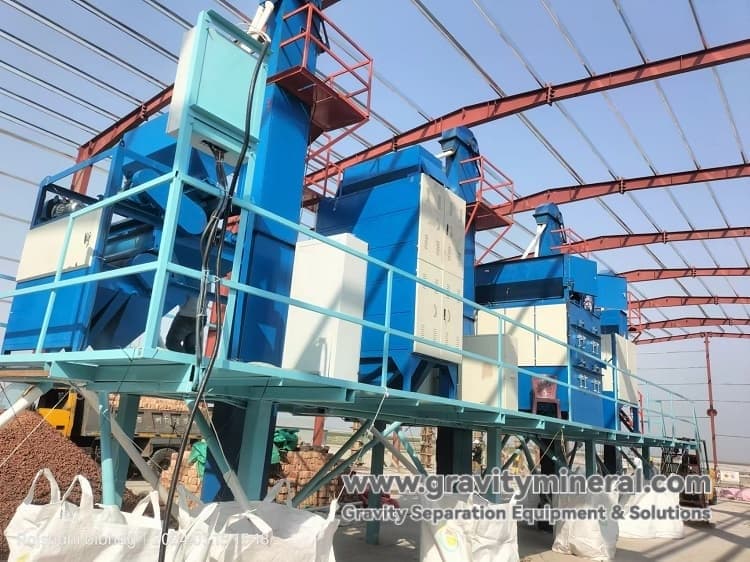
In a typical flowsheet, the arc plate electrostatic separator usually serves as the final cleaning stage. Upstream, a high-tension electrostatic separator (drum type) can be used for roughing, with the rough concentrate sent to the arc plate electrostatic separator for further cleaning; magnetic separation can use a wet magnetic separator or a dry high-intensity magnetic separator; gravity separation can use a fiberglass spiral chute or a 6-S shaking table. Because electrostatic separation requires completely dry material, a dryer must be installed upstream.
Technical Specifications (BXJ Series)
We offer four-stage and five-stage configurations according to the degree of purification required by the process.
| Parameter |
BXJ-2A4-30 (double-sided, four-stage) |
BXJ-2A5-60 (double-sided, five-stage) |
| Capacity |
1-2 t/h |
1-2 t/h |
| Feed size |
0.1-3 mm |
0.1-3 mm |
| Material flow velocity |
10-15 cm/s |
10-15 cm/s |
| Curved plate length |
1600 mm |
1600 mm |
| High voltage / current |
0-60 KV / 0-10 MA |
0-60 KV / 0-10 MA |
| Power consumption |
125 W (ultra-low) |
150 W (ultra-low) |
| Weight |
1688 kg |
2100 kg |
| Overall dimensions (L×W×H) |
2100 × 1600 × 2300 mm |
2100 × 1600 × 2500 mm |
From a Single Arc Plate Electrostatic Separator to Full-Line Magnetic and Electrostatic Support, No Outsourced Responsibility
The separation accuracy of the arc plate electrostatic separator depends on the matching of feed dryness, particle size distribution, electrode gap and angle, and working voltage. GravityMineral has focused on manufacturing gravity separation and magnetic/electrostatic equipment for 20 years, with equipment produced at two in-house manufacturing bases and process and mechanical engineers working on the same team——the electrode material, electrode-gap adjustment and high-voltage control system of the arc plate electrostatic separator are set according to process data, derived from the same source as the full-line design drawings, avoiding the problem of “mismatch between electrostatic equipment and magnetic / gravity separation circuits”.
- In-house manufacturing bases: Core equipment is produced at GravityMineral's two in-house manufacturing bases, with full quality control from raw material procurement to machining, assembly and no-load test runs; every machine is strictly inspected before leaving the factory.
- ISO9001 quality system: The company is certified to the ISO9001 quality management system, and its products hold qualifications such as S-certified supplier and national high-tech enterprise.
- Full-line interface matching: The arc plate electrostatic separator is capacity-matched with the high-tension electrostatic separator, dry high-intensity magnetic separator and spiral chute, reducing blockages and incomplete separation.
- Global delivery experience: Our products have been exported to more than 50 countries, and we are familiar with logistics and customs clearance procedures in major markets across Africa, Southeast Asia, South America, the Middle East, Central Asia, South Asia and Australia; a library of 500+ global cases provides references for electrostatic equipment selection.
- Delivery and after-sales: Engineers provide on-site guidance for installation and commissioning, lead single-machine and linked test runs and train customer personnel; the warranty period is one year, with long-term spare parts and process optimization support.
- Flexible cooperation models: You can purchase equipment alone, commission drawing design only, invite engineers for on-site commissioning only, or choose full-process EPC turnkey delivery, all arranged at your pace and budget.
Arc Plate Electrostatic Separator FAQ: Common Questions Answered
Q1: How much does an arc plate electrostatic separator cost? How is the price calculated?
The price depends on the number of stages (four or five), curved plate length and high-voltage power supply configuration; the BXJ series comes in double-sided four-stage and double-sided five-stage versions. It costs slightly more than a drum electrostatic separator but consumes very little energy; we recommend providing your mineral, particle size and capacity so our engineers can issue a transparent quotation.
Q2: What is the difference between an arc plate electrostatic separator and a high-tension drum electrostatic separator? How do you choose?
Both use an electrostatic field and are often used together: the high-tension drum electrostatic separator suits primary high-capacity roughing, while the arc plate electrostatic separator provides gentler, more precise free-fall separation, often acting as a "cleaner" to upgrade drum rough concentrate to >90% commercial grade. Choose the drum type for roughing and the arc plate for cleaning.
Q3: How does arc plate electrostatic separation differ from magnetic separation? When should electrostatic separation be used?
Magnetic separation works by differences in magnetism, while electrostatic separation works by differences in conductivity. When minerals have similar magnetic properties and cannot be separated magnetically (such as rutile and zircon), arc plate electrostatic separation is the key final cleaning method, often combined with magnetic separation in a "gravity separation—magnetic separation—electrostatic separation" flowsheet.
Q4: Must the feed be dry? What are the requirements?
It must be completely dry and preheated. Feed size is 0.1-3mm and material flow velocity is controlled at 10-15cm/s. Moisture or uneven particle size seriously affects the trajectory deflection of conductive particles, so a **dryer** is usually installed upstream.
Q5: How many tons can it handle per hour? How fine can the feed be?
Capacity is about 1-2 tons per hour (the same for four- and five-stage models), with feed size of 0.1-3mm; it performs excellently on fine material. If more output is needed, several machines can be run in parallel or in multi-stage series.
Q6: What purity can be reached? How to choose four or five stages?
Through multi-stage cascade separation, conductive minerals can reach a final purity of over 90%. Four stages suit general purification; five stages provide more cascades and more thorough cleaning for high-purity export or smelting requirements. Choose the stage count according to your target grade.
Q7: Can voltage, electrode gap and electrode angle be adjusted?
The high-voltage electrostatic field reaches up to 0-60KV with a current of 0-10MA; electrode gap and angle are fully adjustable, so operators can fine-tune the field for specific minerals and optimize conductor deflection and non-conductor sliding trajectories.
Q8: Is energy consumption high? Is it easy to maintain?
Power consumption is only 125W-150W, extremely low; with no rotating drum or brush components, maintenance needs are minimal. The main maintenance task is a quarterly check of curved-plate liner wear (keeping it at ≤3mm) to keep the surface smooth and preserve mineral falling trajectories.
Q9: Which minerals can it separate? Can it handle zircon and rutile?
The arc plate electrostatic separator is designed to recover small amounts of conductive minerals from large volumes of non-conductors, and suits zircon, rutile, ilmenite, monazite, xenotime and garnet as well as quartz sand purification; see the titanium-zirconium placer gravity and magnetic/electrostatic separation solution.
Q10: How is it integrated in the flowsheet? Can I send a sample for testing? How are lead time and after-sales supported?
It often serves as the final cleaning stage: upstream use a drum electrostatic separator for roughing, a dry high-intensity magnetic separator or wet magnetic separator for magnetic separation, a shaking table for gravity separation, and install a dryer. Representative ore samples can be sent for electrostatic separation tests; standard equipment manufacturing lead time is 30-60 days, the warranty period is 1 year, engineers provide on-site commissioning and training, and our machines have been exported to more than 50 countries.
Get an Arc Plate Electrostatic Separator Selection Plan and Quote
Tell us your mineral name, feed size, material moisture content, target capacity (tons per hour), and the conductive / non-conductive minerals to be separated, and GravityMineral engineers will prepare an arc plate electrostatic separator selection plan, a magnetic/electrostatic flowsheet and a transparent quotation.
You can reach us through the contact details on our website or speak directly with a sales engineer for selection advice; representative ore samples can be sent for electrostatic separation tests.