Lamella Clarifier | Inclined Tube Thickener (Plate Clarifier) | TY Series Lamella Settling & Thickening Equipment
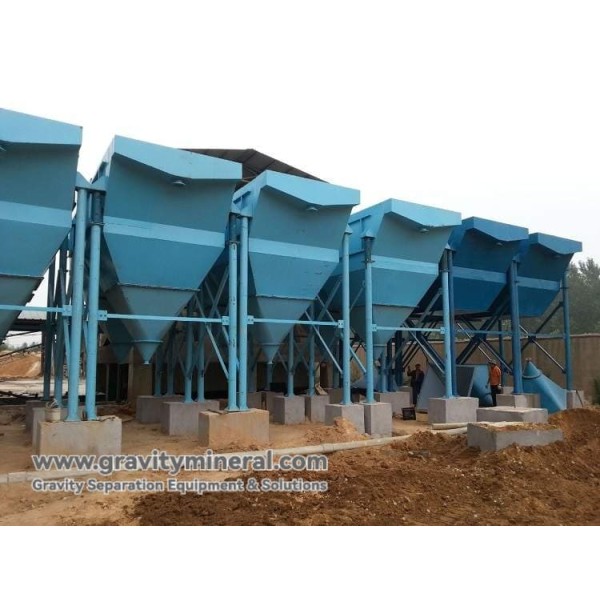
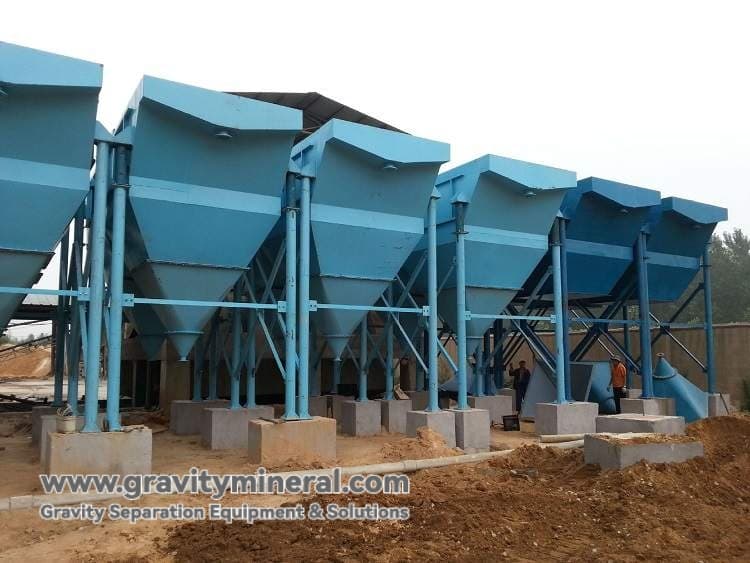
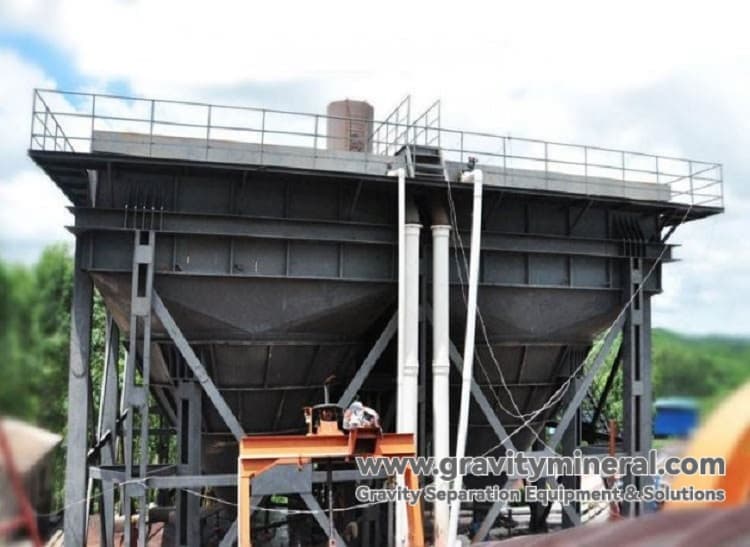
Lamella clarifier—— commonly known in the industry as inclined tube thickener, inclined tube settler, plate clarifier or inclined plate settler—— is a high-efficiency gravity settling and liquid-solid separation unit. Developed on the basis of the "shallow sedimentation theory", it delivers an enormous effective settling area within an extremely compact footprint.
The unit adopts a honeycomb inclined-tube (or plate) structure, increasing the settling rate of fine particles by 3 to 5 times compared with a conventional circular thickener. Because the entire process relies purely on gravity, during operation it consumes no electricity。
This unit is essential for water recovery, tailings dewatering, and the thickening of fine rare-metal ores such as tungsten and tin. Beyond mineral processing, it is also a key component in wastewater treatment across the chemical, metallurgical and building-material industries.
What Is Lamella Thickening? Why Can Plant Dewatering and Wastewater Treatment Not Do Without It?
A lamella clarifier is the core equipment for gravity settling and liquid-solid separation, based on the "shallow sedimentation theory"design principle: the settling velocity of particles depends on settling area rather than tank depth. The equipment packs hundreds of inclined tubes (or plates) closely in the vertical direction, multiplying the effective settling area and achieving fine-particle settling rates several times those of a conventional circular thickener within a very small footprint.
In mineral processing flowsheets, tailings water recovery, concentrate thickening and dewatering, and the treatment of fine rare-metal ores such as tungsten and tin all rely on efficient liquid-solid separation. When rapid settling of ultrafine particles, recovery of clear overflow water and its reuse are required, the lamella thickener becomes a compact alternative to the conventional thickener, with zero power consumption and high space efficiency.
The lamella clarifier is widely used in plant dewatering, tailings recovery, and chemical and metallurgical wastewater treatment because the honeycomb inclined tubes plus shallow sedimentation theory design plays a key role. Compared with a conventional circular thickener, it occupies only 1/12 to 1/20 of the floor area, consumes no energy and features modular installation, making it the most widely used inclined-plate unit for compact gravity settling today.
Core Technology and System Advantages
- Ultra-compact design: A lamella clarifier occupies only 1/12 to 1/20 of the floor area of a conventional thickener yet delivers exactly the same settling capacity.
- Zero energy consumption: The lamella clarifier runs entirely on gravity. With no heavy motorized rake or drive unit, power cost during operation is zero and there is almost no mechanical maintenance.
- Modular assembly: The unit is pre-engineered for rapid on-site assembly, cutting construction and installation time by more than 50%.
- Excellent water quality: The lamella clarifier effectively separates ultrafine particles and produces clear overflow that can be returned immediately to the plant water circuit or safely discharged.
- Fast settling: The honeycomb inclined-tube (or plate) structure raises the fine-particle settling rate by 3 to 5 times, improving treatment efficiency.
- Customizable inclined tubes: The inclination angle and aperture size of the internal inclined tubes can be fully customized to slurry viscosity and settling requirements.
How a Plate Settler Separates: Three Steps to Complete Solid-Liquid Separation
A lamella clarifier separates the incoming turbid flow into three distinct treatment zones:
- Primary settling zone: Raw slurry is fed into the central feed well. Heavy coarse particles immediately drop out of suspension and settle rapidly into the conical bottom hopper.
- Inclined-tube separation zone: The remaining fine particles rise with the water into the honeycomb structure formed by inclined tubes (normally set at a 60° angle). Particles strike the tube walls, flocculate with other particles and slide down the inclined surfaces against the rising flow.
- Clear-water overflow zone: Purified water continues to rise through the top of the inclined tubes and overflows the V-notch weir at the tank top for collection and recycling.
Applications and Full-Line Integration
The lamella clarifier is suitable for fine-particle thickening and solid-liquid separation of wastewater slurry, and typically serves as the gravity separation—dewatering—water recovery thickening and environmental unit in a combined flowsheet. Typical applications are listed below:
| Application |
Typical materials |
Supporting process / production line |
| Concentrate dewatering |
Fine, high-value concentrate (tungsten, tin, gold) |
Thickening fine concentrate before filtration |
| Tailings water recovery |
Tailings, slurry water |
Fast tailings settling; clear overflow returned to the ball mill circuit |
| Industrial wastewater |
Solid-bearing chemical wastewater, metallurgical wastewater |
Chemical precipitation and solid-liquid separation in plants |
| Sand and gravel washing plant |
Slurry and muddy water from aggregate washing |
Thickening aggregate-washing slurry and reusing wash water |
| Fine tungsten-tin thickening |
-200 mesh cassiterite and wolframite fine slime |
Primary tin ore gravity concentration plant solution · Wolframite gravity separation plant solution |
Where ore is complex and finely disseminated, engineers can define the combined flowsheet and equipment interfaces from ore-sample test data, avoiding capacity mismatches between machines from different suppliers. The lamella clarifier is commonly paired with sawtooth wave jig、6-S shaking table、fiberglass spiral chuteand other gravity-separation equipment, with water recovery and tailings dewatering capacity calculated as a whole to achieve full-line water circulation and environmental compliance.
TY Series Technical Parameters and Specifications
Note: the inclination angle and aperture size of the internal inclined tubes can be fully customized to your specific slurry viscosity and settling requirements.
| Model (settling area) |
Dimensions (L×W×H mm) |
Capacity (t/d) |
Water recovery (t/d) |
Suitable application |
| TY-1 (1㎡) |
1700 × 1245 × 2610 |
50 - 150 |
100 - 150 |
Small processing plant / pilot production line |
| TY-5 (5㎡) |
3580 × 2350 × 3500 |
300 - 800 |
500 - 1000 |
Medium-sized concentrator |
| TY-10 (10㎡) |
7160 × 2350 × 3500 |
500 - 1500 |
1000 - 1500 |
Large-scale production line |
Key Components and Operating Parameters
| Component / specification |
Technical details |
| Feed well |
Central feed well where heavy coarse particles immediately separate out and settle into the conical bottom hopper |
| Inclined tubes (plates) |
Honeycomb inclined-tube structure, normally at a 60° angle, with customizable inclination and aperture |
| Settling principle |
Shallow sedimentation theory, multiplying effective settling area in the vertical direction |
| Overflow weir |
V-notch overflow weir at the tank top, collecting and recycling clear overflow water |
| Drive mode |
Pure gravity operation, with no motorized rake or drive unit and zero power consumption |
| Installation |
Modular prefabrication, rapid on-site assembly, installation time cut by more than 50% |
Basic Maintenance and Care
- Regularly clean the conical bottom hopper and discharge sludge promptly to prevent sediment buildup from affecting settling efficiency.
- Check whether the surfaces of the inclined tubes (plates) are scaled or blocked, and clean when necessary to preserve effective settling area.
- Check that the V-notch weir is level and overflow is even, ensuring stable recycling of clear water.
- With zero power consumption and no mechanical rake drive, there is almost no mechanical maintenance; the main tasks are cleaning and sludge discharge.
From a Single Unit to Full-Line Integration, Full Responsibility Without Outsourcing
GravityMineral has focused on gravity concentration for 20 years, with a market share of about 35% and products exported to 50+ countries and regions. The company operates two in-house manufacturing bases and its own design team: core equipment is produced in-house, flowsheets are designed in-house, and the responsibility chain has no weak links. A lamella clarifier is rarely used in isolation, since its settling performance depends on upstream feed density, flocculation conditions and full-line water-circuit design. The tube inclination, aperture and settling area are set from process data and share the same source as the full-line design drawings, avoiding the disconnect of "equipment that cannot be matched to the flowsheet after purchase".
- In-house manufacturing bases: Core equipment is produced at GravityMineral's two in-house manufacturing bases, with full quality control from raw-material procurement to machining, assembly and no-load test running; every unit is strictly inspected before leaving the factory.
- ISO9001 quality system: The company is certified to the ISO9001 quality management system and its products hold qualifications such as S-certified supplier and national high-tech enterprise.
- Full-line interface matching: The water-recovery and tailings-dewatering capacity of gravity-separation equipment and thickeners is calculated as a whole, achieving full-line water circulation and matched upstream and downstream capacity.
- Global delivery experience: Products have been exported to 50+ countries, with familiarity in logistics and customs clearance across major markets in Africa, Southeast Asia, South America, the Middle East, Central Asia, South Asia and Australia.
- Delivery and after-sales: ISO9001 full-process quality control, on-site engineers guiding installation and commissioning, a one-year warranty, and long-term spare-parts and process-optimization support.
Lamella Clarifier FAQ
Q1: Why does a lamella clarifier occupy far less space than a conventional thickener?
According to the "shallow sedimentation theory", particle settling velocity depends on settling area rather than tank depth. By packing hundreds of inclined tubes closely in the vertical direction, the effective settling area is multiplied. A 10-square-metre lamella settling tank can provide the settling area of a huge 100-square-metre circular thickener.
Q2: Does a lamella clarifier require flocculant (chemical reagent) addition?
Although the unit can settle particles naturally by gravity, adding flocculant to the feed slurry (such as PAM——polyacrylamide) binds ultrafine suspended particles together. This forms heavier "flocs" that settle much faster, significantly improving the clarity of the overflow water.
Q3: What advantages does a lamella clarifier offer over a conventional circular thickener?
A lamella clarifier occupies only 1/12 to 1/20 of a conventional thickener, settles 3 to 5 times faster, runs entirely on gravity with zero power consumption and almost no mechanical maintenance, and features modular prefabrication for rapid on-site assembly, cutting installation time by more than 50%.
Q4: Which materials and applications suit a lamella clarifier?
It suits fine-concentrate dewatering, tailings water recovery, industrial wastewater treatment and sand-washing slurry thickening, and can handle fine high-value concentrates such as tungsten, tin and gold as well as -200 mesh fine slime.
Q5: Can the inclined-tube angle and aperture of a lamella clarifier be customized?
Yes. The inclination angle and aperture size of the internal inclined tubes can be customized to your slurry viscosity and settling requirements to suit the settling characteristics of different materials.
Q6: What daily maintenance does a lamella clarifier need?
Regularly clean the conical bottom hopper and discharge sludge promptly, check the inclined tubes for scaling or blockage and the V-notch weir for even overflow. With zero power consumption and no mechanical rake drive, there is almost no mechanical maintenance.
Q7: Which models are available in the TY series? How to select?
The TY series offers TY-1(1㎡)、TY-5(5㎡)、TY-10(10㎡)in three settling areas, with a capacity of 50-1500 t/d. Selection mainly depends on target capacity, feed density and footprint conditions; final configuration should be verified by engineers against ore type and output.
Q8: How are delivery time and after-sales guaranteed?
The core manufacturing cycle of a standard lamella thickener is about 30-60 days, and in-house scheduling is less affected by external supply chains; non-standard customization (special inclined-tube angles or dimensions) takes longer, with a clear delivery schedule stated in the contract. A one-year warranty is provided, followed by long-term spare-parts supply, technical consultation and process-optimization advice.
Get a Lamella Clarifier Selection Plan and Quotation
Tell us your ore type, feed density, target capacity (tons per day), settling requirements, footprint conditions and whether flocculation is needed, and GravityMineral engineers will prepare a unit selection plan, process flowsheet and transparent quotation for you.
You can contact us through the website or reach the sales engineer for your region directly for selection advice.