Loading...
Menu
Trending Products
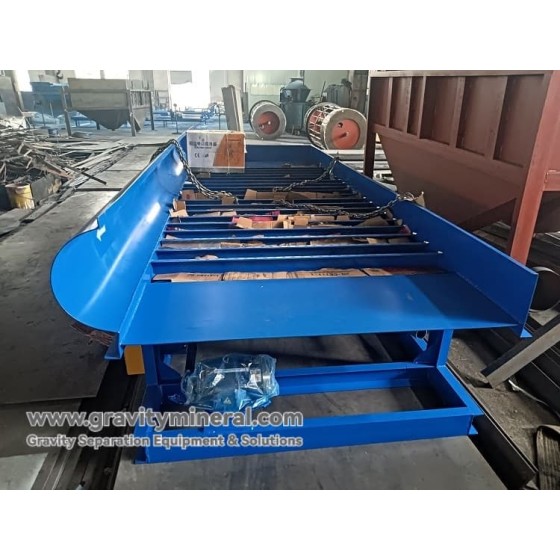
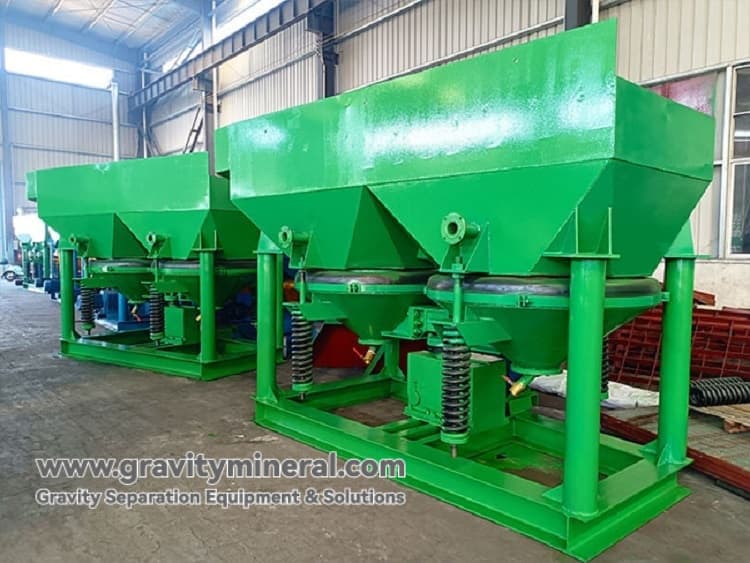
Vibrating Chute
Vibrating Chute
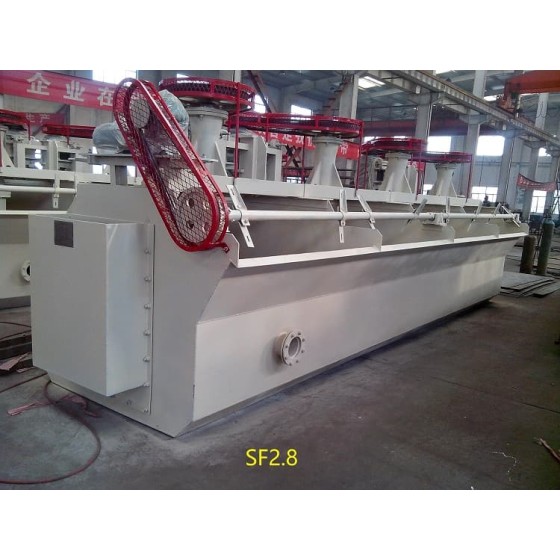
SF type flotation machine
BF type flotation machine
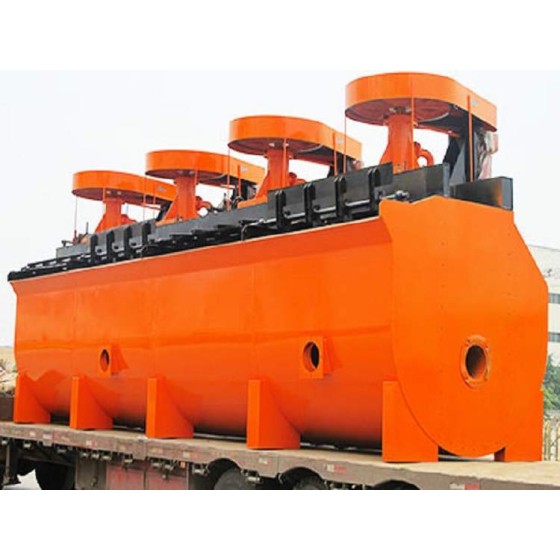
BS-K type flotation machine
XCF-KYF type flotation machine
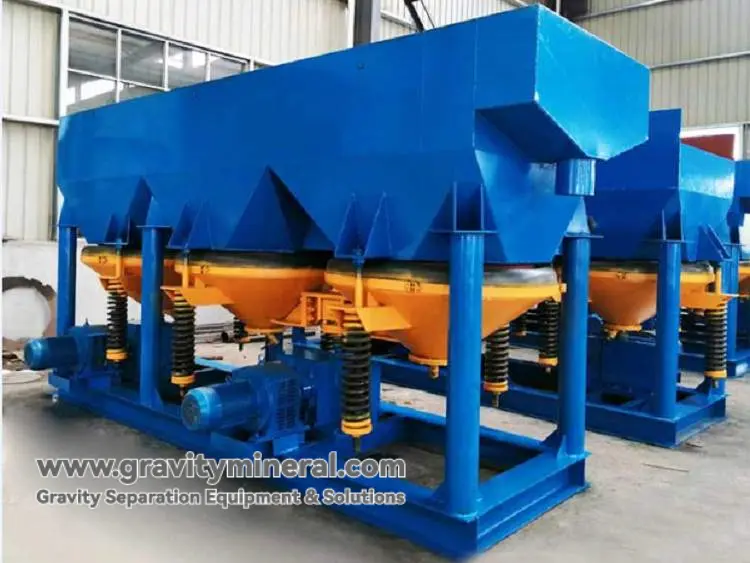
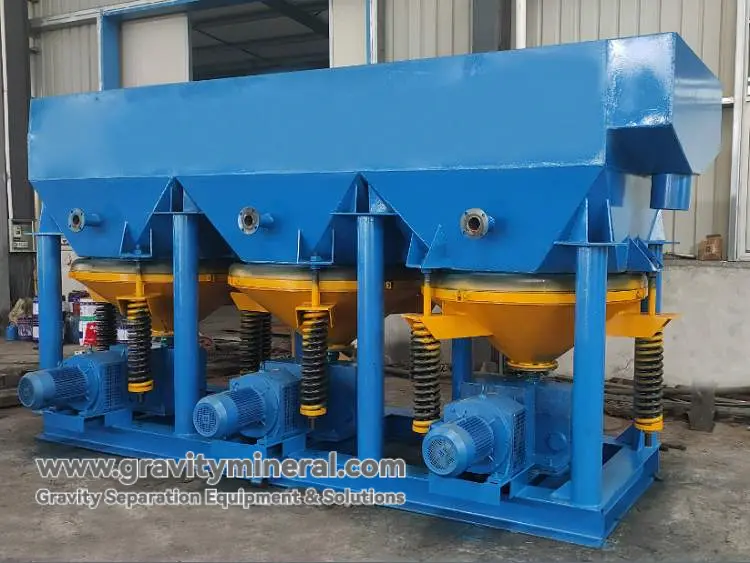
Jigging Machine

Recover coarse gold, diamonds, and heavy minerals with our Sawtooth Wave Mineral Jig. High capacity, water-saving design, and excellent recovery up to 30mm.


We provide complimentary proposals and quotes within 24 hours.

Feel free to contact us via WeChat/WhatsApp: +8619914754015

Share your requirements, and we will provide you with a professional solution.


Model: {{ product.model }}
weight: {{ product.weight }} Kilogram

{{ variable.name }} : {{ variable.values[selectedVariantsIndex[variable_index]].name }}

{{ value.name }}
Product Inquiry

Advanced Sawtooth Wave Mineral Jig Separator

The Mineral Jig Separator is a cornerstone of gravity concentration, specifically engineered for the high-capacity recovery of coarse heavy minerals. While shaking tables and centrifuges excel at catching fine dust, the Jigging Machine is uniquely capable of recovering heavy mineral nuggets and particles up to 30mm in size.

Our equipment utilizes advanced Sawtooth Wave Jigger technology. Compared to traditional sinusoidal wave jigs, the sawtooth pulsation creates a "fast rising, slow falling" water flow. This dynamic perfectly looses the mineral bed and drastically improves the settling time for heavy minerals. This results in significantly higher recovery rates for alluvial gold, diamonds, tin, tungsten, barite, and manganese ores.

Driven by an electromagnetic adjustable-speed motor, this Gravity Jig is an energy-saving powerhouse that reduces water consumption by up to 40% while maximizing your metallurgical index.

Advanced sawtooth wave mineral jig separator for gravity concentration

Why Choose Our Sawtooth Wave Jigger?

  • Superior Recovery Rates: The sawtooth pulsation curve comprehensively improves recovery indices compared to older jigs. Field data shows an increase in Tin (Sn) recovery by 3.01%, Tungsten (W) by 5.5%, Lead (Pb) by 1.63%, and Zinc (Zn) by 2.04%.
  • Massive Water Savings: The "screen-on-screen" composite discharge mode and the unique pulsation cycle effectively reduce the need for under-screen make-up water, saving 30% to 40% water compared to traditional equipment.
  • Intelligent Control: Both the stroke length and the stroke frequency are continuously adjustable (stepless speed regulation), allowing you to easily adapt the machine to different mineral types and feed conditions.
  • Compact Footprint: Highly efficient chamber design allows this machine to achieve massive throughputs while reducing required floor space by up to 1/3 compared to older models.

How a Jigging Machine Works

Jigging is the process of separating particles of different specific gravities in a pulsating fluid bed.

  1. Material Feeding: Raw ore is fed onto a screen inside the jigging chamber.
  2. Pulsation (The Sawtooth Wave): The diaphragm mechanism pulses water up through the screen. The "fast rise" forcefully lifts the entire bed of material, loosening the particles.
  3. Stratification: During the "slow fall" of the water cycle, particles settle back onto the screen. Because heavy minerals (like gold or barite) fall faster than lighter rocks (like quartz), they quickly work their way to the bottom of the bed.
  4. Discharge: The heavy minerals pass through the screen (or are drawn off from the bottom of the bed), while the lighter tailing rocks are washed over the top weir.
Gold jig separator internal screen and diaphragm chamber

Applicable Minerals

The Mineral Jig is the undisputed king of coarse particle recovery. It is widely used for:

  • Precious Metals: Catching coarse alluvial gold nuggets and silver ore before they are lost in downstream fine processing.
  • Diamonds & Gemstones: The primary method for recovering heavy rough diamonds and sapphires from lighter gravels.
  • Heavy Non-Metallic Minerals: Highly effective for upgrading Barite (for drilling mud) and Fluorite.
  • Ferrous & Non-Ferrous Metals: Processing Manganese, Iron ore, Tin (Cassiterite), Tungsten, Lead, and Zinc.

Technical Parameters (JT Series)

We offer a range of sizes, from the compact JT0.57 for small operations or cleaning, to the massive JT5-2 for bulk roughing.

Model Jig Area (m²) Max Feed Size (mm) Capacity (t/h) Stroke Length (mm) Stroke Freq. (r/min) Motor (kW)
JT0.57-1 0.57 < 6 1.5 - 3 8.5 - 12 80 - 180 1.5
JT1-1 1.04 < 10 2.5 - 5 10 - 17 80 - 180 2.2
JT2-2 2.28 < 10 5 - 10 12 - 21 80 - 180 3
JT3-1 3.0 < 10 7.5 - 15 12 - 30 50 - 125 5.5
JT4-2 4.0 < 25 8 - 20 25 - 57 50 - 125 7.5
JT4-2S 4.0 < 25 8 - 20 25 - 57 50 - 125 4 x 2
JT5-2 4.86 < 10 12 - 25 12 - 30 50 - 125 7.5

Frequently Asked Questions (FAQ)

Q1: When should I use a Jig instead of a Shaking Table?

A: Use a Mineral Jig early in the process to recover coarse heavy minerals (up to 30mm) directly after crushing or washing. If you grind the ore too fine, large gold nuggets will be destroyed. A Shaking Table should be used later in the circuit to recover the very fine gold/dust that the jig misses.

Q2: What is the "bedding" or "ragging" in a jig?

A: To help separate the minerals, a layer of artificial "bedding" (often steel shot, hematite, or large dense rocks) is placed on top of the jig screen. During pulsation, this heavy bedding opens up just enough to let heavy gold/minerals fall through, but stays tight enough to block lighter sand.

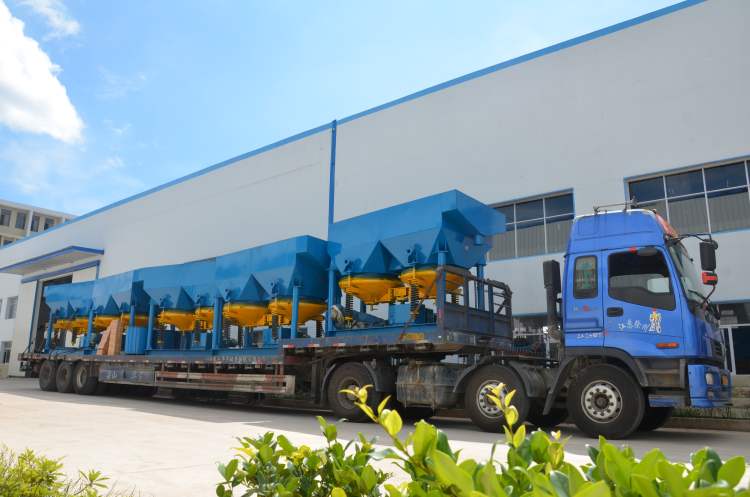
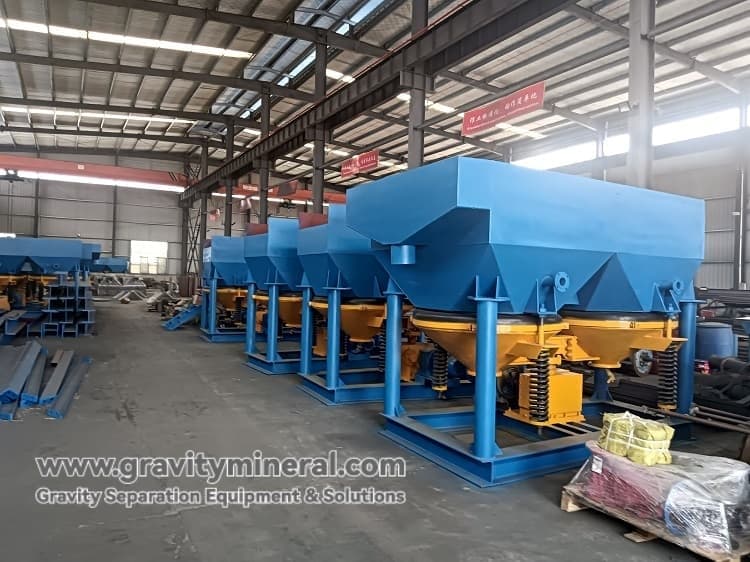
Diamond jigging machine installed at a mining plant Multiple sawtooth wave jiggers for large scale mineral processing

CONTACT US

To find out more about our products and solutions, please fill out the form below and one of our experts will get back to you shortly.

Nginx server needs to configure pseudo-static rules, click View configuration method