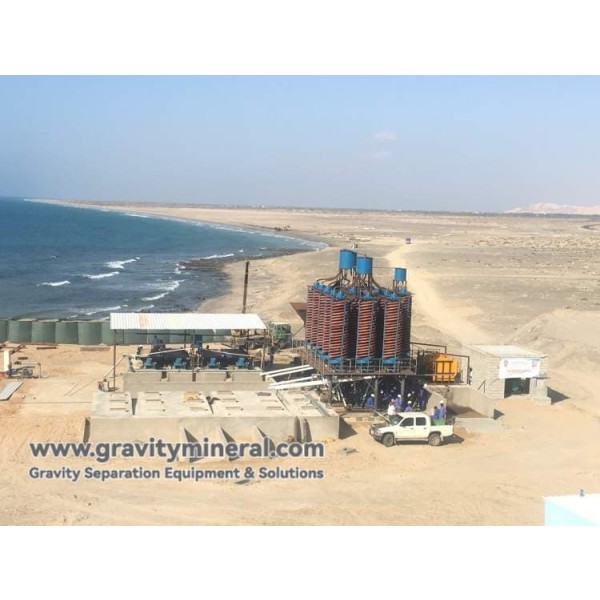
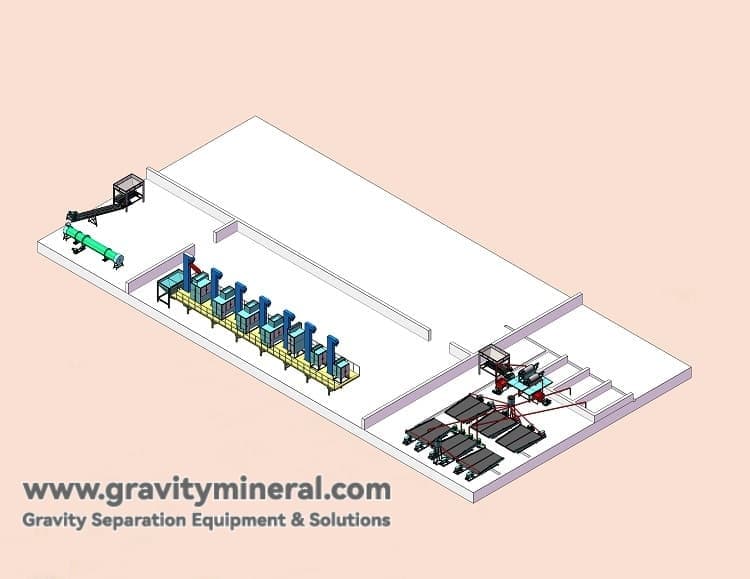
Beach Sand Gravity Separation Plant & Equipment Solution (Gravity + Magnetic + Electrostatic Combined Process):Coastal placer deposits (beach sands) are renowned worldwide for hosting vast reserves of high-value heavy minerals, primarilyilmenite, zircon, rutile, and monazite. Because these minerals have been naturally liberated into fine sands by marine action, no crushing is required at the mining stage—only enormous throughput capacity.
Drawing on decades of expertise in heavy mineral sands metallurgy, GravityMineral has engineered a proven turnkey solution: a “gravity pre-concentration + multi-stage magnetic separation + high-tension electrostatic separation” flowsheet. This beach sand gravity separation plant scientifically exploits the differences in density, magnetic susceptibility, and electrical conductivity of beach sands to separate and recover multiple commercial-grade mineral concentrates from a single feed source.
What Are Beach Sand Deposits?
Beach sand deposits are heavy mineral sand (HMS) placer deposits accumulated along coastal zones, rich in high-value heavy minerals such as ilmenite, zircon, rutile, and monazite. Having been repeatedly washed and sorted by wave and tidal action over long periods, these minerals are essentially liberated as discrete grains with clean surfaces, so there is no need for the costly crushing and grinding required for primary hard-rock ores.
The core of beach sand processing is “size-classified gravity concentration + magnetic/electrostatic deep separation.” GravityMineral’s standard beach sand gravity separation process first uses spiral chutes to reject the bulk of light silica sand, then magnetic separation to recover ilmenite and monazite, and finally high-tension electrostatic separation to cleanly split conductive rutile from non-conductive zircon—achieving “multiple products from one feed.”
20 YearsFocused on gravity separation equipment manufacturing
50+ CountriesBeach sand plants exported and commissioned
500+ ProjectsGlobal gravity separation project experience base
35%China gravity separation equipment market share
Three-Stage Beach Sand Extraction Process Flowsheet
GravityMineral’s coastal washing plant is designed to efficiently process millions of tons of sand, rejecting worthless silica at low cost before producing final products through high-tech purification.
Stage 1: Pre-treatment & Washing
Raw beach sand contains impurities that must be removed before it enters the precision pumping and gravity separation circuit.
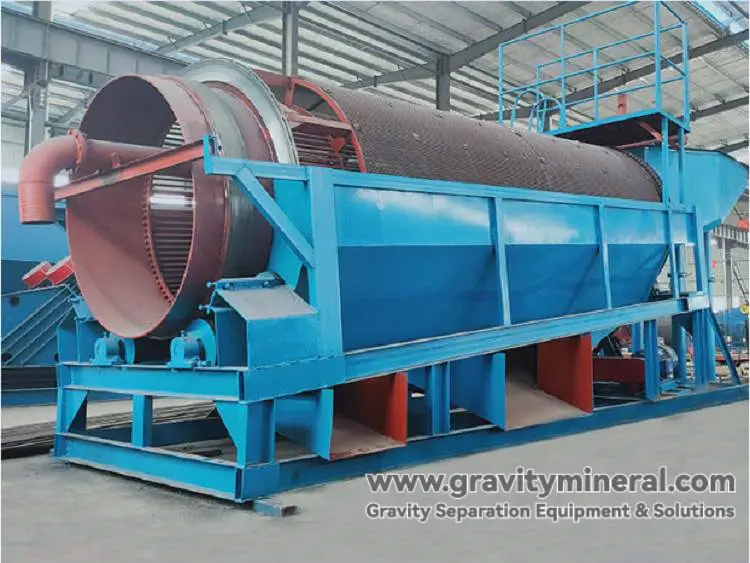
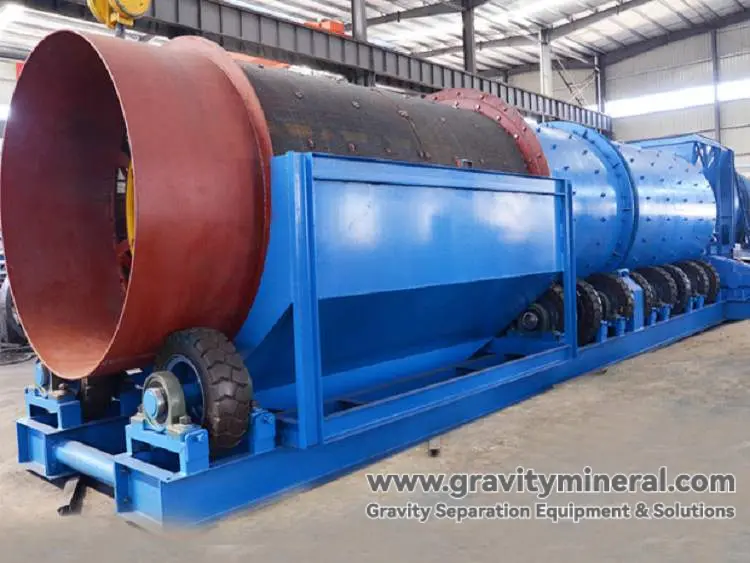
- Screening: Sand is pumped to a double-deck trommel screen. The upper deck removes coarse debris (shells, driftwood, and gravel), while the lower deck ensures only fine ore-bearing sand enters the process.
- Desliming: High-pressure water jets thoroughly wash the sand to remove marine clay and organic impurities.
Stage 2: Gravity Pre-concentration (Bulk Stage)
The goal of this stage is to reject the vast majority of light quartz/silica sand without consuming any power.
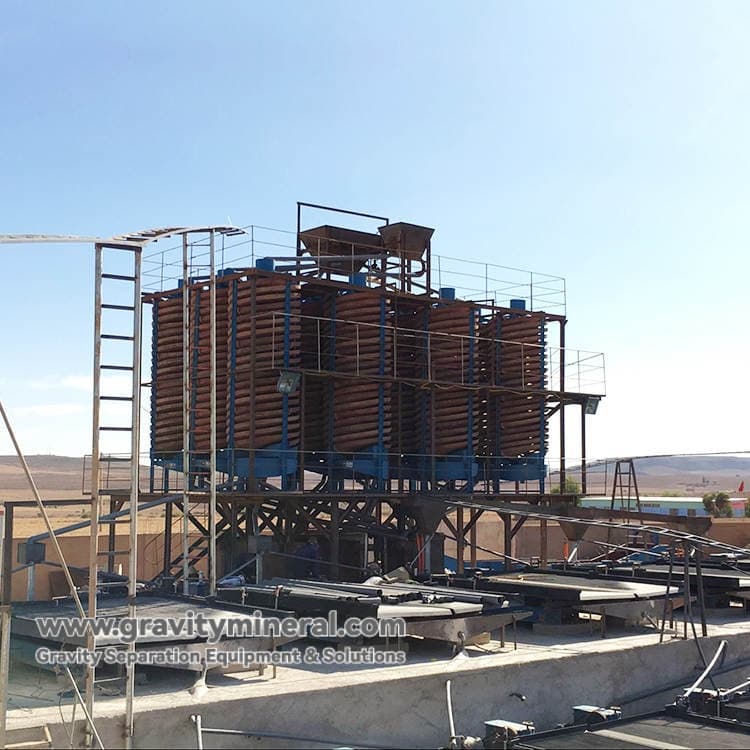
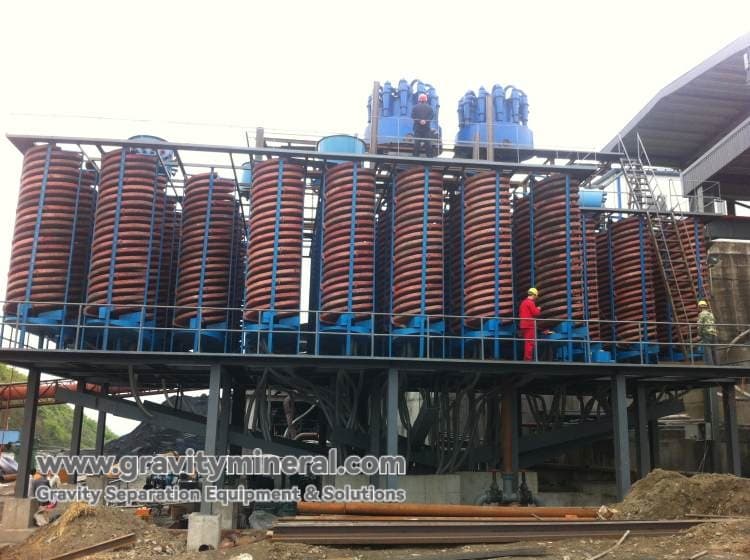
- Spiral Chutes: The washed slurry is pumped to a large bank of fiberglass spiral chutes. As the primary roughing device, spiral chutes use specific gravity to separate heavy black sands (ilmenite, zircon, rutile) from light white beach sand.
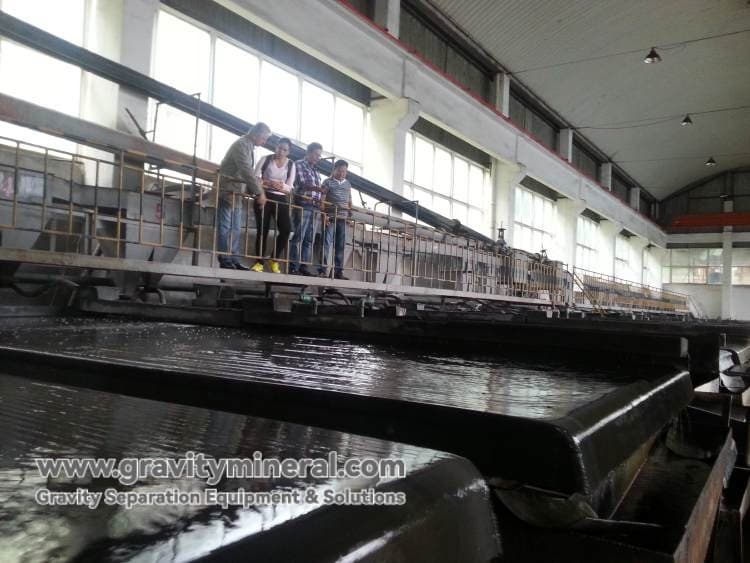
- Shaking Tables: The heavy sand concentrate from the spiral chutes is fed to 6-S shaking tables for further density concentration before drying.
- Wet Magnetic Separation: Medium-intensity wet magnetic separators remove highly magnetic impurities (such as magnetite) to protect downstream dry separation equipment.
Stage 3: Dry Separation & Deep Purification
At this point, the heavy mineral concentrate must be split into its individual commercial products (ilmenite, zircon, and rutile).
- Drying: The gravity concentrate is processed through a dryer. Precise temperature control prevents changes to mineral surface properties.
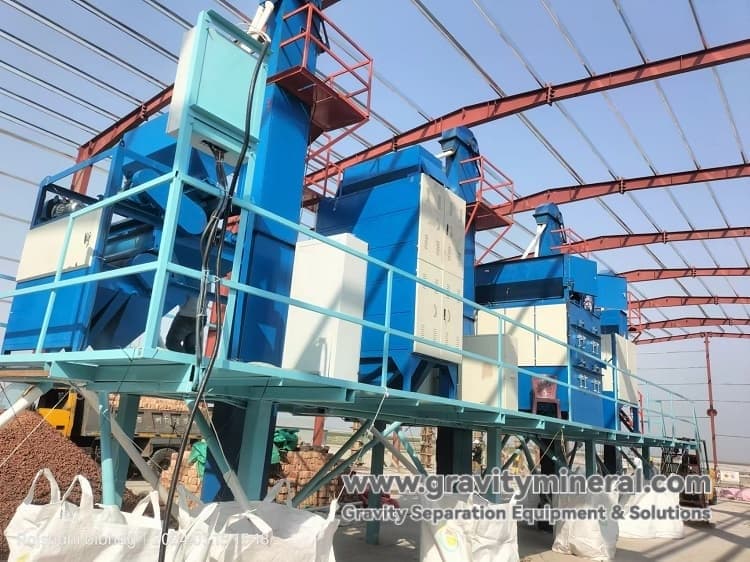
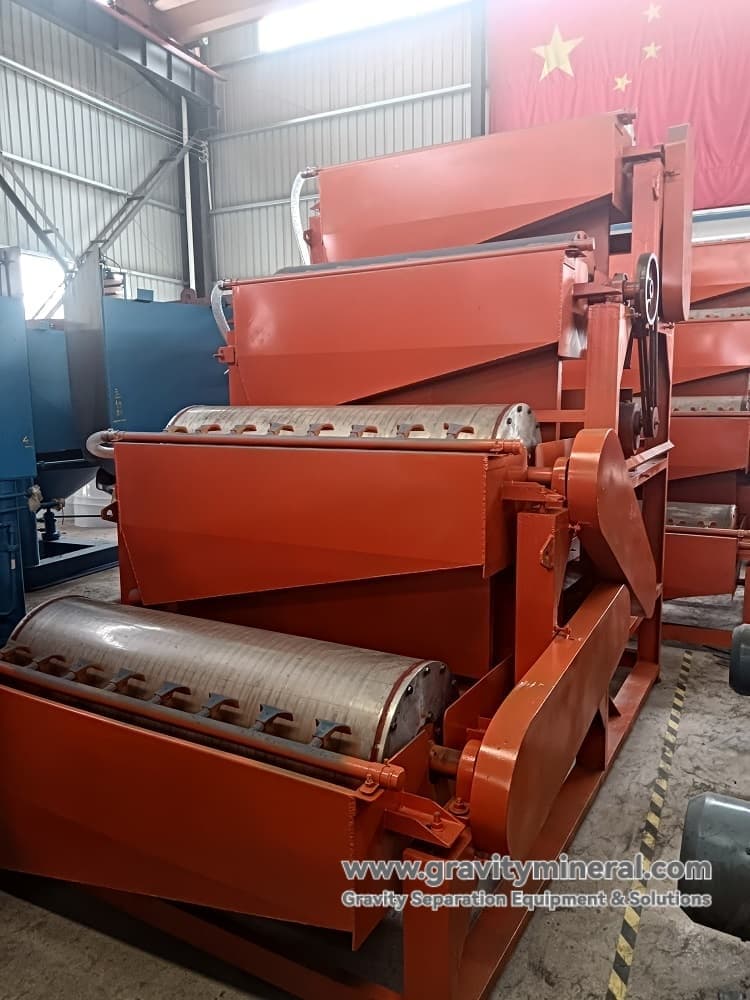
- Dry Magnetic Separation: The fully dried sand passes through multi-roll magnetic separators. This stage extracts ilmenite (which is weakly magnetic).
- Electrostatic Separation: The remaining non-magnetic mixture consists mainly of zircon and rutile. The sand enters a high-tension electrostatic separator / arc-plate electrostatic separator. Because rutile is a conductor and zircon is an insulator, the electric field cleanly separates them into pure, individual commercial-grade concentrates.
Core Equipment Configuration & Selection for a Beach Sand Processing Plant
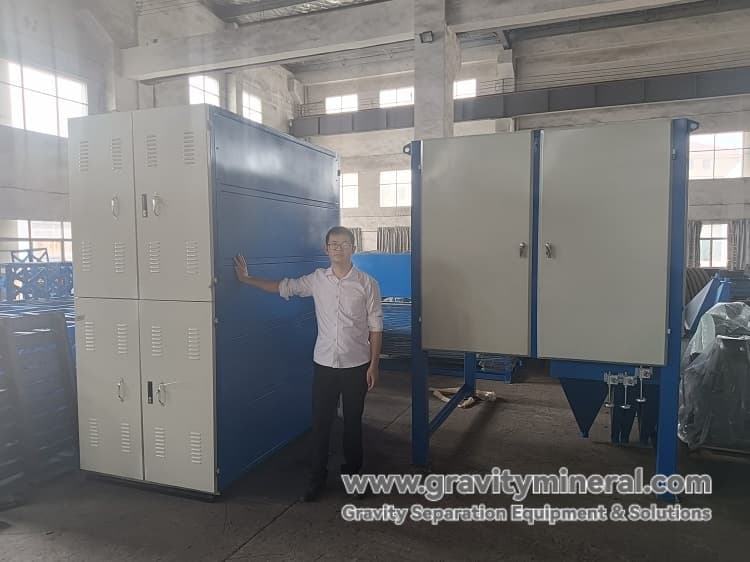
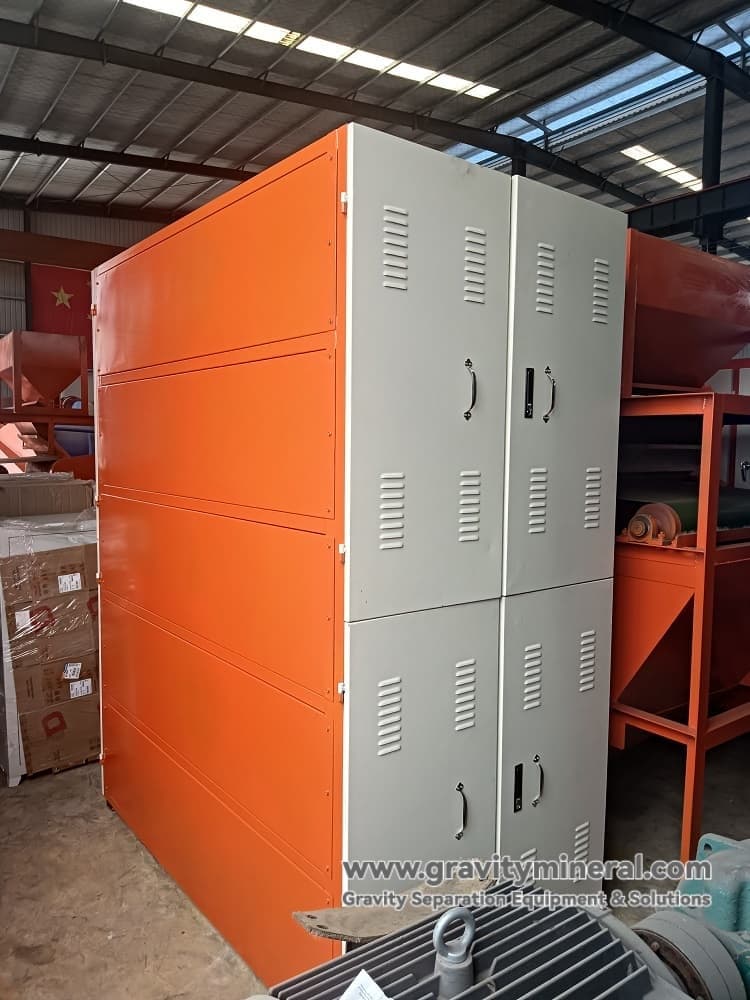
The challenge in beach sand processing lies in efficient concentration in the gravity stage and precise separation in magnetic/electrostatic stages. The table below lists the core equipment and duty stations commonly used in a beach sand gravity separation plant and its process line.
| Process Stage |
Main Equipment |
Functional Characteristics |
| Pre-treatment |
Double-deck trommel screen |
High-efficiency screening to remove shells and gravel. |
| Wet roughing |
Fiberglass spiral chute |
Runs without power, huge throughput capacity, removes quartz sand. |
| Wet scavenging |
6-S shaking table |
Adjustable stroke for high-precision density separation. |
| Pre-treatment |
Dryer |
High thermal drying efficiency. |
| Magnetic separation |
Multi-roll dry magnetic separator |
Extracts ilmenite via optimized low-intensity magnetic field. |
| Electrostatic separation |
High-tension electrostatic separator / arc-plate electrostatic separator |
Through 4-5 stages of precision separation, splits conductive rutile from non-conductive zircon. |
Final Commercial Product Specifications & System Advantages
Final Product Specifications
- Ilmenite concentrate: TiO₂ ≥ 48%
- Zircon sand concentrate: ZrO₂ ≥ 65%
- Rutile concentrate: TiO₂ ≥ 90%
- Monazite concentrate: Rare earth oxides ≥ 55% (recovery ≥ 70%)
System Advantages
- Smart scalability: Spiral chutes immediately reject up to 95% of barren sand (gravity pre-concentration), greatly saving power and equipment investment.
- Precise separation: Multi-roll magnetic separators + high-tension electrostatic separators precisely control magnetic and electric fields—first removing ilmenite, then splitting rutile from zircon.
- Green production: 100% physical separation. No chemicals required; wash water can be safely recycled.
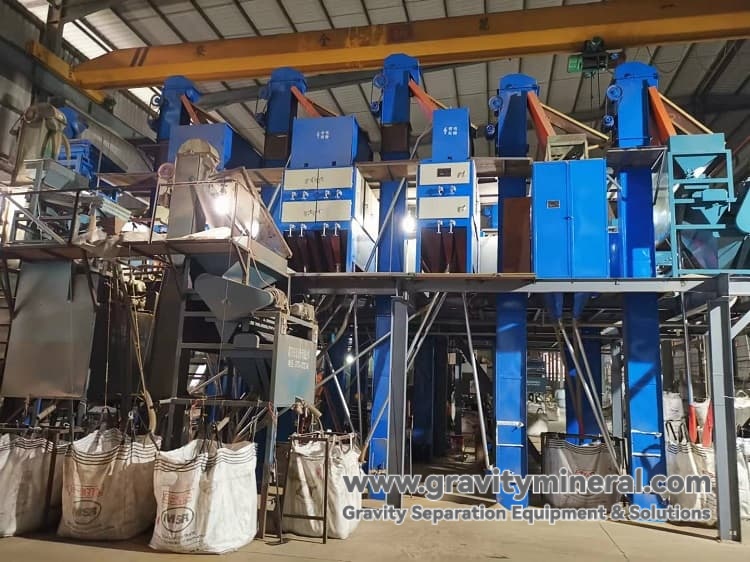
Why Choose GravityMineral to Build Your Beach Sand Processing Plant
Beach sand projects often face pain points such as highly variable mineral composition, difficult zircon–rutile separation, and stringent impurity-removal requirements. The mineral processing industry does not lack equipment—what it lacks is a partner that understands both gravity concentration and magnetic/electrostatic impurity removal, and can make the process line mesh seamlessly.
| Common Pain Point |
GravityMineral’s Solution |
| Low heavy mineral content; huge throughput and high cost |
Large-capacity spiral chute banks for pre-concentration, rejecting over 95% of light silica sand at zero energy cost. |
| Zircon and rutile have the same specific gravity; gravity separation cannot split them |
Dryer and high-tension electrostatic separators after gravity separation exploit conductivity differences for precise splitting. |
| Design institute drawings disconnected from equipment supplier; interfaces mismatch |
Equipment manufacturing, process design, and on-site commissioning closed-loop within one team—interfaces never clash. |
- 20 years focused on gravity separation: We have built spiral chutes and shaking tables for 20 years—historical experience is on call for which equipment suits which ore condition and which process suits which particle size.
- Full gravity/magnetic/electrostatic coverage: GravityMineral not only provides gravity roughing and concentration, but also dry magnetic separators, high-tension electrostatic separators, arc-plate electrostatic separators, and other deep impurity-removal equipment.
- 50+ countries, 500+ global projects: Real sites in Australian heavy mineral sands and Southeast Asian beach sands are the best test of equipment reliability and adaptability.
- Six official certifications: ISO9001, S-certified supplier, National High-Tech Enterprise, Jiangxi Province Specialized & Sophisticated SME, “Contract-Trustworthy AA Enterprise,” and “Major Taxpayer.”
Beach Sand Processing Plant Price & Investment Reference
There is no one-size-fits-all quotation for a beach sand processing plant—for the same throughput, equipment configuration and cost vary greatly with feed grade, mineral assemblage, and site conditions. GravityMineral does not quote “paper prices” detached from ore conditions; instead, we calculate the total account for you based on the following cost structure:
- Equipment investment: Washing/screening section, gravity section (spiral chutes/shaking tables), magnetic section (wet/dry magnetic separators), electrostatic section (high-tension/arc-plate electrostatic separators), dewatering and drying section. Modular design allows phased investment according to budget.
- Free process design: Flowsheet design, equipment selection and configuration, and plant layout drawings are completed by GravityMineral’s in-house design team—no need to hire a separate design institute.
- Civil works and installation labor: Civil construction and general installation workers are organized locally by the customer; GravityMineral engineers provide on-site technical guidance.
- Operating cost (OPEX): Zero reagents and no chemicals in gravity separation, high water recycling rate, low overall operating cost, with a typical payback period of 12–18 months.
- Lead time and cash flow: Core standard equipment manufacturing takes about 40–60 days; a full EPC turnkey project typically takes 7–12 months from contract effectiveness to reaching production targets.
Tell GravityMineral your mineral type, feed grade, target throughput (t/h), feed particle size, and site conditions, and our engineers will draw on a 500+ global project database to issue a transparent equipment selection list and quotation.
From Process Design to Production Target: GravityMineral’s Service Workflow
GravityMineral does not just sell equipment—we provide full-cycle services from mineral analysis and process flowsheet design to equipment manufacturing and on-site installation & commissioning. A beach sand processing plant project can proceed along the following milestones:
- Requirement communication (3–7 days): Provide mineral type, feed grade, target throughput, feed particle size, and site conditions; GravityMineral gives a preliminary solution direction at no charge at this stage.
- Process design & selection quotation (7–15 days): Engineers combine orebody conditions with the 500+ global project database to determine the gravity–magnetic–electrostatic combined process route and issue an equipment selection plan, with selection and quotation issued together.
- Drawing design (7–15 days): Process flowsheet, equipment list, plant layout, and civil engineering condition drawings are completed by our in-house design team—design is never outsourced.
- Equipment manufacturing (40–60 days): Scheduled at our two own manufacturing bases, with full quality control from raw materials to factory trial run.
- Shipping & logistics (30–60 days) + on-site installation & commissioning (60–150 days): Engineers provide on-site guidance for installation, single-machine and interlocked trial runs, and personnel training—delivery is complete only when commissioning meets targets.
A conventional mineral processing EPC turnkey project typically takes 7–12 months from contract effectiveness to reaching production targets. For more details, see full-cycle mineral processing services.
Related Gravity Separation Solutions
Beyond beach sands, GravityMineral’s gravity separation solution library covers mainstream hard-rock and placer ore types, matching you with historical experience from similar scenarios:
Frequently Asked Questions (FAQ) About Beach Sand Processing
Q1: Why does a beach sand plant use so many spiral chutes?
A: Heavy mineral sands (such as zircon and ilmenite) typically account for only 1% to 5% of total beach sand. To be profitable, millions of tons of sand must be processed quickly. Spiral chutes are the only equipment capable of efficiently handling such enormous slurry volumes. Because they consume no power at all (operating solely on gravity and centrifugal water flow), they screen out 95% of worthless silica sand at almost zero operating cost.
Q2: If rutile and zircon have the same specific gravity, how are they separated?
A: This is the most complex stage in coastal sand mining. Because rutile and zircon have nearly identical specific gravity and are both non-magnetic, they cannot be separated by gravity or magnetic separation. GravityMineral’s process first dries the sand and then feeds it into a high-tension electrostatic separator. Since rutile is a conductor and zircon is an insulator, the high-voltage electric field cleanly separates the mixture into two high-value pure concentrates.
Q3: How much does a complete beach sand processing equipment set cost?
A: The specific cost depends on your throughput (t/h), feed grade, and target concentrate requirements. After understanding your ore conditions, GravityMineral will issue a transparent equipment list and quotation covering washing machines, spiral chutes, shaking tables, multi-roll magnetic separators, and high-tension electrostatic separators.
Q4: If the feed has a high clay content, will it affect gravity separation?
A: Yes. High clay content severely interferes with gravity separation performance. GravityMineral configures trommel screens and high-pressure water washing at the front of the process line for washing and desliming first. Only washed slurry can enter the spiral chutes and shaking tables, avoiding loss of heavy minerals coated by fine slimes.
Q5: How are fine slimes in the tailings handled? Will they pollute the environment?
A: No. GravityMineral configures thickeners and filter presses at the end of the process line. After thickening and settling of slime-bearing tailings water, the slurry is filter-pressed into dry cake for stacking, and clear water is returned for recycling. This achieves “zero discharge” while greatly saving water resources.
Q6: Can you supply a single spiral chute? What if we want to expand capacity later?
A: Yes, single-unit supply is available. GravityMineral supports “modular” procurement—you can start with a washing + spiral chute unit and later add shaking tables and magnetic/electrostatic sections when capital allows. Because interfaces are reserved in the upfront design, expansion does not require starting over—simply add equipment proportionally.
Q7: Feed grade fluctuates greatly—can your process adapt?
A: Yes. Our process design accounts for ore fluctuation ranges and operational tolerance. The throughput, stroke, and slope of the gravity section (spiral chutes and shaking tables) can all be adjusted according to feed grade. If fluctuations exceed normal ranges, engineers will set operating parameters for different conditions during on-site commissioning.
Q8: For projects in Africa/Southeast Asia, can you send personnel for on-site installation?
A: Yes. GravityMineral’s products and services have been exported to more than 50 countries worldwide. We dispatch on-site engineers to guide equipment placement, single-machine and interlocked trial runs, recovery rate tuning, and to train your local operating team until the plant runs smoothly and meets targets.
Global Beach Sand Plant Installation Cases
EPC Turnkey: End-to-End Beach Sand Plant Engineering Services
GravityMineral has successfully designed multiple large-scale coastal sand mining plants worldwide, including a 300 t/h facility in Southeast Asia. Because the process is entirely physical (no chemical reagents) and eliminates crushing, capital investment is typically recovered within 12–18 months.
- Solution design: Tailor-made gravity–magnetic–electrostatic combined process flowsheets and equipment configuration based on your specific ore sample characteristics.
- Engineering services: Plant planning and 3D drawing design completed in-house—medium and large projects can save hundreds of thousands of dollars in design fees.
- Equipment manufacturing & supply: Core gravity, magnetic, and electrostatic equipment is produced at GravityMineral’s two own manufacturing bases, with full quality control from raw material procurement to factory trial run.
- Installation & commissioning: On-site engineers dispatched worldwide to guide installation, single-machine and interlocked trial runs, recovery rate tuning, and training of your operators—delivery is complete only when commissioning meets targets.
- After-sales & optimization: Quality responsibility during the warranty period; spare parts supply, technical consultation, and process optimization after warranty, with response within 24 hours.
Welcome to communicate with the GravityMineral engineering team to obtain a customized beach sand processing plant layout plan and equipment quotation.