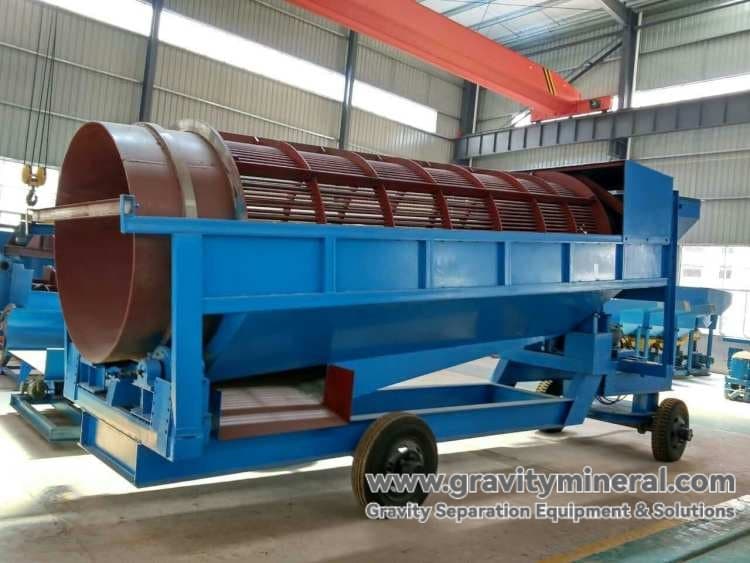
Heavy Duty Trommel Screen | GT Series Placer Mining & Aggregate Screening Equipment
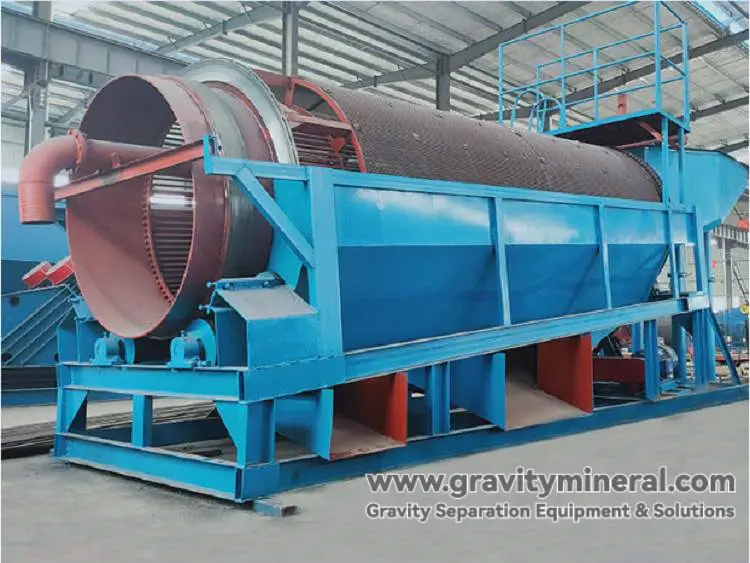
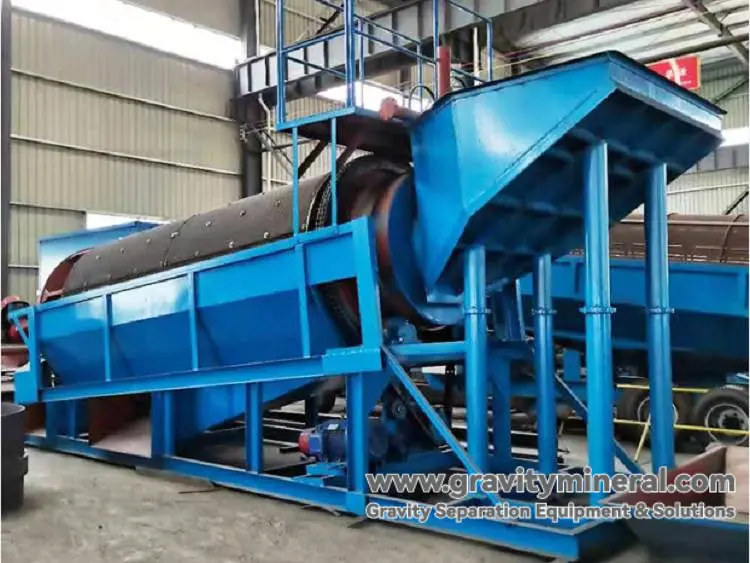
A trommel screen (also called a rotary trommel screen) is a highly efficient, durable mechanical screening machine that separates material by size. Once raw feed enters the rotating cylinder covered with screen mesh, the machine provides a simple, rugged, high-capacity solution for classifying minerals and aggregates.
In the mineral processing industry, the placer screening trommel is the benchmark equipment for the pre-screening stage. As the drum rotates, fine material (valuable fines slurry containing gold or heavy minerals) falls through the screen openings, while oversize barren rock rolls to the end of the drum and is discharged. This design ensures that only precisely sized material is passed to centrifugal concentrators, jig separators, or spiral chutes.
Whether you are processing placer gold, river sand, coal, or construction aggregate, our trommel screen delivers precise classification, very high throughput, and a unique anti-clogging design that keeps your operation running smoothly.
What Is a Trommel Screen? Why Placer Pre-Screening and Aggregate Classification Depend on It
A trommel screen is a mechanical screening machine built on the core principle of a rotating drum combined with size-based screen classification. Raw feed is fed into the rotating cylinder, fine material (fines slurry containing gold or heavy minerals) passes through the screen openings, and oversize waste rock rolls to the end of the drum for discharge, achieving precise separation by particle size. Compared with flat vibrating screens, this rotary screen uses continuous tumbling action, resists impact, and handles large capacity, making it ideal for pre-screening large run-of-mine material.
In placer mining (gold, tin, diamond) and aggregate production, run-of-mine material is often mixed with large volumes of barren river rock and gravel. When you need to reject oversize waste rock early in the process and feed the mineral-bearing fines accurately to gravity separation equipment, the trommel screen becomes the standard screening stage at the very front of the washing flow, thanks to multi-deck simultaneous classification, anti-clogging design, and a heavy-duty impact-resistant structure.
A heavy duty trommel screen can be used for placer gold, river sand, coal, and construction aggregate classification because of its reinforced steel frame, heavy-duty gear and chain drive, and customizable screen mesh. Compared with flat screen machines, it withstands direct impact from wheel-loader dumping, allows multiple concentric classification decks, and is the most widely used rotary trommel screen for placer pre-screening and aggregate classification.
Core Technologies and System Advantages
- Anti-clogging design: Continuous tumbling combined with optional high-pressure internal spray bars or external cleaning brushes keeps the screen mesh free of sticky clay and wedged rocks at all times.
- Heavy-duty structure: A reinforced steel frame, heavy-duty gear/chain drive system, and oversized bearings are designed to absorb the impact of large rocks dumped directly from loaders or excavators.
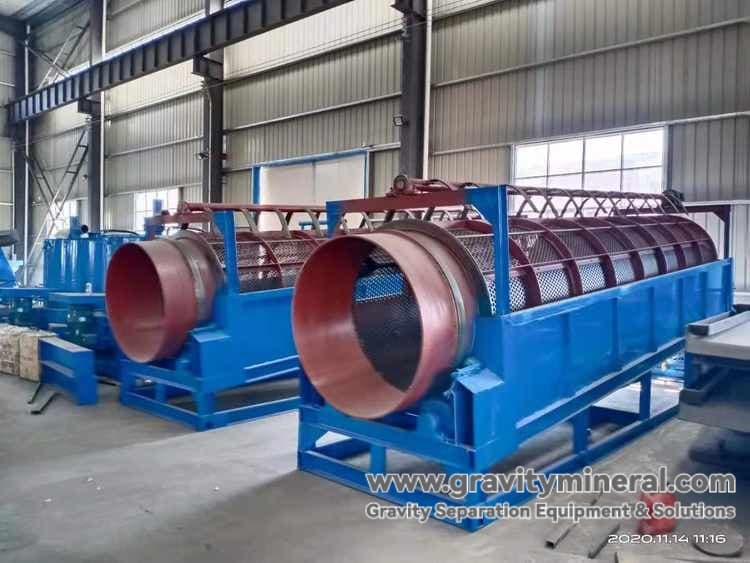
- Multi-deck classification: Custom concentric screen-mesh drums (for example, a coarse inner deck protecting a fine outer deck) or sequential sizing sections with different apertures deliver simultaneous separation of 2 to 4 size fractions.
- Energy efficient: By rejecting large waste rock precisely at an early stage, the volume of material conveyed to downstream processing equipment is greatly reduced, cutting total plant energy consumption by more than 20%.
- Optional screen mesh materials: Polyurethane (PU), high-manganese steel, perforated steel plate, and high-carbon steel wire are available, selected according to abrasiveness and size fraction.
- Wet and dry operation: The machine can run in wet washing mode with high-pressure spray bars, or dry mode for coal, compost, or dry aggregate.
How a Trommel Screen Works: Four Steps to Classify Placer and Aggregate
A trommel screen separates run-of-mine material into different size products through its rotating drum and screen aperture differences:
- Feeding: Raw material is fed through a hopper into the rotating cylinder covered with screen mesh; the heavy-duty drum absorbs the impact of large rocks.
- Rotation and tumbling: The gear/chain drive keeps the cylinder rolling continuously, so material tumbles forward inside the drum and is thoroughly loosened.
- Fines pass through: Fines slurry containing gold or heavy minerals and other fine material falls through the screen openings into the collection hopper below; optional spray bars assist wet screening.
- Oversize discharge: Oversize waste rock and gravel roll to the end of the drum and are discharged, achieving precise classification in both wet and dry operation.
Applications and Full-Line Integration
The trommel screen is highly adaptable and widely used in placer mining, aggregate classification, coal mining, and environmental recycling. It typically serves as the foremost pre-screening unit in a washing — screening — gravity / magnetic-electrostatic separation combined flowsheet. Typical applications are listed below:
| Application |
Typical Material |
Process / Production Line |
| Placer gold / placer mining |
Placer gold, tin sand, diamond-bearing sand and gravel |
Alluvial gold gravity separation line · Rock gold gravity separation line |
| Heavy mineral sand / Ti-Zr placer |
Ilmenite, zircon, monazite heavy mineral sand |
Heavy mineral sand gravity + magnetic + electrostatic solution · Titanium-zirconium placer gravity + magnetic/electrostatic solution |
| Tin / tungsten / primary ore |
Cassiterite, wolframite ore |
Primary tin gravity concentration solution · Wolframite gravity processing solution |
| Aggregate and sand washing / solid waste |
River sand, gravel, construction waste, MSW, compost |
Incinerator bottom ash sorting solution · Aggregate classification, construction waste and compost sorting |
| Mobile placer gold washing plant |
Riverbed placer gold, gold-bearing gravel |
Mobile trommel screen · Continuous screening at remote riverbed gold sites |
If the ore is a complex intergrowth with fine-grained dissemination, our engineers can define the combined flowsheet and equipment interfaces based on sample test data, avoiding capacity mismatches between equipment from different suppliers. A trommel screen is typically paired with gravity equipment such as sawtooth-wave jigs, 6-S shaking tables, fiberglass spiral chutes, and centrifugal concentrators, as well as magnetic-electrostatic equipment such as three-disc dry magnetic separators and high tension electrostatic separators, with throughput calculated as one system to ensure full-line capacity matching.
GT Series Trommel Screen Technical Specifications
The following are standard specifications of the GT series trommel screen. We offer full customization of screen aperture, materials (polyurethane, manganese steel, high-carbon steel wire), and multi-deck configurations.
| Model |
Capacity (t/h) |
Motor Power (kW) |
Drum Diameter (mm) |
Drum Length (mm) |
Screen Aperture (mm) |
Weight (kg) |
| GT1015 |
10 - 15 |
4.0 |
1000 |
1500 |
Custom (e.g., 3-10) |
2200 |
| GT1020 |
15 - 25 |
5.5 |
1000 |
2000 |
Custom |
2800 |
| GT1225 |
25 - 40 |
7.5 |
1200 |
2500 |
Custom |
4200 |
| GT1530 |
60 - 80 |
11 |
1500 |
3000 |
Custom |
5100 |
| GT1545 |
80 - 150 |
15 |
1500 |
4500 |
Custom |
6000 |
| GT1848 |
150 - 200 |
22 |
1800 |
4800 |
Custom |
7500 |
| GT2055 |
200 - 260 |
30 |
2000 |
5500 |
Custom |
8600 |
Key Components and Operating Parameters
| Component / Specification |
Technical Detail |
| Drum structure |
Reinforced steel frame + heavy-duty gear/chain drive, oversized bearings, resistant to large-rock impact |
| Screen mesh |
Polyurethane (PU), high-manganese steel, perforated steel plate, or high-carbon steel wire; aperture customized on request |
| Washing / cleaning system |
Optional high-pressure internal spray bars or external cleaning brushes; anti-clogging, wet and dry operation |
| Multi-deck configuration |
Concentric screen-mesh drum or sequential sizing sections; 2-4 size fractions separated simultaneously |
| Capacity |
10 - 260 t/h (by model) |
| Motor power |
4.0 - 30 kW (by model) |
| Drum size |
Diameter 1000-2000 mm, length 1500-5500 mm |
Maintenance
- Regularly check the lubrication and tension of the gear/chain drive system, and inspect the oil temperature and lubrication of the oversized bearings.
- Inspect the screen mesh for wear and blockage; clean or replace the mesh promptly and keep the spray bar nozzles unobstructed.
- Remove residual material from the drum and collection hopper to prevent buildup from affecting rotation balance and screening efficiency.
From a Single Machine to Full-Line Integration — Responsibility In-House
GravityMineral has focused on gravity separation for 20 years, with an estimated 35% market share and exports to more than 50 countries and regions. The company owns two manufacturing bases and an in-house design team: core equipment is produced in our own facilities and flowsheets are designed in-house, so the responsibility chain has no gaps. A trommel screen is rarely used in isolation — its screening performance depends on upstream feed size, moisture content, and the feed requirements of downstream gravity equipment. Drum diameter, screen aperture, drive, and multi-deck configuration are set from process data and drawn from the same design package as the full line, avoiding the disconnect of equipment that arrives but doesn't fit the flowsheet.
- Own manufacturing bases: Core equipment is produced at GravityMineral's two manufacturing bases, with full quality control from raw material procurement through machining, assembly, and no-load test runs; every machine has strict inspection records before shipment.
- ISO9001 quality system: The company is ISO9001 certified, with S-certified supplier status, national high-tech enterprise status, and other qualifications.
- Full-line interface matching: Trommel screens, jigs, shaking tables, spiral chutes, and magnetic-electrostatic equipment are capacity-calculated as one system, reducing blockages and idle running and avoiding mismatches between suppliers' equipment.
- Global delivery experience: Products have been exported to more than 50 countries, with familiarity in logistics and customs clearance across Africa, Southeast Asia, South America, the Middle East, Central Asia, South Asia, and Australia.
- Delivery and after-sales: ISO9001 quality control throughout, engineers on site for installation and commissioning, a 1-year warranty, and long-term spare parts and process optimization support.
Heavy Duty Trommel Screen FAQ
How many tons per hour can a trommel screen handle? How much does one cost?
GT series trommel screens handle 10-260 t/h, selected by model: from the GT1015 (10-15 t/h) to the GT2055 (200-260 t/h). Price varies widely with capacity, screen mesh material, and multi-deck configuration, and must be quoted based on motor power, drum dimensions, and customization requirements. We recommend providing your target capacity so our engineers can issue a quotation.
What is the difference between a trommel screen and a vibrating screen? Which should you choose?
A trommel screen uses a rotating drum with tumbling screen classification, offering strong resistance to large-rock impact, high capacity, and low clogging, making it suitable for placer pre-screening and wet washing. A vibrating screen relies on high-frequency vibration for stratified screening, with a smaller footprint and higher screening precision, suited to medium and fine dry classification. Choose a trommel screen when the feed is clay-rich, contains many large rocks, or requires washing.
What should you do if the trommel screen mesh clogs? How do you choose an anti-clogging design?
Specifying high-pressure internal spray bars or external cleaning brushes together with continuous tumbling effectively prevents sticky clay and wedged rocks from blocking the screen mesh; anti-clogging performance is especially noticeable with larger apertures, wet washing, and high-clay conditions. We strongly recommend this option for placer gold and clay-bearing sand operations.
How do you choose between a mobile trommel screen and a stationary trommel screen?
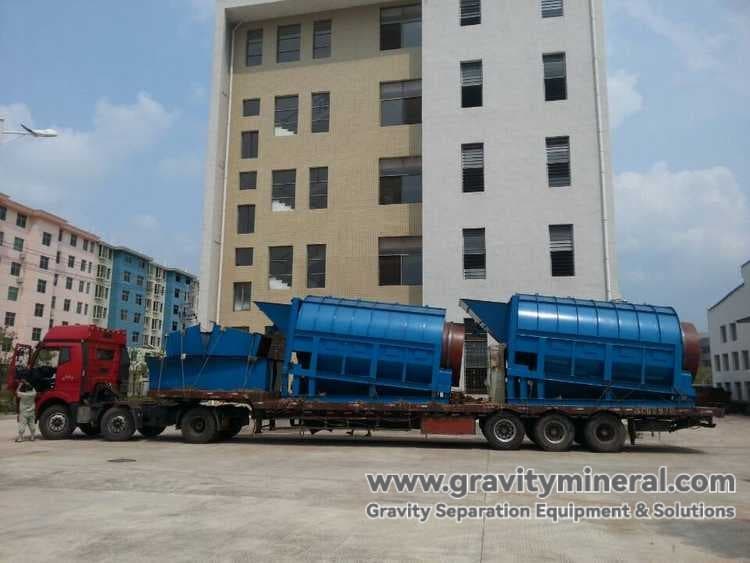
A mobile trommel screen is mounted on tires or a trailer and can move with a mobile trommel screening and washing line, making it suitable for remote riverbed gold sites and multi-site operations. A stationary trommel screen suits long-term fixed plants, with a more stable structure and higher capacity. Choose according to whether the job site needs to be relocated.
Is polyurethane or manganese steel better for trommel screen mesh?
For highly abrasive gravel or large rocks, we recommend high-manganese steel or perforated steel plate; for fine screening, clog-prone materials, or very long service life, choose polyurethane (PU) screen panels — wear-resistant, flexible, and anti-clogging. Mesh can be customized to material abrasiveness and size fraction.
What size of material can a trommel screen handle? Are there feed size requirements?
Trommel screen drum diameter is 1000-2000 mm and withstands direct impact from loader/excavator dumping of large rocks. Screen apertures are customized on request (for example, 3-10 mm and above), enabling 2-4 size fractions to be classified simultaneously. Feed size is governed by drum diameter and feeding intensity; very large rocks should be crushed or pre-screened by a grizzly first.
How do you match a trommel screen with gravity recovery equipment for placer gold processing?
The trommel screen serves as the foremost pre-screening stage in the washing — screening — gravity separation flow. Screened fines are fed as needed to centrifugal concentrators, jig separators, or spiral chutes, with 6-S shaking tables for cleaning. See also our alluvial gold gravity separation line.
Does a faster trommel screen rotation mean better screening?
No. If rotation is too fast, material is thrown against the drum wall, screening through the mesh is insufficient, and wear accelerates; if too slow, feed rate drops and material piles up and blocks the screen. Rotation speed must be selected together with drum diameter, screen aperture, and material characteristics, with the optimal range confirmed by our engineers from process data.
What causes low trommel screen output or no discharge?
Common causes include screen mesh blockage (sticky clay or wedged stones), feed that is too wet or too dense, incorrect rotation speed or drum slope, worn or deformed screen apertures, and drive slippage. Stop the machine first to inspect the mesh and spray system, clear blockages, then adjust speed and slope according to the process requirements.
How are trommel screen shipping, installation, and lead time arranged?
Standard trommel screens have a core manufacturing cycle of 30-60 days, with production scheduled in our own bases; non-standard custom builds take longer. During installation, ensure a level foundation and correct drive alignment, with engineers on site to guide commissioning. A 1-year warranty applies, followed by long-term spare parts and process optimization support; exports to 50+ countries mean we are familiar with logistics and customs clearance in each market.
Get a GT Heavy Duty Trommel Screen Selection Plan and Quotation
Tell us your material type, maximum feed size, target capacity (t/h), required screening fractions, wet or dry operation, and multi-deck configuration needs. GravityMineral engineers will provide an equipment selection plan, process flowsheet, and transparent quotation.
You can reach us through the contact details on our website, or contact the sales engineer for your region directly for selection advice.