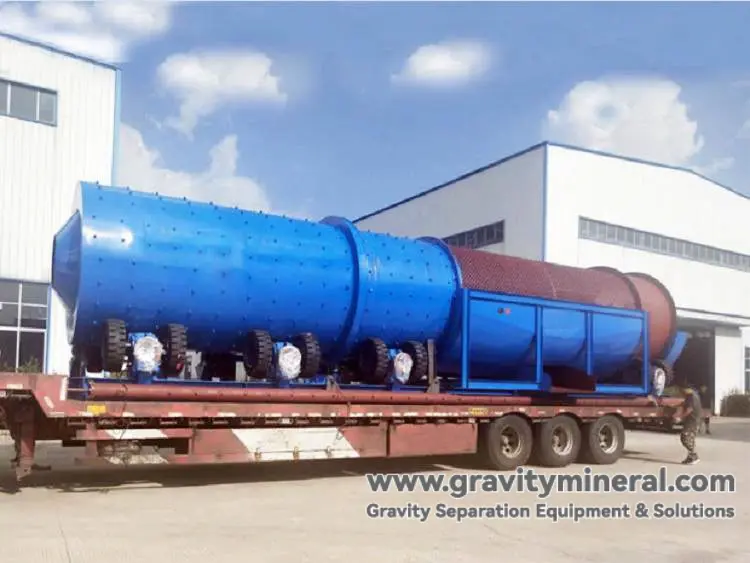
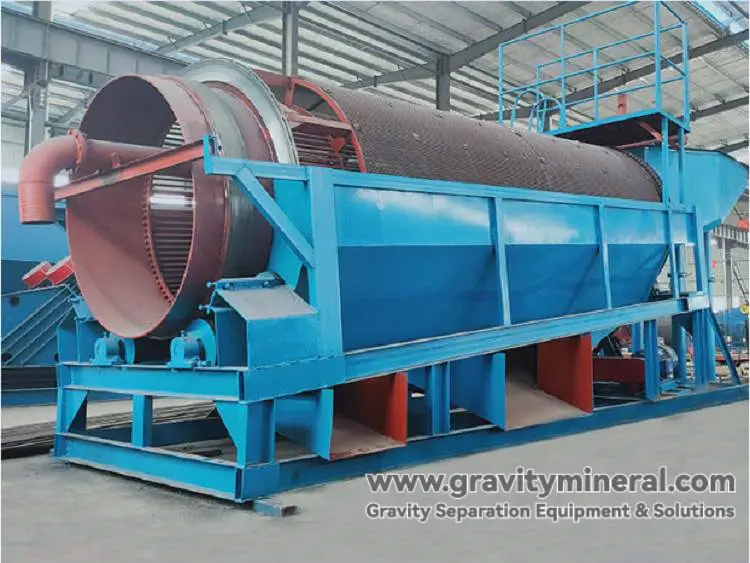
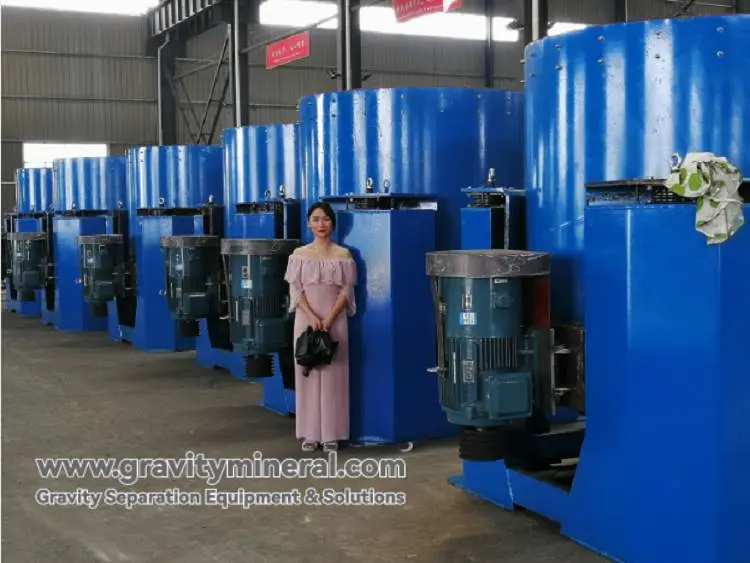
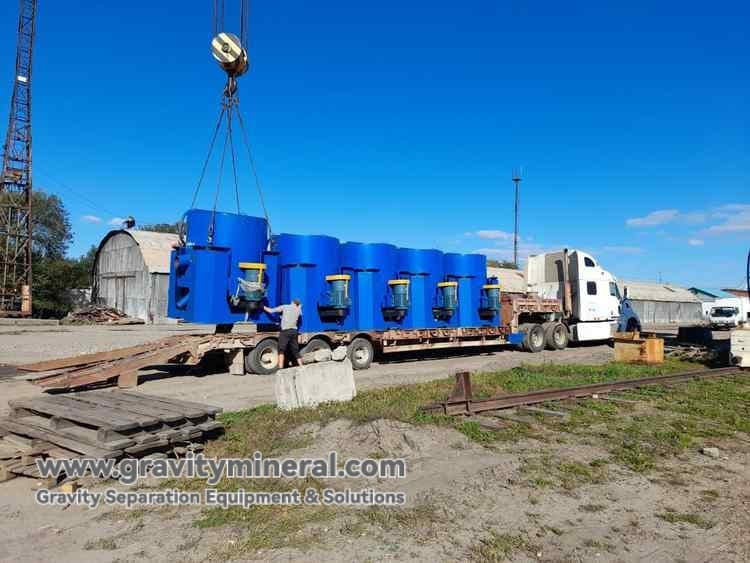
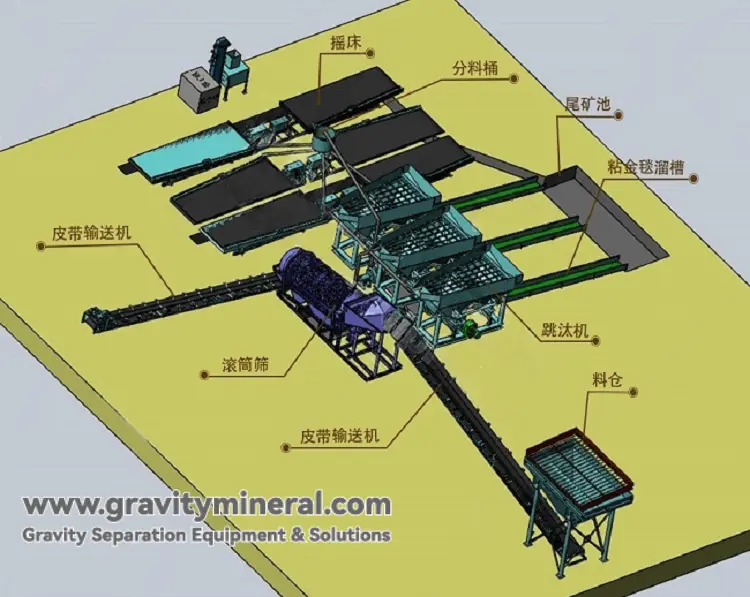
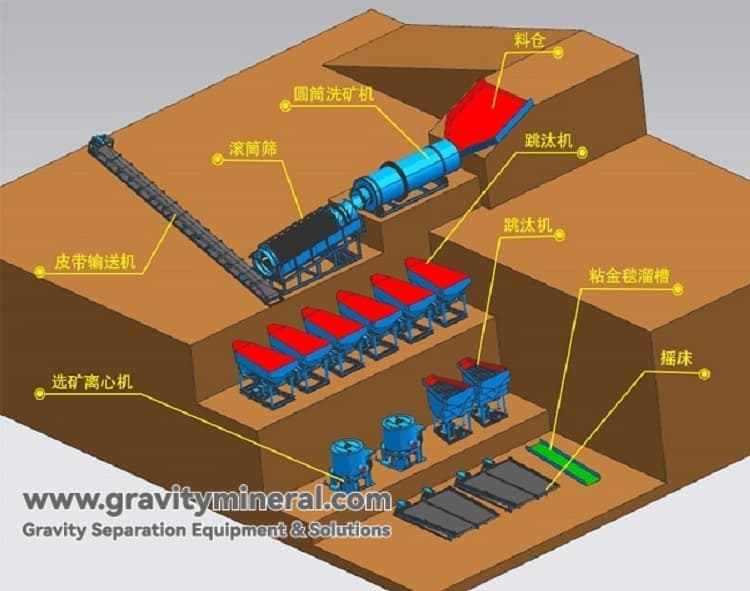
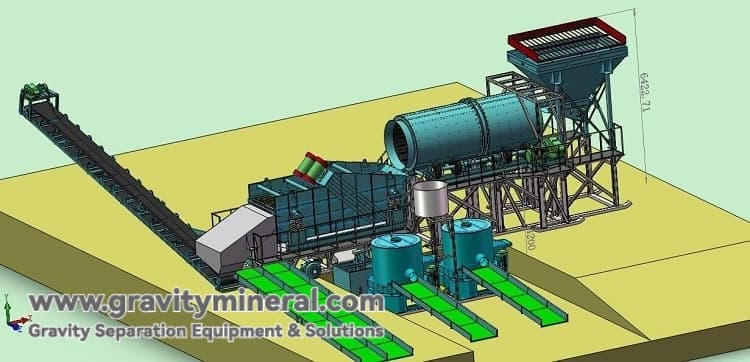
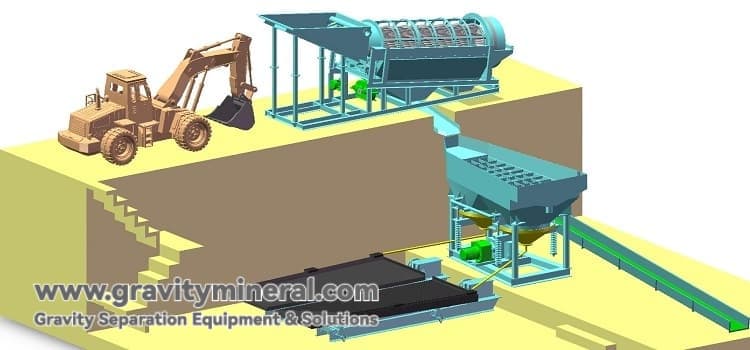
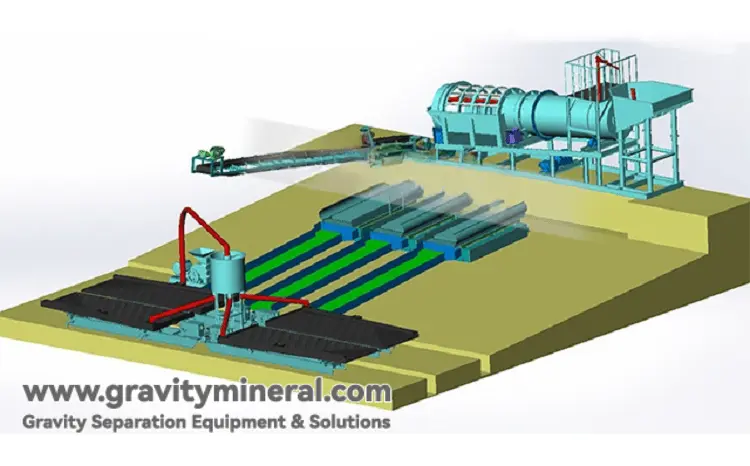
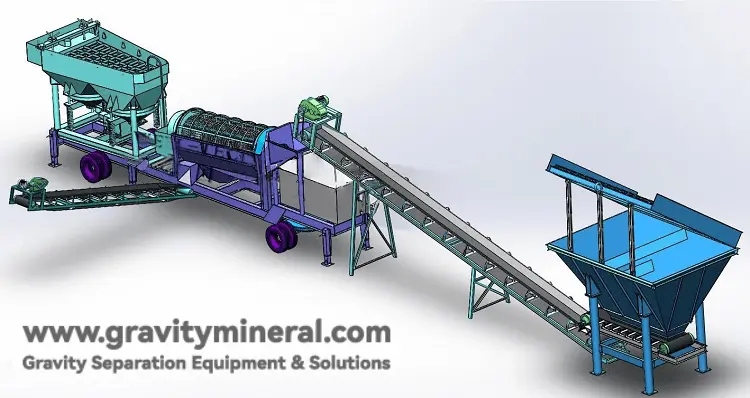
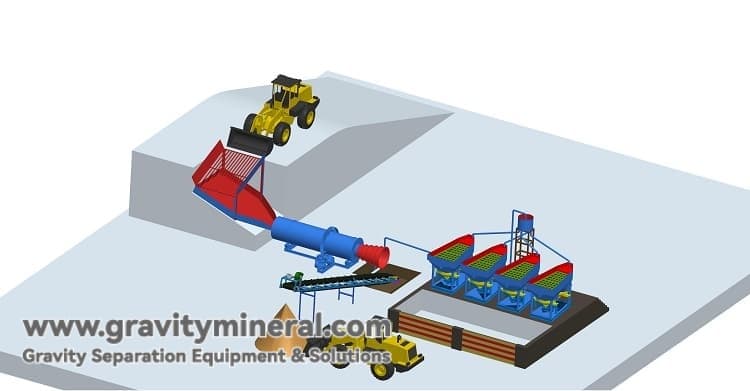
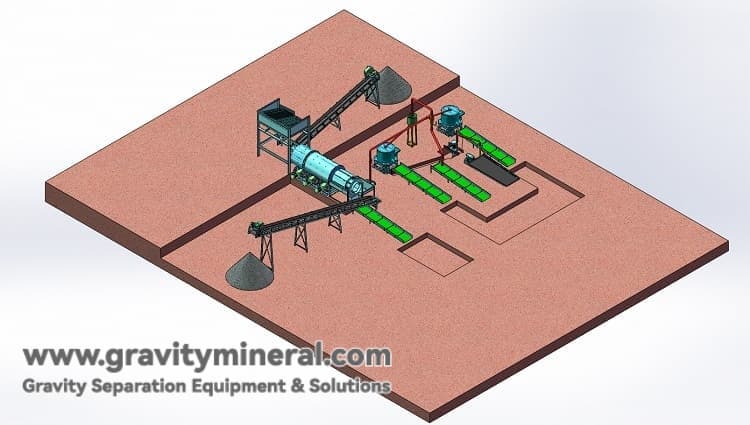
Alluvial gold wash plant and placer gold gravity processing solution: An alluvial gold wash plant (also called a placer gold gravity processing line) is a complete set of beneficiation equipment that uses gravity separation to separate free gold from gravel and clay in river flats, terraces and palaeochannels. The core problem it solves: placer gold needs no crushing or grinding — so how do you recover the gold completely, and discharge compliant tailings, at the lowest possible cost with zero chemicals?
GravityMineral provides complete placer gold gravity process design and equipment manufacturing, from washing and roughing to cleaning, dewatering and water recirculation — 20 years focused on gravity separation, validated on placer gold projects in 50+ countries, with process design, full-line turnkey delivery and custom engineering support.
What Is Alluvial Gold?
Alluvial gold (also called placer gold) is a free gold resource formed by river erosion, transport and deposition. Centuries of river action have naturally liberated the gold particles from the host rock, so no expensive crushing or ball milling is required. The entire recovery process only needs physical gravity separation to wash away sticky clay and handle large volumes of sand.
GravityMineral's alluvial gold wash plant is designed to be efficient, chemical-free and extremely low cost. Using heavy-duty rotary scrubbers, mineral jigs and high-G centrifugal concentrators, GravityMineral delivers turnkey placer gold gravity processing lines that maximise gold recovery while ensuring the fastest return on investment (ROI) at any scale of alluvial operation.
20 yearsFocused on mineral processing equipment manufacturing
50+ countriesPlacer gold wash lines exported and commissioned on site
500+ projectsGlobal mineral processing project experience base
35%China market share in gravity separation equipment
Placer Gold Gravity Processing Flowsheet
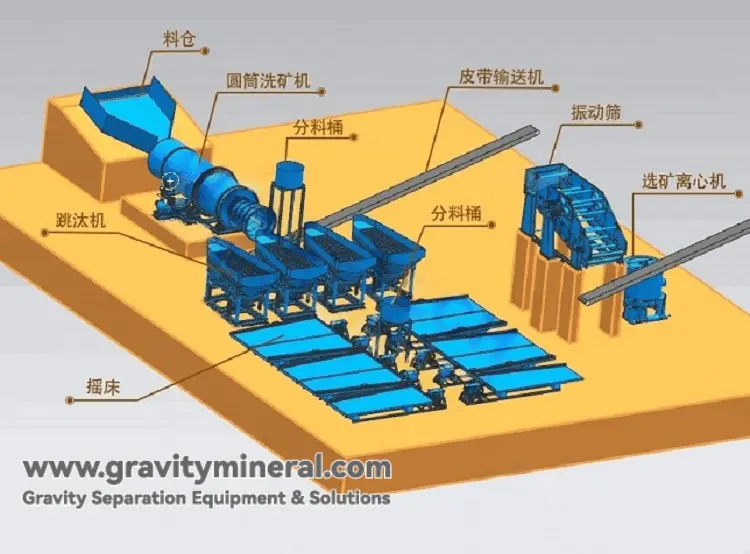
GravityMineral's engineering focuses on breaking down the thick clay lumps that trap gold and on rejecting barren gravel quickly, so that the heavy black sand carrying the gold can be upgraded. The complete placer gold processing equipment set is staged as "washing – roughing – cleaning – dewatering", and stages can be added or removed according to the clay content of the orebody and the gold particle size. That is the core logic of GravityMineral's standard placer gold gravity process: recover early, prevent overgrinding, wash thoroughly.
Stage 1: Pre-treatment (Washing and Desliming)
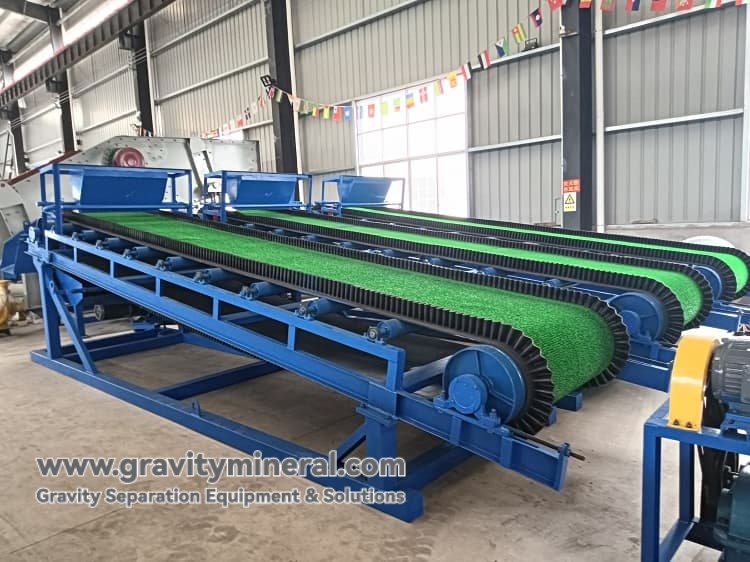
- Feeding: raw river sand and gravel is loaded into the hopper by excavator or loader. A vibrating feeder or belt conveyor delivers the ore evenly to the wash plant. For sticky, high-clay ore a chute feeder is recommended to prevent blocking.
- Washing and screening: material enters a heavy-duty rotary scrubber or trommel screen (capacity 10–300 t/h). High-pressure water jets break up the sticky mud balls and wash the gold-bearing sand into the collection launder, while barren sand, oversize boulders and roots are discharged immediately at the rear. How thoroughly the ore is washed directly determines whether the placer gold gravity circuit succeeds.
Stage 2: Gravity Roughing (the Core Stage)
The washed heavy sand is routed to gravity separators according to gold particle size:
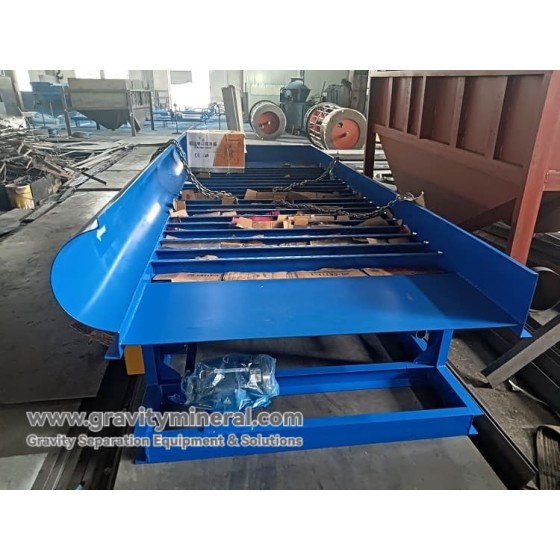
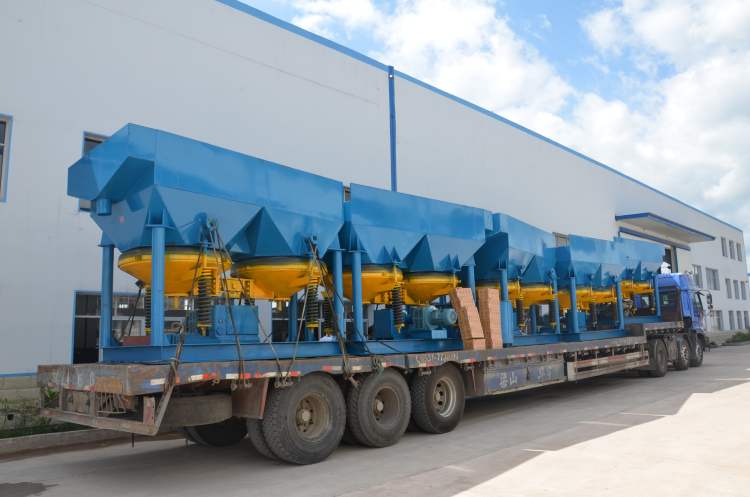
- Mineral jigs: best suited to recovering coarse gold (>0.5 mm). The sawtooth-wave jig has a more rational pulsation curve and handles a wide size range, processing large tonnages continuously — ideal for medium and large alluvial operations.
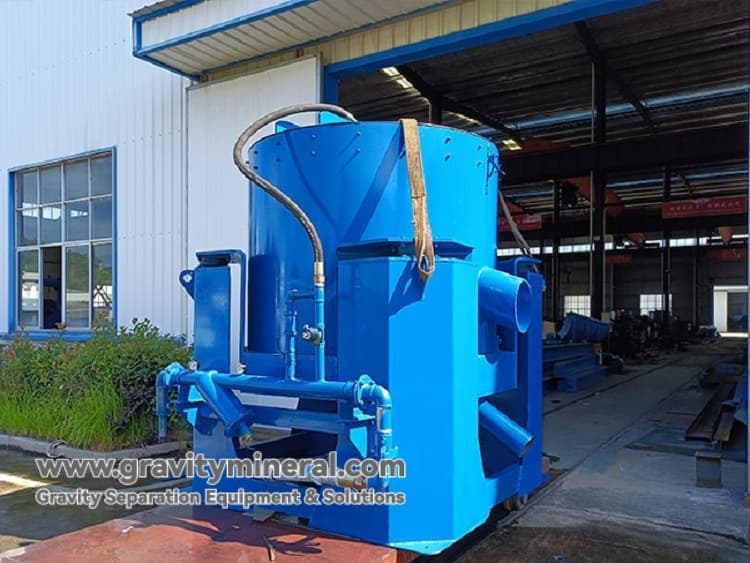
- Centrifugal concentrators: the ultimate device for capturing fine and micron-scale flake gold (0.02–1 mm); the "last link" for fine slimes that conventional gravity equipment struggles to recover.
- Sluices / trommel sluices: a highly economical, low-cost, unpowered option, well suited to small operations or as primary recovery equipment. Pulsating sluices and mat sluices capture fine gold reasonably well.
Stage 3: Separation and Upgrading
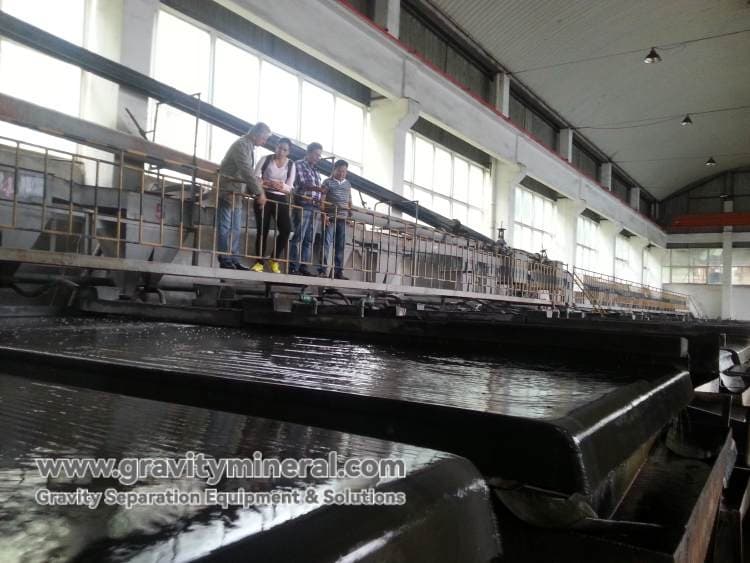
The coarse heavy sand concentrate produced by the jigs or centrifuges is fed to a 6-S shaking table. The table provides unrivalled visible separation precision, completely splitting pure gold powder from the remaining black sand (magnetite / ilmenite). Where the concentrate carries a lot of magnetic iron minerals, a wet magnetic separator can be added for further iron removal and upgrading.
Stage 4: Tailings and Water Management
To keep the operation environmentally sound, slime-bearing tailings water is pumped to a thickener to raise solids concentration (60–70%). The thickened slurry is dewatered in a filter press (moisture <15%), while the clear overflow is recirculated to the rotary scrubber. Dry tailings stacking is a hard requirement for environmental compliance, and it also makes later tailings retreatment for fine gold easier.
Core Equipment and Selection Parameters for a Placer Gold Processing Line
The barrier in gravity separation is not the principle — it is whether the equipment is well built and whether the circuit is configured correctly. The table below lists the core equipment and duty stations used in a placer gold gravity processing line; specific models are confirmed by GravityMineral engineers against the clay content of the orebody, the gold particle size and the target throughput.
| Equipment |
Duty station |
Applicable size / features |
| Rotary scrubber / trommel screen |
Washing and screening |
For high-clay river flat and terrace placers; wash quality directly determines recovery. |
| Sawtooth-wave jig |
Roughing |
Feed <25 mm; high throughput; the workhorse for coarse gold recovery. |
| Spiral concentrator |
Roughing and gangue rejection |
Feed 4–0.04 mm; no power consumption; suited to high-tonnage pre-concentration. |
| Centrifugal concentrator |
Fine slimes recovery |
Recovers −0.074 mm fine gold; the key device for raising fine-particle recovery. |
| 6-S shaking table |
Cleaning |
High separation precision; produces specification gold concentrate in one pass. |
| Thickener / filter press |
Dewatering |
Concentrate dewatering and dry tailings stacking; overflow water recirculated. |
Typical Placer Gold Wash Plant Configurations
Every riverbed is different. GravityMineral tailors the placer gold wash plant layout to your budget and to the physical character of the gold (coarse nuggets versus fine flakes).
| Plant type |
Flowsheet layout |
Key features |
| High recovery |
Trommel screen → jig → shaking table |
Produces a very high-grade concentrate. Especially suited to deposits with coarse gold and nuggets. |
| Large scale |
Rotary scrubber → jig → centrifugal concentrator → shaking table |
Very large capacity (100+ t/h). A perfect balance between high throughput and excellent fine gold recovery. |
| Simple and economical |
Trommel screen → sluice / trommel sluice → shaking table |
Very low initial investment, with no power needed for primary separation. Ideal for small start-ups, with interfaces reserved for staged expansion. |
Why Build Your Placer Gold Line with GravityMineral
The mineral processing industry does not lack equipment or drawings — it lacks a partner that builds equipment, does the design, understands gravity separation and can send engineers on site to get the line running. The biggest risk in a placer gold project is never paying too much for equipment; it is spending the money, building the plant, and finding the numbers do not match.
| Common problem |
GravityMineral's solution |
| Equipment can be bought, but separation results fall short of expectations |
We characterise the ore first, then fix equipment selection — your investment is not the experiment. |
| Individual machines are fine, but they clash once connected |
Washing, screening, gravity separation and dewatering are designed and built by one team — interfaces match and capacities align. |
| Bringing in an external design institute costs hundreds of thousands of dollars |
Process design is completed in-house, so fees do not stack — medium and large projects save hundreds of thousands of dollars in design cost. |
| Equipment arrives, but nobody knows how to tune it |
Gravity separation engineers attend site to supervise installation, lead single-machine and linked-circuit commissioning and train staff — delivery is complete only when commissioning meets the targets. |
| Delivery dates slip and start-up keeps receding |
Scheduled across two in-house manufacturing bases; core equipment takes about 40–60 days, so delivery is barely affected by external supply chains. |
| When something goes wrong, supplier A blames B and B blames the designer |
Equipment, design and site work sit in one closed-loop team — there is no break in responsibility. |
- 20 years focused on gravity separation: two decades of building jigs, shaking tables, spiral concentrators and centrifugal concentrators — which equipment suits which ore condition, which flowsheet suits which size fraction, all backed by retrievable historical experience.
- 50+ countries, 500+ global projects: alluvial gold river flats in Africa, beach placers in Southeast Asia and hard rock gold plants in South America are the best test of equipment reliability and adaptability.
- 35% share of the Chinese market: one in every three Chinese-made gravity separation machines comes from the GravityMineral group.
- Industry-academia research base: a joint R&D centre with Jiangxi University of Science and Technology gives equipment development real technical input rather than guesswork.
- Six official credentials: ISO9001, S-certified supplier, National High-Tech Enterprise, Jiangxi Provincial SRDI (specialised, refined, distinctive and innovative) SME, "Contract-Honoring and Credit-Worthy AA Enterprise", and "Major Taxpayer".
Placer Gold Wash Plant Price and Investment Reference
There is no standard price for a placer gold gravity line — for the same 100 t/h placer gold wash plant, differences in clay content, gold particle size, gravel ratio and site power/water conditions can change the equipment configuration and cost considerably. GravityMineral does not quote "paper prices" detached from the ore; instead we cost the full picture against the following structure:
- Equipment investment: washing and screening stage (rotary scrubber / trommel screen), roughing stage (jigs / spiral concentrators), cleaning stage (shaking tables / centrifugal concentrators) and dewatering stage (thickener / filter press). Smaller operations can start with a single jig plus shaking table, with interfaces reserved for staged expansion — you do not have to invest the full amount up front.
- Free process design: flowsheet design, equipment selection, plant layout and civil works condition drawings are completed by GravityMineral's in-house design team — no external design institute, saving hundreds of thousands of dollars on medium and large projects.
- Civil works and installation labour: civil construction and general installation labour are organised locally by the client, with GravityMineral engineers providing on-site technical supervision — saving the airfares, visas, accommodation and high day rates of sending a domestic crew overseas.
- Operating cost: zero reagents and no chemicals in the gravity stage; the main costs are power, water and wear parts. A flowsheet that washes thoroughly and recovers early markedly lowers cost per tonne treated.
- Lead time and funding rhythm: for standard equipment only (no custom engineering, client-installed), about 40–60 days from contract to shipment; a full turnkey project typically takes 7–12 months from contract effective date to reaching production targets, making cash-flow planning easier.
Tell GravityMineral your ore type, feed grade, target throughput (tonnes per hour), feed size and site conditions, and our engineers will draw on a 500+ global project database to issue a transparent equipment selection list and quotation — one document showing what circuit, which equipment and what cost.
From Process Design to Production Targets: GravityMineral's Service Workflow
GravityMineral does more than sell equipment: we provide a full-cycle service covering mineral analysis, flowsheet design, equipment manufacturing and on-site installation and commissioning. A placer gold project typically advances through the following milestones:
- Requirement review (3–7 days): provide ore type, feed grade, target throughput, feed size and site conditions; GravityMineral proposes a preliminary direction at no charge.
- Process design and selection quotation (7–15 days): engineers combine orebody conditions with the 500+ global project database to fix the placer gold gravity route and issue the equipment selection scheme, with selection and quotation delivered together.
- Drawing design (7–15 days): flowsheet diagram, equipment list, plant layout drawing and civil works condition drawings, completed by the in-house design team — design is never outsourced and fees never stack.
- Equipment manufacturing (40–60 days): scheduled across two in-house manufacturing bases, with quality control from raw material to factory test run.
- Shipping and logistics (30–60 days) + on-site installation and commissioning (60–150 days): engineers supervise installation on site, carry out single-machine and linked-circuit test runs and operator training — delivery is complete only when commissioning meets the targets.
A conventional mineral processing turnkey project typically takes 7–12 months from contract effective date to reaching production targets. For more detail, see full-cycle mineral processing services.
Related Gravity Separation Solutions
Beyond alluvial gold, GravityMineral's gravity separation solution library covers the main hard-rock and placer ore types, so we can match historical experience from similar scenarios:
Alluvial Gold Mining: Frequently Asked Questions (FAQ)
Q1: Why is washing (scrubbing) the most critical step in an alluvial plant?
A: In river sediments gold particles are often trapped inside dense, sticky mud balls. If that mud is simply run over a sluice or jig, the balls roll straight to the tailings area and carry the gold with them. A heavy-duty rotary scrubber works like an enormous washing machine, violently tumbling rock and mud with high-pressure water so the clay breaks down and the free gold is released into the processing circuit.
Q2: Does placer gold washing need chemicals such as cyanide?
A: Absolutely not. Placer gold is already "free" metal mixed into the sand. Water and gravity (jigs, centrifuges, shaking tables) are all you need to separate the heavier gold from the lighter sand. That keeps operating cost extremely low and makes alluvial gold mining 100% environmentally safe.
Q3: My ore has high clay content and fine gold — can jigs still be used?
A: Yes, but the stage configuration must be adjusted. High clay requires a strengthened washing stage (rotary scrubber + high-pressure water), and fine gold requires spiral scavenging and centrifugal concentrators after the jigs to recover the slimes. Gravity separation is extremely sensitive to size matching — treating coarse and fine together performs poorly, so correct classification before separation is essential.
Q4: How is the throughput decided, and can we start small?
A: Yes. Solutions range from pilot lines to large industrial plants. A small operation can start with a single jig plus shaking table, with expansion interfaces reserved in the original design so the washing and cleaning stages can be added later. Scale affects equipment configuration and budget — not the design or process standard.
Q5: What is the delivery lead time, and can equipment be customised?
A: Core manufacturing of standard gravity equipment (jigs, shaking tables, spiral concentrators) is typically 40–60 days, scheduled at GravityMineral's two in-house manufacturing bases, so lead time is barely affected by external supply chains. For extreme cold, high altitude or highly corrosive conditions, materials, motor ratings and structures can be custom-engineered.
Q6: Roughly how much does a placer gold gravity line cost?
A: Cost depends on throughput, clay content, gold particle size and equipment configuration — there is no flat price. GravityMineral issues a transparent equipment list and quotation once the ore conditions are known, with selection and pricing given together; process design is done in-house so no design institute fee is added; civil works and general installation are organised locally by the client, saving international labour cost. Give us the ore conditions and you get a proposal you can actually cost.
Q7: What recovery rate can you guarantee?
A: Recovery is determined by the ore's intrinsic characteristics (density contrast, liberation size, mineral associations). GravityMineral does not promise absolute figures detached from reality. What we do commit to: rigorous process design and circuit calculations that deliver the highest recovery attainable for that ore, with precise equipment selection and circuit control.
Global Alluvial Gold Plant Installations
EPC Turnkey: End-to-End Alluvial Gold Engineering
GravityMineral has successfully delivered hundreds of alluvial gold projects worldwide and can provide full-cycle technical support for your placer gold gravity processing line:
- Solution design: placer gold gravity process, flowsheet and equipment selection tailored to the specific characteristics of your deposit.
- Engineering services: production line planning and 3D drawing design completed in-house — medium and large projects can save hundreds of thousands of dollars in design fees.
- Equipment manufacturing and supply: core gravity equipment is produced at GravityMineral's two in-house manufacturing bases, with quality control from raw material procurement to factory test run and delivery of qualified equipment on schedule.
- Installation and commissioning: on-site installation supervision, single-machine and linked-circuit test runs and operator training — delivery is complete only when commissioning meets the targets.
- After-sales and optimisation: quality responsibility during the warranty period; after warranty, spare parts supply, technical consultation and process optimisation, with response within 24 hours.
Talk to the GravityMineral engineering team for a tailored alluvial gold wash plant layout proposal and equipment quotation.