







High-Efficiency, Energy-Saving Gravity Separation Equipment and Process Solutions for Gold Mine Gravity Concentration Plants | Professional Construction and Renovation of Mineral Processing Plants
Key Conclusions
- The success or failure of a gold gravity separation plant often depends not on the sorting efficiency of individual pieces of equipment, but on whether the crushing, washing, screening, feeding, and gravity separation stages are seamlessly integrated.
- The value of high-efficiency, energy-saving gravity separation equipment lies in “recovering as early as possible”; the earlier coarse-grain gold is recovered in the grinding circuit, the smaller the losses due to over-grinding and sludging.
- There is no one-size-fits-all template for process designs; the process frameworks for rock gold and placer gold deposits differ significantly, and equipment selection must be based on data from ore sample tests.
- The construction and retrofitting of specialized mineral processing plants involve multiple stages, including manufacturing, logistics, installation, and commissioning; allowing for a buffer is a prerequisite for on-time commissioning.
Processing low-grade gold ore—which is costly and yields low recovery rates—is an unavoidable challenge for many mining companies. However, the specific nature of this challenge often does not stem from the ore being inherently unprocessable, but rather from operational inefficiencies in the gravity separation section after the processing plant is built.The causes vary: over-grinding leads to gold loss in fine slurry; incomplete washing causes slurry to coat gold particles; and a mismatch between the processing capacities of the jig and shaking table results in material blockages or idle operation in intermediate stages.
The principles of gravity separation are not complex; the key challenges lie in the quality of equipment manufacturing, the rationality of process configuration, and whether on-site commissioning is carried out properly. The following analysis focuses on the construction logic of gold gravity separation plants, covering the selection of high-efficiency, energy-saving gravity separation equipment, process configuration, and project delivery.
I. Rock Gold Ore and Alluvial Gold: Two Main Approaches to Process Design
There is no universal template for process designs in gold gravity separation plants. In rock gold ore, the grain size distribution of gold is uneven; coarse-grained free gold is suitable for early recovery, while fine-grained or entrapped gold requires a combined process for final recovery. In placer gold ore, gold particles are well-dissociated, but the clay content fluctuates significantly, making ore washing a critical preliminary step.
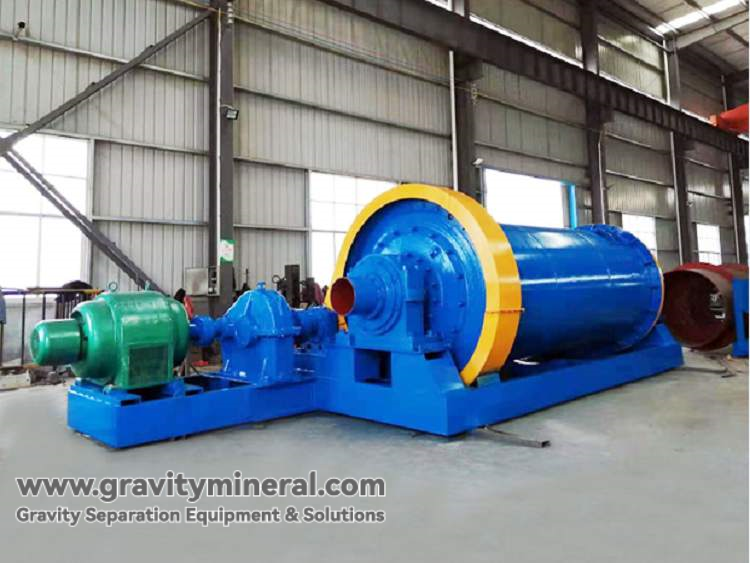
The core logic of gravity separation for rock gold ore is “recover as early as possible.” A jig is incorporated into the grinding circuit to recover already liberated coarse-grained gold early on, reducing the chance of it being repeatedly circulated through the mill, where it would be ground into finer particles and become muddied.The grinding discharge enters a spiral classifier; the underflow is returned to the grinding circuit, while the overflow proceeds to subsequent gravity separation or flotation. The rough concentrate from the jig is sent to a 6-S shaking table for fine selection, and the gravity separation tailings are directed to flotation or leaching based on their properties.
The core principle of gravity separation for placer gold deposits is that “ore washing determines success or failure.” The raw ore first passes through a trommel washer or cylindrical screen to separate out large gravel and wash away mud; mud slurry coating gold particles can significantly reduce the efficiency of gravity separation, and the anti-clogging function of a trough feeder is indispensable in scenarios involving sticky, wet ore.The undersize slurry is fed into a sawtooth-wave jig or spiral chute for rough selection and tailings rejection. The rough concentrate is then sent to a 6-S shaking table for fine selection, followed by a centrifugal separator to recover fine-grained gold.
Gravity separation is extremely sensitive to particle size distribution; mixing coarse and fine particles results in poor separation. If the stroke and frequency of the jig are not set according to ore sample data, or if the shaking table slope is adjusted based solely on experience, the resulting data lacks reference value. This is the most critical pitfall to avoid when designing a gold ore gravity separation process.
II. Process Flow: The Configuration of Stages Is Key
The process flow of a gold gravity separation plant cannot be simply summarized as “crushing—gravity separation—dewatering.” The feed section must ensure uniform feeding and prevent blockages; for placer gold ores with high clay content, trough feeders are preferred. The crushing section should follow the principle of “more crushing, less grinding”; for rock gold ores, a two-stage closed-circuit circuit is commonly used.the washing and screening section must produce feed that meets the requirements for gravity separation; if sand gold ore is not thoroughly washed, the effectiveness of subsequent gravity separation will be significantly reduced; the grinding and classification section controls liberation and over-grinding; for rock gold ore, rod mills can prevent over-grinding of brittle minerals, and incorporating a jig into the grinding circuit enables early recovery;The roughing stage of gravity separation aims to discard tailings at high throughput, using jigs for coarse particles and spiral chutes for fine particles; the concentrating stage combines 6-S shaking tables with centrifugal separators, with the maximum feed size for shaking tables being approximately 2 mm; the dewatering stage ensures that concentrate is transportable and tailings can be discharged in a dry state;Depending on their properties, tailings may undergo further processing via flotation or leaching.
Among these, the number of stages between the “gravity roughing section” and the “gravity concentrating section” is most commonly underestimated.There is an order-of-magnitude difference in processing capacity between jigs and shaking tables; the actual configuration must be precisely calculated based on concentrate and concentrate-in-process output as well as feed particle size. If the number of stages is not clearly defined, material blockages or idle operation will inevitably occur on-site—a typical problem that repeatedly arises in the construction and retrofitting of professional mineral processing plants.
III. Key Considerations for Selecting High-Efficiency, Energy-Saving Gravity Separation Equipment
The key to selecting high-efficiency, energy-saving gravity separation equipment lies not in the unit price of the equipment, but in how well it matches the properties of the ore.
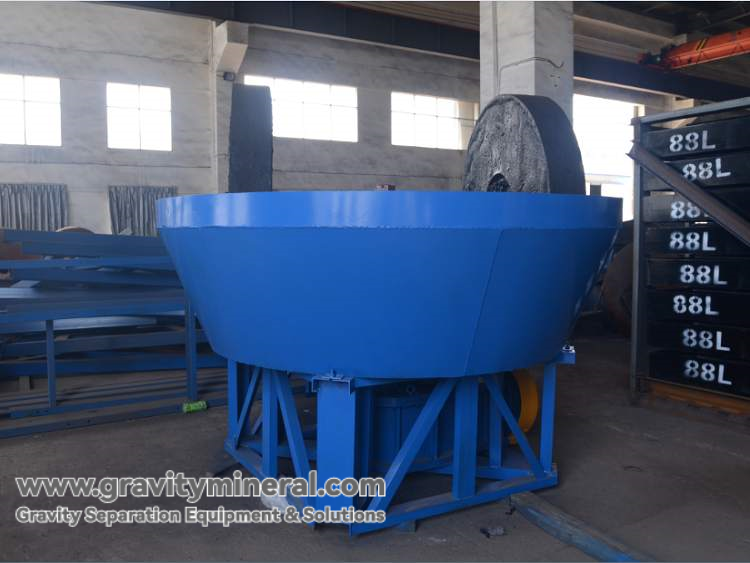
Sawtooth-wave jigs are the mainstay of the roughing stage, generally suitable for particle sizes less than 25 mm. They are applicable for early recovery of coarse gold in rock gold ore grinding circuits as well as for roughing and tailings disposal in placer gold mines; stroke length and frequency must be set based on ore sample testing. Hydraulic jigs are designed for high-capacity roughing and are suitable for high-throughput applications in placer gold mines;The 6-S shaking table is the core of the fine-selection stage; the applicable particle sizes for coarse sand, fine sand, and slime beds decrease in sequence, and the slope is adjusted according to the feed particle size; multi-deck shaking tables can save plant floor space;Spiral chutes are used for rough selection and tailings disposal, with a suitable particle size range of approximately 4 to 0.04 mm; they consume no power and offer significant energy-saving advantages; centrifugal separators are responsible for recovering ultrafine particles, processing fine slime that conventional gravity separation equipment struggles to recover; agitated chutes serve as a supplement for the rough selection of placer gold, featuring a simple structure and suitability for remote mining areas.
The focus of equipment configuration differs between rock gold deposits and placer gold deposits. For rock gold deposits, the primary process flow is “early recovery in the grinding circuit + fine selection by shaking tables + bottom-feed recovery by centrifuges”; for placer gold deposits, the primary process flow is “ore washing + high-throughput roughing + fine selection by shaking tables.”Gravity separation equipment is sensitive to the upper limit of feed particle size. For a 6-S shaking table, the maximum feed particle size for the coarse sand bed is approximately 2 mm; oversized material will directly compromise separation efficiency. Therefore, screen mesh sizes must be aligned with the feed particle size of the gravity separation equipment.
IV. Technical Considerations and Understanding of Recovery Rates
While equipment parameter tables are available for reference, the key consideration during equipment selection is the compatibility between these parameters. The processing capacity of a jig varies with feed particle size and ore density; the number of shaking tables must be configured based on the volume of rough and concentrate and the feed particle size distribution; and spiral chutes and centrifugal separators each have their own applicable particle size ranges.If the feed particle size is mismatched, separation efficiency will drop significantly.
Recovery rate indicators must be viewed rationally. The recovery rate of gold ore in gravity separation is determined by the ore\'s inherent properties, including density differences, grain size distribution, and association patterns.Ores with a high proportion of coarse-grained free gold achieve relatively ideal recovery rates in the gravity separation stage; however, for ores with a high proportion of fine-grained embedded or encapsulated gold, there is an objective upper limit to recovery in the gravity separation stage, necessitating flotation or leaching to make up the shortfall. During the design phase of a gold ore gravity separation process, this upper limit should be determined through mineral processing tests rather than specified as a fixed figure in the contract.
V. Economic Viability and Delivery Timeline
The return on investment for a gold gravity concentration plant is not determined solely by the purchase price of equipment. Design fees, delivery delays, and extended ramp-up periods resulting from substandard commissioning all constitute hidden costs.
Under the traditional decentralized model—where design is outsourced to a separate design institute and equipment is pieced together from multiple manufacturers—there is a high risk of misalignment between drawings and equipment. The time cost of shifting blame when problems arise is even more expensive.Under the integrated design, manufacturing, and commissioning model, mineral processing tests, process flow design, equipment selection and configuration, plant layout, civil engineering drawings, and technical briefings are all completed by a single team. This ensures a complete chain of responsibility, which is particularly critical for the construction and retrofitting of specialized mineral processing plants.
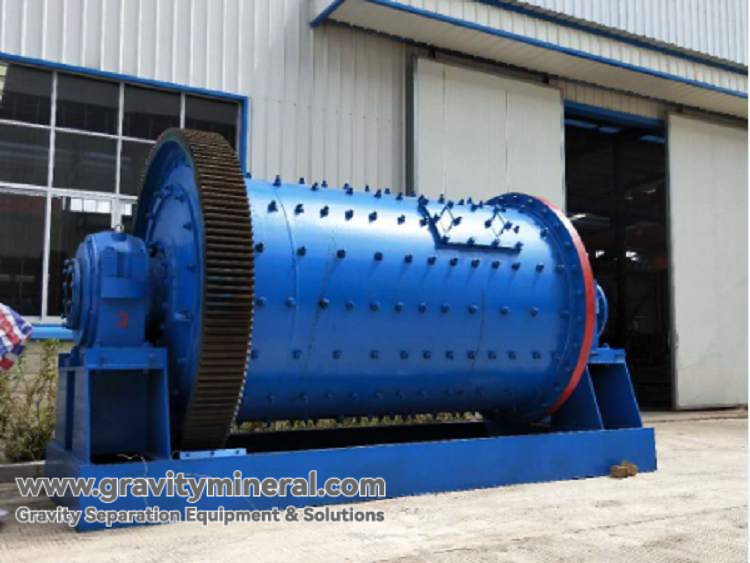
Regarding delivery schedules, standard gravity separation equipment features a relatively simple structure and a high degree of standardization; the manufacturing cycle for core equipment is shorter than that for flotation and leaching equipment. The project timeline for conventional turnkey projects is calculated in phases—manufacturing, ocean freight, installation and commissioning, and a buffer period—and advance planning with sufficient allowances is essential to ensure on-time commissioning.
VI. Case Studies and Common Technical Issues
At a placer gold mine in Yunnan, the raw ore had a high clay content and fine gold particles; in the early stages, the use of a single chute for roughing resulted in significant loss of fine gold in the tailings.The adjustment plan involved installing a drum ore washer upstream for enhanced ore washing, using a trough feeder to resolve blockages caused by sticky, wet ore, feeding the undersize slurry into a sawtooth jig for roughing, feeding the rough concentrate into a 6-S shaking table for fine selection, and feeding the shaking table tailings back into a centrifugal concentrator to recover ultrafine gold.Following the retrofit, the fine-grain gold recovery stage was fully optimized, and the overall recovery rate of the gravity separation section improved significantly. The key to this case lies not in the extent of equipment upgrades, but in the fact that the ore washing and fine-grain recovery stages were optimized in the correct locations.
Frequently Asked Technical Questions
Q: The properties of the ore fluctuate significantly. Can the gravity separation process adapt to this?
During design, the range of fluctuations and operational tolerance are taken into account, with room for adjustment built in: the stroke and frequency of the jig are adjustable, the slope of the shaking table is adjustable, and spiral chutes with different pitch specifications can be swapped out. If fluctuations exceed a certain range, operational parameters or specific process steps may need to be adjusted; the specific adaptation limits should be evaluated during the testing phase through comparative testing of different ore samples.
Q: Compared to flotation, which method should be chosen for gold ore?
Neither method is inherently superior to the other. Gravity separation is low-cost, environmentally friendly, and free of chemical contamination, making it suitable for ores with distinct density differences and coarser grain sizes; flotation offers high separation precision and is suitable for fine-grained and complex mixed ores.In actual gold mining projects, the two methods are often used in combination: gravity separation is used for roughing and tailings rejection, while flotation or leaching is used for fine selection and recovery of residuals. The overall cost should be calculated based on test data.