







High-Efficiency Solutions for Extracting Residual Placer Gold: Professional Equipment and Processes to Boost Recovery Rates
High-Efficiency Solutions for Extracting Alluvial Gold: Professional Equipment and Processes to Boost Recovery Rates
Residual placer gold deposits represent a unique and important category of placer gold resources.Unlike alluvial placer gold found in riverbeds, residual placer gold is found in the weathered residual layers of primary gold deposits. The gold particles have not been transported over long distances; they are angular, have an uneven grain size distribution, and are often mixed with clay and weathered rock fragments.This type of ore has a high clay content, a large proportion of gravel, and gold particles with varying degrees of liberation. If conventional riverbed gold processing methods are applied, problems such as incomplete ore washing, gold loss with the clay, and low recovery rates often arise.Based on the ore characteristics of residual placer gold deposits and drawing on GravityMineral\'s 20 years of experience in equipment manufacturing and process design for gravity separation, this article systematically outlines an efficient extraction scheme for residual placer gold deposits, intended as a reference for mining investors and processing plant technicians.
I. Ore Characteristics of Residual Gold Deposits: Why Riverbed Gold Processing Methods Cannot Be Directly Applied
Alluvial placer gold deposits are formed through the in-situ weathering and disintegration of primary gold-bearing quartz veins or gold-bearing altered rocks. Gold particles essentially retain their original state within the primary ore, having merely been crushed along with the gangue into loose material. This genesis accounts for three distinct characteristics:
First, the ore has a high clay content and is highly viscous. Weathered feldspar, mica, and clay minerals form a paste when exposed to water. If the ore is not pre-washed to remove clay, the slurry will form “inclusions” in the jig and shaking table, trapping fine-grained gold within clumps of mud that are then flushed directly into the tailings.This is the primary reason for the low recovery rate of alluvial placer gold.
Second, the particle size distribution is extremely broad. Gold-bearing quartz gravel chunks measuring tens of millimeters coexist with fine gold particles as small as several hundred mesh. Coarse gold particles must be recovered early to prevent overgrinding or loss, while fine gold particles require equipment that enhances the gravitational field—such as centrifugal separators—to capture them; it is difficult for a single piece of equipment to cover the entire particle size range.
Third, gold particles are not sufficiently liberated. Some gold remains embedded in quartz gravel and enters the gravity separation process without being crushed or liberated, naturally reducing the recovery rate. Therefore, in alluvial sand gold processing, the balance between crushing and washing is even more critical than in riverbed sand gold processing.
GravityMineral\'s fundamental assessment when processing this type of ore is that the core of process design for alluvial sand gold lies not in “concentration,” but in “washing” and “crushing”—only when the ore is thoroughly washed and crushed appropriately does gravity separation become meaningful.
II. Overall Process Flow for a High-Efficiency Extraction Solution for Residual Placer Gold
Given the characteristics of alluvial gold ore, GravityMineral recommends a four-stage process route consisting of “ore washing and screening—crushing and liberation—multi-stage gravity separation—fine-grain recovery,” as detailed below:
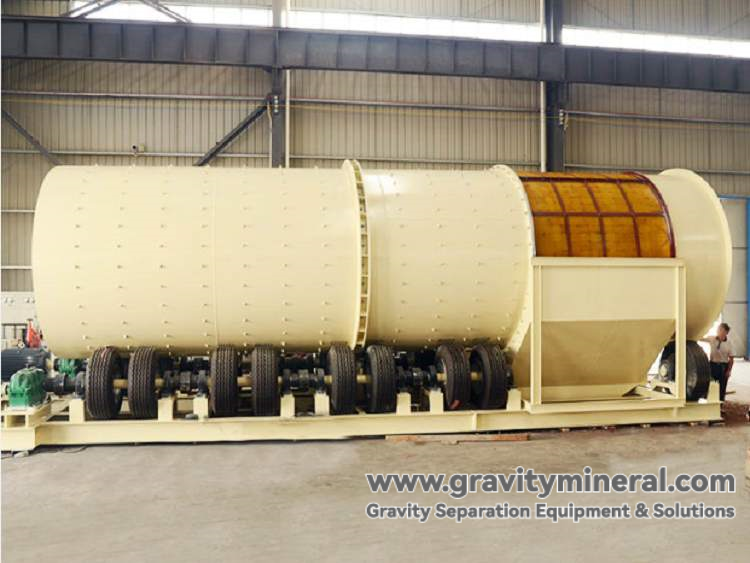
Stage 1: Ore Washing and Screening. The raw ore is uniformly fed into a cylindrical ore washer via a vibrating feeder. Through the rotation of the cylinder and high-pressure water flushing, clay agglomerates are broken up, and clay is separated from gravel.The washed material enters a trommel screen, where large gravel (typically 20 mm or larger) is separated and either discarded directly or returned for crushing, while the undersize slurry proceeds to the next stage. For deposits with exceptionally high clay content, a two-stage washing process using a “cylindrical washing machine + spiral washing machine” can be employed to ensure thorough dispersion of the clay.
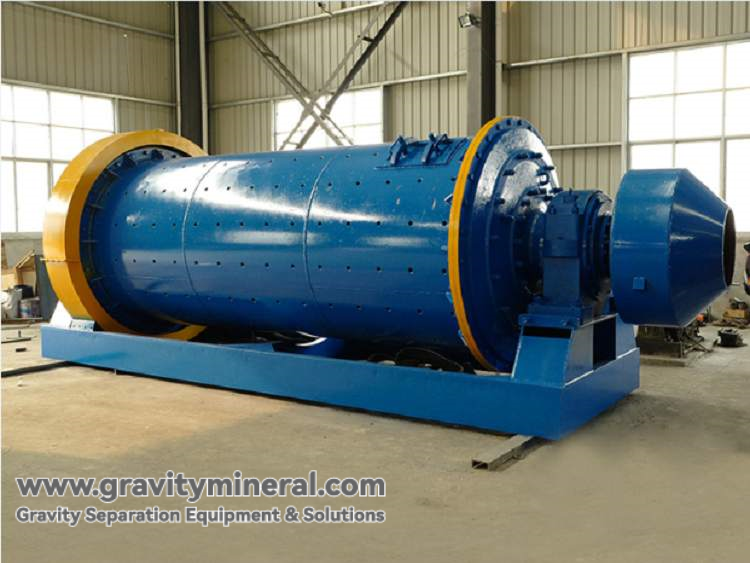
Stage 2: Crushing and Liberation. If the gold-bearing gravel on the screen has a high grade, it should not be discarded directly but should instead be fed into a jaw crusher or hammer crusher for liberation crushing, then returned to the screening process to form a closed circuit.The crushing size should adhere to the principle of “disintegration without muddification.” The quartz gravel in residual placer gold is brittle; excessive crushing will generate large amounts of fine silt, which will actually increase the difficulty of subsequent recovery.
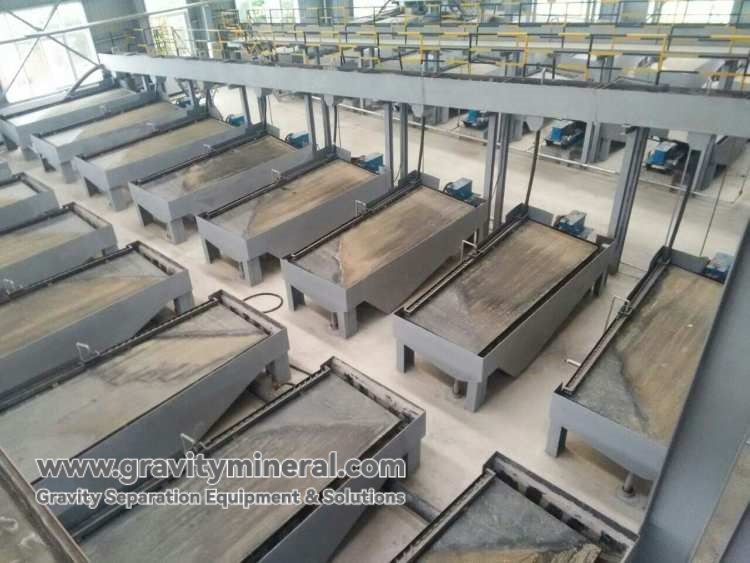
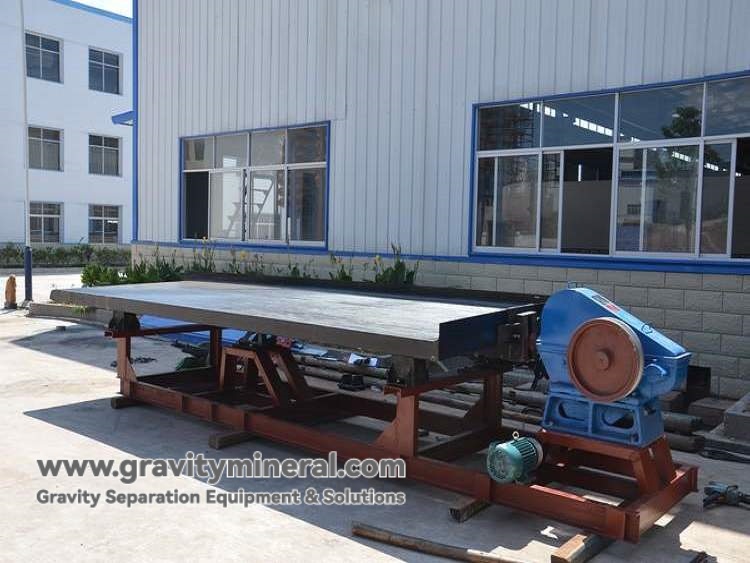
Stage 3: Multi-stage Gravity Separation. The qualified slurry, after washing and screening, first undergoes roughing in a sawtooth-wave jig. Jigs have a high processing capacity and strong adaptability to a wide range of particle sizes; they are the primary equipment in the roughing stage for alluvial sand gold, capable of discarding large amounts of lightweight waste rock in a single pass to produce a coarse concentrate of heavy sand.The coarse concentrate is then fed into a 6-S shaking table for fine selection. Shaking tables offer high separation precision and can produce qualified gold concentrate in a single pass.For ore deposits with high coarse-grain gold content, a vibrating chute or gold-binding chute can be installed before the ore washing and screening process to capture coarse free gold in advance, preventing it from being ground into fine particles or lost in subsequent stages.
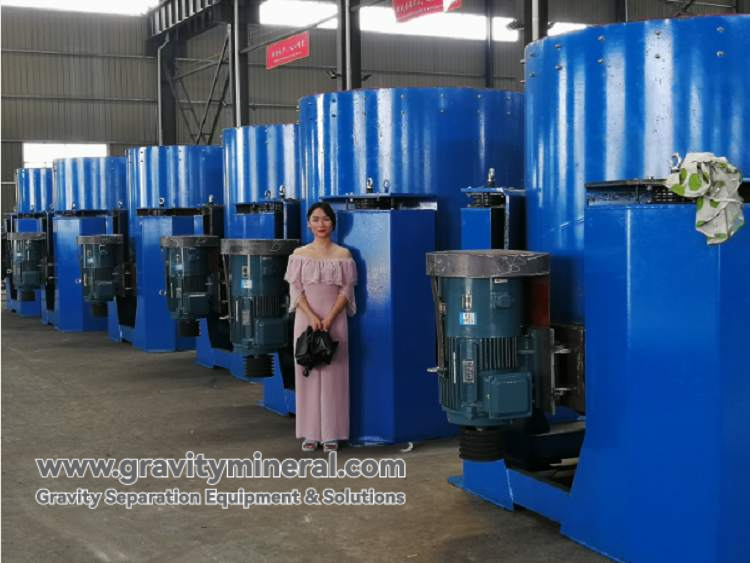
Stage 4: Fine-Grain Recovery. Ultrafine gold particles in the shaking table tailings and the overflow from the ore washing process are recovered using a centrifugal separator.Centrifugal concentrators utilize an enhanced centrifugal force field generated by high-speed rotation to effectively capture fine gold particles smaller than -0.074 mm, serving as the final step in the “complete recovery” process.GravityMineral\'s STLB series centrifugal separators accommodate feed sizes ranging from 0 to 6 mm, with processing capacities ranging from 0.6 t/h to 120 t/h, allowing for flexible configuration based on the scale of the mining site.
The logic of the entire process flow is as follows: ore washing creates suitable feed conditions; crushing ensures the liberation of gold particles; the jig performs roughing to discard a large proportion of tailings; the shaking table performs fine selection to improve grade; and the centrifuge recovers fine particles—each stage fulfills its specific function, with particle size matching between stages to avoid the common issue of “coarse particles being recovered while fine particles are entirely lost as tailings."
III. Selection of Core Equipment: Each Piece of Equipment Solves a Specific Problem
Cylindrical Ore Washer: Solves the “gold-in-silt” problem. The effectiveness of ore washing for alluvial sand gold directly determines the upper limit of recovery rates.GravityMineral\'s RXT series drum washers, with drum sizes ranging from Φ1.0×3.0 m to Φ2.2×6.5 m and a processing capacity of 30–180 t/h,features material-lifting plates and high-pressure water spray systems inside the drum, providing excellent dispersion for highly cohesive, gold-bearing weathered alluvial material. Inadequate washing significantly reduces the sorting efficiency of subsequent jigging and shaking table processes; therefore, equipment selection for this stage should not be compromised to save money.
Sawtooth-Wave Jig: The workhorse of the roughing stage. Compared to traditional jigs, the sawtooth-wave jig features a more optimal water flow pulsation curve, offering greater adaptability to wide-grained materials such as residual gold sand and significantly increasing processing capacity per unit area.GravityMineral\'s JT series sawtooth-wave jigging machines feature jigging areas ranging from 0.57 m² to 4 m², handle feed sizes from 6 to 25 mm, and have processing capacities of 1.5 to 20 t/h.and can be configured as a single unit or in parallel depending on the processing capacity required at a mining site.
6-S Shaking Table: The core of the concentration stage. The 6-S shaking table is the most widely used gravity concentration equipment globally, offering high separation precision and the ability to produce qualified gold concentrate in a single pass.For residual placer gold, the shaker\'s stroke, frequency, and incline must be adjusted according to the actual feed particle size—the parameters for coarse sand beds and fine sand beds differ significantly, which is one of the reasons GravityMineral insists on on-site commissioning by engineers.
Centrifugal Separator: The backup equipment for ultrafine gold particles. Conventional gravity separation equipment struggles to effectively recover the ultrafine gold particles produced by weathering in alluvial sand gold.The STLB series centrifugal mineral separators, by enhancing the centrifugal force field, achieve excellent capture efficiency for fine-grained heavy minerals. Backwash water consumption ranges from 2 to 80 m³/h, and models can be selected based on processing capacity.
Auxiliary equipment should not be overlooked. Vibrating feeders ensure uniform feed rates, preventing fluctuations in jig feed volume from affecting separation; dewatering screens are used to dewater concentrate, reducing transportation costs; and in water-scarce regions, thickeners and recirculation systems can significantly reduce water consumption.GravityMineral provides complete turnkey solutions covering the entire process—from feeding to dewatering, and from gravity separation to tailings treatment—eliminating the need for customers to piece together systems from multiple suppliers.
IV. Key Process Control Points for Improving Recovery Rates
Selecting the right equipment is only the first step; the recovery rate for extracting gold from residual placer deposits also depends on several key process control points:
First, the water pressure and flushing time must be sufficient. Residual gold-bearing weathered material is highly viscous; if the water pressure in the washing machine is insufficient or the flushing time is too short, the mud clumps will not break apart, and gold particles will be trapped and lost.Operators should adjust the feed rate and water flow based on the mud content; it is better to wash more slowly but thoroughly.
Second, the stroke and stroke frequency of the jig must be matched to the feed particle size. Coarse-grained feed requires a larger stroke and lower stroke frequency, while fine-grained feed requires the opposite.Residual placer gold has a wide particle size distribution; if the jig parameters are set for a single particle size class, it will inevitably result in a trade-off between different aspects. During commissioning, GravityMineral engineers will adjust the stroke and cycle rate in stages based on the actual particle size distribution of the feed and clearly explain the adjustment limits to the client\'s operators during training.
Third, fine-tuning the shaking table slope and stroke frequency. The shaking table is sensitive to changes in feed concentration and particle size; a steeper slope and higher stroke frequency are suitable for coarse particles, while the opposite is true for fine particles.The feed concentration in the concentrate section should be controlled between 15% and 25%; if the concentration is too high, the separation zone becomes blurred, and if it is too low, the throughput decreases.
Fourth, do not readily abandon the fine-grain stage. Many residual-type placer gold processing plants simply discharge the shaking table tailings; in fact, the tailings still contain recoverable fine-grained gold. Feeding the tailings into a centrifugal separator for reprocessing can often recover an additional few percentage points of gold, and this incremental recovery is quite substantial over the long term.
Fifth, make process monitoring and parameter fine-tuning a routine practice. The properties of residual placer gold ore may vary across different parts of the ore body. It is recommended to periodically take samples to assess the grade of tailings in each section and promptly adjust the equipment parameters for that section if any abnormal loss is detected.During commissioning and training, GravityMineral clearly explains to the client\'s team the adjustable parameters and monitoring methods for each section, enabling the processing plant to independently optimize its operations.
V. Why Choose GravityMineral: A Closed-Loop Approach from Equipment to Process
The challenge in extracting residual sand gold has never been the unavailability of individual pieces of equipment, but rather the fact that “while equipment can be purchased, the process cannot be properly configured, and on-site adjustments cannot be successfully implemented.” GravityMineral\'s advantages in this field can be summarized in three points:
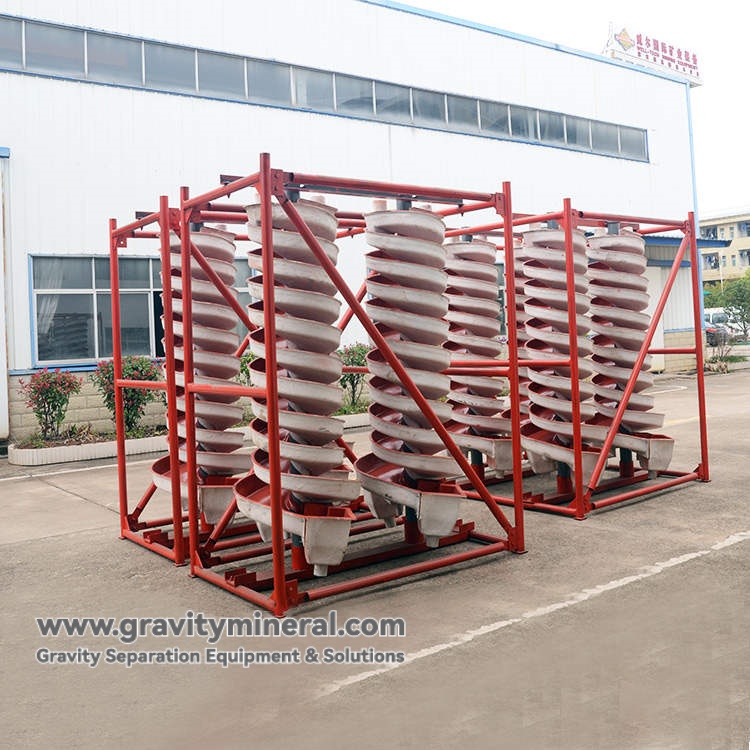
20 Years of Dedication to Gravity Concentration—We Manufacture Our Own Equipment. GravityMineral has been manufacturing core gravity separation equipment—such as jigs, shaking tables, spiral chutes, and centrifugal separators—for 20 years, holding a 35% market share in China\'s gravity separation equipment sector.Two in-house manufacturing bases (Guzhang Industrial Park in Shicheng County, Ganzhou, Jiangxi, and Shahe Industrial Park in Zhanggong District) ensure on-time delivery and customization capabilities—we are not merely a reseller selling private-label products.
Our processes and equipment are deeply integrated, ensuring seamless interfaces. Because we handle both process design and equipment manufacturing, our mechanical engineers clearly understand the upstream feed rates and downstream separation requirements when building the equipment.A single team is responsible for ensuring interface compatibility and production capacity alignment across all stages—crushing, ore washing, gravity separation, and dewatering—thereby avoiding system incompatibilities caused by situations such as “Factory A purchasing a washing machine while Factory B purchases a shaking table.” The design phase is completed by our in-house team, eliminating the need for design fees from external design institutes for medium- to large-scale projects.
Engineers conduct on-site commissioning, and delivery is considered complete only after commissioning meets all standards. Ensuring the smooth operation of a residual placer gold processing line relies on repeated on-site adjustments to ore washing water pressure, jig stroke, and shaking table inclination.GravityMineral dispatches gravity separation engineers to the site to oversee equipment installation, lead the commissioning of individual units and integrated systems, and train client operators until the production line runs smoothly and performance metrics are stable. General installation workers are organized locally by the client, which not only ensures engineering quality but also saves the client significant labor costs associated with sending domestic workers overseas.
Furthermore, GravityMineral products have been exported to more than 50 countries and regions, with a cumulative total of over 500 global gravity beneficiation projects, including numerous placer gold projects in Africa, Southeast Asia, and South America.Given the vast differences in ore properties, climatic conditions, and construction standards across countries, these real-world mining sites have thoroughly validated the equipment\'s reliability and adaptability. When clients bring in new ore samples, engineers can quickly draw upon historical experience from similar scenarios.
Extracting alluvial gold is, at its core, a battle against “silt” and “particle size.”Only when the ore is thoroughly washed will gold particles not be carried away by the mud; only when the ore is properly crushed will gold particles be fully liberated; and only when the number of gravity separation stages is correctly configured and equipment parameters are precisely adjusted will coarse and fine particles be separated effectively.The value of GravityMineral lies not in how many jigs or shaking tables we sell, but in ensuring that the configuration of process stages, equipment integration, and parameter tuning for the “ore washing—crushing—gravity separation—fine-grain recovery” chain are managed as a closed-loop system by a single team, ensuring that every gram of gold has a corresponding recovery step.
If your residual placer gold deposit is facing issues such as unsatisfactory recovery rates, significant loss of fine-grain gold, or incomplete ore washing, feel free to send us a ore sample for a beneficiation test. We\'ll use real data to design the process before discussing equipment configuration.First, understand the ore\'s characteristics; then, prescribe the solution—this is GravityMineral\'s fundamental approach to every mine.
GravityMineral—a leader in gravity separation technology and a trusted partner to the global mining industry.