







How to Build a High-Efficiency Gold Concentration Plant? A Comprehensive Analysis of the Process and Key Points
Key Conclusions at a Glance
- The key to building a highly efficient gravity gold processing plant lies not in simply piling up equipment, but in matching the ore particle size to the state of gold occurrence. For ores dominated by coarse-grained gold, the cost per metric ton of ore for gravity separation is typically significantly lower than that for flotation.
- Process design should adhere to the principles of “early recovery where possible” and “staged liberation,” ensuring that coarse, free gold is recovered as early as possible in the grinding circuit to avoid losses due to over-grinding.
- The use of centrifuges to replace traditional chutes for roughing has been a notable efficiency-enhancing trend in gravity separation processes over the past decade; shaking tables, however, are consistently reserved for scavenging, and the division of labor between roughing and scavenging must be clearly defined.
- Gravity separation is not a panacea. For fine-grained, disseminated ores, forcing a single gravity separation process often fails to achieve recovery rates that meet economic requirements; therefore, a combination of gravity pre-concentration with flotation or leaching should be considered.
- It is best for a single team to take full, closed-loop responsibility for equipment, design, and on-site commissioning; only with unbroken accountability can the certainty of successful production be ensured.
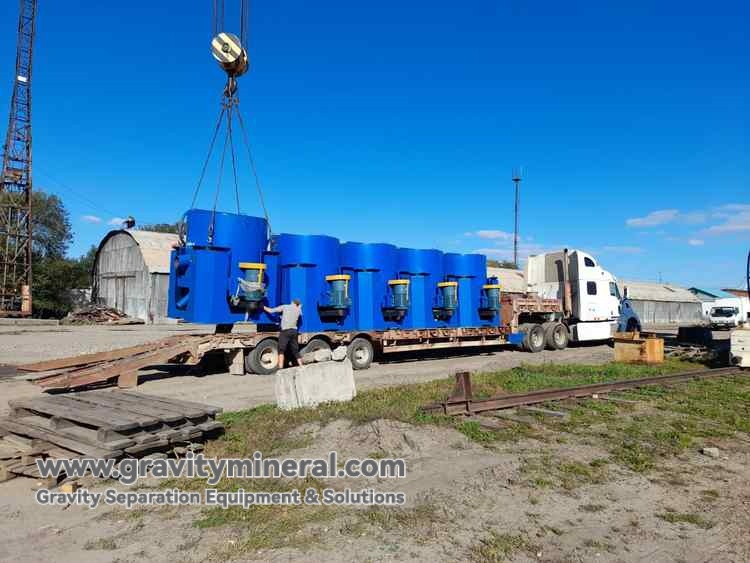
With gold prices remaining high, a number of gold ore resources that were previously considered economically unviable have re-entered the development spotlight. Due to its low cost, short process flow, and environmental friendliness, the gravity separation process has been frequently cited in this round of resource revitalization.However, building a highly efficient gold concentrator is never as simple as deciding “which equipment to install”—it is a systematic engineering process encompassing everything from ore assessment to process design and on-site commissioning. Below, we will break down the key stages one by one, following the sequence of industry background, ore assessment, process flow, equipment configuration, cost-benefit analysis, and common issues.
I. Industry Background: Why Has Gravity Separation Returned to the Forefront of Gold Ore Processing?
Gravity separation (a process that utilizes differences in mineral density to achieve separation in a water current) is not a new technology, and its applicability has always been clearly defined: it relies on density differences, coarse-grained gold, and the degree of liberation.Gold has a density of approximately 19.3 g/cm³, which is six to seven times that of gangue minerals. This difference is substantial enough that, in principle, gravity separation has never been an issue.The problem lies in particle size—gravity separation is highly efficient for coarse-grained, well-liberated gold; however, when particle size falls below tens of micrometers, the viscous drag of the water flow exceeds the gravitational force acting on the gold particles, preventing fine-grained gold from settling in the equipment and causing it to be carried away with the tailings.
Many mining companies tend to fall into two extremes when constructing gravity separation plants. One is treating gravity separation as a “universal solution,” attempting to process all types of ore with it, only to fail to recover fine-grained gold; the other is underestimating the potential of gravity separation, feeding even coarse-grained gold ore into the full flotation process, thereby unnecessarily increasing reagent and grinding costs.From an industry perspective, gravity separation is no longer merely a transitional solution for small-scale mines; rather, it is increasingly appearing as the main process or a pre-concentration stage in the designs of formal processing plants. In particular, for coarse-grained disseminated gold ores and gold-bearing alluvial deposits, the economic advantages of gravity separation are quite significant. Assessing the properties of the ore is the first critical step in building a highly efficient gravity separation gold processing plant.
II. Ore Assessment: First, Determine the Grain Size Range of the Gold
When taking on a gold mining project, the first question should not be what equipment to use, but rather at what particle size the gold is present.A practical approach to assessment: If the proportion of free gold in the +0.1 mm size fraction of the ore is significant, gravity separation warrants serious consideration as the primary process; if gold is predominantly present in sulfides or the grain size of the gold distribution is generally fine, gravity separation can only be used as a pre-concentration method, followed by flotation or leaching.
Test data from a gold mine in Shaanxi provides a useful reference. At this mine, the gold minerals are embedded in relatively coarse grains, primarily occurring as intergranular and fissure gold. They are easily liberated as free gold during grinding, and a single-stage centrifuge separation process achieved good recovery results.Conversely, consider a tailings deposit in Fujian, where the gold particles are extremely fine. Recovery using shaking tables was very poor, and it was difficult to achieve both high grade and high recovery rates with spiral chutes. Ultimately, an economically viable rough concentrate was produced only through a combination of centrifugal pre-concentration and panning for final concentration. The difference between these two cases essentially lies in the fact that the properties of the ore determine the process route.If the ore properties are misjudged, all subsequent steps will be in vain.
It is important to note that when a mine has not yet conducted detailed exploration and lacks representative ore sample data, it is not advisable to proceed directly with equipment procurement and plant construction. The selection of gravity separation equipment relies heavily on three parameters: density difference, particle size distribution, and clay content. Without representative ore sample data, any equipment selection lacks a solid basis.Conducting mineral processing tests to thoroughly understand the ore properties before discussing the process flow and equipment is the most prudent starting point.
III. Process Flow: Crushing, Grinding, and “Recover as Early as Possible”
Many gravity separation gold plants fail to meet performance targets after construction, and the root cause lies not in the gravity separation equipment, but in the grinding process. The grinding requirements for gravity separation differ from those of flotation: flotation aims for grinding to achieve single-particle liberation, where finer is better; gravity separation aims to liberate only what needs to be liberated, ensuring that not a single particle that should not be ground is over-ground.Gold is ductile; when overground, gold particles are flattened into flakes, making recovery through gravity separation even more difficult.
A generally sound practice in the industry is staged grinding and “recovering as early as possible.”In the first stage, grind to a medium fineness to first liberate coarse, individual gold particles, then use a centrifuge or jig to recover what can be recovered early; the tailings from the first-stage gravity separation are then fed into the second-stage grinding. After fine grinding, the material is either passed through a centrifuge again or sent to flotation.Test data from a gold mine in Tibet corroborates this approach: in a combined gravity separation and whole-ore cyanidation process, the overall recovery rate performed well. The key lies in the gravity separation stage first removing the coarse-grained gold, thereby reducing the load on the subsequent cyanidation stage and improving overall efficiency.
The crushing stage is fairly straightforward. A jaw crusher handles coarse crushing, while a cone crusher or double-roll crusher handles fine crushing, reducing the ore to the appropriate particle size before feeding it into the mill.One point that\'s easily overlooked: if the crushed product contains a high clay content, don\'t skimp on the ore washing stage. Clay-rich material entering gravity separation equipment will disrupt the separation bed layer, and even the best centrifuge won\'t be able to salvage the situation. Investments in upstream processes like grinding and ore washing are often more cost-effective than purchasing an additional concentrate separation unit.
IV. Equipment Configuration: Clearly Define the Roles of Rough and Fine Concentration
The selection of gravity separation equipment essentially involves a trade-off between throughput, lower limit of recoverable particle size, and investment. Configuration approaches vary significantly among gravity gold processing plants of different scales. Specific investment and performance metrics must be calculated based on the properties of the ore and on-site conditions; there is no one-size-fits-all solution.
| Processing Capacity | Recommended Configuration Approach | Applicable Scenarios |
|---|---|---|
| Small Scale (Tens of Metric Tons per Day) | Spiral chute + shaking table combination | Small mines, exploratory processing plants, placer gold mines |
| Medium-scale (hundreds of metric tons per day) | Jig + shaking table, with optional centrifuge for roughing | Main scale for township-level mines |
| Larger scale (hundreds of metric tons per day) | Centrifuge or jig for roughing + spiral chute + shaking table for fine sorting | Full-scale processing plants, with centrifuges handling the roughing stage |
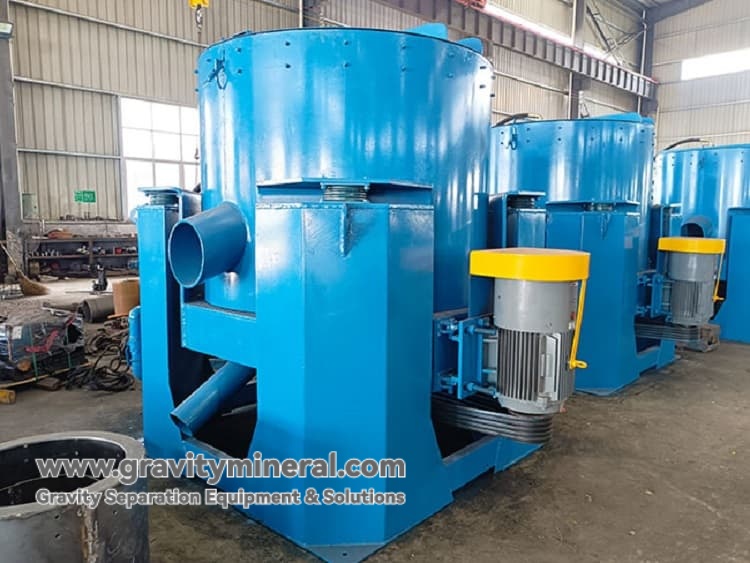
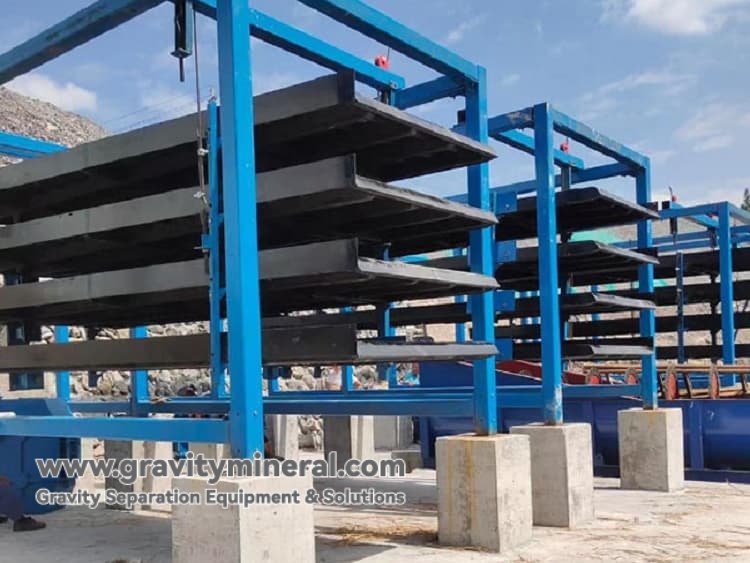
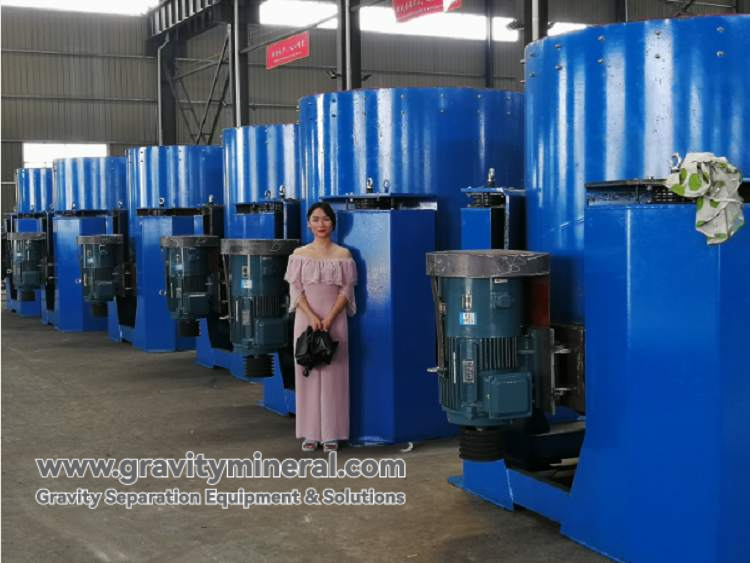
Replacing some spiral chutes or jigs in the roughing stage with a centrifuge—a device that uses high-speed rotation to generate centrifugal force and enhance the settling of fine-grained heavy minerals—has been a worthwhile investment in gravity separation processes over the past decade.Centrifuges offer high recovery rates, high throughput, and a small footprint; their ability to capture ultrafine gold particles far surpasses that of traditional chutes.The role of the shaking table remains unchanged; it is always a fine-selection device, not a roughing device—it has a small throughput and a large footprint, but offers high separation precision. Its true strength lies in processing the rough concentrate from centrifuges or jigs to boost the grade.Don\'t expect a shaking table to process raw ore; that would be like using a scalpel to chop wood.
For complex ore types requiring combined processes such as “gravity separation + magnetic separation + electrostatic separation” or “gravity separation + flotation,” aligning equipment interfaces with production capacity is equally critical.If each stage—crushing, screening, gravity separation, magnetic separation, and dewatering—is sourced from different suppliers, conflicts at interfaces and mismatched production capacities are likely to arise. Having a single team responsible for both the equipment and the process ensures that interfaces do not conflict—a practical lesson at the configuration level.
V. Solution Comparison: How to Choose Between Gravity Separation and Flotation
The question clients most often struggle with is which is more cost-effective: gravity separation or flotation. There is no absolute superior or inferior option; it all depends on the properties of the ore. The table below compares the two based on several key dimensions to serve as a reference for selecting the appropriate process.
| Comparison Dimensions | Gravity Separation Solution | Flotation Solution |
|---|---|---|
| Suitable Ore | Significant density difference, coarse grain size, and predominantly free gold | Fine-grained disseminated, sulfide-encased, and complex associated ores |
| Cost per metric ton of ore | Typically low, with minimal reagent consumption | Generally higher, with reagents and power consumption for grinding accounting for a large proportion |
| Environmental characteristics | No chemical pollution; relatively clean process | Requires reagent management and tailings water treatment |
| Lower limit of recoverable particle size | Favorable for coarse-grained gold; fine-grained gold requires supplementary centrifugation | High adaptability to fine-grain gold |
| Common combinations | Rough selection with tailings rejection, pre-enrichment | Concentration to raise grade, followed by fine-grain tailings recovery |
In many cases, the two processes work in tandem: gravity separation is used for roughing and tailings rejection, allowing large amounts of waste rock to be discarded at low cost; flotation is used for concentration to improve grade and process fine-grained and complex associated minerals. This is the common logic behind the “gravity separation + flotation combined process.”The choice of process and its configuration should ultimately be based on ore test data; it is essential to calculate the total cost rather than focusing solely on the price of individual pieces of equipment.
VI. Costs and Returns: Several Common Issues
Gravity separation offers clear economic advantages when processing coarse-grained gold ore. Operating costs per metric ton of ore are typically lower than those of flotation, with the difference primarily stemming from reagent costs and electricity consumption during grinding. However, specific costs vary significantly depending on ore properties, electricity rates, labor costs, and plant scale, so it is not appropriate to generalize with a single figure.
When clients inquire about building a gravity separation gold processing plant, the most frequently asked questions warrant a separate explanation.
How long is the payback period? This depends on the ore grade, actual recovery rate, and gold price; the equipment itself is not the biggest financial burden.For ore with a relatively low grade but suitable particle size, the gravity separation process is short and operating costs are low, so the payback period may be shorter than expected; for ore with a decent grade but excessively fine gold particles, recovery rates cannot be improved, and even with low costs per metric ton of ore, the operation will still result in a loss.
Can low-grade gold ore be processed using gravity separation? Low grade is not an obstacle to gravity separation; fine particle size is. In a certain tailings deposit in Fujian, the original ore had a very low gold grade, making direct gravity separation virtually uneconomical. The process was only barely viable after significantly increasing the grade through pre-concentration using a centrifuge followed by fine separation.When using gravity separation for low-grade ore, the key lies in whether pre-concentration can raise the feed grade sufficiently.
Can design fees be saved? If a mineral processing project is handled separately by a design institute, an equipment manufacturer, and a construction team, design fees alone can be a significant expense. What\'s more troublesome is that the equipment manufacturer may reject the drawings produced by the design institute, while the design institute refuses to modify them based on the manufacturer\'s requirements—leading to mutual finger-pointing when problems arise.If process flow design, equipment selection and configuration, plant layout, civil engineering drawings, and technical briefings are all handled by a single team—with design work not outsourced—costs won\'t be duplicated, and responsibility won\'t be passed back and forth.
VII. Common Technical Issues and Solutions
VIII. Conclusions and Recommendations
Building a highly efficient gravity gold processing plant ultimately comes down to finding the right balance between ore properties and equipment characteristics. No single configuration can suit every gold deposit. For ores dominated by coarse-grained gold, gravity separation can play the leading role; for fine-grained, disseminated ores, gravity separation is better suited for pre-concentration.In process design, adhere to the principles of early recovery and staged liberation; in equipment configuration, clearly define the roles of roughing and concentrating; and in cost control, calculate costs per metric ton of ore rather than per individual piece of equipment.
From the perspective of project implementation, if equipment manufacturing, process design, and on-site commissioning are managed as a closed-loop process by a single team—ensuring no gaps in accountability—the certainty of successful commissioning will be significantly higher.Gravity separation engineers provide on-site guidance for installation, lead the commissioning of individual units and integrated systems, and train personnel—delivery is not considered complete until the production line is running smoothly and performance indicators are stable. This is particularly important for mine owners building a gravity separation gold processing plant for the first time.
If you are planning a gravity separation gold processing plant—whether you have screening and analysis data for your ore, a report on gold occurrence, or just a rough idea of grade and scale—send us your data. We can help you determine the feasibility of gravity separation, assess whether a combined process is necessary, and recommend the most cost-effective equipment configuration.Send us your ore data to receive a tailored assessment of the gravity separation process and recommendations for equipment configuration.
About Us
GravityMineral has specialized in gravity separation for twenty years, integrating mineral analysis, beneficiation process design, equipment manufacturing, and installation and commissioning. Our core gravity separation equipment is produced at our own manufacturing facilities,Our products are exported to more than 50 countries and regions, and we have accumulated extensive project experience in the gravity separation of placer gold, bedrock gold, and various other mineral types.
If you are planning a gravity gold processing plant or other gravity separation project, please provide us with the ore type, processing capacity, feed particle size, and site conditions to receive preliminary process recommendations and equipment configuration suggestions. If you have representative ore samples, sending them for beneficiation testing will yield a solution better tailored to the specific properties of your ore.
📩 Contact Us · Get a Gravity Separation Solution