







How to Choose Gravity Concentration Equipment for Gold Mines? EPC Solution for a Processing Plant with a Daily Capacity of 100 Metric Tons
Article Overview
- For a gold ore processing plant with a daily capacity of 100 metric tons, the first step in selecting equipment is not to flip through catalogs, but to conduct gravity separation tests using ore samples.
- Gravity separation is effective for coarse-grained free gold but often falls short when dealing with fine-grained, encapsulated gold; installing equipment without conducting tests makes it difficult to control the risks.
- A 100-metric-ton-per-day operation is considered small to medium-scale; the value of an EPC contract lies in integrating testing, design, equipment, and commissioning into a seamless process, with clear accountability for any issues.
- The test report must answer three questions: in what form does the gold exist, what recovery rate can gravity separation achieve, and who should be responsible for the tailings.
How to select gravity separation equipment for gold mines is the most frequently asked question during the initial planning phase of small-to-medium-sized gold processing plants. Most people\'s first instinct is to flip through equipment catalogs and compare model specifications, yet few ask the fundamental question first: Can my ore actually be processed by gravity separation?
There is no such thing as an absolutely “good” or “bad” piece of equipment. Jigging machines excel at processing coarse particles, shaking tables offer high precision in fine selection, and centrifuges are adept at capturing ultrafine particles. The key lies in whether the properties of the ore match the characteristics of the equipment.A processing plant with a daily capacity of 100 metric tons is neither too large nor too small; choose the wrong equipment, and the daily losses will be evident; choose the right one, and cash flow will remain stable. Therefore, before discussing how to select gravity separation equipment for gold mines, let\'s first clarify a more fundamental question—what steps should be taken before spending money on equipment.
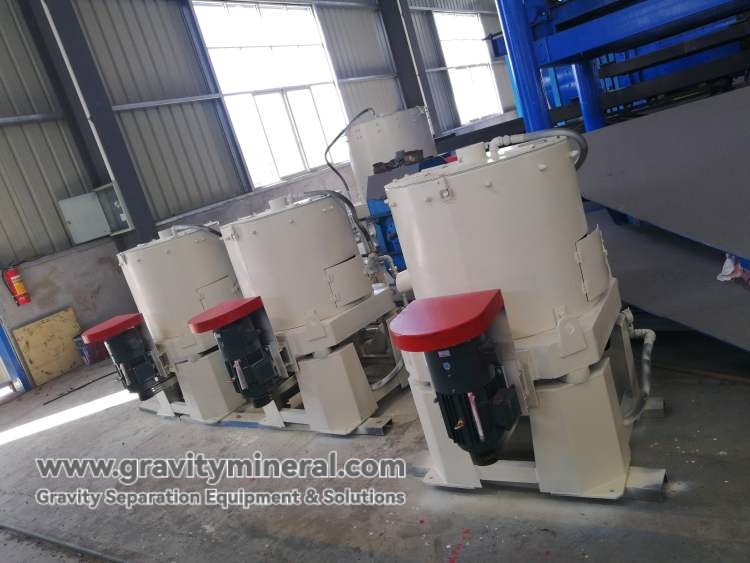
Gravity separation has its limitations; first, consider the occurrence of gold particles
The logic behind gravity separation is straightforward: gold has a high specific gravity, while gangue has a low specific gravity. By flushing and shaking with water, the heavy particles settle to the bottom, and the light ones are washed away. The principle is simple, but the differences between gold deposits are far greater than one might imagine.
In placer gold deposits, gold particles have already been liberated from the host rock. After screening out waste rock and removing mud, the process involves roughing with a jig and concentrating with a shaking table—a clean and efficient workflow. For this type of ore, the equipment configuration for gravity separation is relatively straightforward, provided that ore washing and desliming are carried out properly.Rock gold deposits, however, are far more complex. The gold is embedded in quartz veins or encased in sulfides. The mesh size required during grinding to expose the gold—and whether the exposed gold consists of coarse free gold or fine-grained gold—directly determines whether gravity separation is even feasible.
In some primary gold deposits, the grade of the gravity concentration concentrate may look promising at first glance, but upon calculation, the recovery rate turns out to be very low—while the gold is indeed enriched, only a small portion of it has been recovered from the ore, with the bulk remaining in the tailings. For such ores, gravity separation can only serve as a supplementary method; the main process must rely on flotation or leaching.
Therefore, when selecting gravity separation equipment for gold mines, the first answer does not lie with the equipment manufacturer, but in the ore sample itself. Without conducting gravity separation exploration tests, it is difficult to determine whether the gold in the ore is “easy to capture” or “impossible to capture no matter how finely it is ground.”
Testing Scale for a 100-Metric-Ton Capacity
A daily processing capacity of 100 metric tons, calculated over 300 days, results in an annual throughput of around 30,000 metric tons. An investment of this scale—neither too large nor too small—carries significant costs for subsequent adjustments if the wrong equipment is purchased or the process design is flawed.
To determine when a pilot test is sufficiently complete, experience suggests a three-step approach: exploratory tests to establish direction, conditional tests to determine parameters, and closed-circuit tests to finalize the process flow.
STEP 01
Exploratory Testing
Using a few kilograms of representative ore samples, grind them to different finenesses and process them through a Nelson or shaking table to see if gold can be concentrated. The investment is limited, but this step can rule out obviously unfeasible approaches.
STEP 02
Conditioning Tests
Vary the gradients of grinding fineness, water flow rate, and feed concentration. Even slight deviations in parameters—such as the stroke and frequency of a jig or the slope and stroke of a shaking table—can significantly alter the results.
STEP 03
Closed-Circuit Testing
Run the roughing, scavenging, and concentrating stages in sequence, with the middlings returned to the circuit, to observe the recovery rate and concentrate grade under steady-state conditions. This is the direct basis for equipment selection.
Grinding fineness deserves special mention. The lower limit of the effective particle size range for gravity separation is generally between 0.01 and 0.04 millimeters, though this varies by equipment.If the ore is ground too coarsely, the gold remains unliberated and cannot be captured by gravity separation; if ground too finely, overgrinding increases the amount of fine slime, reducing gravity separation efficiency, and subsequent processes—such as centrifugation or even leaching—must be relied upon to make up for the shortfall. In pilot testing, the grinding fineness variable warrants testing with several additional sample sets.
Three Criteria for Equipment Selection
Once the test report is in hand, selecting the appropriate equipment is a relatively straightforward process. The real concern is when the report is vague, offering only a general recommendation such as “recommend gravity separation” without providing particle size analysis, grade-specific recovery rates, or tailings characteristics.
A report suitable for equipment selection must clearly address at least three points:
The distribution of gold across particle size fractions
If coarse particles predominate, it makes sense to place a jig in the grinding circuit for roughing; if fine particles predominate, a centrifuge or shaking table must be incorporated; if ultrafine particles make up the majority, gravity separation serves as a pre-concentration method and should not be expected to handle the entire process on its own.
Grades and recovery rates of gravity concentrate and tailings
If the concentrate yield is too low, the costs of subsequent processing may eat into profits; if the tailings grade is too high, it indicates that the gravity separation process did not recover all the valuable material, and consideration should be given to adding scavenging equipment or adjusting the process.
Mud Content and Hydration Level of the Ore
Ore with high clay content fed directly into a jig results in a viscous slurry and a compacted bed layer, making it difficult to ensure effective separation; therefore, desliming equipment must be installed upstream of the gravity separation process.
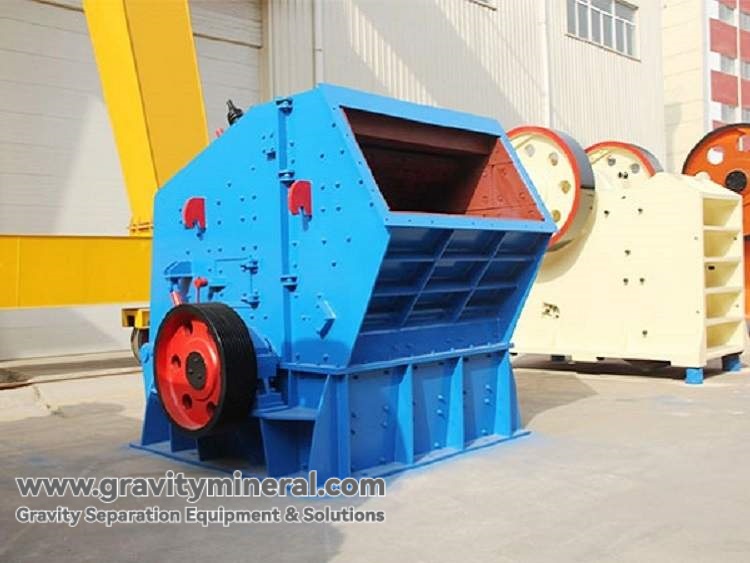
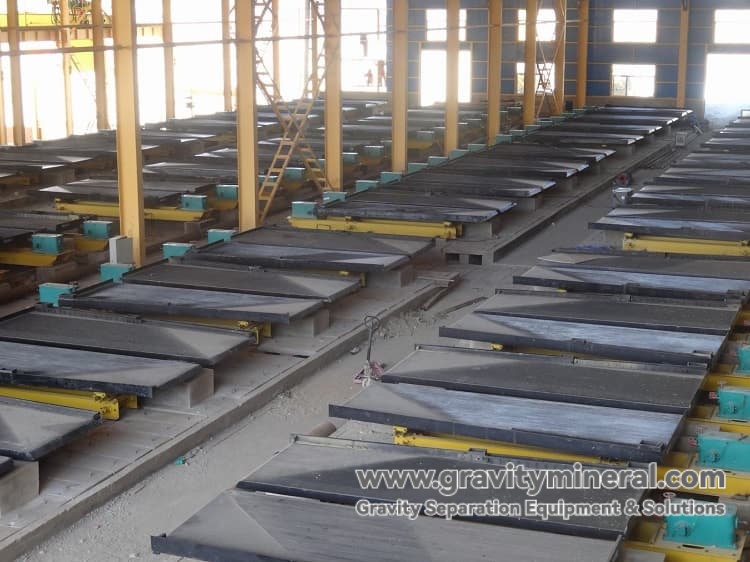
For a processing plant with a daily capacity of 100 metric tons, a common configuration is as follows: in the crushing section, one jaw crusher plus one cone or hammer crusher; in the grinding section, one grid-type ball mill paired with a spiral classifier; in the gravity separation section, a jig for roughing followed by a shaking table for fine selection;with small shaking tables or gold pans used to produce finished concentrate from the rough and concentrate. Tests show that when the proportion of fine-grained gold is high, a centrifuge should be placed after the jig tailings for an additional recovery stage. The configuration is not overly complex, but the model and number of units for each stage must be determined based on test data; this is the core consideration in selecting gravity separation equipment for gold mines.
The Boundary Between Gravity Separation and Combined Processes
Single-stage gravity separation can solve only a limited range of problems. Once the ore properties become complex, a combined process becomes essential—and the criteria for determining this are not mysterious.
For ores with significant density differences and coarser grain sizes, a pure gravity separation process—which is low-cost, involves fewer steps, and requires no chemicals—is the preferred option. Placer gold, certain barite ores, and coarse-grained wolframite typically fall into this category.For ores with density differences but incomplete separation, or those containing associated magnetic minerals, magnetic separation must be incorporated; chromite, ilmenite, and tantalum-niobium ore are typical examples.For ores with a finer grain size or those containing associated sulfide minerals, it is more prudent to use flotation as a backup. Rock gold, primary tin, and antimony ores often follow the approach of “early recovery of coarse-grained gold via gravity separation, with fine-grained gold processed by flotation as a final step.” For the deep recovery of fine-grained gold from gravity separation tailings in rock gold deposits, leaching processes should be considered.
The value of this decision-making logic lies in the following: if pure gravity separation is sufficient, there is no need to overcomplicate the process; adding a single process step means an additional investment and operational cost. Only when separation is truly impossible should a combined process be employed—never for the sake of complexity itself.
The Value of EPC Lies in a Closed-Loop Accountability System
The EPC proposal with the lowest bid is often the one that lists every piece of equipment and drives prices as low as possible. However, once the processing plant begins operations and fails to meet performance targets, the question of who to hold accountable becomes a pressing reality.
The equipment manufacturer will claim the machinery is flawless, attributing the issue to process design; the design firm will argue that the equipment\'s performance specifications were overstated, blaming the manufacturer. The cost of this back-and-forth ultimately falls on the investor.The core of EPC isn\'t the appealing phrase “turnkey,” but rather having someone take full responsibility: who conducted the ore sample testing, who is responsible for the process design; who selected the equipment, who will be on-site for commissioning; production targets are written into the contract, and it\'s made clear in advance how to handle non-compliance.
This is especially true for gravity separation lines. If the throughput of the jig does not match that of the shaking table, material will get stuck in the middle or the system will run idle; if the ore is not thoroughly washed, no amount of adjustment in the subsequent gravity separation section will make a difference. With testing, design, equipment, and installation handled by four separate entities, these interface issues are difficult to identify in advance.The value of a model where manufacturing, design, and commissioning are handled by a single team lies in seamless coordination at the interfaces and clear accountability—since the equipment is manufactured in-house, the process is designed in-house, and on-site commissioning is performed in-house, there is no room for passing the buck when problems arise.
In terms of the delivery cycle, the manufacturing of core equipment typically takes 40 to 60 days, ocean freight takes 30 to 60 days, and on-site installation and commissioning takes 60 to 150 days. Adding a buffer for customs clearance and coordination between stages, a total of 7 to 12 months is considered a standard timeline. It is not recommended to shorten the testing phase, as doing so will result in slower rework later on.
Frequently Asked Questions
Conclusion
Ultimately, selecting gravity separation equipment for a gold mine is not a matter of comparing equipment, but rather a matter of matching the equipment to the ore.Mineral sample testing sets the direction; test reports determine the parameters; parameters determine the equipment; equipment is integrated into the process; and the process is linked by the EPC contractor to form a closed-loop of responsibility—only when this sequence is properly established can the investment certainty for a 100-metric-ton-per-day processing plant be guaranteed.For those with ore samples, we recommend conducting exploratory gravity separation tests first; discuss equipment only after the data is available. This sequence should not be reversed.