







Process Flow Chart for a Placer Gold Processing Plant: How Should the Ore Washing, Screening, and Gravity Separation Steps Be Configured?
Problem Diagnosis, Stage-by-Stage Configuration, and Implementation of a Placer Gold Processing Plant Process Flowchart
A common challenge in sand gold processing plants is that, while the process appears complete and all equipment is operational, fine-grain gold loss can still be observed in the tailings.The feeder is running, the trommel screen is rotating, the jig is jigging, and the shaking table is shaking—on the surface, production appears normal, yet the performance metrics are unsatisfactory. The problem often lies not with the gravity separation equipment itself, but rather with whether the ore washing and screening processes have created suitable feed conditions for gravity separation.
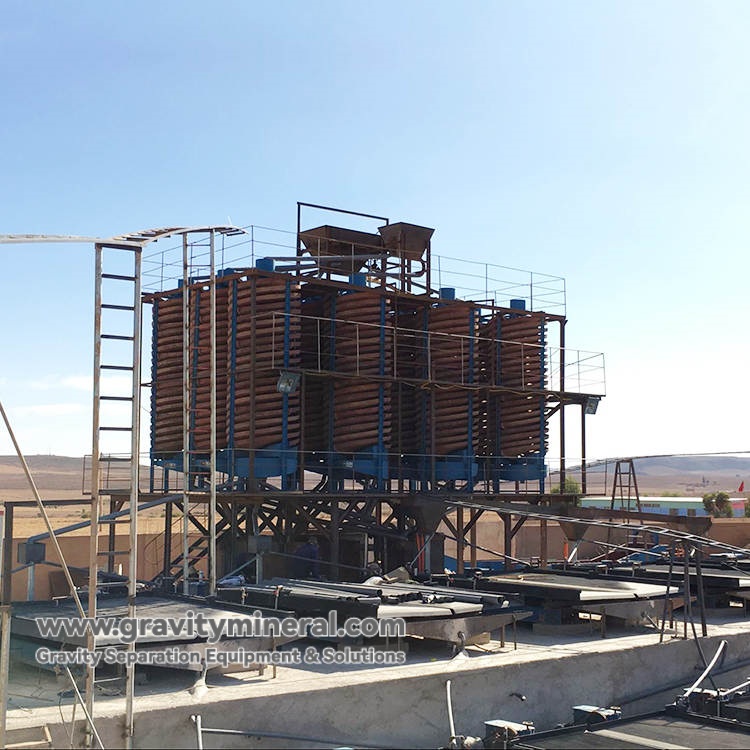
I. Common Issues in Placer Gold Processing Plant Flowcharts: Equipment Is Running, but Not All Gold Is Recovered
There are several common manifestations: the jig\'s concentrate yield is acceptable, but the gold concentrate grade from the shaking table has been consistently low, and repeated adjustments to the shaking table\'s stroke and slope have yielded limited results;Upon sieve analysis of the tailings by particle size, it is found that a disproportionately high percentage of gold loss occurs in the coarser size fractions. This is caused by a mismatch between the screen mesh configuration and the ore\'s particle size distribution, allowing large amounts of coarse gold-bearing material to bypass the jig;In placer gold deposits with high clay content, the clay is not sufficiently broken up in the ore washing section, resulting in gold-bearing clay clumps being discharged with the oversize material, while fine gold is lost with the clay.
These phenomena point to the same conclusion: issues with the process flowchart of a placer gold processing plant rarely stem from the gravity separation equipment itself, but rather from whether the ore washing and screening stages have created suitable feed conditions for gravity separation.The ore washing stage determines whether gold can be liberated from the clay, while screening determines whether the gold is directed into the appropriate particle size fraction; gravity separation merely performs the separation under the given feed conditions. If the front-end configuration is improper, the overall recovery efficiency of the placer gold processing flowchart will remain limited, no matter how meticulously the back-end equipment is selected.
II. The Root Causes of Problems in Placer Gold Processing Flow Charts: Shortcomings in the Three Stages of Ore Washing, Screening, and Feeding
1. Mismatch Between Washing Intensity and Ore Properties
Gold in placer deposits is often bound to clay, with fine-grained gold particles encased in mud. Trommel washers rely on drum rotation and water flushing, which are effective for loose sand and gravel but struggle to thoroughly break up highly plastic clay clumps; spiral washers, on the other hand, offer superior scrubbing capacity for materials with high clay content.In the process flowchart of a placer gold processing plant, whether the ore washing section is properly configured directly determines the success or failure of the placer gold gravity separation process. Gold encapsulated in clay cannot enter the gravity separation section, leading to increased tailings loss.
2. Screening is used only for “removing large chunks” rather than “particle size separation”
Gravity separation is highly sensitive to particle size distribution; mixing coarse and fine particles results in poor separation efficiency. The jig is the main unit in the roughing stage and is suitable for processing coarser-grained placer gold; the shaking table is the core of the concentrating stage and handles fine-grained minerals;spiral chutes are suitable for high-volume, low-grade feed; and centrifugal separators are responsible for recovering ultrafine gold particles smaller than -0.074 mm, serving as the final step to ensure “complete recovery.”If undersize material is fed into the same unit without being classified and remains mixed, each piece of equipment will be unable to process the grain size it is designed for, and separation efficiency will naturally decline. Screen mesh configuration must be determined based on the ore\'s particle size distribution and the grain size at which gold particles are present.
3. Fluctuations in Feed Rate and Concentration
Gravity separation equipment is sensitive to feed stability. If the feed concentration to the jig fluctuates wildly, it becomes difficult to maintain the proper bed consistency; if the concentration is too high, the slurry becomes viscous, hindering the settling of gold particles, while if the concentration is too low, the water flow becomes turbulent, making it easy for fine gold particles to be washed away.If the front-end process relies on direct dumping by excavators and there is no stable control over the water volume used for ore washing, the material flow entering the gravity separation section will fluctuate continuously, making it difficult to stabilize the performance indicators of the placer gold gravity separation process.
III. How to Design the Process Flow Chart for a Placer Gold Processing Plant: Coordination of the Washing, Screening, and Gravity Separation Stages
The core of designing a process flow diagram for a placer gold processing plant is to align the particle size and capacity interfaces between the various stages: “feeding—washing—screening and classification—roughing—concentration—sweeping.” The configuration logic is explained by stage below.
Stability
Install a receiving hopper between the excavator discharge and the ore washing equipment. Use a vibrating feeder or belt feeder beneath the hopper to continuously and evenly feed the material, ensuring a steady flow into the ore washing stage and preventing the intermittent feeding caused by shock loading from causing fluctuations in the subsequent stages.
Select Equipment Based on Silt Content
For riverbed sand with low clay content and loose clay texture, a drum washing machine equipped with high-pressure water jets can meet the requirements; for ore with relatively high clay content that feels slippery when rubbed by hand, a spiral washing machine or an extended washing section is recommended.To determine whether the washing is adequate, take a sample of the washed sand on-site and rub it between your fingers; only when no mud strands are produced and no mud clumps containing gold are visible can the feed be considered suitable for the placer gold gravity separation process.
Classification by Particle Size
The discharge from the ore washer is fed into a trommel screen or circular vibrating screen, where the material is classified into two to three fractions based on the particle size distribution of gold particles.The coarse gravel on the screen typically contains very little gold and can be discarded directly; the intermediate size fraction is fed to a jig or spiral chute for rough selection; the fine fraction, after de-silting, is fed to a shaking table or centrifugal concentrator. Screen mesh sizes are determined based on the results of ore sample screening analysis to avoid feeding all undersize material into the same equipment in a “one-size-fits-all” manner.
Jigging as the primary method, supplemented by spiral chutes
Jigging machines have a high processing capacity and reliably capture coarser gold particles, serving as the mainstay of the roughing stage; spiral chutes have a simple structure and require no power consumption, making them suitable for pre-concentration or processing fine-grained material. The objective of the roughing stage is to improve recovery rates and concentrate gold from a large volume of waste sand; the concentrate grade can be further improved in the concentrating stage.
Shaking tables for final concentration; centrifuges for bottom-feed recovery
Coarse concentrate is fed to shaking tables for fine selection; these tables offer high sorting precision and are suitable for improving the grade of small quantities of coarse concentrate. Micro- and fine-grain gold in the roughing tailings and shaking table tailings is recovered through scavenging using centrifugal separators.Wash processing is responsible for liberation, screening for stream separation, roughing for concentration, fine selection for purification, and scavenging for loss prevention. Only when these five stages are seamlessly integrated can the closed-loop process of a placer gold beneficiation line be considered complete.
Sequential Interdependence
In the process flowchart of a placer gold processing plant, ore washing is the liberation stage, screening is the diversion stage, and gravity separation is the enrichment and purification stage. These three stages are not parallel but form a sequential, interlocking relationship; if the particle size interface at any stage does not align properly, gold will be lost at that interface.
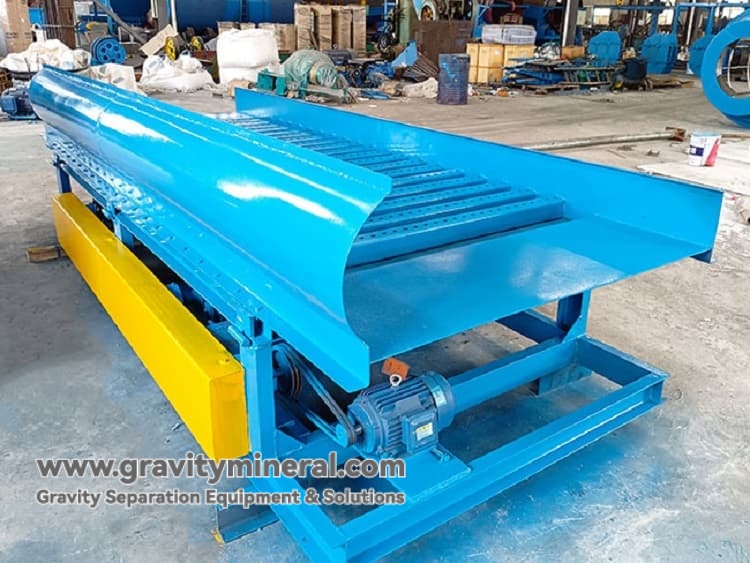
IV. Implementing the Alluvial Gold Processing Plant Process Flowchart: From Ore Samples to Integrated Commissioning
Once the plan is finalized, implementation proceeds in sequence, with clear criteria for evaluation at each step.
First, conduct ore sample screening and beneficiation tests
Collect a representative sample of raw ore sand. After drying, screen it by particle size and test the gold grade at each size fraction to determine the correlation between particle size distribution and the grain size where gold is present.If conditions permit, conduct recoverability tests to validate the process route with real data rather than relying solely on theoretical models. If the proportion of coarse-grained gold is high, the jigging section must be designed with sufficient processing capacity; if the proportion of fine-grained gold is high, the loads on the centrifuges and shaking tables must be recalculated.
Determine Screen Mesh Sizes Based on Screening Results
If gold is primarily concentrated in coarser particle sizes, set the screen mesh size at the upper limit of the corresponding particle size range to ensure this material enters the jig; if the proportion of fine-grained gold is high, route the undersize material separately through the desliming and centrifugal separation processes to prevent mixing with coarser particles. Screen mesh sizes must be determined based on laboratory test data, not arbitrarily set based on experience.
Conduct a mud-rubbing test in the ore washing section
After the ore washing equipment has been running with material, take a sample from the discharge outlet and rub it between your fingers to check for clumps of mud or a slippery sensation; take a small amount of washed sand, add it to clean water, and stir to observe the rate at which the water becomes turbid and then clears, to determine whether the fine silt has been thoroughly washed out.If the test fails, adjust the washing water flow, equipment speed, or replace the washing machine model.
Conduct a live-load integrated test run for at least one shift
After the entire placer gold processing line has been operating stably with feed material, take samples from the following points: the wash discharge, oversize, undersize, jig concentrate and tailings, shaking table concentrate and tailings, and centrifuge tailings. Weigh and analyze the samples to create a material balance sheet.If the grade of tailings is abnormal at any stage, the problem is pinpointed to that section.
Fine-Tune Parameters One at a Time
When adjusting the jig stroke, the transverse water flow of the shaking table, or the feed concentration based on integrated test data, change only one parameter at a time. After stable operation is achieved, take samples for comparison before deciding on the next step. Adjusting multiple parameters simultaneously makes it impossible to attribute changes in indicators, thereby undermining the basis for optimizing the placer gold gravity separation process.
Project Timeline
A typical turnkey project for conventional placer gold processing usually takes 7–12 months from initial requirements discussion to production commencement and compliance with standards. This includes approximately 40–60 days for manufacturing core equipment, 30–60 days for international ocean freight,on-site installation and commissioning takes 60–150 days; additional buffer time must be allocated for coordination between stages and uncontrollable factors such as customs clearance. Advance planning and allowing sufficient leeway are essential to ensuring the project comes online on schedule.
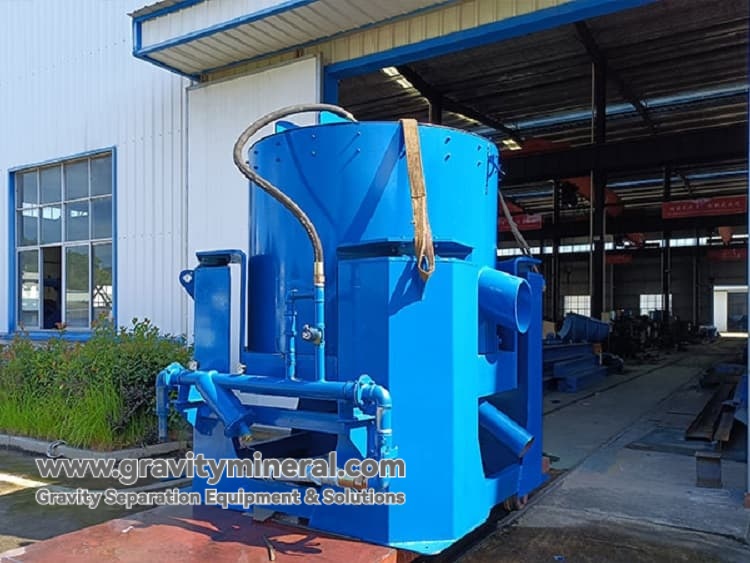
V. Process Flowchart for Placer Gold Processing Plants: Evaluating Results After Pairing
Due to significant variations in placer gold ore grades and gold occurrence patterns, it is not appropriate to provide absolute benchmarks.However, a well-designed gold ore processing flow—featuring thorough ore washing, reasonable screening and classification, and seamless integration of rough, concentrate, and scavenging stages—typically achieves a comprehensive recovery rate within the industry\'s reasonable range. A significant decrease in tailings grade compared to the original ore grade is a direct indicator that the process is functioning properly.
- Are the tailings grades balanced across all particle size fractions?—If a particular fraction is significantly higher, it indicates a problem with the flow distribution or equipment configuration in that section;
- Whether the washed ore discharge is free of gold-bearing mud clumps—if no mud strands are visible when rubbed and the water clears rapidly when stirred, the process is considered合格;
- Is the feed concentration stable across all gravity separation stages?—Fluctuations in concentration directly lead to bed disruption and the loss of fine gold.
If these three criteria are met, the process framework of the placer gold beneficiation line is established. When indicators are unsatisfactory, first inspect the ore washing and screening stages, then check the parameters of the gravity separation equipment. If deficiencies in the front end are not addressed, adjustments in the back end often yield only half the results with twice the effort.
VI. Key Considerations for Sand Gold Processing Equipment Configuration and Process Design
The configuration of a placer gold processing plant\'s flowchart essentially involves ensuring that each piece of equipment handles the specific particle size range it is best suited for.Washing equipment determines whether gold can be liberated; screening equipment determines which unit the gold proceeds to; and gravity separation equipment determines whether the gold can be concentrated and purified. A typical configuration for a placer gold gravity separation solution features jigs, spiral chutes, shaking tables, and centrifugal separators as core gravity separation equipment, supplemented by drum washers,drum screens, and dewatering screens; the process design follows the principle of “more crushing, less grinding; early liberation, early recovery,” with coarse particles recovered early through gravity separation and fine particles captured by centrifuges as a backup.
For placer gold deposits with high clay content and a large proportion of fine gold particles, the washing section should be enhanced; after screening, the fine-grain fraction should undergo separate de-silting, and the gravity separation section should employ a combination of jigging for roughing, shaking tables for concentrating, and centrifuges for scavenging;For riverbank placer gold deposits with clean gravel and a predominance of coarse-grained gold, the process can be appropriately simplified, but the matching of screen mesh sizes to the feed size for the jig must still be strictly maintained. Different ore properties require different configurations; the selection of placer gold processing equipment should be based on ore sample data rather than applying a fixed template.
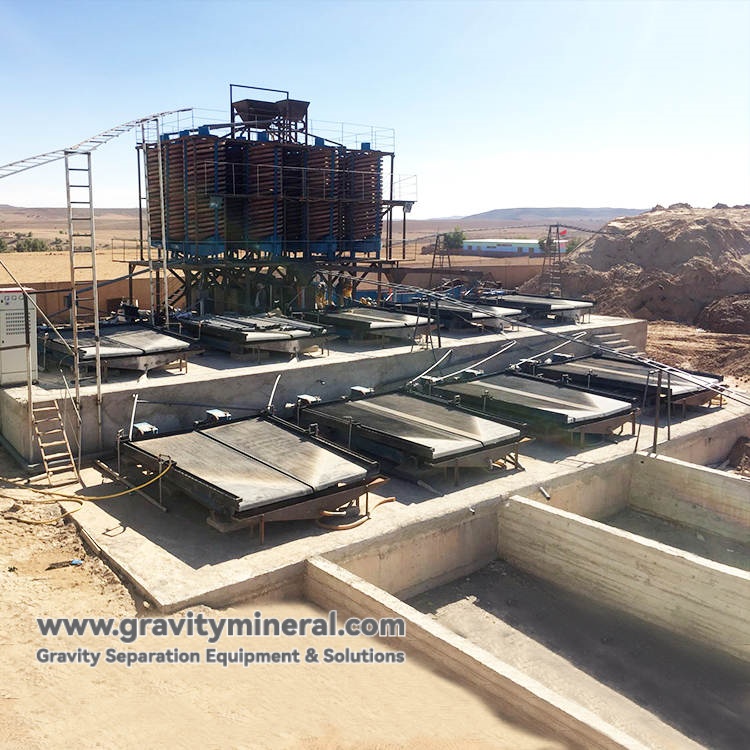
VII. Further Discussion on Process Flow Charts and Equipment for Placer Gold Processing Plants
The design of the placer gold processing flowchart and the configuration of placer gold processing equipment must be determined comprehensively based on ore sample screening data, mud content, the particle size distribution of gold grains, and site conditions.If you are planning a process flowchart for a placer gold processing plant, or if your existing placer gold processing line is experiencing high tailings loss or unstable performance indicators, please provide the process configuration and tailings screening data so that our engineers can assist in identifying problem areas and recommending configuration adjustments.
Our services for the design of sand gold processing plant flowcharts cover mineral processing testing and mineral analysis, process design, equipment manufacturing and turnkey supply, on-site installation guidance, commissioning, and personnel training.We derive process flows using real-world test data to mitigate plant construction risks from the outset; design and equipment are handled by the same team to ensure interface compatibility and production capacity alignment; engineers provide on-site guidance for installation and integrated commissioning, and delivery is considered complete only after successful commissioning and meeting all performance standards.The soundness of a placer gold processing plant\'s process flow diagram is ultimately reflected in whether the three stages—washing, screening, and gravity separation—each fulfill their specific functions while seamlessly integrating with one another. Only when these three stages are properly configured can the recovery efficiency of the placer gold processing flow have a solid foundation.
We provide design services for placer gold processing plant flow diagrams and turnkey supply of placer gold processing equipment, covering ore sample testing, process design, equipment manufacturing, installation, commissioning, and personnel training.
Please feel free to provide ore sample data or describe issues with your existing process; our engineers will assist you in determining the appropriate configuration.