







Suppliers of Alluvial Gold Gravity Concentration Equipment: Analysis of a 200-Metric-Tons-Per-Hour Processing Plant Design and Process Configuration
Key Conclusions
- Alluvial gold does not require crushing or grinding; gravity separation is the primary process, and the success of the scheme hinges on two key stages: ore washing and fine-grain gold recovery.
- A processing capacity of 200 metric tons per hour falls into the upper-middle range; relying solely on sluices or a single centrifuge is insufficient. A classification and recovery configuration consisting of “coarse-grain jigging + fine-grain centrifugation + scavenging sluices” should be implemented.
- The mud content is the deciding factor for this process. If a drum screen is used for ore with high clay content, gold encapsulated in mud clumps will be lost with the tailings.
- The number of shaking tables in the concentrate stage should be determined by working backward from the volume of rough concentrate, rather than oversizing the setup based on the feed rate; otherwise, the ore layer on the table surface will be too thin, and separation efficiency will actually decrease.
Alluvial gold deposits are among the types of ores with relatively simple processing flowsheets in the mineral processing field. Since the gold is naturally liberated, there is no need for drilling, blasting, or ball milling; concentrate can be obtained through washing, screening, and gravity separation. However, a simple process does not mean the configuration can be arbitrary.At a production rate of 200 metric tons per hour, the common issue is not the quality of the equipment itself, but rather a misalignment in the configuration logic: while the equipment list may appear complete, after commissioning, losses of fine-grain gold are abnormally high, and the tailings grade actually exceeds that of the concentrate.
The crux of the problem lies not in individual machines, but in the process flow structure. As a supplier of gravity separation equipment for alluvial gold, GravityMineral\'s fundamental approach to design is: examine the ore first, then draw up the process flow.
I. Assessing Ore Properties: Particle Size Distribution and Silt Content Determine Equipment Selection
The starting point for an alluvial gold processing plant design is not a flowchart, but the ore itself. The particle size distribution of the gold determines the recovery equipment, while the clay content determines the configuration of the ore washing section.
For coarser gold particles—ranging from a few tenths of a millimeter to several millimeters—jigging machines and sluices can effectively capture them.For finer gold particles—ranging from tens of micrometers to even finer—chutes and gold-capturing mats are unable to intercept them, necessitating the use of a centrifugal separator. Feeding all particle sizes into a single piece of equipment may yield acceptable recovery of coarse particles, but the loss of fine particles often exceeds expectations.
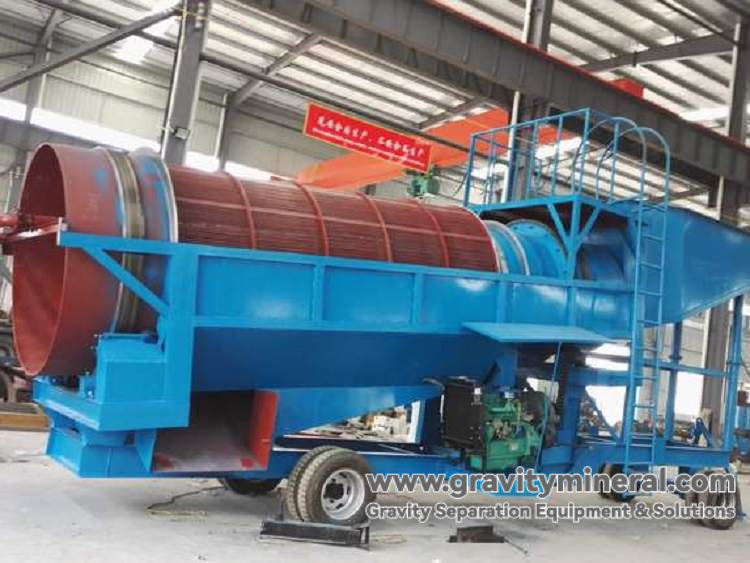
Clay content is a more subtle factor. For river sand with low clay content, a trommel screen combined with high-pressure water washing is sufficient.For clay with a relatively high clay content—a sticky mud that clumps when wet and does not easily break apart—a trommel screen can only screen out the mud clumps; the gold encapsulated within cannot be released. In such cases, a rotary washing machine must be used, relying on the rotation of the drum and the repeated agitation by internal lifting plates to break up the mud clumps.
If geological reports contain only grade data but lack particle size distribution and clay plasticity indicators, it is recommended to supplement these first. The accuracy of the processing plan depends on these two sets of data, which are no less important than the grade itself.
II. Main Process Flow for a 200-Metric-Ton-Per-Hour Plant: Three-Stage Recovery with Clearly Defined Roles
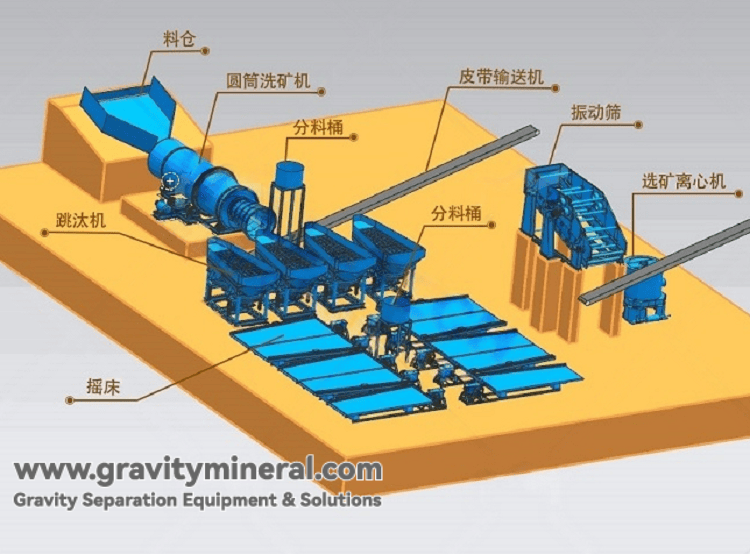
For an alluvial gold processing plant with a capacity of 200 metric tons per hour, it is advisable to divide the recovery process into three distinct stages rather than simply stacking equipment.
Stage 1: Ore Washing and Screening. The raw ore is uniformly fed via a vibrating feeder into a rotary washing machine or a trommel screen. The classification size is typically controlled between 5 and 10 millimeters; the undersize material proceeds to gravity separation, while the oversize gravel is inspected and discarded as tailings.When the slurry contains a high proportion of silt, the undersize from the ore washer should be further processed through a cylindrical screen or linear screen to remove wood debris, grass roots, and large rock fragments, thereby providing qualified feed for the downstream centrifuge.
Stage 2: Coarse Gold Interception. The undersize slurry enters the jig. The jig is highly effective at recovering gold particles larger than 0.5 millimeters; it features high throughput, continuous concentrate discharge, and low operational intensity. For a 200 metric tons per hour operation, it is recommended to install two sawtooth-wave jigs in parallel; if one is undergoing maintenance, the other can maintain partial production capacity.The pulsation curve of the sawtooth-wave jig is more optimal than that of traditional models, offering greater adaptability to a wide range of particle sizes and aligning well with the characteristics of alluvial gold, which exhibits significant fluctuations in particle size. Although the jig concentrate yield is small, it has a high enrichment ratio and is fed directly to the shaking table for fine selection.
Stage 3: Fine-Grain Gold Recovery. The jig tailings are fed into a centrifugal separator. This stage is most prone to investment cuts and is also most likely to result in losses after production begins. The centrifuge utilizes a high-multiplier gravitational field to recover gold particles in the tens-of-micrometers range; traditional sluices exhibit a significantly higher loss rate at this particle size.The centrifuge concentrate is combined with the jig concentrate and fed to the shaking table; the shaking table tailings are returned to the centrifuge feed, forming a small closed circuit. An additional fixed chute lined with a gold-collecting mat may be installed in the sweep section as a backup; after the concentrate is periodically removed, it is fed separately to the shaking table.
Overall recovery rates are influenced by a combination of ore properties, particle size distribution, and operational proficiency, and vary significantly between mines; therefore, it is not appropriate to summarize them with a single figure during the planning stage. The reasonable approach is to determine the achievable process indicators for the specific ore conditions through mineral processing tests and then configure the equipment accordingly.
III. Reference Equipment Configuration for a 200-Metric-Tons-Per-Hour Processing Plant
The table below provides a baseline configuration; actual models and quantities must be adjusted based on the results of particle size screening analysis.
| Process Step | Equipment | Reference Specifications/Parameters | Quantity | Remarks |
|---|---|---|---|---|
| Feeding | Vibrating Feeder | Processing capacity matched to 200 t/h with a margin of safety | 1 unit | Equipped with a pre-screening function to remove large pieces of waste rock in advance |
| Ore Washing | Rotary ore washer or trommel screen | Processing capacity: 200–250 t/h | 1 unit | Rotary washing machine for mud-containing ore; drum screen for low-clay ore |
| Screening | Cylindrical screen/linear screen | Adjustable mesh size: 5–10 mm | 1 unit | Secondary classification after ore washing to protect downstream equipment |
| Rough Selection | Serrated-wave jig | Single-unit processing capacity: 80–120 t/h | 2 units | Operating in parallel to recover coarser gold particles |
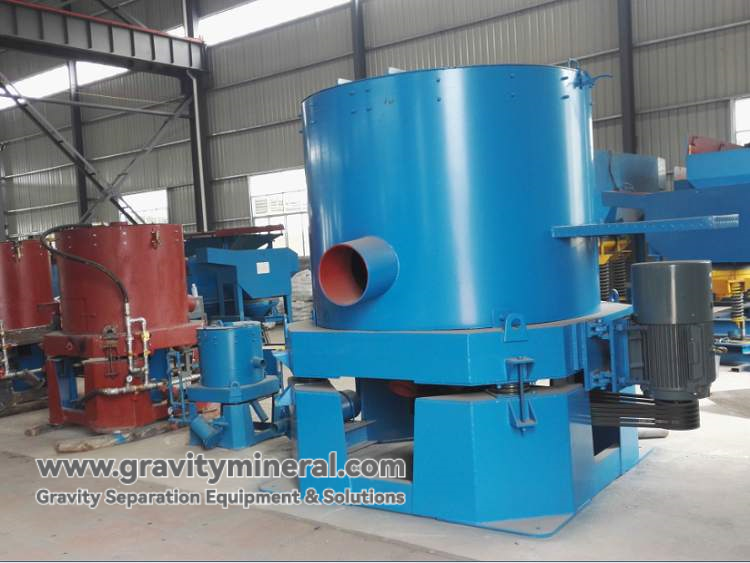
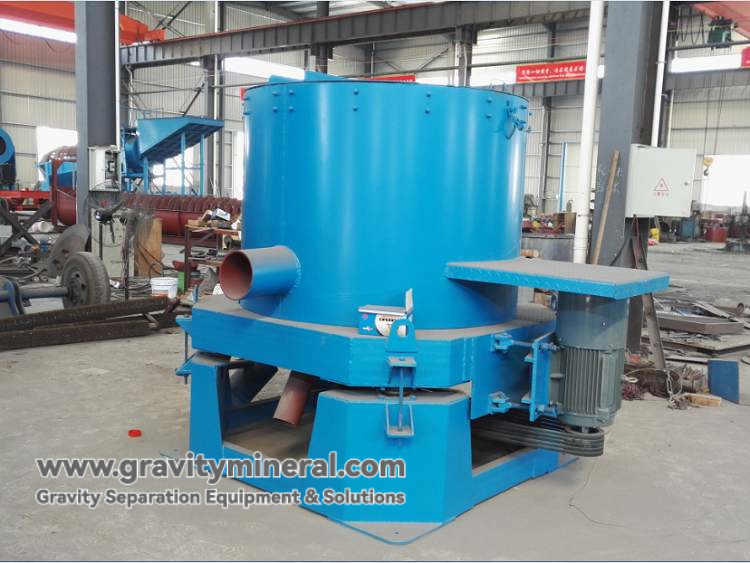
| Fine Sorting | Centrifugal Concentrator | Single-unit processing capacity: 80–150 t/h | 2 units | Recovers ultrafine gold particles and processes jig tailings |
| Sweep Selection | Fixed Chute | 1.2–1.5 m wide, 4–6 m long | 1–2 stages | Lay down a gold mat as a final safeguard |
| Concentration | 6-S shaking table | Selected based on the volume of coarse concentrate | 2 units | Combined jigging and centrifugal concentrate beneficiation |
| Water Supply | Clean Water Pump/Return Water Pump | Selection based on water balance | Several | Tailings water is reused after sedimentation |
| Tailings | Thickener + Filter Press | Selected based on tailings volume | 1 set | Dry stacking or backfilling, depending on local environmental requirements |
The number of shaking tables in the selective concentration stage should be calculated based on the volume of rough concentrate. Since the combined hourly output of jig and centrifuge concentrates is limited, two shaking tables are typically sufficient; configuring too many will result in an excessively thin ore layer on the table surface, leading to reduced separation efficiency.
IV. Investment Allocation Principles: Prioritize Ore Washing and Fine-Grain Recovery
In the investment for a 200-metric-ton-per-hour alluvial gold processing plant, equipment procurement accounts for the majority of the cost, with the remainder allocated to civil engineering, power supply, and installation. Several practical considerations apply to the allocation of funds.
The ore washing section should not be scaled back. Although rotary washers are more expensive than trommel screens, using trommel screens for ore with high clay content significantly impairs the efficiency of downstream jigging and centrifugal separation due to slurry interference, increases water consumption, and results in irreparable losses.
The number of centrifuges should not be reduced. The 200 metric tons of raw ore generates a large volume of jig tailings; if a single centrifuge\'s processing capacity or retention time is insufficient, the recovery of fine-grain gold will be compromised. Operating two centrifuges in parallel is a common minimum configuration.
A practical approach can be adopted for shaking tables. Since the processing capacity of the concentrate recovery section is small, refurbished shaking tables with level bed surfaces and properly functioning headboxes can meet the requirements; funding should be prioritized for centrifuges and ore washers.
Automation configurations should be determined based on labor availability. For projects in remote locations with recruitment challenges, variable-frequency drives can be installed for feeders and pumps, and automatic concentrate discharge systems can be configured for jigging machines to reduce the number of operator positions. For projects with a stable workforce and controllable labor costs, manual operation can also meet the requirements of an alluvial gold processing plant.
The design phase also impacts the total investment. If design institutes, equipment manufacturers, and construction teams are contracted separately, design costs accumulate, and discrepancies may arise between drawings and equipment interfaces, resulting in poor on-site implementation.Having a single team handle mineral processing tests, process flow design, equipment selection and configuration, plant layout, and civil engineering drawings can reduce coordination costs at the interfaces, resulting in significant savings on design fees for medium- to large-scale projects.As a supplier of alluvial gold gravity separation equipment, GravityMineral integrates design and manufacturing under a single chain of responsibility precisely to avoid such disconnects.
V. Analysis of Common Technical Misconceptions
Can chutes serve as primary equipment? They are suitable for coarse-grained gold but not for fine-grained gold. Chutes have limited recovery rates for ultrafine particle sizes, which often constitute a significant proportion of alluvial gold. Chutes are best used for scavenging or as an auxiliary in roughing, but should not be relied upon for primary recovery.
Can centrifugal concentrate be sold directly? Centrifugal concentrate is a mixture of heavy sand with limited gold grade and contains large amounts of heavy minerals such as magnetite and ilmenite. Selling it directly may result in lower prices during the pricing process.After separating black sand through shaking table concentration, the concentrate grade is improved, and both transportation and pricing conditions are enhanced.
Can tailings water be discharged directly? Alluvial gold processing does not use chemicals, and tailings water consists primarily of silt and sand; however, suspended solids levels must still meet environmental requirements. Installing a thickener to reuse clear water and filter-pressing the underflow for dry stacking has become standard practice rather than an optional feature.
How should fluctuations in ore properties be addressed? The stroke and frequency of the jig, the slope of the shaking table, and the flow velocity in the chutes are all adjustable; operational flexibility should be built into the design.When fluctuations exceed a certain range, operating parameters or specific process steps must be adjusted. The acceptable limits should be determined during the testing phase through comparative testing of different ore samples and clearly communicated to the operating team during training.
VI. Why Choose GravityMineral as Your Alluvial Gold Gravity Concentration Equipment Supplier
GravityMineral has specialized in the manufacture of gravity separation equipment for 20 years. Our core belief is that the technical sophistication of an alluvial gold processing plant lies not in individual pieces of equipment, but in their integration. Given variations in ore particle size distribution, clay content, and topographical conditions, equipment selection and process flow design must be adjusted accordingly.Simply replicating standard designs across different mines makes it difficult to guarantee optimal operational performance.
If you are currently advancing an alluvial gold processing plant project, please submit your ore particle size analysis and clay content data to the GravityMineral engineering team, who will use this information to develop a tailored configuration plan. Obtaining a complete equipment list and quotation, or first sending representative ore samples for beneficiation testing, can serve as the first step in launching your project.As a supplier of alluvial gold gravity separation equipment, we do not offer generic templates, but rather processing plant solutions with a capacity of 200 metric tons per hour that are tailored to the specific properties of your ore.
GravityMineral · Alluvial Gold Gravity Concentration Solutions · Customized Based on Ore Properties