







Turnkey Complete Production Line for Gold Ore Gravity Concentration with a Capacity of 50 Metric Tons Per Hour
A turnkey production line for gold gravity separation with a capacity of 50 metric tons per hour essentially involves entrusting a single team with the overall design, manufacturing, installation, and commissioning of all stages—including crushing, grinding, gravity separation, and dewatering—along the chain from “ore intake” to “gold concentrate output.”This scale—neither too large nor too small—is precisely the range where a configuration tailored to the specific properties of the ore is most critical. This article addresses key industry concerns in distinct sections: whether the ore is suitable for gravity separation, how to configure the equipment sequence, what the turnkey delivery entails, how to determine the construction schedule and acceptance criteria, and what pitfalls to avoid in advance.
I. Assess Ore Characteristics First, Then Discuss the Configuration of Gravity Separation Equipment for Gold Mines
Gravity separation relies on density differences. The density of native gold is significantly higher than that of pyrite and quartz, so there are no theoretical obstacles. However, while the principle holds true, it does not mean that every gold mine is suitable for gravity separation as the primary method.
Three ore characteristics truly determine the direction of a turnkey solution for a complete 50-metric-ton-per-hour gold gravity separation production line: the size distribution of gold particles, the minerals with which gold is associated, and the clay content and presence of harmful impurities.For ores with coarse gold grain size and early individual liberation, gravity separation can recover coarse gold particles early in the grinding circuit; for ores with fine grain size and severe sulfide encapsulation, gravity separation can only handle pre-concentration, tailings rejection, and early recovery of coarse particles, while the fine-grain fraction must be recovered by flotation or leaching.
There is a clear balance between grinding fineness and gravity separation recovery efficiency. If the grinding is too coarse, the gold remains unliberated and cannot be recovered by gravity separation; if the grinding is too fine, the sulfides become muddied, and the gold particles are lost with the fine slime, so gravity separation cannot recover them either.This balance can only be determined through mineral processing tests; it cannot be established based on experience alone. Therefore, prior to the commencement of a gold gravity separation production line, the processability test of representative ore samples is the first step and a prerequisite for the successful implementation of the entire turnkey production line solution.
II. Main Process Flow of a 50-Metric-Ton-Per-Hour Gold Gravity Concentration Line
Based on conventional operating conditions, a production rate of 50 metric tons per hour translates to a daily processing capacity of several hundred metric tons. The main process flow of this line is typically divided into five stages.
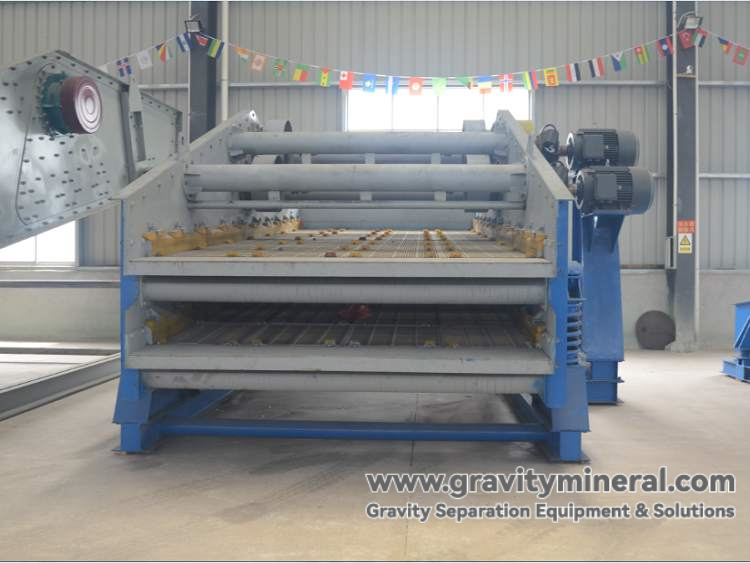
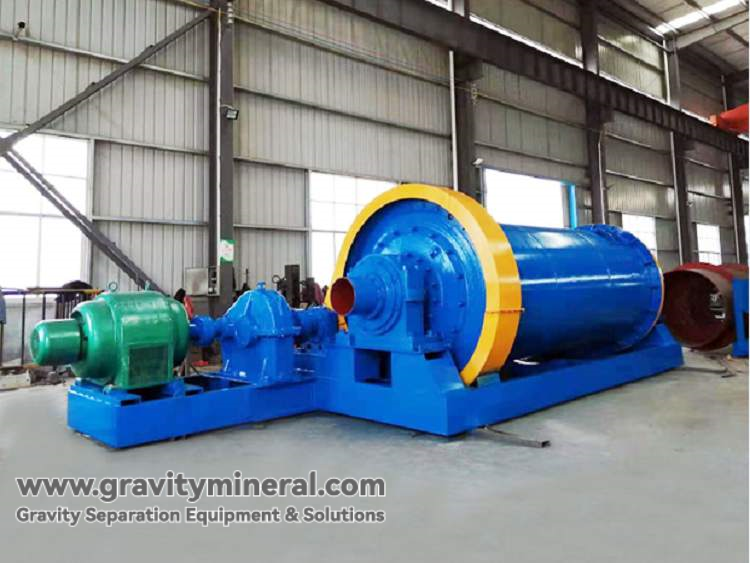
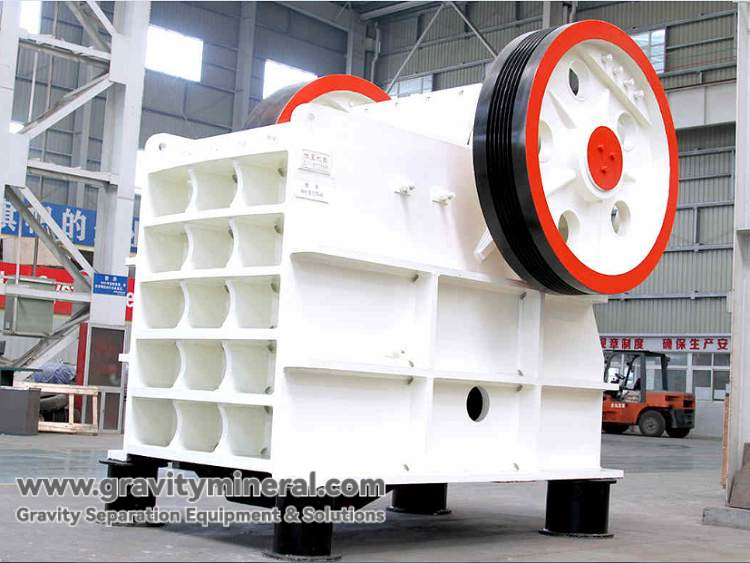
The crushing and screening section emphasizes the principle of “crush more, grind less.” A jaw crusher is used for primary crushing, while a cone crusher paired with a vibrating screen in a closed-circuit system is used for secondary crushing. By controlling the feed size to the mill, the mill\'s power consumption can be minimized.The grinding and classification section uses a grid-type ball mill paired with a spiral classifier or hydrocyclone. The forced discharge characteristic of the grid-type mill is suitable for coarse grinding and facilitates early recovery in the gravity separation process.
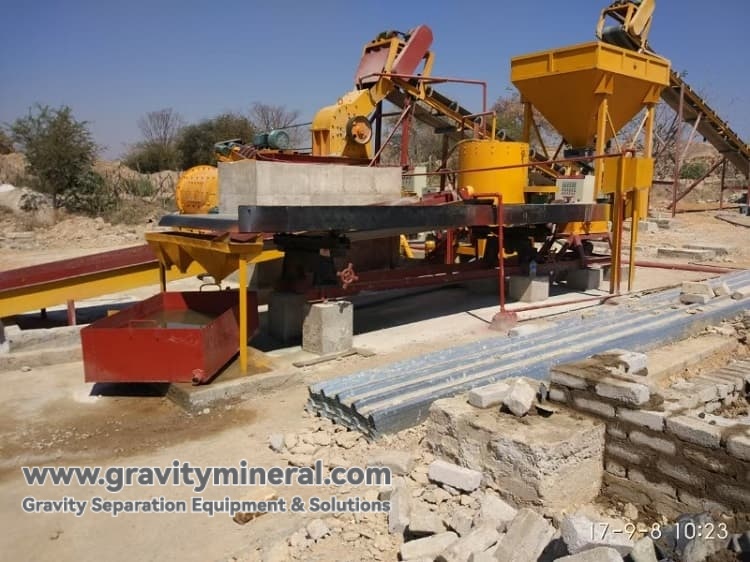
The roughing stage of gravity separation is the core of the entire line. Jigging machines have high throughput and are suitable for coarse particles, while centrifugal separators are highly effective at capturing fine-grained gold but have relatively limited throughput.For a 50-metric-ton-per-hour operation, two common configurations are: jigging for roughing combined with a centrifuge for scavenging, or a centrifuge positioned at the mill discharge for rapid recovery, with the jig processing the classified tailings. The choice depends on the gold particle size distribution provided in the test report.
The fine-selection stage primarily uses shaking tables; the coarse concentrate is fed into the shaking tables for zone separation to obtain high-grade gold concentrate. In situations where space is limited, multi-deck suspended shaking tables can be used to increase throughput while maintaining the same footprint.The tailings stage is determined by the subsequent process: if the tailings are fed to flotation, they are concentrated before feeding; if this is the final stage, a thickener followed by a filter press is used for dewatering and dry stacking.
This main process flow is not a fixed template. The number of stages, equipment specifications, and interconnections in a gold ore beneficiation process must all be adjusted according to the characteristics of the ore.
III. Turnkey Gold Gravity Concentration Equipment Production Lines: What Exactly Is Included?
The term “turnkey” is frequently used in the industry, but its actual value varies significantly.
The first type involves delivering a list of equipment; the process ends upon delivery and acceptance at the site, with installation and commissioning handled by the mine operator. The second type includes installation and commissioning; the contractor leaves the site once the equipment is installed and running during no-load testing, with no responsibility for the stability of performance indicators.The third type ensures compliance with performance standards and production targets. The contract specifies processing capacity, recovery rate targets, and a continuous operation evaluation period; if these are not met, corrective actions are required.
The truly meaningful turnkey approach is the third type. It requires the service provider to possess three capabilities simultaneously: in-house manufacturing capabilities to ensure consistent equipment delivery schedules and quality; in-house design capabilities to complete process flow and layout designs; and in-house commissioning engineers who can be stationed on-site to ensure the line is fully operational.If even one of these three capabilities is missing, the chain of responsibility breaks, making it easy for blame to be shifted back and forth between the equipment supplier, the design firm, and the contractor when problems arise.
The value of a turnkey solution for a complete gold ore beneficiation production line lies in consolidating the three key elements—equipment, design, and on-site implementation—under a single entity responsible for the entire project.The equipment is manufactured by the same team, the process is designed by the same team, and interface compatibility and production capacity alignment are resolved at the drawing stage—rather than discovering on-site that the processing capacities of the jig and shaking table do not match.
IV. Key Trade-offs in Equipment Configuration
The relationship between jigging machines and centrifuges. The two are not substitutes for one another. Jigging machines handle coarse particle sizes and high throughput with low operating costs; centrifuges handle fine particle recovery, and their backwash water consumption must be controlled. A line with a capacity of 50 metric tons per hour typically uses both in parallel, with each handling a specific particle size range.
Shaking Table Specifications and Quantity. In the fine-selection stage, where ore volume is low, a single 6-S shaking table is sufficient; however, the feed rate must be strictly controlled. Excessive feed can cause zone confusion and lead to a drop in concentrate grade. Multi-deck shaking tables are suitable for sites with limited space or to accommodate future capacity expansions.
Matching of Mills and Classification Equipment. Low classification efficiency results in fine particles being carried over in the return sand, causing over-grinding of fine particles in the mill, which adversely affects both gravity separation and subsequent flotation. The choice between spiral classifiers and hydrocyclones depends on the processing capacity and required classification particle size.
The dewatering stage cannot be omitted. High moisture content in the concentrate affects transportation pricing, and direct discharge of tailings fails to meet environmental regulations. The integration of thickeners and filter presses must be properly planned during the design phase.
There is no one-size-fits-all answer for equipment configuration. Even for production lines of the same scale, the equipment list can vary significantly depending on the ore characteristics. This is why the selection of heavy media separation equipment for gold mines must be based on test data.
V. Project Schedule, Acceptance, and Scope of Responsibility
For a turnkey gold gravity separation production line with a capacity of 50 metric tons per hour, the project timeline for domestic projects—from contract execution to trial runs with actual feed material—typically spans several months. For overseas projects, additional time is required for ocean freight, customs clearance, and on-site organization, significantly extending the overall timeline.The manufacturing lead time for core gravity separation equipment is relatively controllable; for projects scheduled at in-house manufacturing facilities, delivery dates are less affected by external supply chains.
Acceptance criteria must be clearly specified in the contract: whether the processing capacity meets the agreed-upon value, whether the recovery rate meets the targets supported by test reports, and the number of consecutive days of operation required to meet the standards. Performance commitments must be based on ore testing; absolute figures divorced from the specific characteristics of the ore are meaningless.
The scope of responsibility must also be clearly defined. Civil engineering and general installation workers are typically organized locally by the mine operator, while the service provider dispatches engineers to supervise installation, lead commissioning, and train operators. This division of labor ensures project quality while avoiding the cost increases associated with dispatching large numbers of domestic workers to the site.Equipment quality, process design, and achieving commissioning standards fall under the service provider\'s responsibility, while proper use in accordance with procedures and routine maintenance are the mine operator\'s responsibility.
VI. Common Misconceptions and How to Avoid Them
Misconception 1: Proposing a solution without conducting tests. Without data from representative ore samples, equipment selection becomes a matter of guesswork. If performance metrics do not meet expectations after construction, the resulting losses will far exceed the cost of testing.
Misconception 2: Comparing only equipment quotes without evaluating process compatibility. Even if equipment names on quotations appear similar, differences in the number of process stages and particle size distribution can result in significantly varying actual recovery rates.
Misconception 3: Blindly pursuing finer grinding fineness. Over-grinding leads to sludging, causing gold to be lost in the fine slurry, which adversely affects both gravity separation and flotation. “More crushing, less grinding; early liberation, early recovery” is the correct approach.
Misconception 4: Operating gravity separation in isolation without a safety net. For ores with a high proportion of fine-grained gold, gravity tailings grades cannot be reduced sufficiently; without flotation or leaching, metal is lost in the tailings.
Misconception 5: Neglecting wear parts and spare parts. Jig screens, centrifuge drums, and shaking table surfaces all have a limited service life. Spare part supply must be clearly defined during the planning stage to avoid production downtime due to part shortages after commissioning.
VII. Which Projects Are Suitable for This Line?
A turnkey, complete gravity separation production line for gold ore with a capacity of 50 metric tons per hour is suitable for the following scenarios: projects involving rock gold ore with relatively coarse gold particle distribution and early single-particle liberation;projects involving placer gold deposits where, after washing and screening, gravity separation serves as the primary processing method; retrofit projects with existing flotation or leaching processes that require the addition of an early-recovery gravity separation stage at the front end; and new processing plants seeking to reduce chemical consumption and environmental pressure through gravity separation.
It is equally important to clarify situations where this approach is not suitable: projects where gold is primarily present as fine-grained disseminations or encapsulated within sulfides—where gravity separation recovery rates are limited—gravity separation can only serve as a pre-concentration method, and the main process must be arranged separately; projects with highly variable ore characteristics that have not undergone systematic testing should first conduct additional testing before finalizing a plan.
The criteria for judgment are straightforward: if mineralization data supports gravity separation as the primary recovery method, the process is viable; if the data does not support this, gravity separation should be relegated to a pre-concentration or auxiliary role.
VIII. Implementation Pathway for Achieving Production Standards
The implementation sequence for a 50-metric-ton-per-hour gold gravity separation production line should be as follows: conduct ore sample testing to determine ore characteristics and liberation size; simultaneously develop the process flow design and equipment selection; finalize the layout plan and civil engineering requirements;equipment manufacturing and turnkey supply, on-site installation guidance, individual and integrated commissioning, personnel training, and final acceptance after performance indicators have stabilized.
Getting the sequence right is more important than overpaying for equipment. The core value of a turnkey gold gravity separation production line lies in having a single responsible entity drive every step of this process, ensuring that the investment corresponds to defined performance targets—rather than merely delivering a pile of equipment that is simply unloaded on-site.
If you are planning a 50-metric-ton-per-hour gold gravity separation project, you should first compile information on the ore type, raw ore grade, target processing capacity, feed particle size, and site conditions, and provide these along with representative ore samples.so that an assessment of the ore\'s characteristics and feasibility tests can be conducted first, followed by the determination of the gold gravity separation equipment configuration and the turnkey solution for the entire production line. The more complete the ore data, the clearer the correlation between the proposed solution and the performance metrics.