




How Should a Gravity Gold Concentration Production Line Be Configured? Complete Equipment and Gravity Concentration Process Solutions
Let\'s start with three key points
Key Point 1: When configuring a gravity gold processing line, the first step isn\'t selecting equipment—it\'s determining the ore\'s characteristics. For ores with a high content of sticky gangue, skipping the ore washing and scrubbing steps and feeding the ore directly into the chute will cause fine-grained gold to be carried away with the mud clumps, rendering even the best downstream equipment useless.
Key Point 2: Gravity separation cannot be accomplished with a single piece of equipment. Roughing serves to discard waste, scavenging captures residuals, and concentrating elevates the grade—each stage has its own specific function. Relying solely on a shaking table or a centrifuge will either limit throughput or fail to recover fine-grained gold completely.
Key Point 3: The core logic behind the equipment configuration for an entire gravity gold beneficiation production line can be summarized in one sentence: Divide by particle size, sort by density, and recover early and quickly to prevent already liberated gold particles from circulating repeatedly through the process. From feed to concentrate, every step of this line involves pitfalls that have been encountered in actual production.
Prerequisite for Configuring a Gravity Gold Processing Line: Assess Ore Characteristics First, Then Discuss Equipment
When taking on a gold mining project, there\'s no need to rush into drawing a flowchart. The configuration plan for a gravity gold beneficiation production line depends on the state in which gold exists in the ore.
Alluvial gold deposits and vein gold deposits require two distinct technical approaches. In alluvial gold deposits, the gold has already been liberated from the host rock, with particle sizes typically ranging from 0.074 millimeters to 2 millimeters. Since native gold has a higher specific gravity than gangue, the density difference is pronounced, making gravity separation the most direct approach—without the need for crushing or grinding.The configuration of a gravity gold processing production line for this type of ore is relatively simple: ore washing and screening, roughing, and concentrating—just three stages are sufficient to form a complete process.
Rock gold ores are somewhat more complex. Gold is embedded in pyrite or quartz veins and must first be ground to achieve single-particle liberation before gravity separation can be performed. If the grinding fineness is insufficient, the specific gravity of the intergrown particles will not be high enough, making it difficult to recover them via gravity separation; if grinding is excessive, fine-grained gold will be washed away by the water flow on the shaking table surface and similarly cannot be recovered.It is generally accepted in the industry that gravity separation yields optimal results for particles larger than 0.074 millimeters, while the difficulty increases significantly for particles smaller than 0.03 millimeters.
There is another type of ore that is often overlooked: placer gold deposits or ancient riverbed deposits containing a high proportion of sticky gangue. A significant portion of tailings loss at placer gold processing plants stems not from the separation equipment itself, but from the failure of the upstream pretreatment process to break up the clay agglomerates.Kaolinite-type clays form colloids when exposed to water, trapping fine-grained gold within them; these particles cannot be screened out by vibrating screens nor retained by chutes. Gravity gold processing lines for this type of ore must be equipped with a washing and liberation unit to break up the clay agglomerates before subsequent separation can take place.
The method for determining this is straightforward: take a mineral sample, add water, stir it, and let it settle. If the sample feels slippery when rubbed between your fingers and the clay layer does not disperse, a washing machine with a desliming hopper should be installed; if the clay settles and disperses quickly, the material can proceed directly to roughing after screening.
The ore washing and scrubbing unit, trommel screen, and trough feeder are upstream components of a gravity separation line; most domestic gravity separation equipment manufacturers are capable of supplying these as a complete set.Manufacturers specializing in gravity separation typically include ore washing, screening, and feeding equipment in their product lines. When selecting equipment, they can calculate production capacity in conjunction with the subsequent gravity separation section, thereby avoiding interface mismatches that can occur when ore washing equipment and chutes are supplied by different manufacturers.
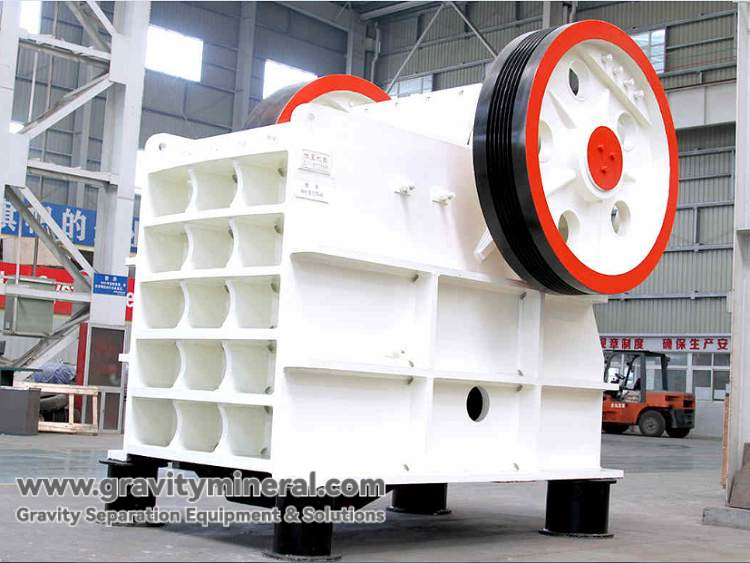
Roughing Stage: Discard Waste Rock First, Then Focus on Recovery Rates
The objective of roughing is clear: to remove a large amount of gangue at a low cost while retaining gold particles.
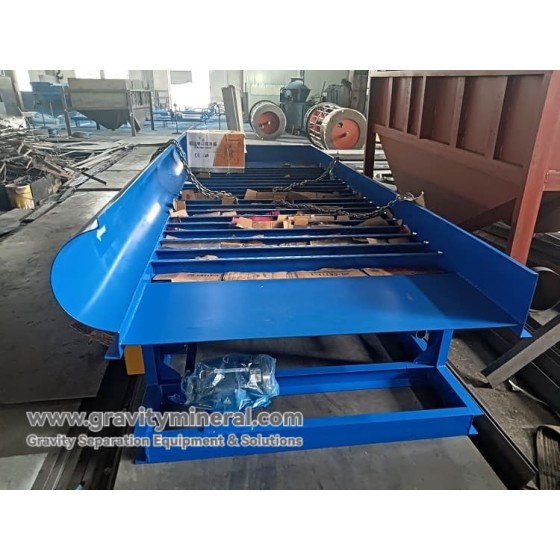
Vibrating chutes are a common choice for the roughing of placer gold. Compared to fixed chutes, the rubber base plate of a vibrating chute pulsates periodically; once heavy minerals have settled, they are less likely to be dislodged by water flow, and the processing capacity is also substantial.In engineering practice, combining a vibrating chute with a flat chute for two-stage recovery yields good single-grain gold recovery results while simultaneously pre-removing most of the gangue-bearing heavy sand.
Jigging machines are more commonly used in rock gold grinding circuits. Their advantage lies in their wide processing particle size range; coarse gold settles to the bottom of the jigging chamber and is discharged through a screen plate.A common configuration involves placing the jig downstream of the grinding and classification circuit to first recover coarse free gold, with the tailings then fed into a centrifuge and shaking table. Compared to traditional jigs, sawtooth-wave jigs feature a more optimal water flow pulsation curve, offer greater adaptability to a wide range of particle sizes, and provide higher processing capacity per unit area.
Spiral chutes are suitable for applications with high throughput. They feature a simple structure with no moving parts and can remove large quantities of light minerals in a single pass. However, their ability to capture fine and ultrafine gold is limited; when used alone, they tend to leave gold in the tailings. They are typically employed as pre-concentration equipment, followed by a scavenging stage.
There is one step here that is often omitted: scavenging. Sending roughing tailings directly to the tailings pond may seem to save on equipment investment at first glance, but in reality, fine and ultrafine gold is lost at this stage.Adding a fixed chute or belt chute for scavenging requires minimal investment but effectively recovers the fine and ultrafine gold particles missed by the roughing stage. This is particularly evident in placer gold processing lines; running the roughing tailings through a chute once more typically results in improved recovery rates.
Concentration Stage: Division of Labor Between Centrifuges and Shaking Tables
If the grade of the rough concentrate is insufficient, it commands a low price and is difficult to smelt. The task of the fine selection stage is to remove gangue and associated heavy minerals from the rough concentrate to raise the gold grade.
The placement of the centrifuge in the fine concentration stage is critical. It relies on the centrifugal force generated by high-speed rotation to amplify density differences, resulting in a high enrichment ratio.For fine-grained gold, especially particles smaller than 0.074 millimeters, the recovery efficiency of centrifuges is significantly superior to that of traditional shaking tables. However, since centrifuges discharge concentrate intermittently, although the concentrate grade is high, there is an upper limit on throughput; they are therefore typically placed at the front end of the fine-selection stage to serve as the primary recovery unit.
Shaking tables handle the final purification. The rough concentrate from the centrifuge is fed into the shaking tables, where the asymmetrical reciprocating motion of the bed surface, combined with transverse water flow, separates gold and heavy sand into distinct density zones, resulting in clearly defined concentrate, middlings, and tailings zones.The 6-S shaking table has a wide range of applications, and the concentrate grade it produces can meet the requirements for subsequent smelting or amalgamation drum processing. When plant space is limited, multi-tiered lifting-type shaking tables can multiply the processing capacity while occupying the same floor area, making them worth considering in a comparative evaluation.
A typical concentration scheme is as follows: coarse concentrate from the centrifuge is fed into the shaking table for fine concentration, with the concentrate sent to smelting and the middlings returned to the process. The step of returning the middlings should not be omitted, as the shaking table middlings still contain a significant amount of intergrown ore bodies. Discarding them directly as tailings would be a waste; returning them to the grinding mill or to the centrifuge for further processing helps improve recovery rates.
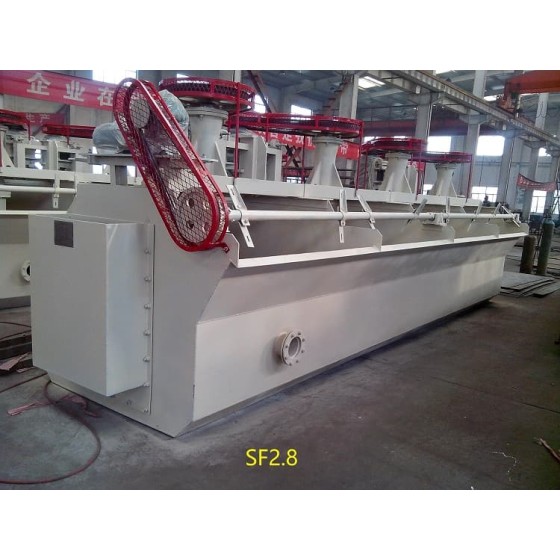
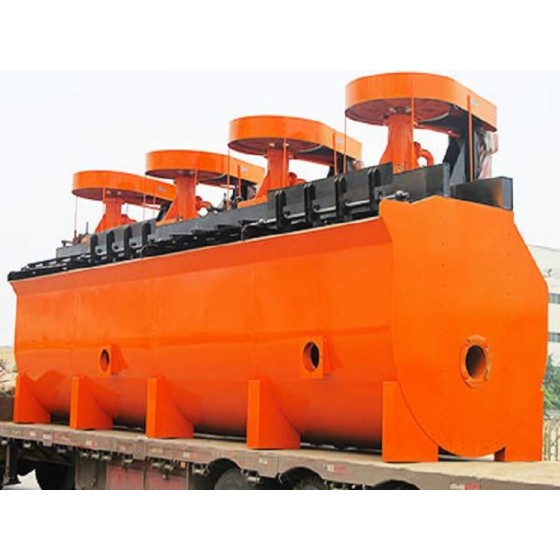
If the ore contains associated tungsten, antimony, or sulfide minerals, the gravity concentration concentrate may not be pure gold but rather a gold-tungsten mixed concentrate or a gold-sulfide concentrate. In such cases, gravity separation can only serve as a pre-concentration step, and subsequent separation must be handled by flotation or magnetic separation.When configuring a gravity gold beneficiation production line, an interface for this process stage should be reserved.
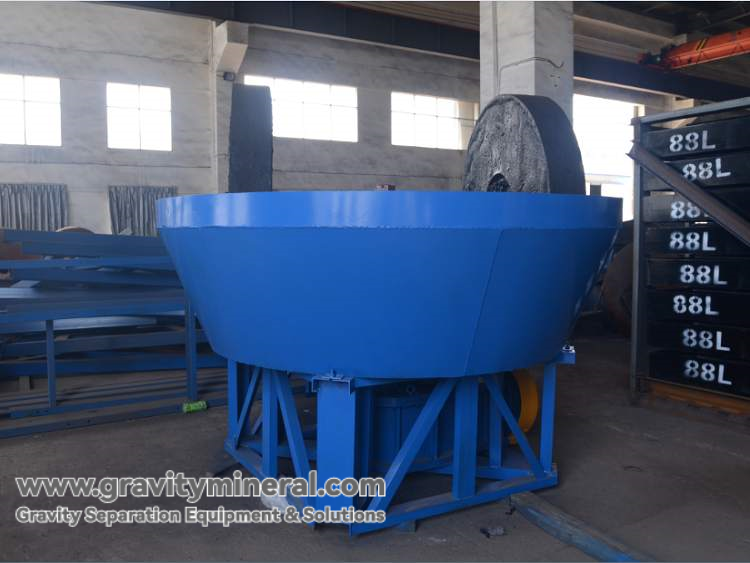
Equipment Configuration Sequence for a Complete Gravity Gold Processing Production Line
The table below uses gravity separation in a rock gold ore grinding circuit as a template; for placer gold lines, the crushing and grinding stages can be omitted, and the process can begin directly with ore washing and screening.
| Process Stage | Core Equipment | Function | Configuration Key Points |
|---|---|---|---|
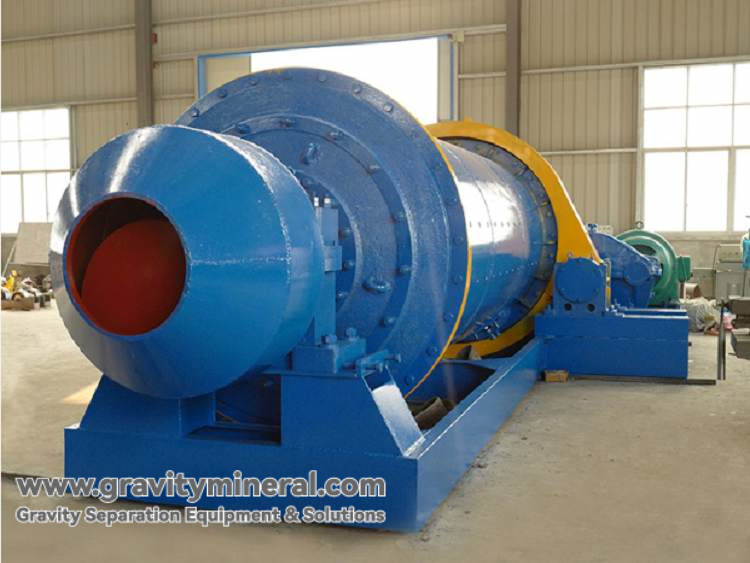
| Feeding and Grinding | Vibrating feeder, grid-type ball mill, high-frequency fine screen | Grind to single-particle liberation; control particle size | Undersize feed goes to gravity separation; oversize returns to the mill |
| Rough Concentration | Sawtooth-wave jig or pulsating chute | Recover coarse free gold and discard tailings | Placed at the mill discharge or the overflow of the classifier |
| Sweep selection | Fixed chute or belt chute | To capture fine-grained gold from the roughing tailings | Maintain slurry flow; do not desliming first |
| Enrichment | Centrifugal concentrator | Enriches fine-grained gold and improves the enrichment ratio | Gravity values are adjusted based on ore samples; feed concentration should be moderate |
| Refining | 6-S Shaking Table or Multi-Tier Shaking Table | Final grade enhancement to produce smeltable concentrate | Control the feed rate to each unit to prevent overloading |
| Recirculated Water and Tailings | Thickener, filter press, and return water tank | Recirculated water and dry-stacked tailings | Improve water recycling efficiency |
In this process, the role of the hydrocyclone is often overlooked. Tailings from the centrifuge enter the hydrocyclone for classification; the underflow is returned to the grinding mill for regrinding, while the overflow proceeds to the next stage.The benefit is that already liberated fine-grain gold is not over-ground in the mill, while unliberated agglomerates have the opportunity for another round of grinding. Pairing the first grinding stage with the first gravity separation stage, and the second grinding stage with the second gravity separation stage—this staged grinding and beneficiation process is an effective means of controlling over-grinding.
The configuration logic for placer gold processing lines differs: the grinding stage is omitted and replaced with a drum washer and a cylindrical screen.The rotating drum of the ore washer, combined with high-pressure water flushing, breaks up clay agglomerates and washes away the mud film on the surface of the gravel; the undersize material is fed into a centrifuge or chute for rough selection. The oversize gravel is tested for gold content and discarded if confirmed to be too low.
If the goal is to minimize the interface risks associated with piecing together equipment from multiple suppliers, opting for a turnkey solution is another viable approach. Manufacturers that produce both the core gravity separation equipment and the配套 crushing, washing, and screening lines can have the same team calculate the jig processing capacity and the number of subsequent shaking tables required, thereby reducing the likelihood of material backlog caused by a situation where “the jig processes too much material and the shaking tables cannot keep up.”Such manufacturers typically have a wealth of case studies covering various ore conditions; their experience with similar scenarios can serve as a reference during equipment selection, though final parameters must still be determined based on test results from samples of the specific ore.
Three Common Issues During Commissioning
First, the feed concentration to the centrifuge is too high. An excessively thick slurry interferes with the separation of light and heavy minerals in the centrifugal field, resulting in a decrease in concentrate grade. The feed concentration should be maintained within a moderate range, with specific values determined based on the equipment model and ore sample.
Second, the feed rate to the shaking table exceeds the limit. Shaking tables are precision equipment with limited bed width; if the slurry layer is too thick, the separation zones become blurred. When the feed rate to a single unit exceeds the rated range, consider combining units, switching to multi-deck shaking tables, or pre-concentrating the coarse concentrate.
Third, the water flow for ore washing is insufficient. In the ore washing and screening process of a placer gold line, insufficient water flow can prevent clay from being washed away, leading to screen clogging and a sharp drop in undersize yield. The ratio of water flow to sand ore volume must be adjusted based on the clay content; on-site assessments can be made by evaluating the undersize yield and the condition of the screen surface.
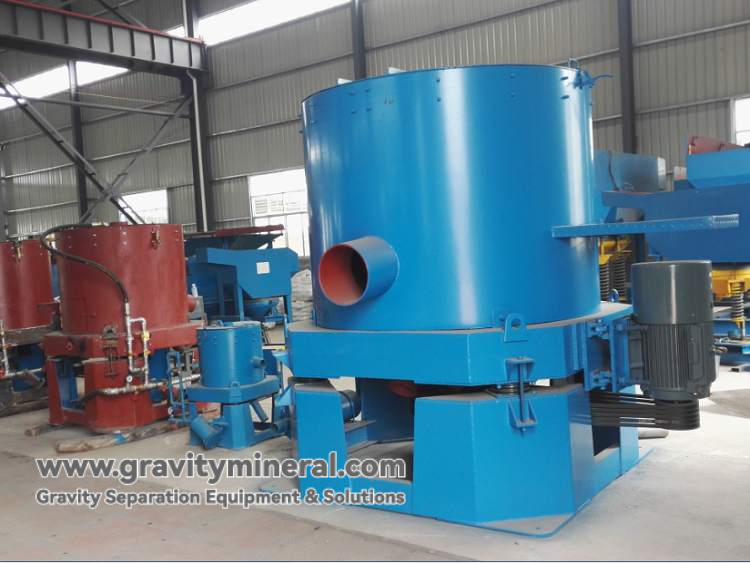
Basic Assessment of Investment and Return on Investment
In the investment breakdown of a gravity gold processing line, equipment accounts for the largest portion, while installation and civil engineering costs must also be factored in.For rock gold gravity separation lines, equipment costs typically account for a large proportion of the total investment, with the remainder consisting of steel structures, piping, electrical systems, and civil engineering. Since alluvial gold lines eliminate the grinding process, equipment investment is relatively lower; however, the costs for ore washing and screening cannot be reduced.
The payback period depends on the grade and the price of gold.When grades are high and gold prices are stable, the advantage of a gravity separation line is faster cash flow recovery—rough concentrate is produced quickly, and the smelting cycle is short, unlike flotation concentrates, which require waiting for dewatering, transportation, and smelter scheduling. The improvement in recovery rates and the reduction in tailings grade following a gravity separation retrofit are typically the primary sources of net additional benefits.
However, it should be noted that gravity separation is not suitable for all gold deposits. For ores with extremely fine grain sizes or where gold is tightly encapsulated by sulfides, there is an upper limit to gravity recovery rates. The appropriate approach for such ores is to use gravity separation to “quickly recover” the already liberated coarse-grained gold early on, while the remaining portion is processed via flotation or cyanidation.Relying solely on gravity separation to handle the entire recovery process is often not economically viable. The mineral processing industry has no shortage of equipment or design drawings; what is lacking is a thorough understanding of the ore\'s properties before deciding which equipment to use at each stage.
Common Questions About Gravity Gold Processing Lines
Q: Can a gravity gold processing line be set up for small-scale gold mines with low throughput?
A: Yes. Gravity separation equipment is highly modular. For small-scale operations, you can start with a single jig and a shaking table, reserving expansion interfaces during the initial design phase to gradually add equipment later.
Q: Can the gravity separation process adapt to significant fluctuations in ore properties?
The design takes into account the range of fluctuations and operational tolerance. The stroke and frequency of the jig are adjustable, the slope of the shaking table is adjustable, and spiral chutes can be replaced with models of different pitches.If fluctuations exceed a certain range, operational parameters or specific process steps will need to be adjusted; the adaptability limits should be evaluated during the testing phase through comparative testing of different ore samples.
Q: How should one decide between gravity separation and flotation?
It depends on the properties of the ore. Gravity separation has lower costs, is more environmentally friendly, and involves no chemical contamination; it is suitable for ores with significant density differences and coarser grain sizes. Flotation offers high separation precision and is suitable for fine-grained and complex mixed ores.In many cases, the two processes are complementary: gravity separation is used for roughing and tailings removal, while flotation is used for concentration and grade improvement—that is, a combined gravity-flotation process.
The configuration of a gravity gold beneficiation production line is, in essence, a response to the properties of the ore. Only when the ore characteristics are clearly identified can the division of labor among the three stages—roughing, scavenging, and concentrating—be justified, and equipment selection remain grounded in reality.The equipment configuration table and process sequence provided above serve as a general framework; specific models, parameters, and the number of stages must still be determined based on ore sample test data. Conduct tests first, perform cost calculations next, and finally install the equipment—this is the fundamental sequence for avoiding detours in the construction of a gravity gold processing line.