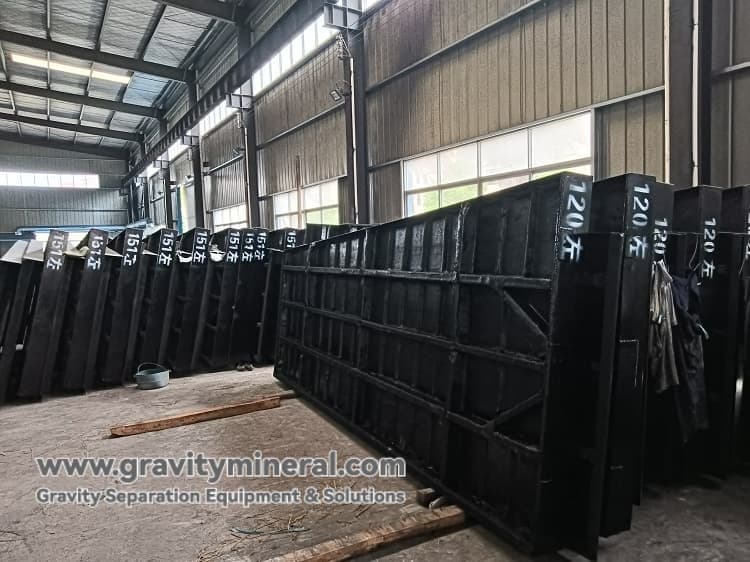
Tungsten (Wolframite ore) ore processing plant solution: Wolframite (Fe/MnWO₄) is an important source of tungsten. It is characterised by very high specific gravity, weak magnetic susceptibility and extreme brittleness. Because it shatters so readily during comminution, the core metallurgical principle of a wolframite gravity plant must be: "recover tungsten early, reject waste early."
GravityMineral's wolframite gravity processing plant uses a strict "staged grinding and early recovery" circuit. By combining high-capacity gravity separation with targeted flotation and high-intensity magnetic separation, it efficiently recovers coarse, fine and ultrafine wolframite. This turnkey EPC solution ensures excellent recovery (90–92%) and produces a premium, commercial-grade tungsten concentrate (WO₃ ≥ 65%).
What Is Wolframite?
Wolframite is the isomorphous solid-solution series between ferberite and hübnerite. It has a very high specific gravity (7.1–7.5 g/cm³), is weakly magnetic and is brittle and easily broken. In nature wolframite commonly occurs with quartz veins and complex sulphide ores (such as pyrite and arsenopyrite), and is often associated with cassiterite, molybdenite and bismuthinite.
Because its density is so high, gravity separation is the most important and most economical method for recovering wolframite. But because wolframite is brittle, grinding easily causes "over-comminution (sliming)". GravityMineral's standard wolframite gravity process therefore follows the principle of "crush more, grind less; recover as early as possible" — jigs are embedded in the grinding circuit to recover coarse liberated tungsten in advance, shaking tables and centrifugal concentrators then recover the fines, and finally sulphide flotation and high-intensity magnetic cleaning bring the concentrate up to specification.
20 yearsFocused on mineral processing equipment manufacturing
50+ countriesWolframite gravity lines exported and commissioned
500+ projectsGlobal mineral processing project experience base
35%China market share in gravity separation equipment
Five-Stage Wolframite Extraction Flowsheet
GravityMineral's flowsheet is designed to liberate wolframite precisely and to systematically recover the associated valuable metals (such as tin, molybdenum and bismuth).
Stage 1: Crushing and Pre-concentration
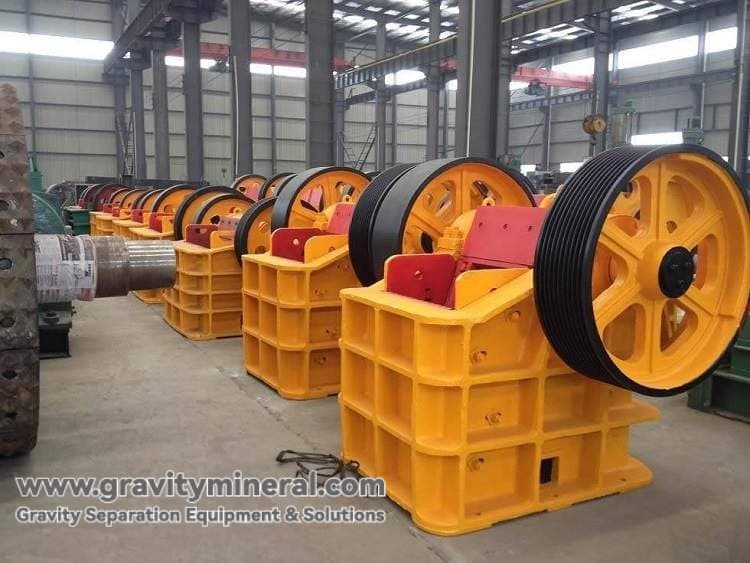
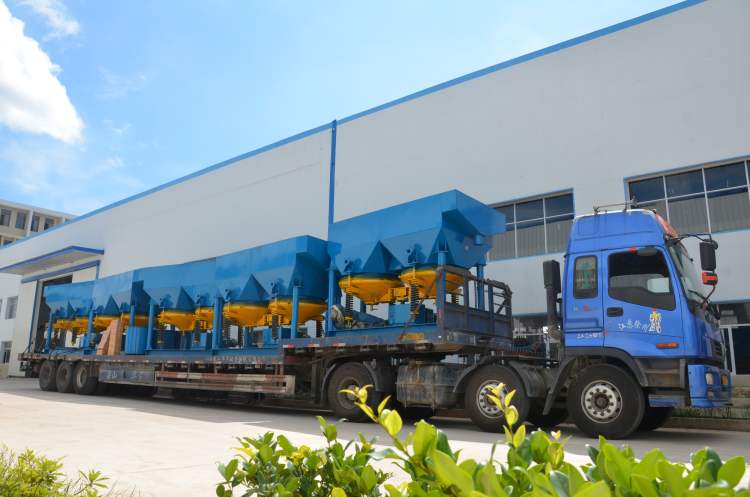
Run-of-mine ore is reduced by primary and secondary crushing (jaw and cone crushers) to below −30 mm. To save the enormous energy consumed downstream in grinding, the crushed ore is fed to sawtooth-wave jigs for pre-concentration. This stage immediately rejects large volumes of barren waste rock and recovers coarse tungsten lumps before the ore ever reaches the mill.
Stage 2: Staged Grinding
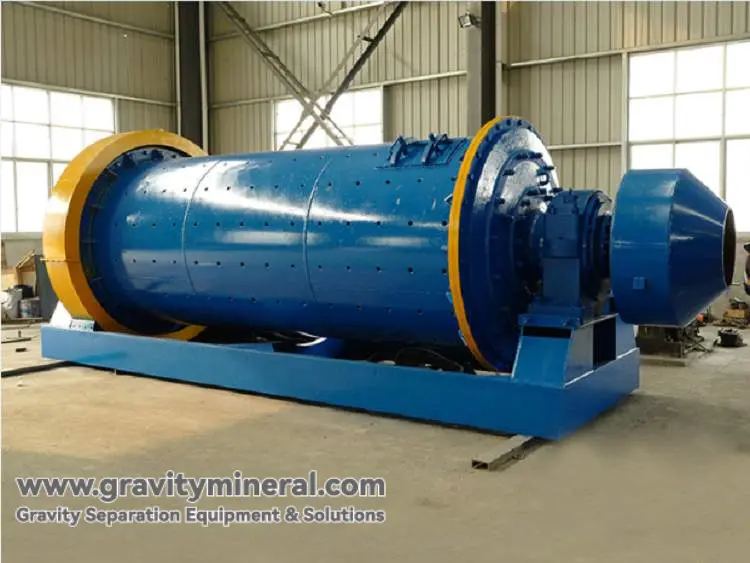
The pre-concentrated ore enters a rod mill (wolframite is brittle, and rod milling effectively prevents over-comminution), operated in a strict closed circuit with a spiral classifier. This configuration ensures the ore is ground only as far as mineral liberation requires, avoiding the overgrinding of brittle tungsten ore into unrecoverable slimes.
Stage 3: Gravity Roughing
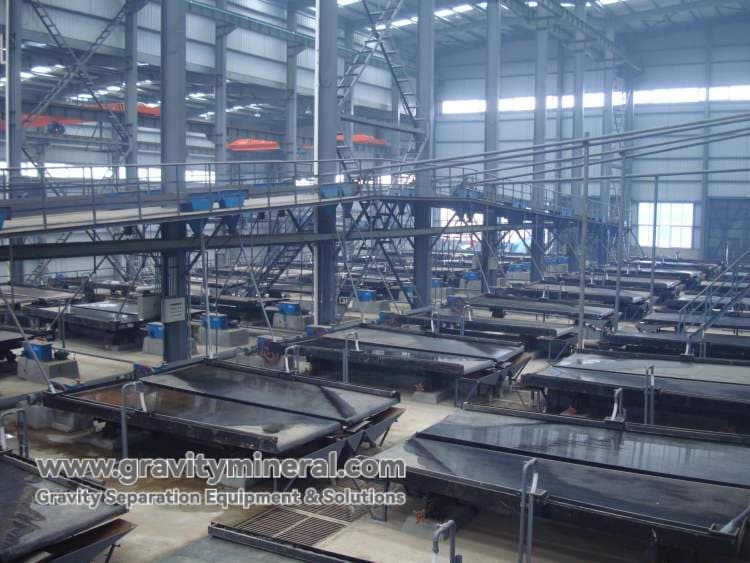
The classified pulp is conveyed to high-capacity sawtooth-wave jigs and FRP spiral concentrators to recover most of the medium and fine wolframite. The jig tailings are then subjected to precision scavenging on 6-S shaking tables. This stage produces a high-grade "coarse heavy sand".
Stage 4: Cleaning and Combined Separation
The coarse sand from the gravity circuit usually contains sulphides, cassiterite (tin) and bismuthinite. GravityMineral applies an integrated technology package for deep purification:
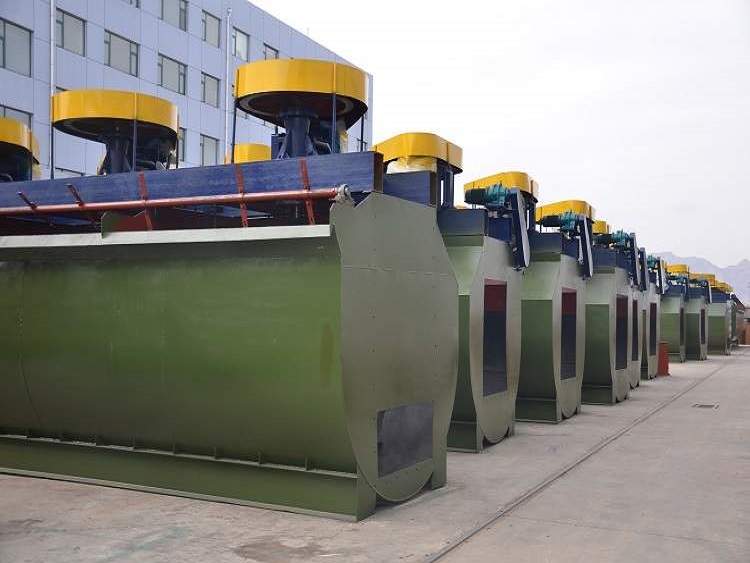
- Desulphurisation: the concentrate is fed to flotation cells, where reagents depress the wolframite and float off the sulphides (pyrite / arsenopyrite).
- Drying: the flotation concentrate must be dried in an indirect rotary dryer to prepare it for high-intensity magnetic separation.
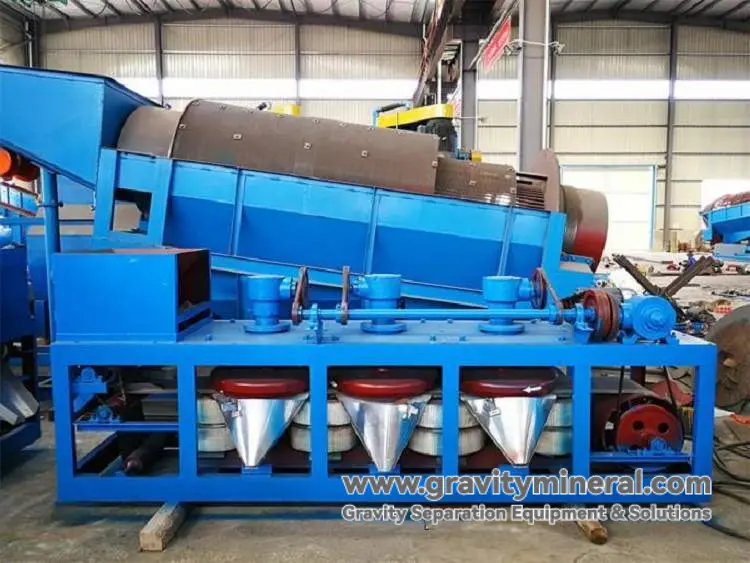
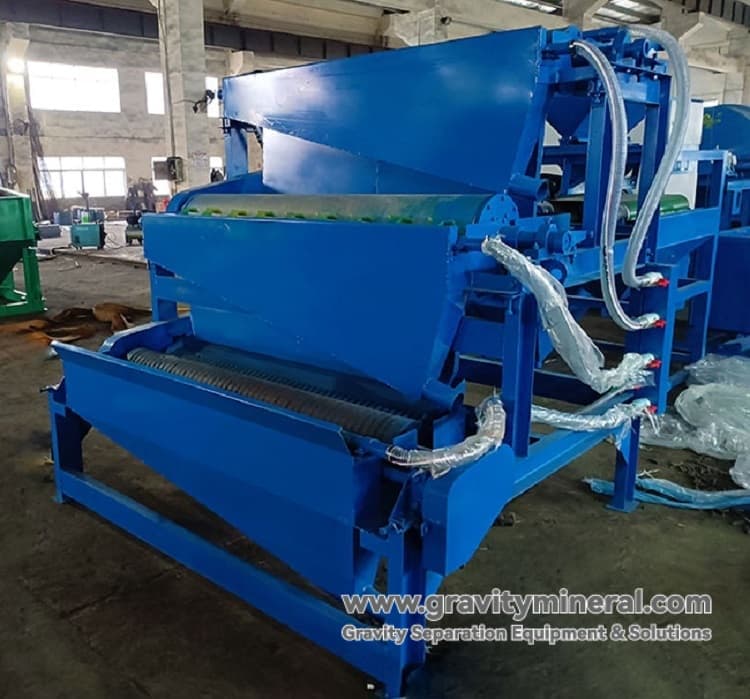
- Magnetic tin removal: a three-disc high-intensity magnetic separator exploits the weak magnetism of wolframite to separate it completely from non-magnetic cassiterite.
- Final cleaning: for complex intergrowths, shaking tables can be used for further purification, ensuring a grade of WO₃ ≥ 65%.
Stage 5: Slimes Recovery (the key to high yield)
Even with fine-tuned grinding, some tungsten slimes below 0.074 mm are inevitably generated. These are deslimed in a thickener and then treated with centrifugal concentrators and belt sluices. The recovered ultrafine tungsten is then finally purified by flotation or high-intensity magnetic separation.
Core Equipment Configuration and Selection for a Tungsten Ore Processing Plant(Wolframite Gravity Plant)
The challenge in wolframite gravity processing lies in precise control of the grind size (to prevent sliming) and in matching equipment to each size fraction. The table below lists the core equipment and duty stations used in a wolframite gravity processing plant.
| Process stage |
Main equipment |
Function and features |
| Crushing and pre-concentration |
Jaw / cone crusher, sawtooth-wave jig |
Crushes the ore and rejects barren waste immediately, saving downstream grinding cost. |
| Grinding and classification |
Rod mill / ball mill, spiral classifier |
Staged grinding control achieves mineral liberation without destroying the brittle tungsten ore. |
| Gravity roughing |
Sawtooth-wave jig, 6-S shaking table |
Core separation equipment for capturing heavy minerals and producing a rough concentrate. |
| Flotation |
Mechanical flotation cells |
Removes difficult sulphides (desulphurisation) and floats ultrafine slimes. |
| Drying and dewatering |
Dryer |
80–120 °C; provides specification dry feed for high-intensity magnetic separation. |
| Magnetic impurity removal |
Three-disc high-intensity magnetic separator |
Purifies wolframite and separates it completely from associated cassiterite. |
| Slimes recovery |
Centrifugal concentrator |
Uses high G-force to recover fine −0.074 mm tungsten that would otherwise be lost. |
Target Technical Indicators and System Advantages
Technical targets
- Feed grade: 0.2%–0.8% WO₃
- Final concentrate grade: ≥ 65% WO₃ (meeting the national first-grade standard).
- Overall recovery: 90%–92% (markedly higher than a single-stage flotation route).
- Associated element recovery: tin (Sn) 80–85%, sulphur (S) >85%.
System advantages
- Early recovery, no sliming: the "crush more, grind less + recover early" process stops wolframite from being over-comminuted in the mill at source.
- Full gravity / magnetic / flotation coverage: a highly streamlined circuit whose gravity, flotation and magnetic stages can be flexibly adjusted.
- Clean production: zero reagents in the gravity stage and closed-loop reagent circulation in the flotation stage, meeting modern environmental requirements.
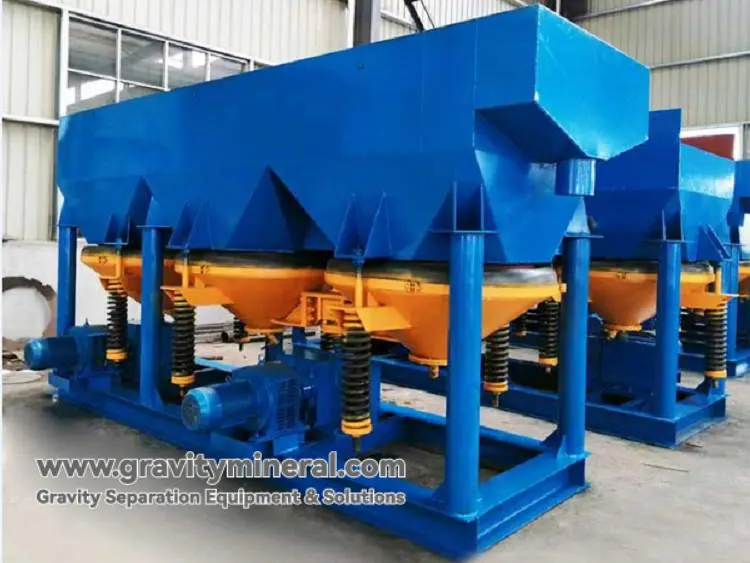
Why Build Your Wolframite Plant with GravityMineral
Wolframite is a very high-value metal, but it is brittle — sliming from overgrinding is the biggest single cause of lost profit. The mineral processing industry does not lack equipment — what it lacks is a partner that understands gravity separation, sulphide flotation and magnetic tin removal alike, and can make the flowsheet fit together perfectly.
| Common problem |
GravityMineral's solution |
| Wolframite is brittle and is easily over-comminuted and lost in grinding |
Following "crush more, grind less", the grinding stage uses a rod mill with jigs placed ahead of it to recover coarse tungsten early. |
| Wolframite occurs with cassiterite; gravity separation cannot split them |
A dryer and three-disc high-intensity magnetic separator are installed after gravity separation, using wolframite's weak magnetism for complete separation from cassiterite. |
| Heavy sulphide encapsulation drags down concentrate grade |
Flotation cells are added after gravity roughing for desulphurisation, ensuring the final WO₃ grade meets specification. |
- 20 years focused on gravity separation: two decades of building spiral concentrators, jigs and shaking tables — which equipment suits which ore condition, which flowsheet suits which size fraction, all backed by retrievable historical experience.
- Full gravity / magnetic / flotation coverage: GravityMineral supplies not only gravity roughing and upgrading, but also deep-cleaning equipment such as flotation cells and three-disc magnetic separators.
- 50+ countries, 500+ global projects: wolframite operations in Southeast Asia, tungsten–tin intergrowth ores in South America and other real sites are the best test of equipment reliability and adaptability.
- Six official credentials: ISO9001, S-certified supplier, National High-Tech Enterprise, Jiangxi Provincial SRDI (specialised, refined, distinctive and innovative) SME, "Contract-Honoring and Credit-Worthy AA Enterprise", and "Major Taxpayer".
Wolframite Processing Plant Price and Investment Reference
There is no standard price for a wolframite processing plant — for the same throughput, differences in feed grade, degree of liberation and site conditions can change the equipment configuration and capital cost considerably. GravityMineral does not quote "paper prices" detached from the ore; instead we cost the full picture against the following cost structure:
- Equipment investment: crushing and grinding stage (jaw / cone crusher / rod mill), gravity stage (jigs / spiral concentrators / shaking tables), flotation stage, magnetic stage (dryer + three-disc magnetic separator) and dewatering stage. Modular design allows staged investment to suit your budget.
- Free process design: flowsheet design, equipment selection and plant layout drawings are completed by GravityMineral's in-house design team — no external design institute required.
- Civil works and installation labour: civil construction and general installation labour are organised locally by the client; GravityMineral engineers provide on-site technical supervision.
- Operating cost (OPEX): zero reagents and no chemicals in the gravity stage — compared with an all-flotation route, the combined gravity–magnetic–flotation circuit cuts operating cost substantially; power, water and wear parts are the main expenses.
- Lead time and funding rhythm: manufacture of core standard equipment takes about 40–60 days; a full EPC turnkey project typically takes 7–12 months from contract effective date to reaching production targets.
Tell GravityMineral your ore type, feed grade, target throughput (tonnes per hour), feed size and site conditions, and our engineers will draw on a 500+ global project database to issue a transparent equipment selection list and quotation.
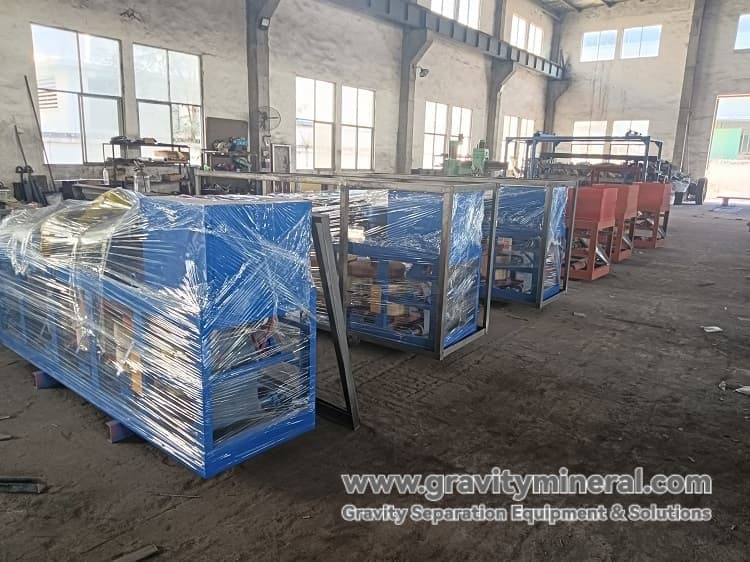
From Process Design to Production Targets: GravityMineral's Service Workflow
GravityMineral does more than sell equipment: we provide a full-cycle service covering mineral analysis, flowsheet design, equipment manufacturing and on-site installation and commissioning. A wolframite project typically advances through the following milestones:
- Requirement review (3–7 days): provide ore type, feed grade, target throughput, feed size and site conditions; GravityMineral proposes a preliminary direction at no charge.
- Process design and selection quotation (7–15 days): engineers combine orebody conditions with the 500+ global project database to fix the gravity–magnetic–flotation route and issue the equipment selection scheme, with selection and quotation delivered together.
- Drawing design (7–15 days): flowsheet diagram, equipment list, plant layout drawing and civil works condition drawings, completed by the in-house design team — design is never outsourced.
- Equipment manufacturing (40–60 days): scheduled across two in-house manufacturing bases, with quality control from raw material to factory test run.
- Shipping and logistics (30–60 days) + on-site installation and commissioning (60–150 days): engineers supervise installation on site, carry out single-machine and linked-circuit test runs and operator training — delivery is complete only when commissioning meets the targets.
A conventional mineral processing EPC turnkey project typically takes 7–12 months from contract effective date to reaching production targets.
Related Gravity Separation Solutions
Beyond wolframite, GravityMineral's gravity separation solution library covers the main hard-rock and placer ore types, so we can match historical experience from similar scenarios:
Wolframite Processing: Frequently Asked Questions (FAQ)
Q1: How is wolframite separated from cassiterite (tin)?
A: This is a classic metallurgical problem, because both minerals have very high specific gravities and often occur together. Gravity separation cannot distinguish them. GravityMineral solves it with a three-disc high-intensity magnetic separator: wolframite is weakly magnetic, while cassiterite is completely non-magnetic. Once the gravity concentrate is dried and passed through the high-intensity field, the two valuable metals separate easily and completely.
Q2: Why is "slimes recovery" so critical for wolframite?
A: Wolframite is extremely brittle. Even with optimal staged grinding, roughly 10–20% of the ore breaks down into micron-sized dust (−0.074 mm) known as slimes. Standard jigs and shaking tables cannot recover particles that fine. By integrating centrifugal concentrators and a dedicated slimes flotation process at the end of the circuit, we recover this fine tungsten and can raise total plant revenue by as much as 20%.
Q3: Roughly how much does a complete wolframite processing plant cost?
A: The actual cost depends on your throughput (tonnes per hour), feed grade and required grind size. Once GravityMineral understands the ore conditions, we issue a transparent equipment list and quotation covering the jaw crusher, rod mill, jigs, shaking tables, flotation cells and three-disc magnetic separators.
Q4: My wolframite has high sulphide content and gravity cannot clean it — what then?
A: Where wolframite occurs with sulphides such as pyrite or arsenopyrite, gravity alone cannot produce a specification concentrate. GravityMineral adds flotation cells after gravity roughing, desulphurising by depressing the wolframite and floating off the sulphides, which brings the final concentrate grade up to specification.
Q5: How are the fine slimes in the tailings handled? Will they pollute the environment?
A: No. GravityMineral installs a thickener and filter press at the end of the circuit. After thickening and settling, the slurry is filter-pressed into dry cake for stacking, while the clear water is returned to the ball mill for reuse. This achieves zero discharge and saves a significant amount of water.
Q6: Can you supply a single shaking table? What if we want to expand later?
A: Yes, single units can be supplied. GravityMineral supports modular purchasing: you can start with a crushing + jigging set and add centrifugal concentrators, shaking tables and the magnetic stage later when budget allows. Because the interfaces are reserved in the original design, expansion does not require rebuilding — you simply add equipment in proportion.
Q7: Our feed grade fluctuates a lot — can your flowsheet cope?
A: Yes. Process design accounts for the ore's variation range and operating tolerance. Throughput, stroke and slope of the gravity stage (jigs and shaking tables) can all be adjusted to the feed grade. If variation exceeds the normal range, engineers set the operating parameters for each condition during on-site commissioning.
Q8: For projects in Africa or Southeast Asia, can you send engineers for on-site installation?
A: Yes. GravityMineral's products and services have been exported to more than 50 countries. We dispatch on-site engineers to supervise equipment positioning, single-machine and linked-circuit test runs, recovery adjustment, and to train your local operating team until the line runs stably and meets the targets.
EPC Turnkey: End-to-End Wolframite Gravity Engineering
This combined gravity–magnetic–flotation circuit is the most reliable and economically proven route for wolframite worldwide. GravityMineral provides a full-cycle turnkey EPC service:
- Solution design: a gravity–magnetic–flotation flowsheet and equipment configuration tailored to the specific characteristics of your ore sample.
- Engineering services: production line planning and 3D drawing design completed in-house — medium and large projects can save hundreds of thousands of dollars in design fees.
- Equipment manufacturing and supply: core gravity, flotation and magnetic equipment is produced at GravityMineral's two in-house manufacturing bases, with quality control from raw material procurement to factory test run.
- Installation and commissioning: engineers dispatched worldwide to supervise installation, single-machine and linked-circuit test runs, recovery adjustment and operator training — delivery is complete only when commissioning meets the targets.
- After-sales and optimisation: quality responsibility during the warranty period; after warranty, spare parts supply, technical consultation and process optimisation, with response within 24 hours.
Contact GravityMineral's metallurgists by WhatsApp or email for a customised wolframite plant layout proposal and equipment quotation.