







Manufacturer of Gravity Separation Equipment for Low-Grade Gold Ore—Complete System with a Capacity of 10 Metric Tons per Hour
When processing low-grade gold ore using gravity separation, the risk lies not in the unit price of the equipment, but in a mismatch between the process and the ore\'s properties.
A capacity of 10 metric tons per hour is a typical scale; even a slight misalignment in the configuration can slow down the entire line.
Gravity separation tests are not meant to answer “Can it be processed?” but rather “Is this process combination suitable for your ore?”
The test report must serve as a basis for equipment selection; otherwise, it is merely a set of data.
This article is organized into several sections—testing, process, configuration, reporting, and manufacturer selection—to provide a clear overview of manufacturers of gravity separation equipment for low-grade gold ore and complete 10-metric-ton-per-hour processing systems.
Why Testing Is Essential for Gravity Separation of Low-Grade Gold Ore
Low-grade gold ore means a large amount of gangue must be processed to concentrate a small amount of concentrate. Since gravity separation requires no chemicals and has relatively low operating costs, many project owners\' first instinct is to opt for gravity separation equipment. The problem often lies not with the equipment itself, but with whether the ore properties and the process are a good match.
The form in which gold occurs in low-grade gold ore varies significantly. In some cases, the gold exists as free, well-dissociated particles with a coarse grain size, making it suitable for recovery using a centrifugal separator; in other cases, the gold is embedded in pyrite or gangue minerals with a fine grain size, and even after grinding to a fine particle size, agglomerates remain, making it difficult to recover effectively through gravity separation alone.Without conducting tests, it is impossible to determine which category the ore falls into.
Manufacturers of gravity separation equipment for low-grade gold ores can supply the equipment, but determining “which process is suitable for the ore” requires experimental data. Skipping testing and ordering equipment directly may save a limited amount on testing costs, but the costs of subsequent process adjustments and equipment replacements are often much higher.
Three Questions Gravity Separation Tests Must Answer
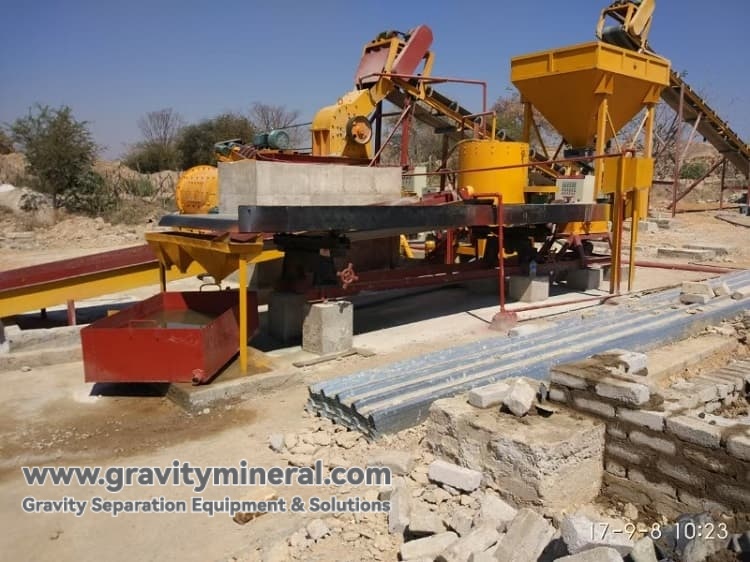
For a gravity separation project targeting low-grade gold ore with a capacity of 10 metric tons per hour, the tests must clarify at least three key points.
The occurrence state of gold and its gravity separability. By analyzing mineral properties, determine the grain size distribution and degree of individual liberation of gold to assess whether gravity separation can effectively concentrate the ore.
The appropriate grinding fineness. If the ore is ground too coarsely, there will be an excess of intergrown particles, resulting in poor recovery from gravity separation; if ground too finely, overgrinding will cause loss of fine slime, making recovery by centrifugal separators difficult.This balance must be determined through testing; typically, the grinding fineness is optimized within the range where 60–80% of the particles are -200 mesh, depending on the degree of gold particle liberation.
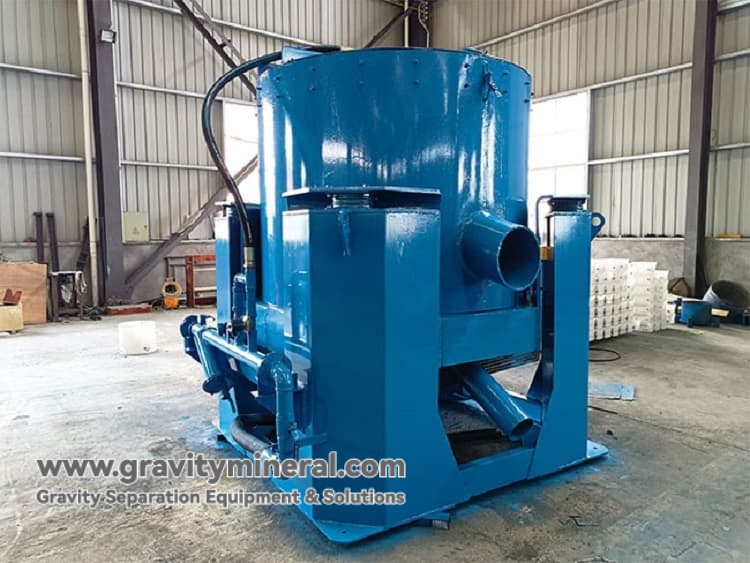
Equipment Combination and Stage Configuration. Centrifugal separators are suitable for recovering individually liberated gold, shaking tables are suitable for fine selection, and spiral chutes are suitable for rough and scavenging. The sequence of equipment, the number of scavenging passes, and the method of tailings reprocessing should all be based on test reports.
Configuration Approach for a Complete 10-Metric-Ton-Per-Hour Plant
A capacity of 10 metric tons per hour is neither too large nor too small; equipment selection must balance processing capacity with operational economy. The configuration is typically divided into several stages: crushing, grinding and classification, roughing, scavenging, and concentrating.
| Stage | Common Configuration | Points to Note for a 10-Metric-Tons-Per-Hour Operation |
|---|---|---|
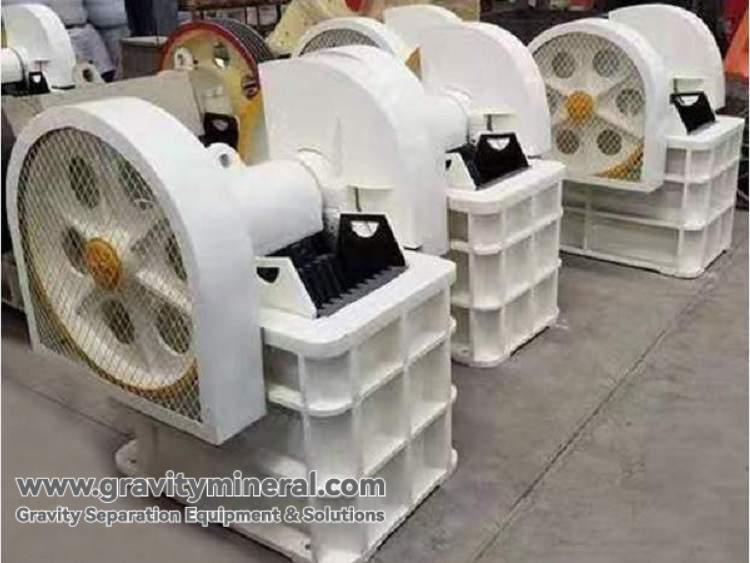
| Crushing | Jaw crusher paired with an impact crusher or double-roll crusher | The discharge particle size must be controlled within the mill\'s feed requirements to avoid overloading the mill |
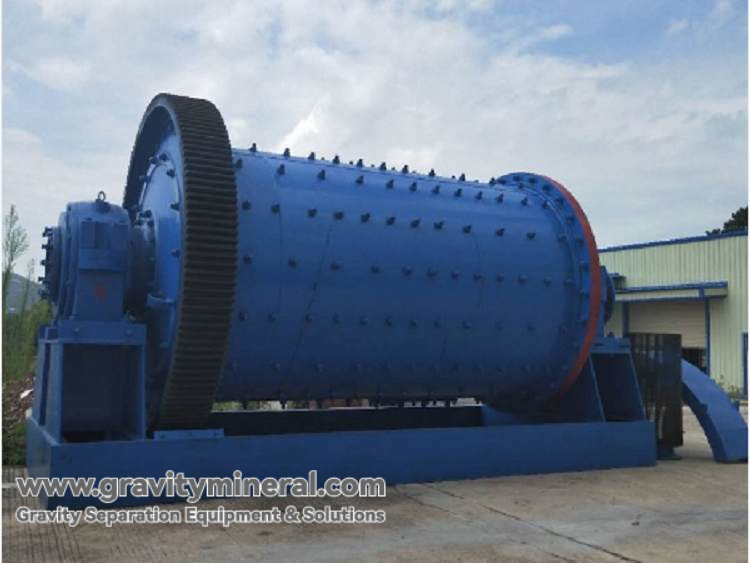
| Grinding and Classification | Closed-circuit operation of ball mill and spiral classifier | Grinding fineness is determined by testing; typically, the -200 mesh fraction accounts for 60–80%, adjusted according to gold liberation |
| Rough Selection | Centrifugal concentrator or jig | The backflush water pressure and feed concentration of the centrifuge must be calibrated through testing; fluctuations in concentration affect separation efficiency |
| Sweep Selection | Spiral chutes or shaking tables | Tailings re-scanning is an indispensable step for low-grade gold ore; the recovery rate from this process directly impacts overall profitability |
| Concentration | Shaking Table | With a small feed rate, shaking tables offer good operational flexibility and are suitable for producing the final concentrate |
This table is not a fixed template. Depending on the properties of the ore, the number of process stages and equipment combinations will need to be adjusted. The configuration list provided by manufacturers of gravity separation equipment for low-grade gold ore should correspond to the recommended process in the test report, rather than applying a single configuration to all ores.
Test Types and Process Details
Gravity separation tests are typically conducted in several stages.Exploratory tests determine whether the ore is suitable for gravity separation; condition tests identify the optimal ranges for parameters such as grinding fineness, feed concentration, and rinse water volume; open-circuit tests verify the process structure; closed-circuit tests evaluate the stability of performance indicators under循环 loads; and, when conditions permit, scaled-up tests are conducted to provide data closer to actual operating conditions for equipment selection.
In terms of the process, ore sample preparation—including crushing, blending, and subsampling—is generally performed first to ensure sample representativeness. This is followed by sieve analysis and density analysis to understand the distribution of each particle size fraction. Next, conditioning tests are conducted using shaking tables or centrifugal separators to determine roughing parameters. Once the open-circuit process has been successfully run, it is then verified in a closed-circuit configuration.During the testing process, the feed grade, concentrate grade, tailings grade, and recovery rates must be recorded; these data serve as the direct basis for subsequent equipment selection.
How to Use Test Reports as a Basis for Equipment Selection
When reviewing the test report, do not focus solely on the recovery rate figures. Pay close attention to three key aspects.
Does the recommended process correspond to the equipment list? If the test requires two stages of scavenging but the equipment configuration only provides one stage, the tailings grade will be abnormally high.
Does the required grinding fineness match the mill\'s capacity? If the mill on-site cannot consistently achieve the fineness recommended by the test, even the best-performing gravity separation equipment will struggle to perform optimally.
Are the feed concentration and water quality requirements met? Centrifugal separators are sensitive to feed concentration, so the stability of the on-site water supply must be confirmed in advance.
Furthermore, the concentrate yield from gravity separation of low-grade gold ore is typically low. For 10 metric tons of raw ore processed per hour, the concentrate yield may be only a few hundred kilograms or even less.The method of subsequent concentrate processing—whether to sell it on-site, feed it to a fine-selection shaking table for the final product, or combine it with flotation or leaching—should be considered during the testing phase. Rough concentrate often contains gangue and sulfides; without a subsequent processing plan, the value of the concentrate will be diminished.
Key Focus Areas for Gravitational Separation Tests by Ore Type
For gold deposits, the focus for rock-type gold ores is on the degree of gold particle liberation and the size of gold particles in the ore, while for placer gold deposits, the emphasis is on clay content and the liberation of individual gold particles. For tungsten-tin ores, cassiterite is brittle, so over-grinding must be addressed; multi-stage grinding and early recovery are common approaches.Chromite is often associated with silicate gangue; after gravity separation and tailings rejection, magnetic separation is typically required to remove impurities. For titanium-zirconium sand deposits, a combined process of gravity separation, magnetic separation, and electrostatic separation is involved, and tests must verify the separation effectiveness of each stage separately.
Different ore types have different testing priorities and require different equipment configurations. The selection of gravity separation equipment must be based on experimental data specific to the characteristics of the ore type.
How to Select a Testing and Equipment Service Provider
When selecting a service provider, consider the following points:Does the provider have in-house testing capabilities to independently conduct gravity separation tests and issue reports? Does it possess equipment manufacturing capabilities, and are process design and equipment manufacturing seamlessly integrated within the same team? Does it have experience processing similar ore types and can it provide guidance? Will the manufacturer\'s engineers participate in on-site commissioning, and is achieving commissioning standards a condition of delivery?
If a manufacturer of gravity separation equipment for low-grade gold ore only sells equipment—without conducting tests or managing commissioning—the risk of a disconnect between the process and the equipment is transferred to the project owner. When equipment, design, and commissioning are handled by a single team, the lines of responsibility are clear, and there is no need to coordinate among multiple suppliers if problems arise.
Take GravityMineral as an example: with two decades of specialization in gravity separation, the company operates its own manufacturing facility and design team, independently manufacturing core equipment such as jigs, shaking tables, spiral chutes, and centrifugal separators.The gravity separation solution for the rock gold mine adopts an approach that combines early recovery in the grinding circuit with the joint processing of gravity separation tailings. Equipment parameters cover a range of 10 metric tons per hour; for example, the JT2-2 sawtooth jig has a processing capacity of 5–10 metric tons per hour,the JT4-2 has a capacity of 8–20 metric tons per hour, the 5LL-1500 spiral chute has a capacity of 6–8 metric tons per hour, and the STLB60 centrifugal concentrator has a capacity of 8–12 metric tons per hour.The recommended parameters in the test report can be directly applied to equipment selection and process configuration, reducing instances where the process and equipment are mismatched.
Frequently Asked Questions
If no tests have been conducted, is it possible to directly configure a gravity separation unit with a capacity of 10 metric tons per hour based on experience alone?
This is not recommended. The selection of gravity separation equipment depends on parameters such as density difference, particle size distribution, and clay content. Without representative ore sample data, there is insufficient basis for selection, and subsequent adjustments can be costly.
What is the approximate range for testing costs?
Testing costs vary significantly depending on the ore type, depth of testing, and process complexity, but they typically represent a limited proportion of the total equipment investment. Specific costs must be discussed and confirmed with the service provider based on the test plan.
What stages are included in a complete 10-metric-ton-per-hour plant?
It typically includes feeding, crushing, grinding and classification, roughing, scavenging, concentrating, and dewatering. The specific configuration must be determined based on the process recommended by the test, and configurations vary significantly depending on the ore type.
What should be done if the grade of the gravity concentration is insufficient?
During the pilot phase, consider re-processing the concentrate using a fine-selection shaking table, or combine it with processes such as flotation or leaching based on the mineral properties. The specific plan should be supported by pilot test data.
Who is responsible for on-site commissioning after the equipment arrives?
It is recommended to select a service package that includes installation guidance and commissioning by the manufacturer\'s engineers. Commissioning to meet specified standards should be a condition of delivery to ensure that someone is responsible for process operations once the equipment arrives on-site.
When selecting a manufacturer of gravity separation equipment for low-grade gold ore and a complete 10-metric-ton-per-hour system, the key lies in integrating ore properties, test data, process design, and equipment configuration into a cohesive whole. Conducting tests in advance and carefully reviewing the reports provide the basis for equipment selection.The value of a manufacturer of gravity separation equipment for low-grade gold ore lies not merely in providing a list of equipment, but in ensuring that the process and equipment are aligned based on a single set of data. Whether the configuration of a complete 10-metric-ton-per-hour system is reasonable ultimately depends on whether it is based on the test results specific to your ore.