Tantalum-niobium (coltan) processing plant solution: Tantalum-niobium ore — commonly called coltan (columbite-tantalite) — is a critical strategic rare metal resource, essential to modern electronics and superalloys. Because tantalite and columbite have different mineralogical characteristics and occur mainly with magnetic minerals, their beneficiation requires a highly customised multi-stage process.
GravityMineral has developed an advanced "gravity + magnetic combined process". Hard rock and placer ore receive tailored pre-treatment — precise crushing and grinding, or washing and screening. Gravity gangue rejection, wet shaking table cleaning, drying and three-disc high-intensity iron removal then follow, and this turnkey EPC solution ensures a final concentrate with a total Ta₂O₅ + Nb₂O₅ grade above 50%.
What Is Coltan (Tantalum-Niobium Ore)?
Tantalum-niobium ore consists mainly of tantalite and columbite, which commonly form an isomorphous continuous solid solution series and are known industrially as coltan. They are high-density minerals (typically 5.2–7.9 g/cm³) with weak magnetic susceptibility, and occur mostly in granite pegmatites (hard rock) and related alluvial placer deposits.
Because their density is so high, gravity separation is the most economical and most important method for recovering tantalum-niobium. Run-of-mine ore, however, often carries high-density gangue such as magnetite and ilmenite, and gravity alone cannot produce a specification concentrate. GravityMineral's standard coltan beneficiation process therefore uses a combined circuit: "early gravity recovery and gangue rejection + shaking table cleaning + drying + deep iron removal and purification in a three-disc magnetic separator", ensuring the final concentrate meets metallurgical specification.
20 yearsFocused on mineral processing equipment manufacturing
50+ countriesTantalum-niobium processing lines exported and commissioned
500+ projectsGlobal mineral processing project experience base
35%China market share in gravity separation equipment
Modular Coltan Extraction Flowsheet
GravityMineral's flowsheet is designed to capture both coarse tantalum-niobium lumps and fine tantalum-niobium sands. Depending on whether the source is hard rock or alluvial placer, a different pre-treatment module is used, while the downstream gravity + magnetic core process stays the same.
Stage 1: Pre-treatment and Liberation (ore-type-specific design)
Correct size control and mineral liberation are essential for optimal gravity separation.
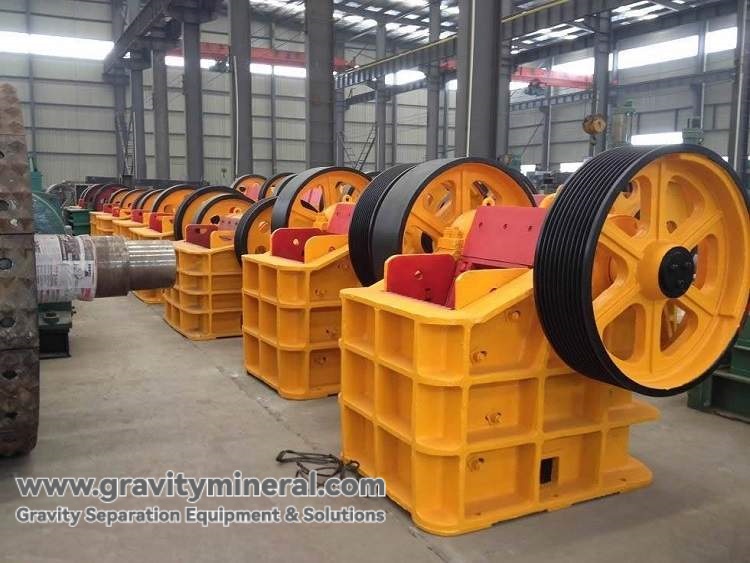
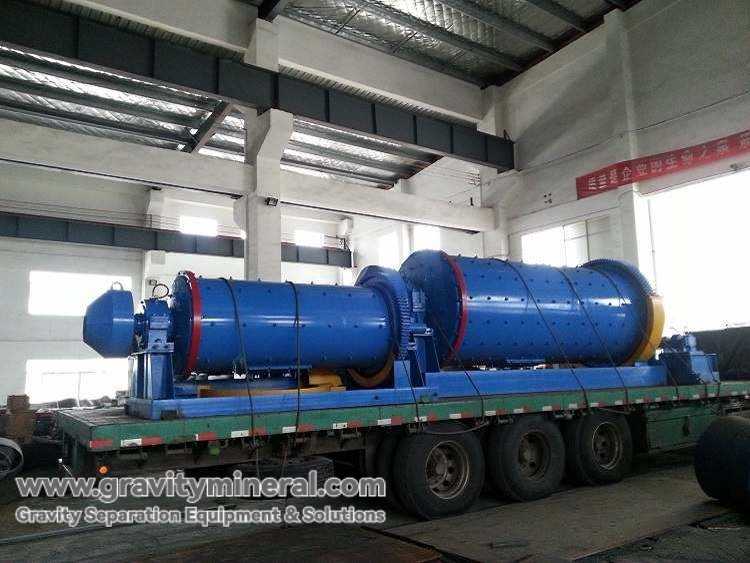
- [Hard rock] Crushing and grinding: granite pegmatite and similar hard rock is coarse crushed in a jaw crusher, then ground in a rod mill (coltan is brittle, and rod milling prevents over-comminution and sliming), with a spiral classifier controlling the grind size to achieve liberation.
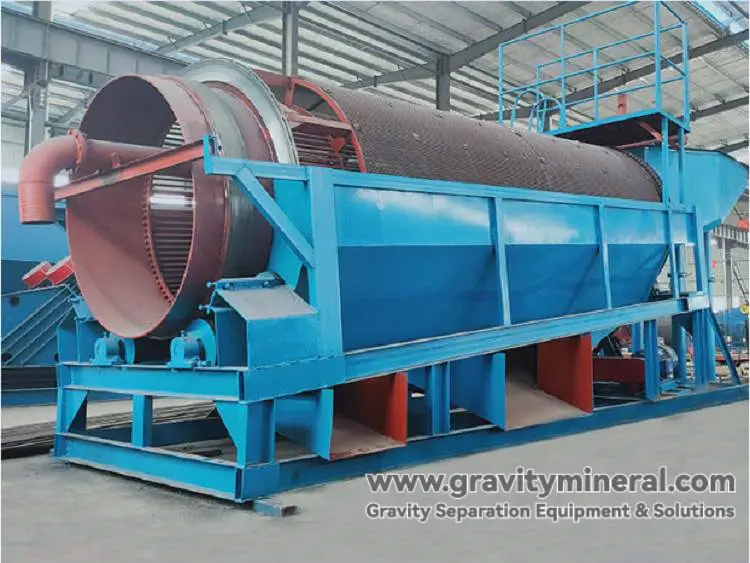
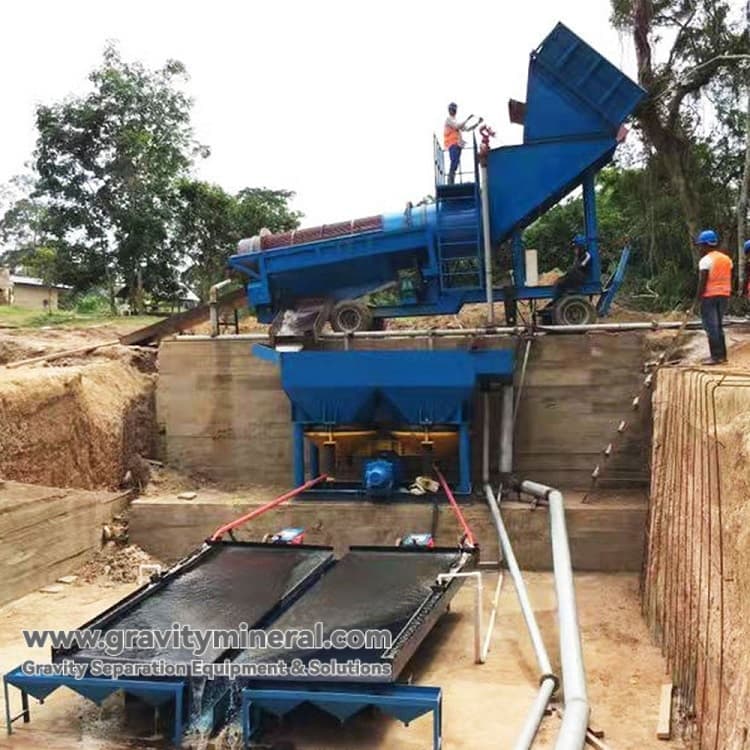
- [Placer] Washing and screening: alluvial ore needs no crushing — it goes directly to a rotary scrubber that vigorously breaks down the clay, followed by trommel screening, with the undersize reporting straight to the next stage.
Stage 2: Gravity Roughing (Upgrading)
The classified size fractions are fed to density separators to reject barren siliceous ore and rock quickly.
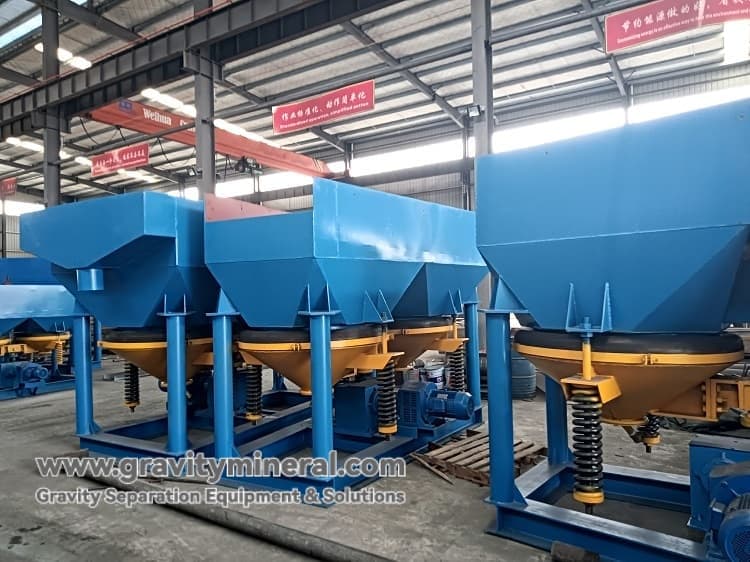
- Jigging: coarse ore (+0.5 mm) is fed to a sawtooth-wave jig. Jigs offer enormous throughput and recover coarse tantalum-niobium lumps immediately.
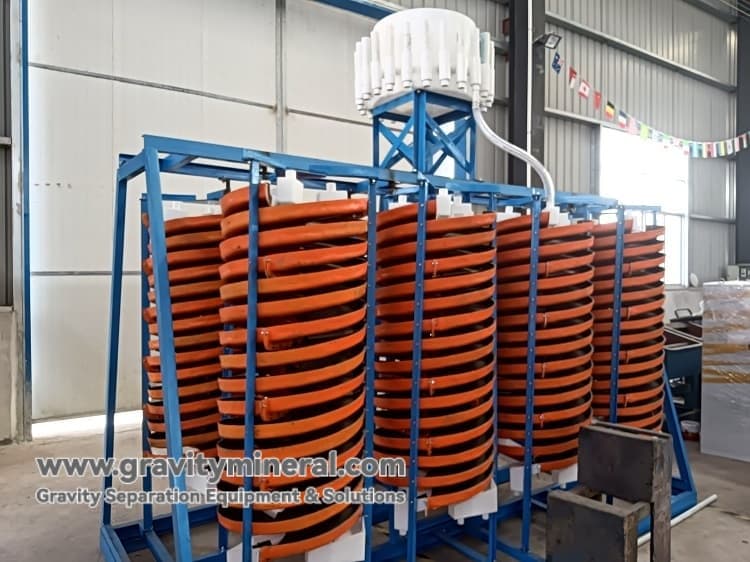
- Spiral concentrators: medium and fine sand (0.074–0.5 mm) is routed to FRP spiral concentrators for efficient upgrading of the heavy black sands.
Stage 3: Wet Cleaning and Iron Removal
Magnetic iron minerals must be removed from the gravity concentrate before it can meet metallurgical specification.
- Rougher iron removal: the concentrate first passes through a medium-intensity magnetic separator to remove strongly magnetic iron impurities.
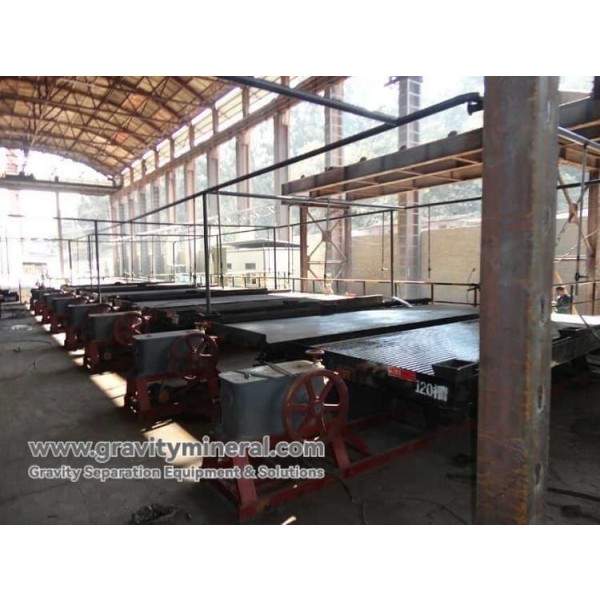
- Shaking table cleaning: the de-ironed material goes to 6-S shaking tables (wet operation), where water flow and deck vibration separate tantalum-niobium from residual heavy minerals by density, markedly raising the grade.
Stage 4: Drying and High-Intensity Magnetic Cleaning
Before dry high-intensity magnetic separation, the table concentrate must be thoroughly dried.
- Drying: the table concentrate is dewatered and dried in an indirect rotary dryer (80–120 °C) to prevent agglomeration and blinding of the magnetic discs.
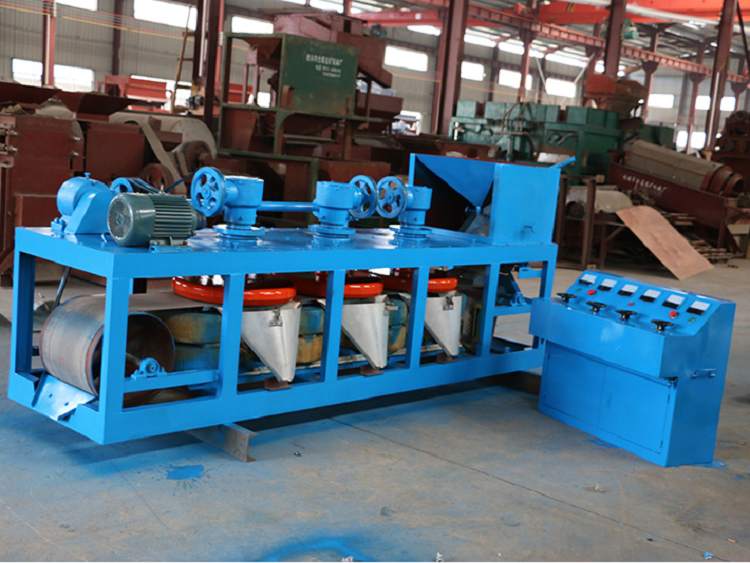
- High-intensity magnetic cleaning: the dried material enters a three-disc magnetic separator (high-intensity), where a field above 18,000 gauss completely separates weakly magnetic iron and titanium impurities from the tantalum-niobium.
- Acid washing (optional): depending on the ore, an acid wash pre-treatment can dissolve iron oxide coatings on the tantalite crystal surfaces to secure the final concentrate grade.
Core Equipment Configuration and Selection for a Coltan Processing Plant
The challenge in coltan processing lies in matching the crushing/grinding liberation size, dividing the gravity stages correctly and controlling magnetic field intensity precisely. The table below lists the core equipment and duty stations used in a coltan processing plant.
| Process stage |
Main equipment |
Technical features |
Capacity |
| Crushing and grinding (hard rock) |
Jaw crusher + rod mill |
Coarse crushing then rod milling prevents over-comminution of brittle coltan and achieves liberation. |
Customised to throughput |
| Washing and screening (placer) |
Rotary scrubber + trommel screen |
High-pressure water jets break down clay and reject large gravel, delivering specification pulp downstream. |
30–100 t/h |
| Coarse gravity separation |
Sawtooth-wave jig |
Treats 0–10 mm; efficient recovery of coarse tantalum-niobium lumps. |
5–30 t/h |
| Fine gravity separation |
FRP spiral concentrator |
Treats 0.02–2 mm fractions; zero-power operation. |
2–4 t/h per set |
| Rougher iron removal |
Medium-intensity magnetic separator |
Field intensity 0.6–1.0 T; removes strongly magnetic impurities. |
10–50 t/h |
| Wet cleaning |
6-S shaking table |
Treats 0.074–2 mm; wet operation that markedly raises tantalum-niobium grade. |
0.5–2 t/h |
| Drying and dewatering |
Dryer |
80–120 °C; provides specification dry feed for high-intensity magnetic separation. |
5–20 t/h |
| Deep impurity removal |
Three-disc magnetic separator (high-intensity) |
Field intensity up to 18,000 gauss; deep removal of weakly magnetic iron minerals. |
0.1–0.5 t/h |
Target Technical Indicators and System Advantages
Technical targets
- Required feed grade: Ta₂O₅ + Nb₂O₅ ≥ 0.01%
- Size range: 0–10 mm
- Plant capacity: 20 to 500 t/d (fully customisable)
- Final concentrate grade: Ta₂O₅ + Nb₂O₅ ≥ 50%
- Iron removal efficiency: Fe content ≤ 0.5%
System advantages
- Efficient separation: the synergy of gravity and high-intensity magnetic separation delivers an excellent concentrate grade.
- Economical investment: lower capital expenditure and markedly lower operating cost than an all-flotation route.
- Environmentally sound: water recirculation above 85% and no harmful chemical additives (the optional acid wash is excepted and comes with effluent treatment).
Why Build Your Coltan Plant with GravityMineral
Coltan is extremely valuable, yet feed grades are usually very low and iron impurities are severe. The mineral processing industry does not lack equipment — what it lacks is a partner that understands both gravity gangue rejection and high-intensity magnetic cleaning, and can make the flowsheet fit together perfectly.
| Common problem |
GravityMineral's solution |
| Tantalum-niobium is closely intergrown with iron minerals, so iron content exceeds specification |
Drying plus a three-disc high-intensity magnetic separator for deep iron removal, with an acid wash where necessary, ensuring Fe ≤ 0.5%. |
| Coarse and fine fractions processed together, so recovery falls short |
Strict classification: jigs for coarse, spiral concentrators for fines — staged treatment ensures recovery across the full size range. |
| Hard rock is over-comminuted, causing losses in the slimes |
Following "crush more, grind less", the grinding stage uses a rod mill to prevent brittle coltan from being overground into slimes. |
- 20 years focused on gravity separation: two decades of building spiral concentrators and jigs — which equipment suits which ore condition, which flowsheet suits which size fraction, all backed by retrievable historical experience.
- Full gravity / magnetic coverage: GravityMineral supplies not only gravity roughing and upgrading, but also deep-cleaning equipment such as medium-intensity magnetic separators and three-disc magnetic separators.
- 50+ countries, 500+ global projects: coltan operations in Africa, tin-associated tantalum-niobium in South America and other real sites are the best test of equipment reliability and adaptability.
- Six official credentials: ISO9001, S-certified supplier, National High-Tech Enterprise, Jiangxi Provincial SRDI (specialised, refined, distinctive and innovative) SME, "Contract-Honoring and Credit-Worthy AA Enterprise", and "Major Taxpayer".
Coltan Processing Plant Price and Investment Reference
There is no standard price for a coltan processing plant — for the same throughput, differences in feed grade, degree of liberation and site conditions can change the equipment configuration and capital cost considerably. GravityMineral does not quote "paper prices" detached from the ore; instead we cost the full picture against the following structure:
- Equipment investment: crushing and grinding stage (or washing stage), gravity stage (jigs / spiral concentrators), cleaning stage (shaking tables), high-intensity magnetic stage (dryer + three-disc magnetic separator) and dewatering stage. Modular design allows staged investment to suit your budget.
- Free process design: flowsheet design, equipment selection, plant layout and civil works condition drawings are completed by GravityMineral's in-house design team — no external design institute, saving hundreds of thousands of dollars on medium and large projects.
- Civil works and installation labour: civil construction and general installation labour are organised locally by the client, with GravityMineral engineers providing on-site technical supervision — saving the airfares, visas, accommodation and high day rates of sending a domestic crew overseas.
- Operating cost (OPEX): zero reagents and no chemicals in the gravity stage — compared with an all-flotation route, the combined gravity–magnetic circuit cuts operating cost substantially; power, water and wear parts are the main expenses.
- Lead time and funding rhythm: manufacture of core standard equipment takes about 40–60 days; a full EPC turnkey project typically takes 7–12 months from contract effective date to reaching production targets.
Tell GravityMineral your ore type, feed grade, target throughput (tonnes per hour), feed size and site conditions, and our engineers will draw on a 500+ global project database to issue a transparent equipment selection list and quotation.
From Process Design to Production Targets: GravityMineral's Service Workflow
GravityMineral does more than sell equipment: we provide a full-cycle service covering mineral analysis, flowsheet design, equipment manufacturing and on-site installation and commissioning. A coltan project typically advances through the following milestones:
- Requirement review (3–7 days): provide ore type, feed grade, target throughput, feed size and site conditions; GravityMineral proposes a preliminary direction at no charge.
- Process design and selection quotation (7–15 days): engineers combine orebody conditions with the 500+ global project database to fix the gravity–magnetic route and issue the equipment selection scheme, with selection and quotation delivered together.
- Drawing design (7–15 days): flowsheet diagram, equipment list, plant layout drawing and civil works condition drawings, completed by the in-house design team — design is never outsourced and fees never stack.
- Equipment manufacturing (40–60 days): scheduled across two in-house manufacturing bases, with quality control from raw material to factory test run.
- Shipping and logistics (30–60 days) + on-site installation and commissioning (60–150 days): engineers supervise installation on site, carry out single-machine and linked-circuit test runs and operator training — delivery is complete only when commissioning meets the targets.
A conventional mineral processing EPC turnkey project typically takes 7–12 months from contract effective date to reaching production targets. For more detail, see full-cycle mineral processing services.
Related Gravity Separation Solutions
Beyond coltan, GravityMineral's gravity separation solution library covers the main hard-rock and placer ore types, so we can match historical experience from similar scenarios:
Coltan Processing: Frequently Asked Questions (FAQ)
Q1: Why is high-intensity magnetic separation essential for coltan?
A: Tantalite and columbite in nature are almost always intergrown or associated with dense magnetic iron minerals such as magnetite and ilmenite. Gravity separation alone captures all of these heavy minerals together. Because metallurgical buyers demand very low iron content (Fe ≤ 0.5%), a dryer plus a three-disc high-intensity magnetic separator is required to selectively separate the weakly magnetic iron impurities from the valuable tantalum-niobium.
Q2: What is the purpose of the acid wash pre-treatment?
A: In some complex deposits, tantalite crystals carry a thin physical coating of iron oxide (rust). That coating makes the tantalite behave as if it were magnetic, so a magnetic separator mistakenly pulls it into the tailings. A short, targeted acid wash dissolves the surface iron, ensuring the tantalite stays non-magnetic and is recovered completely in the final concentrate.
Q3: Can you build a small coltan line, for example 20 t/day?
A: Yes. GravityMineral's modular design supports scales from 20 t/day up to 500 t/day. For small projects we can configure a compact single jig plus shaking table scheme that keeps initial investment under control while protecting core recovery.
Q4: How is a final concentrate grade above 50% guaranteed?
A: A high grade is not the work of one machine but of a combined circuit: "gravity rejection — fine upgrading — shaking table cleaning — drying — three-disc high-intensity iron removal". GravityMineral rigorously calculates the recovery and grade gradient of each stage during process design, and precisely calibrates magnetic field intensity and shaking table stroke during on-site commissioning to ensure the target is met.
Q5: Our coltan occurs with tin — can your process recover both?
A: Yes. Coltan commonly occurs with cassiterite (as in pegmatite ores in South America and Africa). The two have similar densities and both upgrade well by gravity (jigs, shaking tables). After gravity produces a mixed concentrate, the difference between the weakly magnetic coltan and the non-magnetic cassiterite is used to separate them in a high-intensity magnetic separator — multi-mineral recovery that maximises your economic return.
Q6: What is the best approach for weathered coltan ore with high clay content?
A: High clay content seriously interferes with gravity separation. GravityMineral installs a rotary scrubber at the front of the circuit, where high-pressure water jets completely break up the mud balls, followed by trommel screening and desliming. Only washed pulp enters the jigs and spiral concentrators, preventing fine slimes from coating the coltan and causing losses.
Q7: Why must a three-disc magnetic separator be paired with a dryer?
A: A three-disc magnetic separator is dry high-intensity magnetic equipment. If the feed moisture is too high, wet material sticks directly to the magnetic discs, blinding the gaps and causing uneven field distribution so iron impurities cannot be captured effectively. The feed must therefore be dried to a free-flowing state in an indirect rotary dryer (80–120 °C) to achieve maximum iron removal efficiency.
Q8: Besides virgin ore, can you treat coltan tailings?
A: Yes. Many historical tailings still contain appreciable coltan and associated heavy minerals. GravityMineral provides tailings sampling and analysis, retreatment process design and combined gravity–magnetic equipment supply. Large-area upgrading in spiral concentrators, shaking table cleaning and three-disc magnetic iron removal can turn "dormant tailings" back into profit.
EPC Turnkey: End-to-End Coltan Engineering
GravityMineral provides highly customised turnkey EPC solutions for medium-sized coltan projects worldwide, concentrate upgrading and tailings recovery, covering the full cycle of technical support:
- Solution design: a gravity–magnetic flowsheet and equipment configuration tailored to the specific characteristics of your ore sample.
- Engineering services: production line planning and 3D drawing design completed in-house — medium and large projects can save hundreds of thousands of dollars in design fees.
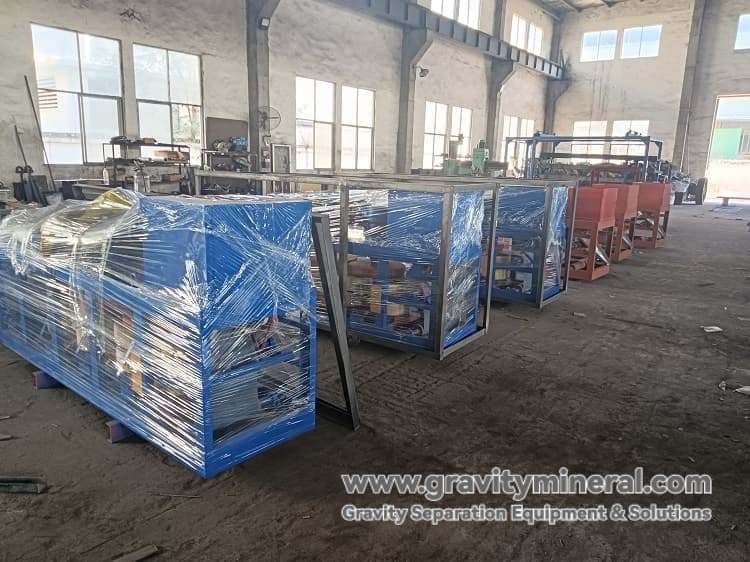
- Equipment manufacturing and supply: core gravity and magnetic equipment is produced at GravityMineral's two in-house manufacturing bases, with quality control from raw material procurement to factory test run and delivery of qualified equipment on schedule.
- Installation and commissioning: engineers dispatched worldwide to supervise installation, single-machine and linked-circuit test runs, recovery adjustment and operator training — delivery is complete only when commissioning meets the targets.
- After-sales and optimisation: quality responsibility during the warranty period; after warranty, spare parts supply, technical consultation and process optimisation, with response within 24 hours.
Talk to the GravityMineral engineering team for a customised coltan plant layout proposal and equipment quotation.