







How do I choose a gold gravity separation production line with a capacity of 15–20 metric tons per hour?
Key Findings at a Glance
- A capacity of 15–20 metric tons per hour falls within the small-to-medium range. The primary principle for equipment selection is “enough to meet needs without waste”; do not simply replicate the configurations used by large-scale plants.
- The particle size of the gold determines the sequence of equipment: coarse particles are recovered early via jigging; medium and fine particles are selectively processed using shaking tables; and fine particles are captured by centrifuges and blanket machines as a backup.
- With smaller production capacities, it is even more critical to ensure that the throughput of the upstream and downstream sections aligns; if there is a material buildup or idle time in the middle, the efficiency of the entire line will drop.
- First, determine the particle size distribution; then define the processing stages; and finally, calculate the costs. Only by following this sequence will a 15–20 metric tons per hour gold gravity separation production line be a worthwhile investment.
I. Industry Background: 15–20 metric tons per hour is a “delicate balance” in terms of production capacity
With gold prices remaining high, many small and medium-sized mines and processing plants are revitalizing their existing resources, making a processing capacity of 15–20 metric tons per hour a very common choice. This range isn\'t particularly large, but it also can\'t be achieved simply by throwing together a few pieces of equipment.
To be honest, this production capacity range is the ultimate test of one\'s expertise in equipment selection. If the capacity is too small and the equipment is oversized, it\'s a waste; if the capacity is modest and there\'s even a slight mismatch between process stages, the efficiency of the entire line will be significantly impacted. When selecting a 15–20 metric tons per hour gold gravity separation production line, the key lies in the word “matching.”
This article breaks down the process of configuring and calculating this production line step by step, following the actual sequence of line assembly.
II. Core Logic: Assess Gold Particle Size First, Then Determine the Segmentation
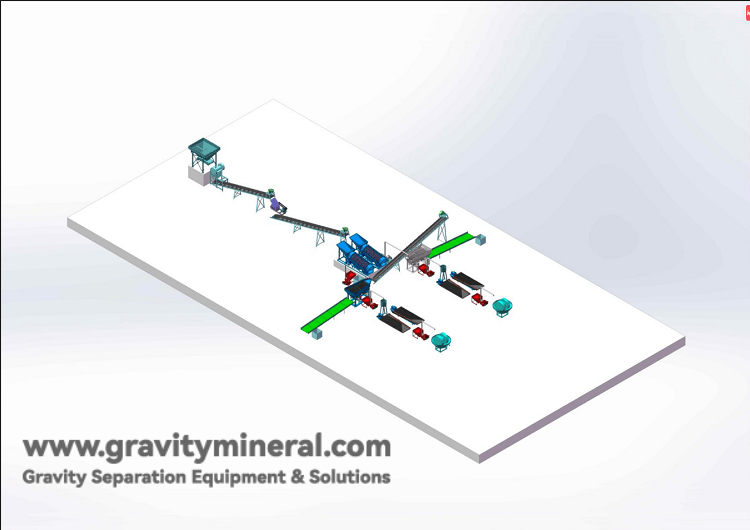
Gravity separation relies on density differences, but the real bottleneck is particle size. The coarser the gold particles, the more straightforward the separation process; the finer the particles, the more equipment selection must adapt accordingly. The layout of a gold gravity separation production line essentially involves intercepting particles in stages based on their size.
Coarse free gold is processed by a jig (which uses pulsating water flow to stratify by density) to ensure early recovery and prevent over-grinding; medium- and fine-grained gold is processed by a shaking table (a concentrator that utilizes bed movement and water flow) for selective concentration; and fine and ultrafine particles are captured by centrifugal separators and carpet machines.If the sequence is reversed or if there is a missing buffer step in the middle, fine-grain gold will circulate within the system, ultimately resulting in tailings with grades exceeding the permissible limit.
Therefore, before designing the processing line, conduct a particle size analysis to identify the specific particle size fractions where gold is concentrated. If this step is not thoroughly carried out, adding more equipment later on is merely a matter of chance.
Production capacity can be small, but the particle size analysis cannot be skipped—only once the particle size distribution is determined can the sequence of equipment be properly established.
III. Process Flow: Building It Stage by Stage
A 15–20 metric tons per hour gold gravity separation production line is most stable when configured in four stages.
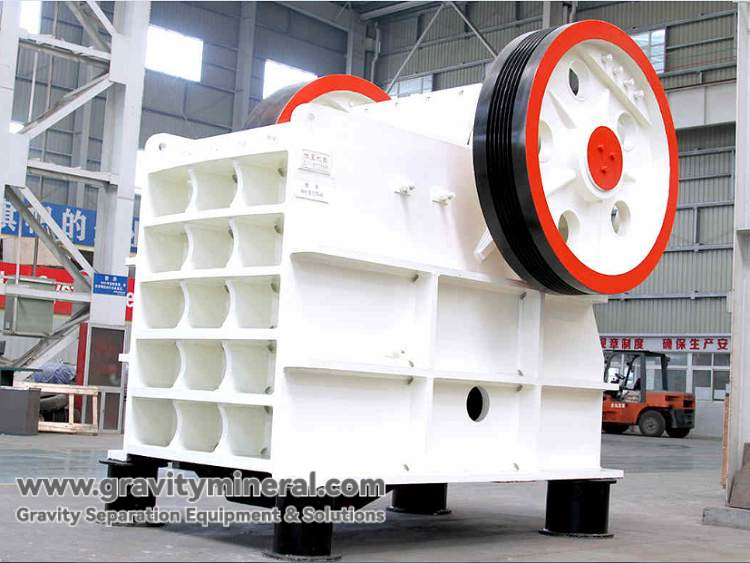
Stage 1: Ore washing and crushing. When the raw ore contains a high clay content, first use a cylindrical ore washer to remove the clay, then feed it into a jaw crusher for primary crushing to reduce large chunks to a size that the mill can process. For ore with low clay content, this stage can be simplified.
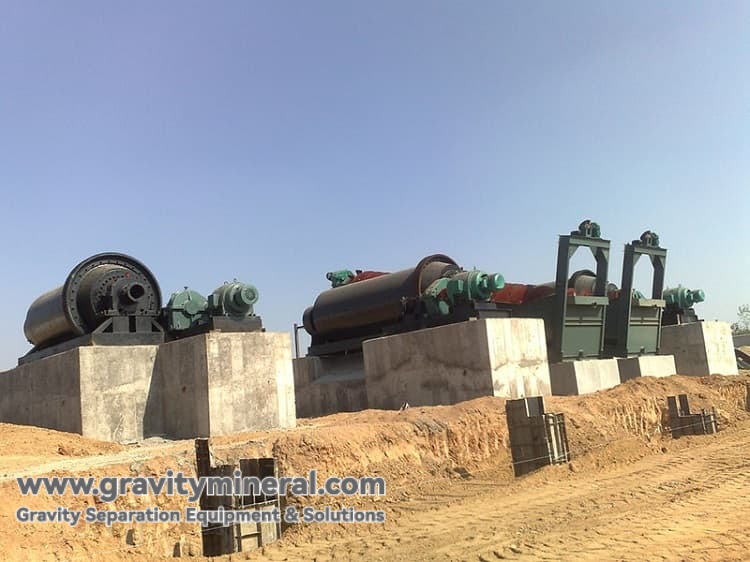
Stage 2: Grinding and Classification. A ball mill paired with a spiral classifier forms a closed-circuit grinding system, with gravity separation equipment integrated into the circuit to ensure “early recovery whenever possible.” The key to this stage is uniform particle size; avoid grinding coarse-grained gold into fine particles too early.
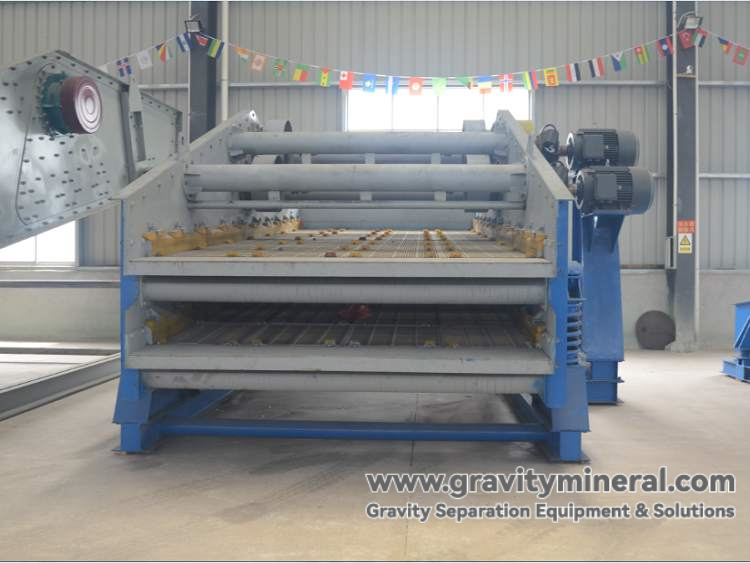
Stage Three: Graded Gravity Separation. Coarse-grain fraction undergoes roughing; medium- and fine-grain fractions undergo concentrating; and the fine-grain fraction undergoes supplementary recovery. Each stage\'s equipment is responsible only for the particle size range it excels at. Finer grading is not necessarily better; rather, the feed material for each stage must be appropriately matched to its capabilities.
Stage Four: Dewatering and Transportation. Concentrates and tailings are settled and dewatered, then pressed into filter cakes; arrangements are in place for dry tailings disposal and concentrate transportation. Do not skimp on dewatering; the savings often translate to reduced transportation costs down the line.
IV. Equipment Configuration: Alignment with Production Capacity Is Key
The table below outlines a common configuration approach for a 15–20 metric tons per hour gold gravity separation production line; specific models should be fine-tuned based on the properties of the ore. When selecting a centrifugal separator for the fine-grain recovery stage, pay particular attention to the lower limit of gold particle size—do not force it to process grain sizes beyond its capacity range.
| Process Stage | Main Equipment | Selection Criteria |
|---|---|---|
| Ore Washing | Cylindrical Ore Washer | Install as a pre-treatment step when mud content is high; ensure thorough de-silting |
| Crushing | Jaw Crusher | Feed size must match the mill inlet |
| Grinding | Ball mill, spiral classifier | Closed-circuit operation, uniform particle size |
| Coarse-Grain Gravity Separation | Sawtooth-wave jig | Stroke and frequency matched to feed particle size |
| Medium-to-fine particle enrichment | 6-S shaking table | Reduced feed volume increases grade; clear zone separation |
| Fine-Grain Recovery | Centrifugal mineral separators, suspended vibrating belt machines | Recovery of ultrafine gold particles |
| Dewatering | High-efficiency thickeners, filter presses | Dry tailings disposal, concentrate moisture control |
The most common source of error here is mismatched processing capacities. If the jigging capacity and shaking table capacity do not match, the result can range from idle operation to material blockages. Therefore, the equipment sequence and production capacity must be balanced during the design phase—do not wait until the equipment arrives on-site to make adjustments.
V. Solution Comparison: Standalone Gravity Separation vs. Gravity Separation Combined with a Downstream Process
For a 15–20 metric tons per hour line, there are two common configurations; the choice depends on the ore characteristics.
| Comparison Criteria | Single Gravity Concentration | Gravity Concentration Combined with a Secondary Process |
|---|---|---|
| Suitable Gold Particle Size | Primarily coarse-grained free gold | Mixed coarse and fine particles, with a high proportion of fine particles |
| Process Complexity | Simple, with relatively low investment | Slightly complex; flotation or leaching required in the later stages |
| Recovery rate | Effective for coarse-grain gold | More reliable overall recovery |
| Operational Difficulty | Simple to operate | Requires control of downstream reagents and feed rate |
For ore deposits dominated by coarse-grained gold, a single-stage gravity separation process is sufficient—it\'s cost-effective and hassle-free. For ore deposits with a high proportion of fine-grained gold and limited returns from coarse-grained gold, supplementing with flotation or cyanidation in the downstream stage ensures more stable overall recovery.For the medium- and fine-grain enrichment stage, the feed rate to the 6-S shaking table must be reduced and the grade increased to ensure effective separation. There is no single “best” approach—it all depends on the characteristics of your ore.
VI. Economic Analysis: Small-Scale Operations Require Even More Detailed Cost Calculations
For production lines operating at 15–20 metric tons per hour, the total investment is not particularly large, but unit costs for small-scale operations are often magnified. Oversizing equipment leads to waste, while undersizing prevents it from running at full capacity—both directly impact the cost per metric ton of ore.
A prudent approach is to first validate the process using test data, then select equipment based on actual production capacity—rather than blindly pursuing “capacity reserves for future expansion.” While leaving some room for growth is wise, excessive reserves mean paying for large-scale equipment to process a small volume of ore, which will prolong the payback period.
Provided the ore grade and gold particle size are appropriate, the recovery rate for this line generally fluctuates within a reasonable range; specific figures should be determined based on test data.Only by averaging out equipment investment, electricity consumption per metric ton of ore, chemical costs, and labor expenses can one determine whether this 15–20 metric tons per hour gold gravity separation production line is truly cost-effective.
VII. Case Study: Production Capacity Optimization at a Gold Mine in Shandong
A gold mine in Shandong, with a processing capacity of approximately 15–20 metric tons per hour, primarily processes ore containing coarse free gold with moderate clay content. The main issue prior to the upgrade was that the ore was ground too finely; while the gravity separation section recovered coarse gold reasonably well, a significant amount of fine gold was being sent to the tailings.
The adjustment strategy focused on two points: first, appropriately coarsening the grinding fineness and integrating gravity separation equipment earlier into the grinding circuit to recover coarse-grained gold sooner; second, supplementing the fine-grained section with a centrifugal separator and a suspended vibrating mat machine for scavenging and additional recovery. After the adjustments, the gold grade in the tailings dropped significantly, and the overall recovery rate improved.
This case illustrates that problems with small-capacity production lines often do not stem from the number of equipment units, but rather from whether the particle size classification and the coordination between upstream and downstream processes are properly configured.
VIII. Common Technical Issues
Issue 1: Is grinding absolutely necessary for a 15–20 metric tons per hour operation? It depends on the ore. Veined gold ores generally require grinding for liberation; gold-bearing sand and gravel materials with good individual liberation can simplify the process by relying primarily on washing and screening. Do not force the inclusion of unnecessary steps just to make the process “complete.”
Issue 2: With such a small capacity, is it worth including a downstream cyanidation stage? It depends on the proportion of fine-grain gold. When fine-grain gold is abundant and the return on coarse-grain gold is limited, a downstream cyanidation stage as a backup can significantly improve recovery; when coarse-grain gold makes up the majority and free gold is easily recoverable, simple gravity separation is often more economical.
Question 3: Is it a good idea to purchase larger equipment to facilitate future capacity expansion? It\'s acceptable to leave a moderate margin for growth, but don\'t overdo it. Excessive capacity will artificially inflate the cost per metric ton of ore, which will actually slow down the payback period. Don\'t skimp on the dewatering stage either; a combination of high-efficiency thickeners and plate-and-frame filter presses is essential for ensuring dry tailings disposal and concentrate transportation.
IX. Consulting and Cooperation
Selecting a 15–20 metric tons per hour gold gravity separation production line ultimately comes down to aligning particle size and processing capacity. The equipment list can be quite long, but what truly determines profitability is whether the process matches the ore characteristics.
If you have ore of this type awaiting processing, please provide us with data such as grade, particle size distribution, clay content, and target throughput. Based on this information, we will conduct a process matching and equipment selection analysis. If necessary, we will request samples to conduct beneficiation tests and determine the optimal solution based on the data. Send us your ore data to receive a customized solution.
X. Conclusion and Recommendations
Returning to the initial question—how should one select a 15–20 metric tons per hour gold gravity separation production line? First, determine the particle size; then define the separation stages; and finally, calculate the costs. If the sequence is correct, the configuration will naturally become clear. There is no need to pursue complexity for this line; being sufficient, well-matched, and seamlessly integrated are the most practical selection criteria for small-capacity production lines.