Pendulum Feeder | Swinging Feeding Equipment for Ball Mills and Conveyors
A pendulum feeder is a classic and highly reliable mechanical feeding device, designed to be installed directly beneath fine ore bins and hoppers. Its main function is to extract granular and small lump material from storage bins and deliver it evenly and continuously to belt conveyors or directly into ball mill.
The swinging feeder has a simple structure, an economical price and extremely low energy consumption, and is widely used in pilot plants and small-to-medium mineral processing facilities. For metallurgy, coal, building materials and chemical industries that require stable, accurate intermittent feeding, it is an ideal choice.
Because it does not rely on vibration, it runs quietly and smoothly, offering a cost-effective solution for handling dry, free-flowing granular materials.
What Is Pendulum Feeding? Why Is It Essential for Accurate Fine-Ore Metering?
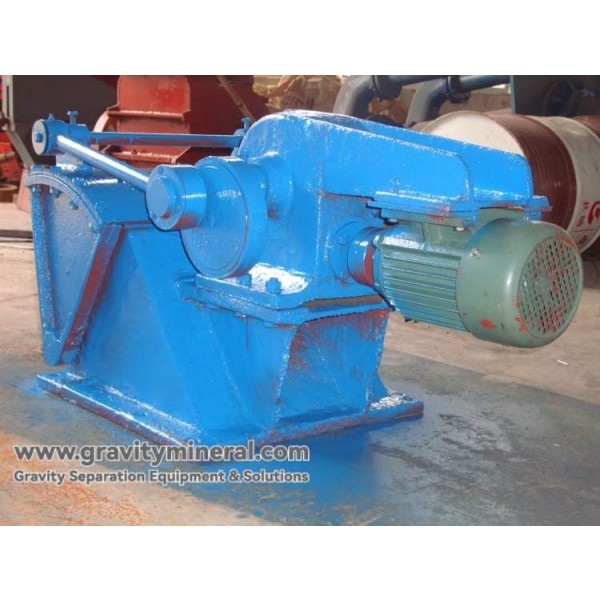
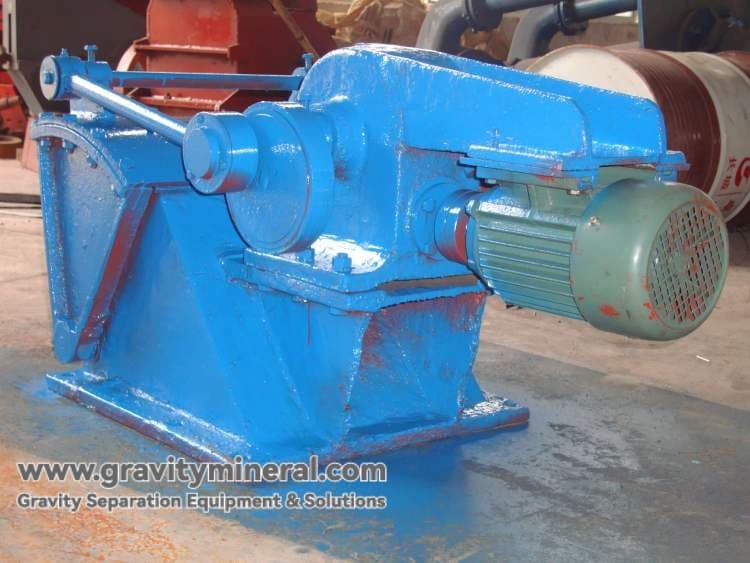
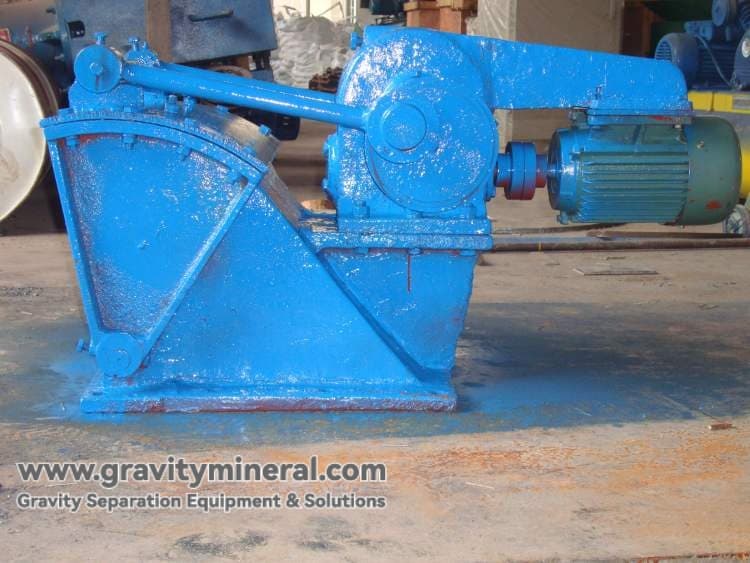
A pendulum feeder is a fine-ore metering device whose core principle is mechanical swinging volumetric displacement. It is installed directly beneath a fine ore bin or hopper, where a worm-gear reduction motor drives an eccentric wheel and crank arm, moving the curved bottom plate (the "pendulum") located right under the bin opening in a back-and-forth motion. This meters granular and small lump material continuously into a conveyor belt or ball mill. Because it does not rely on vibration, operation is quiet, stable and extremely energy-efficient.
In pilot plants and small-to-medium mineral processing facilities, crushed fine ore needs to enter the mill in a stable, metered way. This feeder uses positive physical discharge to ensure the receiving equipment never runs short of ore, while its low-power reduction gearbox delivers significant energy savings, making it an economical and reliable choice for the fine-ore feeding stage.
The reason pendulum feeders are widely used in metallurgy, coal, building materials and chemical industries is that the worm-gear reduction plus eccentric pendulum mechanical drive design plays a key role. Compared with heavy vibratory feeders, it has a simpler structure, consumes less power and produces less noise, making it the most widely used swinging-type equipment for accurate fine-particle feeding in small and medium-sized operations.
Core Technology and System Advantages
- Stable and reliable operation: The physical swinging motion achieves stable, forced discharge of material, ensuring receiving equipment such as mills never experiences an ore supply shortage.
- Easy flow adjustment: By changing the stroke length of the eccentric crank or adjusting the discharge gate on the hopper, the feed rate can be easily adjusted, and operators can change the flow at any time.
- High efficiency and energy saving: Using a low-power motor together with a reduction gearbox, this machine consumes only a fraction of the electricity of a heavy vibratory feeder, with lower noise as well.
- Optimized structure: The structure is compact and lightweight. Its mechanical design is simple, and routine maintenance requires only basic tools and standard lubrication, so no special training for staff is needed.
- Environmentally friendly: A closure can be easily fitted at the discharge outlet to prevent dust escape, protecting the plant environment and meeting strict pollution-control standards.
- Quiet and smooth: With no reliance on vibration, it operates quietly and steadily, making it suitable for dry, free-flowing granular materials.
How a Pendulum Feeder Works: Four Steps to Accurate Metering
The operation of this equipment is entirely mechanical and highly reliable:
- An electric motor drives a worm-gear reducer, greatly increasing torque while reducing speed.
- The low-speed output shaft is connected to an eccentric wheel and a connecting crank arm.
- The crank arm pushes and pulls the curved bottom plate (the "pendulum") located directly beneath the bin opening.
- As the pendulum swings backward, a measured amount of ore is released from the bin; as it swings forward, it smoothly pushes the ore over the bin edge into a receiving chute or conveyor belt.
Applications and Whole-Line Integration
The feeder handles accurate metering of dry, granular and small lump materials, and typically serves as the metering unit in the crushing—fine ore bin—metering—grinding/conveying integrated flowsheet. Typical applications are as follows:
| Application |
Typical material |
Matched process / production line |
| Ball mill metering feed |
Granular and small lump ore |
Ball mill · metered feeding at the bottom of the fine ore bin |
| Conveyor feeding |
Crushed fine particles, raw material |
Belt conveyor · accurate continuous conveying |
| Pilot plant / small concentrator |
Dry granular ore samples, intermediate products |
Accurate feeding in small-to-medium mineral processing facilities |
| Metallurgy / coal / building materials |
Ore, coal particles, construction raw material |
Stable, accurate intermittent feeding applications |
| Alluvial gold / heavy sand feeding |
Fine heavy sand, tailings feed |
Alluvial gold gravity separation plant solution |
If the ore is complex and finely disseminated, engineers can determine the integrated process flowsheet and equipment connections from ore sample test data, avoiding capacity mismatches between equipment from different suppliers. The pendulum feeder is usually capacity-matched with jaw crushers, ball mills and downstream gravity separation equipment (fiberglass spiral chutes and 6-S shaking tables) to prevent upstream/downstream capacity mismatch.
Technical Parameters and Specifications
Pendulum feeders come in several specifications based on feed opening size, matching different fine ore bins and mill capacities.
| Model (feed opening mm) |
Max feed size (mm) |
Swing frequency (times/min) |
Capacity (t/h) |
Motor power (kW) |
Machine weight (kg) |
| 400 × 400 |
< 50 |
approx. 8 |
3 - 12 |
1.1 |
approx. 700 |
| 400 × 600 |
< 50 |
approx. 8 |
4 - 15 |
1.1 - 1.5 |
approx. 850 |
| 600 × 600 |
< 75 |
approx. 8 |
6 - 20 |
1.5 - 2.2 |
approx. 1100 |
* The above are standard reference parameters; actual capacity depends on material size and bin feeding conditions.
Key Components and Operating Parameters
| Component / specification |
Technical detail |
| Drive mechanism |
Electric motor drives a worm-gear reducer, greatly increasing torque while reducing speed |
| Swing mechanism |
Output shaft connects to eccentric wheel and crank arm, driving the curved bottom plate (pendulum) in a back-and-forth motion |
| Flow adjustment |
Changing the eccentric crank stroke or adjusting the hopper discharge gate sets the feed rate |
| Max feed size |
< 50 - 75 mm (by model) |
| Capacity |
3 - 20 t/h (by model) |
| Motor power |
1.1 - 2.2 kW (low power, quiet and smooth) |
| Dust-control configuration |
A closure can be fitted at the discharge outlet to prevent dust escape |
Basic Maintenance and Care
The machine has a simple structure, and routine maintenance requires only basic tools and standard lubrication:
- Regularly lubricate the worm-gear box, eccentric wheel bearings and crank arm joints, checking oil level and seals.
- Check that the pendulum (curved bottom plate) swings freely without abnormal sticking, and that the discharge gate adjusts smoothly.
- Clean residual material from the bin opening and discharge outlet to keep passages clear; if a closure is fitted, check seal integrity regularly.
From a Single Machine to Whole-Line Integration - Responsibility Kept In-House
GravityMineral has focused on gravity separation for 20 years, with a market share of about 35% and products exported to over 50 countries and regions. The company owns two manufacturing bases and an in-house design team; core equipment is produced in-house and processes are designed in-house, so there are no gaps in the responsibility chain. A pendulum feeder is rarely used in isolation - its feeding rhythm depends on the size of the upstream fine ore bin and the capacity of the downstream mill. Feed opening size, swing stroke and feed gate are verified against process data and share the same source as the whole-line design drawings, avoiding the disconnect of "equipment that does not match the flowsheet once installed."
- In-house manufacturing base: Core equipment is produced at GravityMineral's own two manufacturing bases, with full quality control from raw material procurement to machining, assembly and no-load test run; every machine has strict inspection records before leaving the factory.
- ISO9001 quality system: The company is ISO9001 certified, and its products have earned S-certified supplier, national high-tech enterprise and other qualifications.
- Whole-line interface matching: Feeder, crusher, ball mill and downstream gravity separation equipment are capacity-matched as a whole, reducing blockage and idle running and avoiding capacity mismatch between equipment from different suppliers.
- Global delivery experience: Products have been exported to over 50 countries, with familiarity in logistics and customs clearance for major markets across Africa, Southeast Asia, South America, the Middle East, Central Asia, South Asia and Australia.
- Delivery and after-sales: ISO9001 full-process quality control, engineers on site for installation and commissioning guidance, a one-year warranty, and long-term spare parts and process optimization support.
Pendulum Feeder FAQ
Q1: Which materials are not suitable for a pendulum feeder?
A pendulum feeder is designed for dry, granular and small lump materials.Not recommended for high-viscosity, wet or sticky clay-like ores, nor for ultrafine dry powders (which flow like water). For sticky ores, we recommend an apron feeder / reciprocating chute feeder.
Q2: Where is this feeder usually installed in a plant?
You will almost always find it bolted to the bottom discharge outlet of the fine ore bin. Acting as the final metering valve, it conveys crushed rock from the bin onto a conveyor belt and then directly into a ball mill for grinding.
Q3: What is the difference between a pendulum feeder, a vibratory feeder and a reciprocating feeder?
This feeder meters material through worm-gear reduction plus eccentric pendulum swinging, with a simple structure, low power consumption and low noise, making it suitable for dry granular materials; vibratory feeders suit dry, hard, large lumps; reciprocating chute feeders suit wet, sticky large lumps. The pendulum feeder is the economical choice for accurate fine-particle metering.
Q4: Can the feed rate of a pendulum feeder be adjusted?
Yes. By changing the stroke length of the eccentric crank or adjusting the discharge gate on the hopper, the feed rate can be easily adjusted, and operators can change the flow at any time.
Q5: What is the capacity of a pendulum feeder? Can it meter continuously?
Capacity by model is approximately 3-20 t/h, supporting stable, accurate intermittent feeding so that receiving equipment such as ball mills never runs short of ore.
Q6: What routine maintenance does a pendulum feeder need?
With a simple structure, routine maintenance requires only basic tools and standard lubrication. Regularly lubricate the worm-gear box, eccentric wheel bearings and crank arm joints, check that the pendulum swings freely and the discharge gate adjusts smoothly, and clean residual material from the bin opening.
Q7: What models of pendulum feeder are available? How do I select one?
Three feed opening sizes are available: 400×400, 400×600 and 600×600, with a maximum feed size of 50-75 mm and capacity of 3-20 t/h. Selection mainly depends on the fine ore bin size, maximum feed size and downstream mill capacity; final configuration should be verified by engineers based on ore type and throughput.
Q8: How are lead time and after-sales service guaranteed for a pendulum feeder?
The core manufacturing cycle for a standard pendulum feeding machine is about 30-60 days, and in-house scheduling is little affected by external supply chains; custom non-standard designs (special feed openings or sizes) take longer, with a clear delivery schedule stated in the contract. A one-year warranty is provided, followed by long-term spare parts supply, technical consultation and process optimization advice.
Get a Pendulum Feeder Selection Plan and Quote
Tell us your material type, maximum feed size, target capacity (tons per hour), fine ore bin size, downstream mill or conveyor model, and site utility conditions, and GravityMineral engineers will prepare an equipment selection plan, process flowsheet and transparent quotation for you.
You can reach us through the contact details on our website, or contact the sales engineer for your region directly for selection advice.