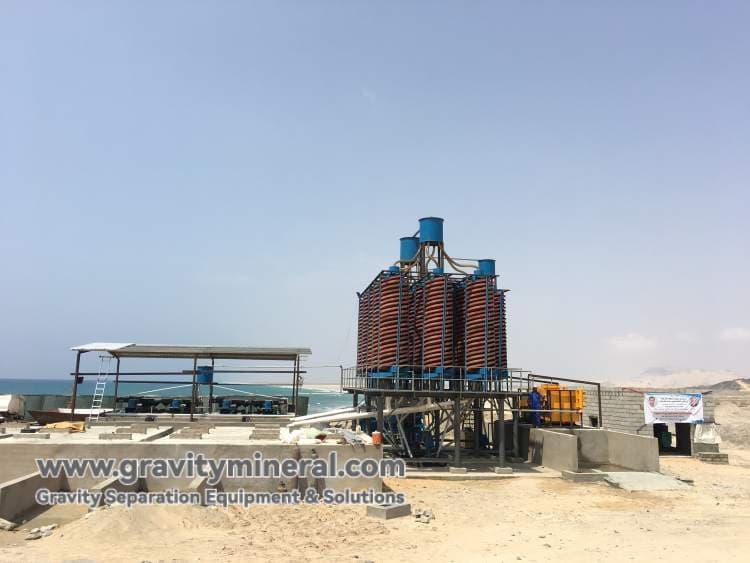
Ilmenite ore processing plant solution (gravity + magnetic): Ilmenite (FeTiO₃) is the main commercial source of titanium dioxide (TiO₂). Because it combines high specific gravity with weak magnetic susceptibility, the combined gravity + magnetic separation route has become the accepted industry standard for producing commercial-grade concentrate.
The processing strategy, however, differs markedly with the ore source. GravityMineral's ilmenite ore processing plant provides scientifically customised flowsheets for both alluvial (placer) ilmenite and hard-rock (igneous) ilmenite. By optimising the equipment configuration for your specific deposit type, GravityMineral ensures the highest TiO₂ recovery, stable operation and efficient energy use.
What Is Ilmenite?
Ilmenite is the principal mineral raw material for titanium dioxide pigment and titanium metal. It has a high specific gravity (4.5–4.8 g/cm³) and is weakly magnetic, commonly occurring with heavy minerals such as magnetite, rutile and zircon. Its sources fall into two main categories: alluvial (placer) and igneous (hard-rock) deposits.
Because the density contrast is pronounced, gravity separation is the most economical workhorse for recovering ilmenite. Gravity alone, however, cannot split ilmenite from dense rutile or zircon, nor remove strongly magnetic magnetite. GravityMineral's standard ilmenite beneficiation process therefore uses a combined "gravity pre-concentration + deep magnetic purification" circuit: it rejects the bulk of the light silica sand while ensuring the final TiO₂ grade reaches the 48%+ metallurgical standard.
20 yearsFocused on mineral processing equipment manufacturing
50+ countriesIlmenite processing lines exported and commissioned
500+ projectsGlobal mineral processing project experience base
35%China market share in gravity separation equipment
Customised Gravity Flowsheets: Placer Versus Hard Rock
GravityMineral designs your plant according to the geological characteristics of your titanium deposit.
Flowsheet 1: Alluvial (Placer) Ilmenite
Placer deposits are naturally well liberated, so no crushing or grinding stage is required.
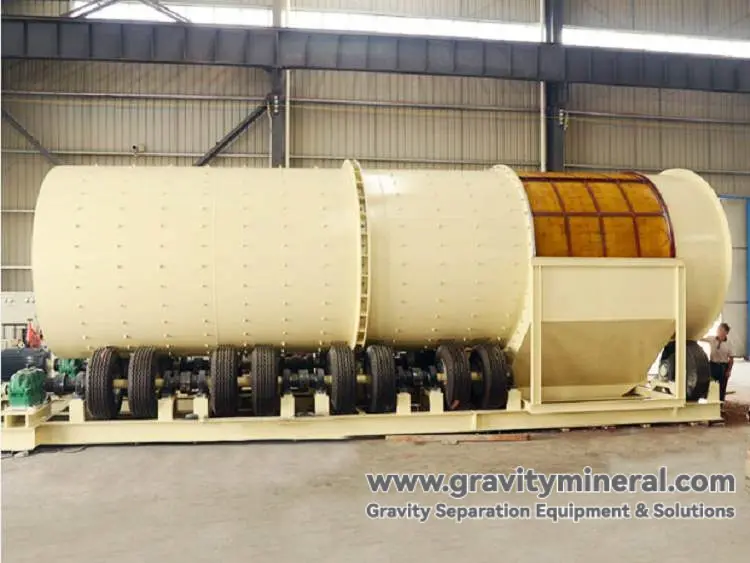
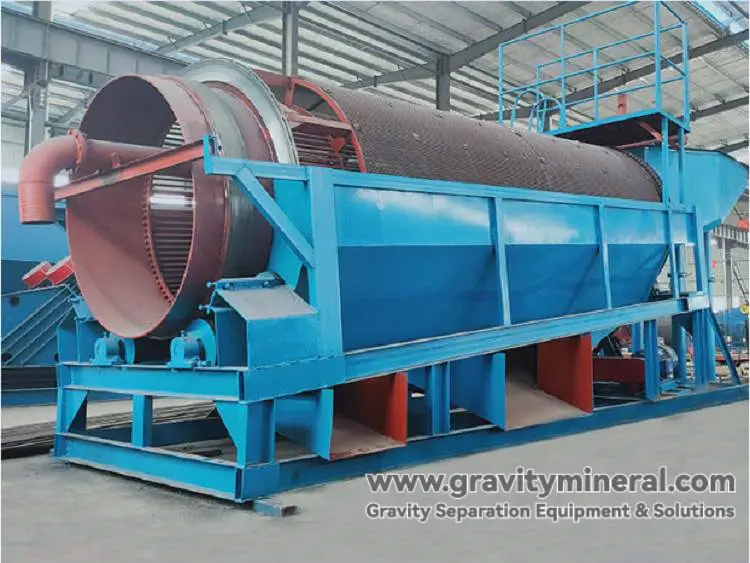
- Washing and screening: raw sand is fed to a trommel screen or rotary scrubber (capacity 20–300 t/h) to break up clay lumps and remove barren roots and oversize gravel.
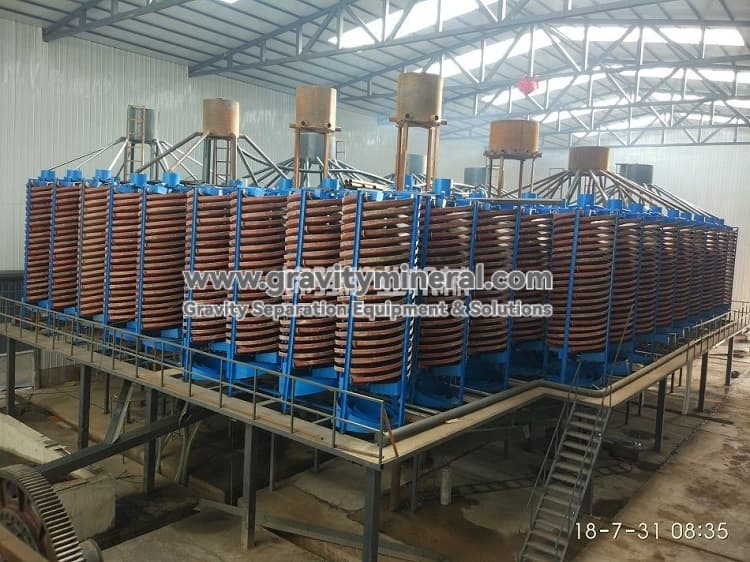
- Gravity upgrading: the −2 mm heavy sand is pumped to a bank of FRP spiral concentrators for roughing and scavenging. The spirals rapidly reject light silica sand and produce a heavy mineral concentrate.
- Drying: the heavy mineral concentrate passes through a dryer for dewatering, preparing it for dry magnetic separation.
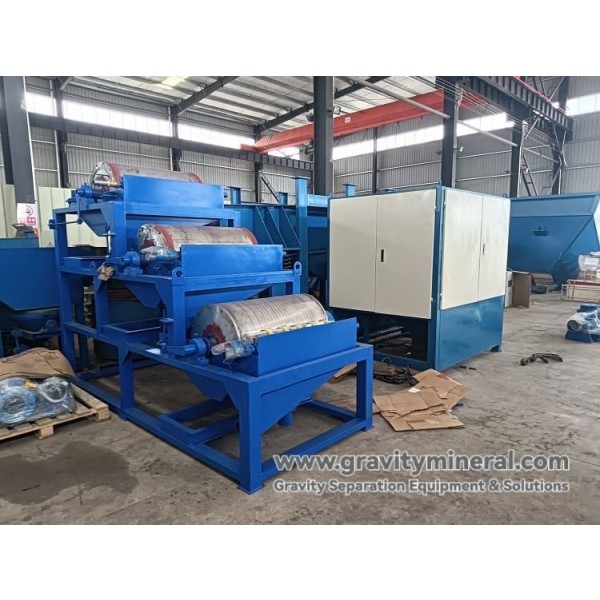
- Magnetic purification: the dried material passes through a multi-roll magnetic separator. A low-intensity roll first removes highly magnetic magnetite, then a high-intensity roll (0.8–1.5 tesla) selectively attracts the weakly magnetic ilmenite, producing a clean titanium dioxide concentrate.
Flowsheet 2: Igneous (Hard-Rock) Ilmenite
Hard rock must pass through a full comminution circuit to liberate the titanium grains.
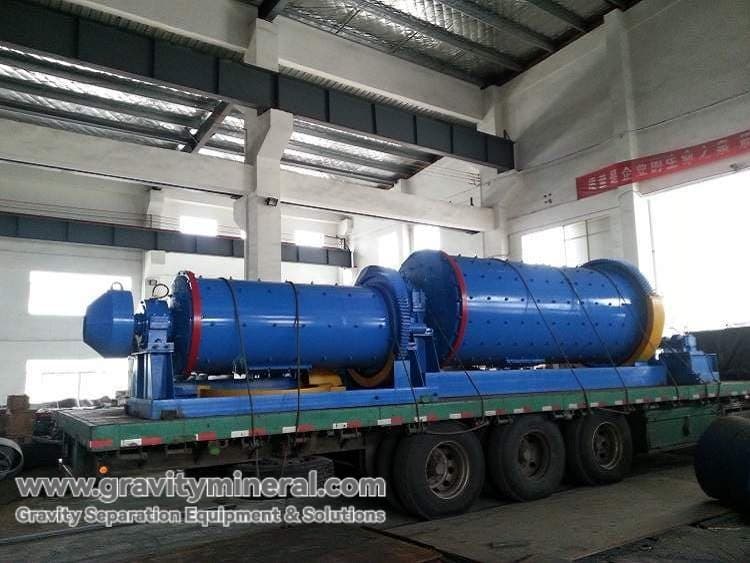
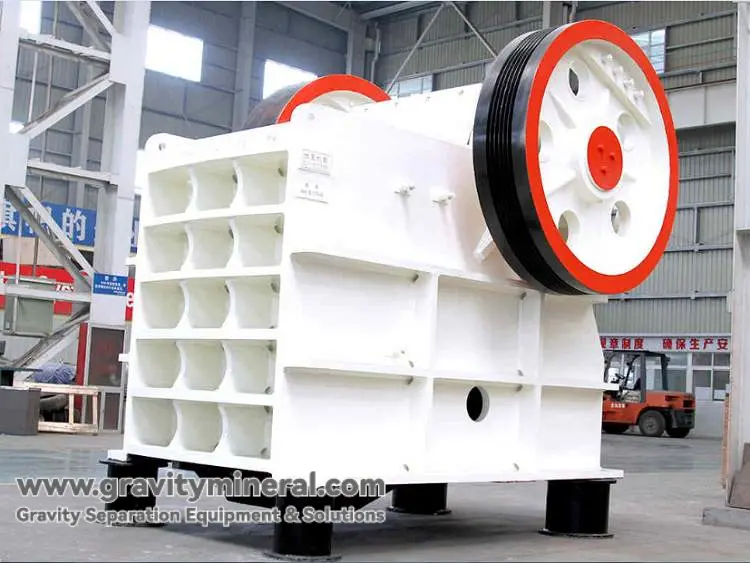
- Crushing and grinding: run-of-mine ore is reduced by primary and secondary crushing (jaw and impact crushers). The crushed ore enters a ball mill and is ground to −0.3 mm for complete mineral liberation.
- Gravity pre-concentration: the mill slurry is pumped to FRP spiral concentrators or sawtooth-wave jigs to reject most of the barren light gangue, reducing the load on downstream equipment.
- Drying: the gravity concentrate must be dewatered in a dryer to prevent blinding of the magnetic rolls.
- Magnetic purification: the upgraded concentrate passes through a multi-roll magnetic separator with adjustable field intensity, perfectly separating ilmenite from non-magnetic heavy minerals such as rutile or zircon.
Core Equipment Configuration and Selection for an Ilmenite Processing Plant
The challenge in ilmenite processing lies in efficient upgrading in the gravity stage and precise control of magnetic field intensity in the magnetic stage. The table below lists the core equipment and duty stations used in an ilmenite ore processing plant.
| Process application |
Main equipment |
Capacity / spec |
Function |
| Alluvial (washing) |
Rotary scrubber / trommel screen |
20–300 t/h |
Breaks up sticky clay and screens out oversize waste gravel. |
| Hard rock (crushing) |
Jaw crusher |
15–500 t/h |
Primary crushing (feed size ≤ 500 mm). |
| Hard rock (grinding) |
Ball mill |
Custom specification |
Grinds the ore to −0.3 mm for complete mineral liberation. |
| Gravity recovery (all types) |
FRP spiral concentrator |
2–4 t/h per unit |
High-capacity upgrading; rejects light silica sand immediately. |
| Drying and dewatering |
Dryer |
80–120 °C |
Provides specification dry feed for magnetic separation. |
| Magnetic separation (all types) |
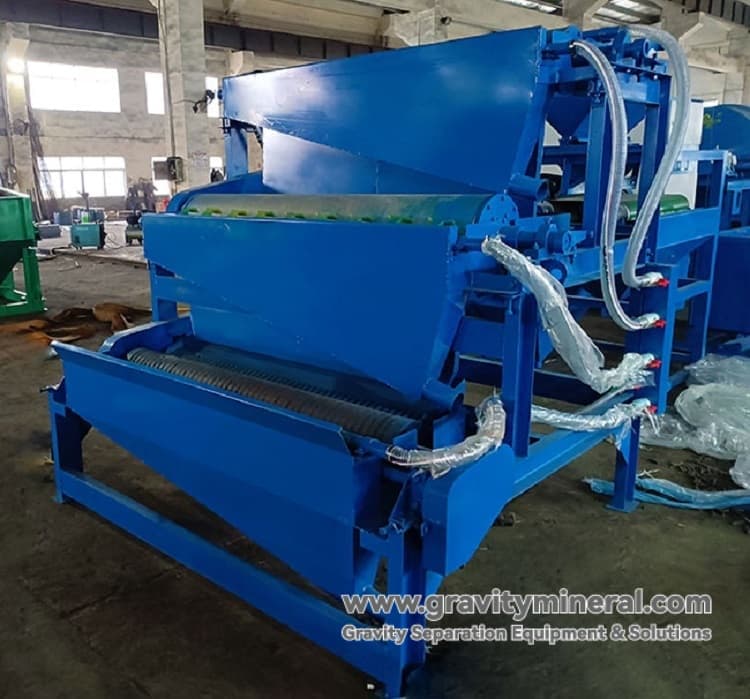
Multi-roll magnetic separator |
10–50 t/h |
Adjustable field intensity (0.8–1.5 T) for perfect ilmenite extraction. |
Target Production Indicators and System Advantages
Technical targets
- Plant capacity: 50 to 5,000 t/d (fully modular and expandable).
- Target concentrate grade: TiO₂ ≥ 48% (commercial metallurgical grade).
- System reliability: proven, durable equipment delivering ≥92% plant availability.
- Equipment investment: gravity pre-concentration greatly reduces the load on expensive magnetic separators, saving capital cost.
System advantages
- Smart volume reduction: spiral concentrators reject up to 70% of the barren sand immediately, cutting power consumption and equipment investment substantially.
- Precise separation: the multi-roll magnetic separator controls the field precisely — magnetite removed first, then ilmenite captured — for a clean concentrate.
- Clean production: zero reagents and no chemicals in the gravity stage, fully in line with modern environmental requirements.
Why Build Your Ilmenite Plant with GravityMineral
Ilmenite projects typically face shifting mineral composition, difficulty separating ilmenite from rutile, and strict impurity limits. The mineral processing industry does not lack equipment — what it lacks is a partner that understands both gravity upgrading and magnetic cleaning, and can make the flowsheet work as one system.
| Common problem |
GravityMineral's solution |
| Coarse and fine fractions processed together, so recovery falls short |
Strict classification: jigs for coarse fractions, spiral concentrators for fines — staged treatment ensures recovery across the full size range. |
| Ilmenite occurs with rutile; gravity separation cannot split them |
A dryer and multi-roll magnetic separator are installed after gravity separation, using ilmenite's weak magnetic response for complete separation from rutile. |
| Design institute drawings and equipment supply are disconnected, so interfaces mismatch |
Equipment manufacturing, flowsheet design and on-site commissioning sit within one closed-loop team — the interfaces never clash. |
- 20 years focused on gravity separation: two decades of building spiral concentrators and jigs — which equipment suits which ore condition, which flowsheet suits which size fraction, all backed by retrievable historical experience.
- Full gravity / magnetic coverage: GravityMineral supplies not only gravity roughing and upgrading, but also deep-cleaning equipment such as high-intensity magnetic separators.
- 50+ countries, 500+ global projects: ilmenite operations in Africa, Southeast Asian beach placers and other real sites are the best test of equipment reliability and adaptability.
- Six official credentials: ISO9001, S-certified supplier, National High-Tech Enterprise, Jiangxi Provincial SRDI (specialised, refined, distinctive and innovative) SME, "Contract-Honoring and Credit-Worthy AA Enterprise", and "Major Taxpayer".
Ilmenite Processing Plant Price and Investment Reference
There is no standard price for an ilmenite processing plant — for the same throughput, differences in feed grade, degree of liberation and site conditions can change the equipment configuration and capital cost considerably. GravityMineral does not quote "paper prices" detached from the ore; instead we cost the full picture against the following cost structure:
- Equipment investment: washing / crushing stage, gravity stage (spiral concentrators / jigs), magnetic stage (multi-roll magnetic separators) and dewatering and drying stage. Modular design allows staged investment to suit your budget.
- Free process design: flowsheet design, equipment selection and plant layout drawings are completed by GravityMineral's in-house design team — no external design institute required.
- Civil works and installation labour: civil construction and general installation labour are organised locally by the client; GravityMineral engineers provide on-site technical supervision.
- Operating cost (OPEX): zero reagents and no chemicals in the gravity stage — compared with an all-flotation route, the combined gravity–magnetic circuit cuts operating cost substantially; power, water and wear parts are the main expenses.
- Lead time and funding rhythm: manufacture of core standard equipment takes about 40–60 days; a full EPC turnkey project typically takes 7–12 months from contract effective date to reaching production targets.
Tell GravityMineral your ore type, feed grade, target throughput (tonnes per hour), feed size and site conditions, and our engineers will draw on a 500+ global project database to issue a transparent equipment selection list and quotation.
From Process Design to Production Targets: GravityMineral's Service Workflow
GravityMineral does more than sell equipment: we provide a full-cycle service covering mineral analysis, flowsheet design, equipment manufacturing and on-site installation and commissioning. An ilmenite project typically advances through the following milestones:
- Requirement review (3–7 days): provide ore type, feed grade, target throughput, feed size and site conditions; GravityMineral proposes a preliminary direction at no charge.
- Process design and selection quotation (7–15 days): engineers combine orebody conditions with the 500+ global project database to fix the gravity–magnetic route and issue the equipment selection scheme, with selection and quotation delivered together.
- Drawing design (7–15 days): flowsheet diagram, equipment list, plant layout drawing and civil works condition drawings, completed by the in-house design team — design is never outsourced.
- Equipment manufacturing (40–60 days): scheduled across two in-house manufacturing bases, with quality control from raw material to factory test run.
- Shipping and logistics (30–60 days) + on-site installation and commissioning (60–150 days): engineers supervise installation on site, carry out single-machine and linked-circuit test runs and operator training — delivery is complete only when commissioning meets the targets.
A conventional mineral processing EPC turnkey project typically takes 7–12 months from contract effective date to reaching production targets. For more detail, see full-cycle mineral processing services.
Related Gravity Separation Solutions
Beyond ilmenite, GravityMineral's gravity separation solution library covers the main hard-rock and placer ore types, so we can match historical experience from similar scenarios:
Ilmenite Processing: Frequently Asked Questions (FAQ)
Q1: Why does ilmenite processing need a "multi-roll" magnetic separator?
A: Ilmenite sand is rarely pure; it is almost always mixed with magnetite (strongly magnetic) and other heavy minerals such as zircon or rutile (non-magnetic). A multi-roll magnetic separator first uses a low-intensity roll to remove the magnetite impurity. A high-intensity roll (0.8–1.5 tesla) then separates the weakly magnetic ilmenite, leaving the non-magnetic zircon / rutile behind. A single-intensity magnet cannot perform this staged separation.
Q2: What is the main advantage of this flowsheet?
A: Cost efficiency. By using low-energy spiral concentrators to reject up to 70% of barren sand immediately (gravity pre-concentration), GravityMineral sharply reduces the volume that must pass through the more expensive magnetic separators. This "smart volume reduction" design saves significant power and capital investment.
Q3: Roughly how much does a complete ilmenite processing plant cost?
A: The actual cost depends on your throughput (tonnes per hour), feed grade and target concentrate specification. Once GravityMineral understands the ore conditions, we issue a transparent equipment list and quotation covering the scrubber, spiral concentrators, dryer and multi-roll magnetic separators.
Q4: If the feed has a high clay content, will that affect gravity separation?
A: Yes. High clay content seriously interferes with gravity separation. GravityMineral installs a rotary scrubber or trommel screen at the front of the circuit to wash and deslime first. Only washed pulp enters the spiral concentrators and jigs, preventing fine slimes from coating the ilmenite and causing losses.
Q5: How are the fine slimes in the tailings handled? Will they pollute the environment?
A: No. GravityMineral installs a thickener and filter press at the end of the circuit. After thickening and settling, the slurry is filter-pressed into dry cake for stacking, while the clear water is returned for reuse. This achieves zero discharge and saves a significant amount of water.
Q6: Can you supply a single spiral concentrator? What if we want to expand later?
A: Yes, single units can be supplied. GravityMineral supports modular purchasing: you can start with a washing + spiral concentrator set and add the magnetic and drying stages later when budget allows. Because the interfaces are reserved in the original design, expansion does not require rebuilding — you simply add equipment in proportion.
Q7: Our feed grade fluctuates a lot — can your flowsheet cope?
A: Yes. Process design accounts for the ore's variation range and operating tolerance. Throughput, stroke and slope of the gravity stage (spiral concentrators and jigs) can all be adjusted to the feed grade. If variation exceeds the normal range, engineers set the operating parameters for each condition during on-site commissioning.
Q8: For projects in Africa or Southeast Asia, can you send engineers for on-site installation?
A: Yes. GravityMineral's products and services have been exported to more than 50 countries. We dispatch on-site engineers to supervise equipment positioning, single-machine and linked-circuit test runs, recovery adjustment, and to train your local operating team until the line runs stably and meets the targets.
Q9: Can one plant handle both hard rock ilmenite and alluvial ilmenite?
A: Yes, but the front end differs. Alluvial ilmenite needs only washing and screening, while hard rock ilmenite needs crushing, grinding and closed-circuit classification to reach liberation at −0.3 mm. From the gravity stage onward the two routes converge: spiral and jig upgrading, drying, then cleaning in a multi-roll magnetic separator whose low-intensity roll removes magnetite and whose high-intensity roll (0.8–1.5 T) captures the weakly magnetic ilmenite. That shared downstream section is why one modular plant can be configured for either ore type, or for a mine that transitions from placer to hard rock over its life.
Global Ilmenite Project Installations
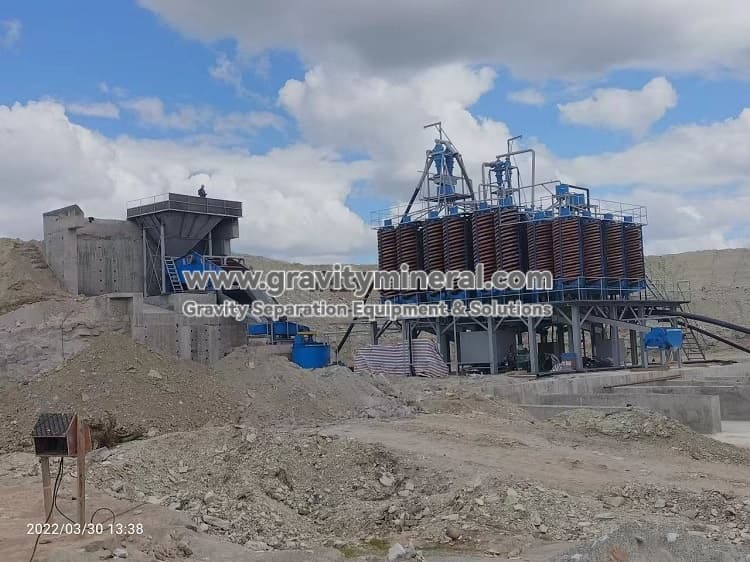
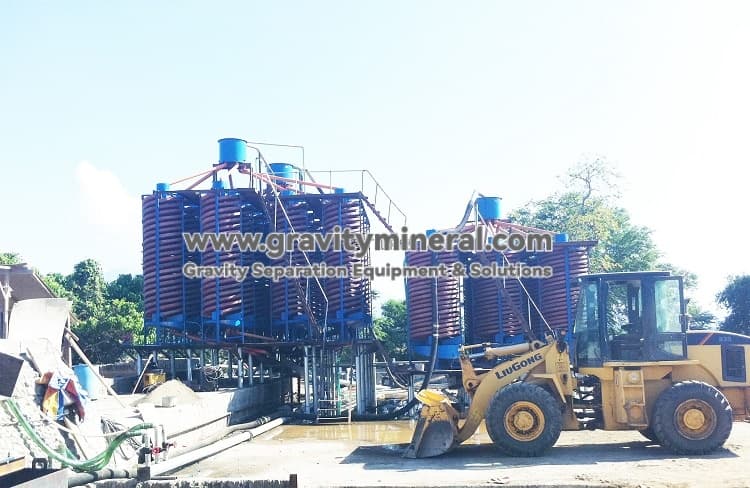
EPC Turnkey: End-to-End Ilmenite Gravity Engineering
Whether you process coastal placer sands, inland alluvial deposits or hard-rock igneous ilmenite, GravityMineral provides an end-to-end turnkey EPC solution covering comprehensive ore testwork, customised flowsheet design, equipment manufacturing and on-site commissioning.
- Solution design: a gravity–magnetic flowsheet and equipment configuration tailored to the specific characteristics of your ore sample.
- Engineering services: production line planning and 3D drawing design completed in-house — medium and large projects can save hundreds of thousands of dollars in design fees.
- Equipment manufacturing and supply: core gravity and magnetic equipment is produced at GravityMineral's two in-house manufacturing bases, with quality control from raw material procurement to factory test run.
- Installation and commissioning: engineers dispatched worldwide to supervise installation, single-machine and linked-circuit test runs, recovery adjustment and operator training — delivery is complete only when commissioning meets the targets.
- After-sales and optimisation: quality responsibility during the warranty period; after warranty, spare parts supply, technical consultation and process optimisation, with response within 24 hours.
Talk to the GravityMineral engineering team for a customised ilmenite plant layout proposal and equipment quotation.