







High-Efficiency Gold Tailings Re-processing Solution | Improve Gold Recovery Rates and Reduce Tailings Losses
I. Manifestations of Problems in Gold Tailings Re-selection and Recovery
The challenges faced in the re-selection of gold tailings typically manifest in three forms.
Tailings from flotation or cyanidation enter the gravity separation section; while the concentrate grade barely meets standards, the gold grade in the tailings consistently fluctuates around 0.3 g/t and cannot be reduced. Although the figures on the lab reports may not seem excessive, when annual metal losses are calculated based on daily processing volumes, the amounts are substantial.
When the -0.037 mm particle size fraction accounts for more than 60% of the tailings, the separation efficiency of spiral chutes and conventional shaking tables drops significantly. These fine gold particles settle slowly and are carried away by the water flow before they can be stratified in the chute.Microscopic analysis often reveals that a significant proportion of the gold in the tailings exists as fine individual particles or intergrown aggregates. The issue is not that the gold is unrecoverable, but rather that the equipment selection is mismatched with the particle size distribution.
Concentrate grades fluctuate wildly, and sulfur content varies significantly. When the concentrate is returned to the main system for reprocessing, the balance between grinding and classification is repeatedly disrupted, leading to unstable classification operations and frequent production adjustments.The gravity separation section lacks an independent closed-loop system, causing the concentrate to “circulate” within the process. This not only prevents effective liberation but also disrupts the stable operation of the main process.
II. Analysis of the Causes of Low Efficiency in Gold Tailings Re-concentration
1. Lack of Particle Size Classification; Fine Silt Interferes with Separation
If tailings are not effectively classified before entering the gravity separation equipment, fine silt creates a viscous slurry environment in the spiral chutes and shaking tables, hindering the settling and stratification of coarse gold particles. When the proportion of the -0.037 mm size fraction in the feed is too high, the separation efficiency of the spiral chute decreases significantly.Fine silt has a large specific surface area, complex surface charges, and residual reagent effects that have not yet been eliminated; the combination of these factors prevents the gravity separation equipment from operating at optimal performance.
2. Gravitational Concentrate Returned to the Main System, Creating an Inefficient Cycle
Some processing plants return gravity concentrate to the main grinding system for reprocessing; however, this practice presents significant problems in actual operation. Gravity concentrate has high sulfur content and a particle size distribution that differs greatly from the feed to the main system; upon return, it disrupts the water level and concentration balances in the grinding and classification processes.More critically, a portion of the gold in the concentrate exists in an encapsulated state; upon return to the main system, the grinding conditions are not optimized for this material, resulting in limited liberation efficiency. Experience at Henan Jinyuan Gold Mining shows that returning shaking table concentrate to the main system leads to unstable classification operations and frequent production adjustments; this issue was ultimately resolved by establishing an independent regrinding and re-concentration circuit.
3. Lack of Dynamic Control Over Re-concentration Section Parameters
The operating parameters of gravity separation equipment are not set in stone. Parameters such as the feed concentration, rinse water volume, and wear condition of the spiral chutes; the stroke and frequency as well as the transverse slope of the shaking tables; and the backwash pressure and drum speed of the centrifuges all require dynamic adjustment based on changes in ore properties and throughput.In actual production, some processing plants have not optimized the parameters of their gravity separation equipment for a long time after installation; they maintain the original settings even after changes in ore properties, which naturally leads to a decline in separation efficiency.
III. High-Efficiency Recovery Solution for Gold Tailings
Core Logic of the Solution: Pre-classification—Coarse and Fine Separation—Independent Concentrate Circuit. Each of these three stages has a specific role and collectively forms a complete gold tailings re-selection and recovery system.
1. Pre-classification: Preparing Qualified Feed for Separation
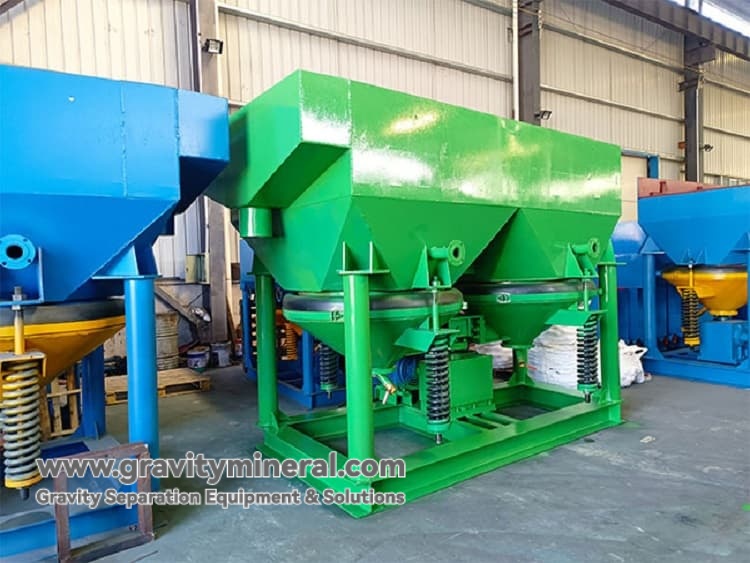
Before entering the re-selection process, tailings are first classified using a hydrocyclone or high-frequency screen to separate the -0.037 mm fine fraction. The coarse fraction (+0.037 mm) enters a spiral chute or jig, while the fine fraction is processed separately.
The necessity of the classification stage lies in the fact that fine silt is not only difficult to recover in gravity separation equipment but also interferes with the stratified settling of coarse-grained gold. Separating coarse and fine fractions and feeding them into appropriate equipment is the foundation for improving the overall recovery rate.The selection of classification equipment depends on site conditions and processing capacity; hydrocyclones are suitable for applications with high throughput, while high-frequency screens are suitable for retrofit projects with limited space.
2. Coarse-Grain Gravity Separation and Fine-Grain Centrifugal Separation
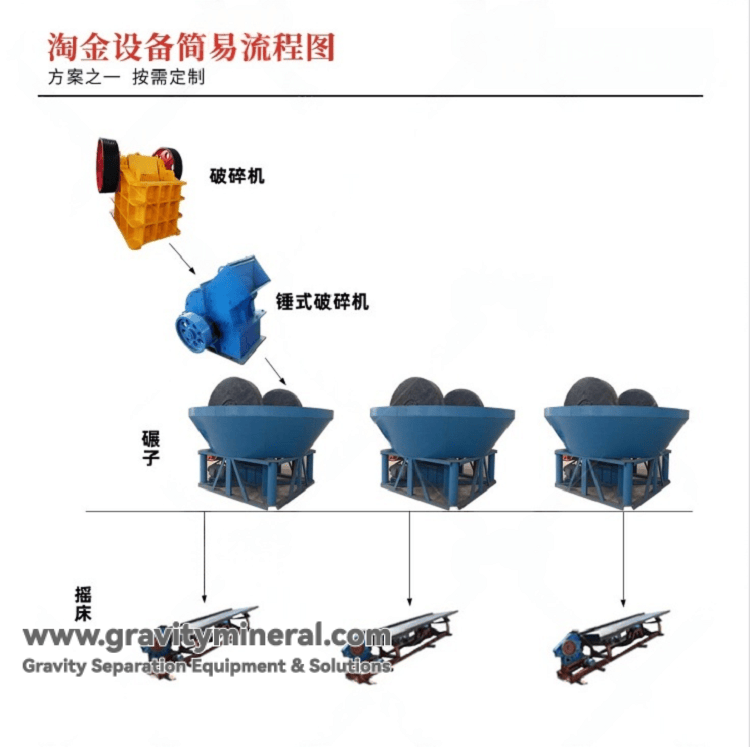
Coarse-grain material enters the spiral chute for roughing, and the concentrate from the chute proceeds to the shaking table for fine selection. The feed concentration of the spiral chute is controlled within an appropriate range, and the rinse water volume is adjusted based on the clarity of the concentrate zone boundary.Replace the spiral chute grooves promptly once they have worn to a certain extent to prevent a hidden decline in recovery rate caused by equipment wear. During the shaking table concentration stage, select the stroke length and stroke frequency based on the concentrate particle size: use a long stroke and low stroke frequency for coarse particles, and a short stroke and high stroke frequency for fine particles.
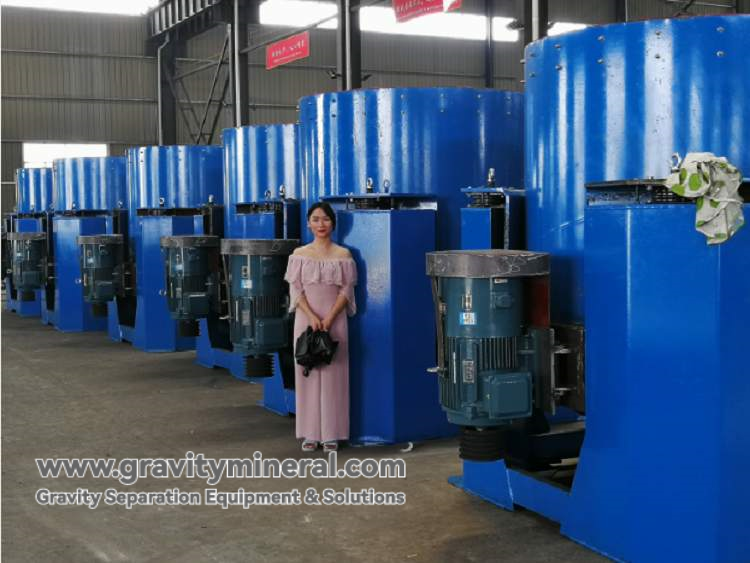
Fine-grained material is fed into the centrifugal concentrator. The water-jacketed centrifuge uses continuous backwash to keep the ore bed loose, preventing compaction of the concentrate layer that would cause a sharp drop in recovery rate. Backwash pressure and drum speed are adjusted according to the material\'s particle size.The centrifuge\'s processing capacity is set at approximately 80 percent of the rated value; if the feed rate is too high, the centrifugal field is disrupted, causing both concentrate grade and recovery rate to decline.
Independent regrinding and re-selection of the three-stage concentrate
After the chute concentrate and centrifuge concentrate are combined, they enter a separate regrinding circuit. The grinding fineness is determined based on the degree of liberation of the intergrown particles, using microscopic identification and sieve analysis data as a reference. The ground product enters flotation, where a collector system suitable for gold-bearing sulfide ores is employed to produce the final gold concentrate.
The key significance of the independent circuit lies in the fact that the gravity concentrate is no longer returned to the main system, thereby avoiding interference with the grinding and classification balance of the main process. At the same time, regrinding conditions can be optimized separately based on the material characteristics of the gravity concentrate, resulting in higher liberation efficiency.Practice at Henan Jinyuan has shown that establishing a separate re-selection circuit significantly improves system operational stability and effectively increases the recovery rate of the entire process.
IV. Implementation Steps
- Ore Property Analysis
Three representative samples—feed ore, tailings, and gravity concentrate—are collected and sent to the laboratory for gold grade analysis, particle size screening, and identification of gold occurrence states.Particle size analysis determines the primary particle size distribution of gold, guiding the selection of appropriate equipment; identification of the form of gold occurrence assesses the ratio of free gold to intergrown gold, determining whether a regrinding circuit is necessary. This step serves as the data foundation for all subsequent decisions and cannot be omitted.
- Upgrading the Classification Stage
Install classification equipment upstream of the gravity separation feed. Where on-site space permits, use a hydrocyclone bank; where space is limited, use a high-frequency screen. Simultaneously, inspect the wear on the grooves of the spiral chutes and replace any severely worn ones promptly. Install concentration and flow rate monitoring devices on the feed pipelines to establish a baseline record of operational data.
- Parameter Calibration and Stable Operation
On a weekly basis, fix key parameters such as feed concentration, rinse water volume, and shaking table stroke frequency, maintain continuous operation, and take daily samples for analysis.Determine the optimal parameter ranges for each piece of equipment under current ore conditions through data comparison, and incorporate the calibration results into the operating procedures. The goal of this phase is “stability,” rather than pursuing outstanding single-day performance metrics.
- Construction of an Independent Regrinding Circuit
If, after completing the preceding steps, the tailings grade remains too high and the assessment results indicate a significant proportion of intaglio gold, proceed with the construction of an independent regrinding circuit.The mill is sized to handle 1.2 times the production capacity of the gravity concentration, and the flotation process adopts a “one roughing, one cleaning, one scavenging” configuration, with the intermediate product returned to the roughing stage. Water from the flotation tailings can be reused in the gravity separation section to reduce fresh water consumption.
V. Application Limits and Expected Outcomes of the Plan
1. Applicable Conditions
This plan yields relatively stable results for tailings containing gold particles larger than 0.01 mm. If the gold particles in the tailings are generally smaller than 0.005 mm and mostly encapsulated by quartz or sulfides, gravity separation can only serve as a pre-concentration method, and must be followed by cyanidation or fine-grinding flotation processes.The advantages of gravity separation include controllable costs, the absence of chemical contamination, and high recovery efficiency for coarse and medium-sized gold particles; however, there is an objective limit to its ability to recover ultrafine, encapsulated gold.
2. Expected Results
Provided that the ore properties are suitable, the process configuration is reasonable, and the parameters are properly calibrated, the recovery rate of gold from tailings via gravity separation can typically be improved by several to over ten percentage points, and the gold grade in the tailings can be reduced to a lower level.The specific improvement depends on the properties of the original tailings, the form in which gold is present, and the level of operational management; there are significant differences between projects, and actual test data should serve as the basis for determination.
Industrial operation data from Henan Jinyuan following the retrofit show that, after the independent re-concentration circuit was put into operation, the gold grade in the tailings decreased from 0.120 g/t to 0.082 g/t, and the total recovery rate for the entire process increased from 88.43% to 91.45%.This case demonstrates that a high-efficiency gold recovery solution for gold tailings re-concentration is clearly effective when conditions are suitable.
VI. Key Considerations for Selecting Gold Tailings Re-selection Equipment
Suitable for coarse-grain tailings rejection and rough concentration, these chutes feature a simple structure and require no power consumption. When selecting equipment, focus on the material of the grooved channel and its replaceability; fiberglass reinforced plastic (FRP) with an alumina lining performs well in terms of wear resistance and corrosion resistance.
The core equipment for the fine-selection stage, offering high sorting precision. The 6-S shaking table is a general-purpose model, while multi-deck shaking tables can increase throughput while maintaining the same footprint. When selecting a model, choose the bed type (coarse sand, fine sand, or slime) based on the feed particle size.
A key piece of equipment for recovering fine-grain gold. The water-jacketed design is superior to traditional types in maintaining the looseness of the ore bed; the backwash system is a key consideration during selection.
Hydrocyclones or high-frequency screens should be selected based on processing capacity and site conditions. Classification efficiency directly affects the operating performance of subsequent gravity separation equipment.
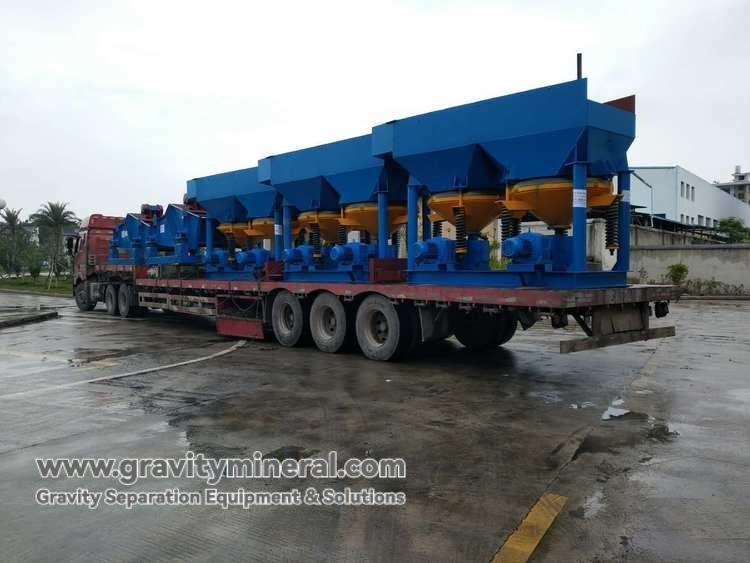
VII. GravityMineral\'s Technical Capabilities in Gold Tailings Re-recovery
GravityMineral has specialized in the manufacturing of gravity separation equipment and process design for two decades, offering comprehensive service capabilities—from experimental analysis to on-site commissioning—for gold tailings reprocessing and recovery.
Core gravity separation equipment—including jigs, spiral chutes, 6-S shaking tables, and centrifugal separators—is produced at our in-house manufacturing facilities, ensuring controllable lead times and quality. Equipment parameters are determined based on test data regarding ore properties, thereby avoiding the issue of generic models being incompatible with specific materials.
Mineral processing tests, process design, equipment selection and configuration, and plant layout are all carried out by our in-house team. The integration between the gravity separation section and the regrinding and flotation section, as well as the division of separation paths for coarse and fine particles, are clearly defined during the planning phase, thereby minimizing interface conflicts during on-site installation.
Engineers are stationed on-site to supervise installation and integrated commissioning until the production line operates stably and performance indicators meet expectations. Operator training is conducted concurrently to ensure the team has the capability to independently control operations after production begins.
Our services span more than 50 countries and regions, and we have accumulated a wealth of practical experience in scenarios such as rock gold tailings, gravity recovery of flotation tailings, and placer gold recovery. For gold tailings gravity recovery projects, we can leverage case data from projects with similar ore conditions to shorten the design cycle.