







How to Build a Gold Concentrator with a Production Capacity of 50 Metric Tons Per Hour? Complete Equipment and EPC Turnkey Solutions
A gold ore processing plant with a production capacity of 50 metric tons per hour can have a daily throughput that varies significantly depending on the operating schedule: approximately 400 metric tons under an 8-hour single shift, or up to 1,000 metric tons under continuous production.For a rock gold processing plant of this scale, it features a complete set of processing stages without the need for oversized individual machines, making it the first step for many mine owners transitioning from exploratory investments to full-scale plant construction.
Precisely because it is “neither too large nor too small,” the design offers greater flexibility.Even for two gold processing plants with the same 50-metric-ton-per-hour capacity, if one has coarser ore grain size and lower clay content, the equipment and process can be quite simple; if the ore properties are more complex and contain more associated sulfide minerals, a combined processing method will be necessary. Therefore, the first step in building a plant is not to ask about equipment prices, but to thoroughly understand the ore.
To determine whether your ore is suitable for gravity separation as the primary method, first answer these three questions
The core principle of a gravity separation gold processing plant is to achieve separation by exploiting the density difference of gold. It is relatively low-cost, free of chemical contamination, and particularly effective for coarse, free gold. However, it is not a panacea. To determine whether gravity separation is the primary method, three questions must be addressed:
-
What is the grain size of the gold distribution? Ore with relatively coarse gold grains and sufficiently liberated free gold particles achieves high recovery efficiency through gravity separation; for ore with fine-grained distribution and a high proportion of encapsulated gold, gravity separation can only serve as a pre-concentration step.
-
Is the clay content high? For ores with heavy, highly cohesive clay, a pre-treatment step for ore washing and desliming is essential; otherwise, the feed conditions for gravity separation will be unsuitable, and even the best equipment will fail to meet performance targets.
-
Is the associated mineralization complex? For gold-bearing sulfide ores and polymetallic ores, gravity separation alone is often insufficient; a combined process—such as gravity separation followed by flotation or leaching—is required.
The answers to these three questions come from the process mineralogy analysis and beneficiability tests of representative ore samples. Frankly speaking, selecting equipment without conducting tests is like a blind man feeling an elephant—the selection of gravity separation equipment relies heavily on three parameters: density difference, particle size distribution, and clay content. Any selection recommendation that deviates from actual test data is merely a reference.
How to Configure a Complete Set of Equipment for a 50-metric-ton-per-hour Gravity Gold Concentrator
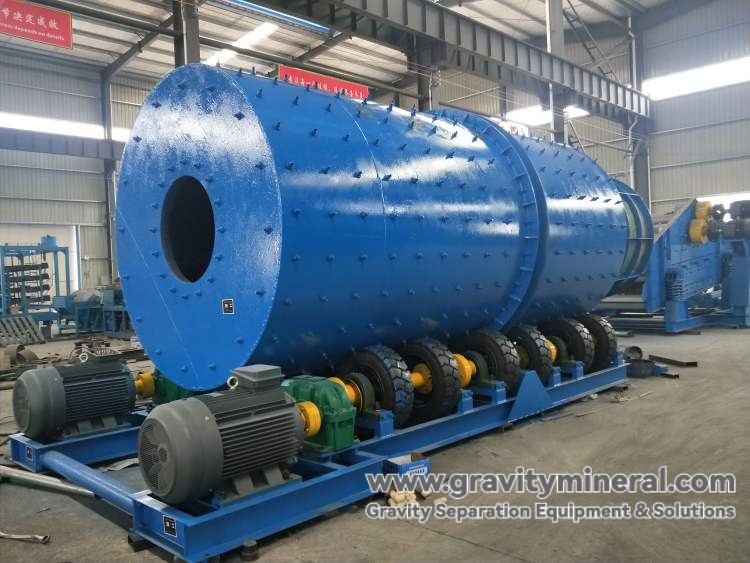
The crushing stage generally does not require a three-stage closed-circuit system; two stages of crushing plus screening to control the feed size to the mill within a reasonable range are sufficient. For grinding, a ball mill is paired with a spiral classifier to form a closed circuit. The gravity separation stage is divided into roughing, scavenging, and concentrating, with clearly defined roles.The table below outlines the basic configuration for a rock gold gravity separation plant; specific models should be adjusted based on ore hardness, feed particle size, and site elevation differences:
| Process Stage | Equipment | Reference Specifications and Orientation | Core Function |
|---|---|---|---|
| Feeding | Vibrating Feeder | Matched to Feed Particle Size | Ensures uniform feeding and removes oversized pieces |
| Primary Crushing | Jaw Crusher | Primary Crushing Type | Crush the raw ore to the feed size required for secondary crushing |
| Fine Crushing | Fine Crushing Jaw Crusher or Cone Crusher | Fine Crushing Type | Crush to mill feed size |
| Screening | Circular Vibrating Screen | Closed-circuit with fine crushing | Screening inspection to control feed size |
| Grinding | Grid-type ball mill | Matched to processing capacity | Grind to the target liberation fineness |
| Classification | Spiral classifier | Closed-circuit operation with the ball mill | Controls overflow fineness |
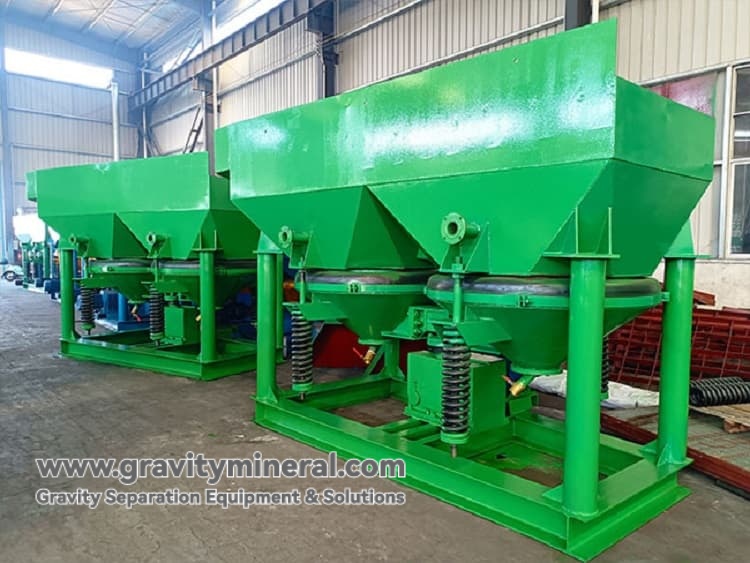
| Rough and gravity separation | Sawtooth Jig | Dual-chamber or parallel operation based on volume | Recovery of coarse native gold |
| Sweep/Concentration | Centrifugal mineral separator | Based on fine-grain recovery requirements | Recovery of fine-grained heavy minerals |
| Enrichment | 6-S Shaking Table | Configured Based on Concentrate Output | Concentrate purification to produce heavy sand gold |
| Dewatering | Thickener + Filter Press | Configured based on tailings volume | Recirculated water utilization; dry tailings discharge |
The value of the jig in the roughing stage is often underestimated; it provides stable recovery of coarse-grained gold, features adjustable stroke and frequency, and is highly adaptable to materials with a wide particle size distribution.Centrifuges are placed in the scavenging stage to specifically target fine, heavy minerals in the jig tailings. Shaking tables process only coarse concentrates; although the volume is small, this step is a key link in grade enhancement.
One step that is often omitted deserves special attention: installing a set of hydrocyclones for secondary classification after grinding and classification.The overflow from a spiral classifier feeds directly into the gravity separation process, but significant fluctuations in particle size make it difficult for the gravity separation equipment to adapt; hydrocyclones separate the underflow from the overflow, resulting in much more stable feed conditions. The configuration of this gravity separation system does not aim for large, all-in-one units, but rather focuses on seamless process integration and balanced production capacity.
How the gravity separation tailings are handled determines the maximum recovery rate for the entire plant
The concentrate yield at gold mining plants using gravity separation is typically very low, with the vast majority of material ending up in tailings. These tailings still contain fine-grained gold, encapsulated gold, and intergrown ore bodies; the processing route for this portion directly determines the plant\'s overall recovery rate.
-
Predominantly gold-bearing sulfide ore: Subjecting gravity separation tailings to flotation—using roughing and scavenging stages—requires only a limited increase in investment but can further improve the recovery rate.
-
Oxidized or low-sulfide ores: Since flotation results are unstable, regrinding and leaching of the tailings can be considered; however, for a 50-metric-ton-per-hour scale, a full leaching system requires advance assessment of environmental and regulatory approval requirements.
-
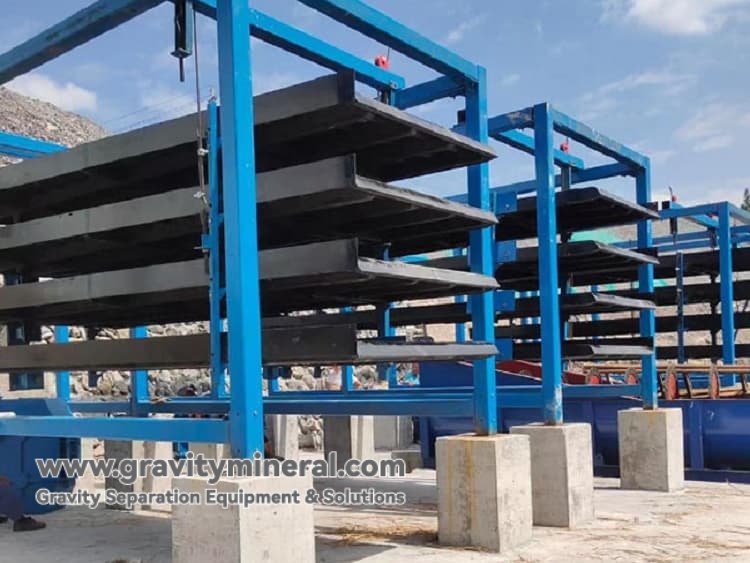
Practical approach: First, ensure the gravity separation stage is optimized; use chutes or a belt screen to recover coarse gold from the tailings; then, based on tailings grade data, decide whether to implement a combined process.
The guiding principle here is: never overcomplicate the process if pure gravity separation can solve the problem; resort to magnetic and electrostatic separation only when density separation is insufficient; and use flotation as a last resort only when the particle size is too fine or when there is associated sulfide ore. The more complex the process, the higher the investment and operating costs—this is especially important to factor in for a plant with a capacity of 50 metric tons per hour.
What Exactly Is Included in an EPC Turnkey Project? Clarify the Boundaries of Responsibility First
EPC turnkey projects for gravity gold processing plants are among the most commonly misunderstood. Some assume that delivery is complete once the equipment arrives, is installed, and is operational; however, when trial production targets are not met, all parties end up shifting blame onto one another. A standardized EPC contract must cover at least six key areas:
-
Mineral processing testing and process design—establishing the process flow based on ore sample data, rather than simply adjusting dimensions on generic drawings.
-
Full-process construction drawing design—including equipment foundations, piping routes, electrical wiring, and site elevation differences—which determines the ease of future maintenance.
-
Equipment Manufacturing and System Integration—Ensuring that processing capacities across all stages—crushing, grinding, gravity separation, and dewatering—are properly matched to avoid bottlenecks caused by individual units.
-
Installation and Civil Construction Management—Civil construction may be organized locally by the owner, while the EPC contractor ensures precision in equipment installation and piping connections.
-
Commissioning with Actual Feed Material—No-load operation is not sufficient; commissioning must be conducted with actual ore feed, and the process must be adjusted until performance indicators are stable.
-
Training and Handover — Operators and maintenance personnel must be able to work independently; operations should not grind to a halt once the engineers leave.
The EPC advantage for a 50-metric-ton-per-hour project lies in fewer interfaces: the client deals with a single entity, eliminating the need to coordinate and resolve disputes among crusher manufacturers, ball mill manufacturers, and gravity separation equipment manufacturers.Suppliers like GravityMineral—which manufactures gravity separation equipment and has its own design team and on-site commissioning engineers—integrate equipment, design, and on-site operations into a single, closed-loop team, ensuring an unbroken chain of responsibility. This is precisely how this logic is put into practice.In actual collaboration, civil engineering and general installation workers are organized locally by the client, with our engineers on-site to provide guidance. This approach ensures construction standards are met while significantly reducing cross-border labor costs.
Investment Breakdown and Construction Timeline: Setting a Reasonable Expectation
The investment for a 50-metric-ton-per-hour gravity gold processing plant varies significantly depending on ore properties, site conditions, and the degree of automation; therefore, it is not appropriate to provide an absolute figure. However, there are discernible patterns in the composition of the investment:
| Cost Categories | Approximate Percentage | Description |
|---|---|---|
| Equipment Purchase | Approximately half | Crushing, grinding, gravity separation, dewatering, and auxiliary equipment |
| Civil Engineering | Around 20 percent | Plant buildings, equipment foundations, water tanks, and tailings ponds |
| Installation work | About 10 percent | Equipment installation, piping, electrical wiring |
| Design and Management | Varies depending on the model | Our in-house design team can significantly reduce the time required for this phase |
| Transportation and spare parts | Small quantities | Equipment transportation and initial spare parts |
Design fees deserve special mention. If you hire a design institute, equipment manufacturer, and construction team separately, design fees constitute a distinct expense;however, if the equipment supplier\'s in-house design team handles mineral processing tests, process flow design, equipment selection and configuration, plant layout, and civil engineering drawings, this expense can be saved, and there will be no mismatch between the drawings and the equipment.
In terms of construction timeline, a typical turnkey mineral processing project—from contract execution to production commencement and meeting performance standards—usually takes between several months and one year. This timeline includes separate phases for core equipment manufacturing, logistics and transportation, and on-site installation and commissioning, with additional buffer time allocated for customs clearance and coordination between stages.Advance planning and allowing for sufficient margins are key to ensuring on-time commissioning.
When budgets are tight, the trade-off principle is clear: prioritize reducing automation levels and plant interior finishes, but do not compromise on the specifications of grinding and gravity separation equipment. If a ball mill is one size too small, processing capacity will be insufficient, making it impossible to meet subsequent performance targets; if a jig has insufficient area, coarse-grained gold will escape into the tailings, resulting in a loss of real money.
Common Misconceptions in Concentrator Construction
-
Treating gravity separation as a panacea: Gravity separation excels at processing coarse, free-particle gold, while fine, inclusional gold requires a combined process to cover it—this is a law of physics that no equipment can circumvent.
-
Piecing Together Equipment: While individual units from different manufacturers may operate independently, connecting them can result in interface conflicts and mismatched production capacities. The gravity separation process is particularly sensitive to particle size consistency.
-
Neglecting Recirculating Water and Dry Tailings Discharge: Thickening tanks and recirculating water basins are essential minimum configurations; environmental compliance and water usage costs hinge on them.
-
EPC Contracts Lacking Acceptance Clauses: Commissioning and performance standards must be explicitly documented—including processing capacity, recovery rates benchmarked against test values, and continuous stable operating time—none of which can be omitted.
-
Purchasing Equipment Without Testing: Without representative ore sample data, selecting any gravity separation equipment is like a blind man feeling an elephant.
Building a 50-metric-ton-per-hour gravity gold processing plant: What\'s the next step?
To move forward with a 50-metric-ton-per-hour gravity separation gold processing plant project, we recommend following this sequence: First, collect representative ore samples for process mineralogy analysis and gravity separation testability tests to obtain baseline data such as concentrate yield and grade, tailings grade, and overall recovery rate;Next, based on the test results, determine whether to use a gravity separation-only process or a combined gravity separation and other processes; then have the equipment and design teams clearly specify in the proposal the correspondence between each piece of equipment\'s processing capacity and the test data; finally, clearly define the acceptance criteria and boundaries of responsibility in the EPC contract. A proposal that clearly articulates this logic is far more reliable than attractive renderings.