







How Should a Fluvial Alluvial Gold Ore Processing Plant Be Configured? Complete Set of Processing Equipment and Gravity Separation Process Plan
How Should a Flushing-Type Placer Gold Mine Processing Plant Be Configured? Complete Set of Processing Equipment and Gravity Separation Process Plan
Alluvial placer gold deposits are a highly representative type of placer gold deposit—formed by the transport and deposition of sediment by seasonal water flows and flash floods, they often occur in fan-shaped or banded distributions. They are characterized by high and fluctuating clay content, high gravel content, a mixture of coarse and fine gold particles, and significant variations in ore body thickness and grade.The core of configuring a processing plant for this type of ore body is not to simply replicate the standard configuration for riverbed placer gold, but rather to design a targeted system centered on four key principles: “thorough ore washing, early recovery of coarse particles, thorough recovery of fine particles, and rapid discharge of gravel.” This article presents a comprehensive configuration approach and a gravity separation process plan for alluvial placer gold processing plants.
I. The Four Characteristics of Alluvial Gold Ore Bodies Determine the Configuration Logic
1. High and Highly Fluctuating Silt Content
Fine silt and clay are mixed into the ore during the alluvial deposition process, resulting in significant variations in silt content between the rainy and dry seasons, as well as between the upper and lower parts of the ore body. Washing equipment must be selected based on operating conditions for the maximum silt content, rather than the average—this is the most common pitfall in alluvial placer gold processing lines.
2. High Gravel Content and Large Particle Size
In areas where flash floods have strong transport capacity, the proportion of gravel is high and the particle size is large. The screen mesh size in the screening section and the gravel discharge capacity directly determine the throughput of the entire line. If gravel does not discharge smoothly, the entire line downstream will become blocked.
3. Mixed-size gold particles
Due to the short transport distance in alluvial deposits, coarse-grained gold coexists with fine-grained and ultrafine-grained gold. Coarse grains are recovered early via jigs or sluices, while ultrafine gold (-0.074 mm) must be captured by a centrifugal concentrator; no single piece of equipment can cover the entire grain size range.
4. Significant Variations in Ore Body Grade and Thickness
Feed rates fluctuate significantly; the process design must allow for adjustment flexibility and operational tolerance, and the feed section must be capable of accommodating these fluctuations.
II. Configuration of the Complete Mineral Processing Equipment: Organized by Stage, with Seamless Integration Between Stages
The standard main process flow for an alluvial sand gold processing plant is: Feed → Washing and Screening → Roughing and Tailings Discharge → Sweeping → Concentration and Gold Recovery → Fine-Grain Recovery → Dewatering → Tailings Treatment.
1. Feeding Section
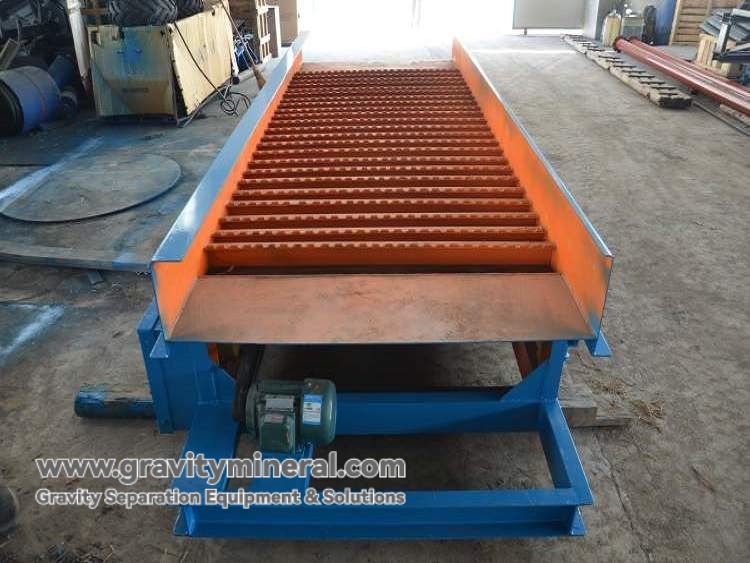
- Equipment: Vibrating feeder or trough feeder.
- Selection Criteria: Alluvial ore is high in clay content and is sticky and wet; a trough feeder is preferred to prevent blockages caused by sticky, wet ore. The feeding section must have sufficient buffering and调节 capacity to accommodate fluctuations in feed rate caused by variations in ore body grade and thickness.
2. Ore Washing and Screening Section (Key Section for Alluvial Ore)
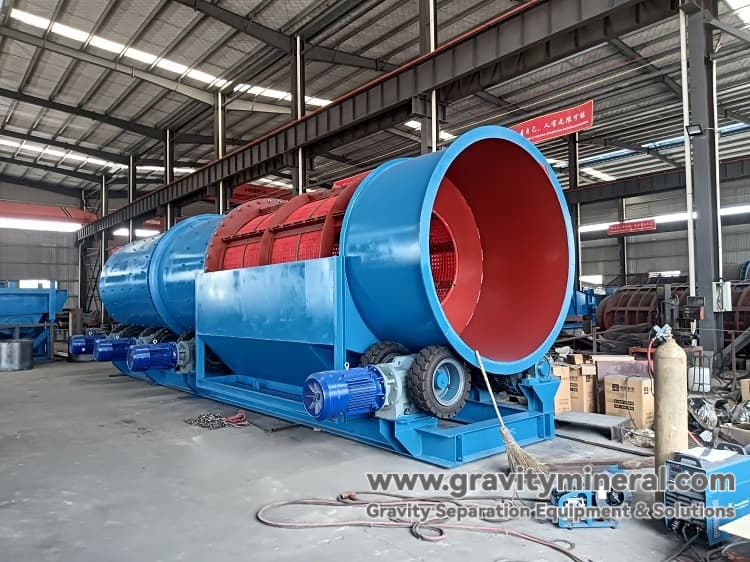
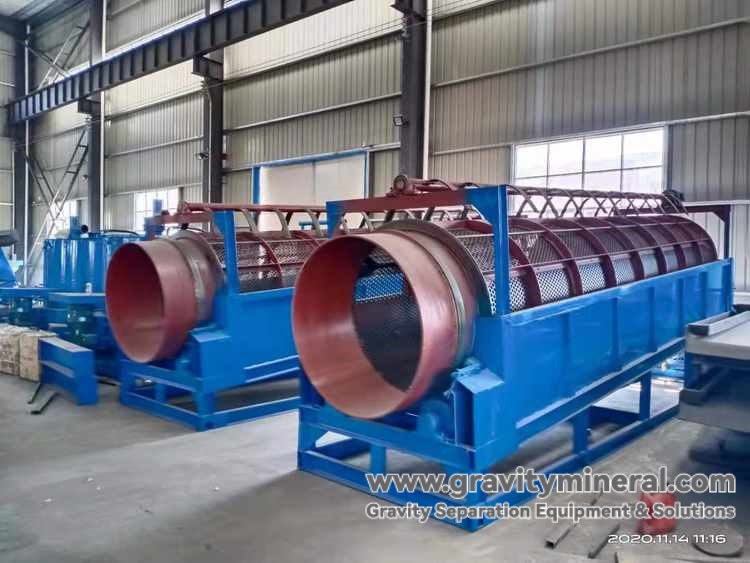
- Equipment: Trommel washer (cylindrical washer) + cylindrical screen/trommel screen.
- Selection Criteria: Select the size of the ore washer based on operating conditions with the highest mud content; if necessary, add a scrubbing stage or extend the washing drum; determine the screen aperture size of the cylindrical screen based on the gravel size distribution, and allow for a margin in gravel discharge capacity.In alluvial deposits, if ore washing is incomplete, gold particles coated in slurry enter the gravity separation section, causing a sharp drop in jig separation efficiency and tailings loss on the shaking table—ore washing serves as the first line of defense for recovery rates in alluvial placer gold processing lines.
3. Roughing and Tailings Removal Section
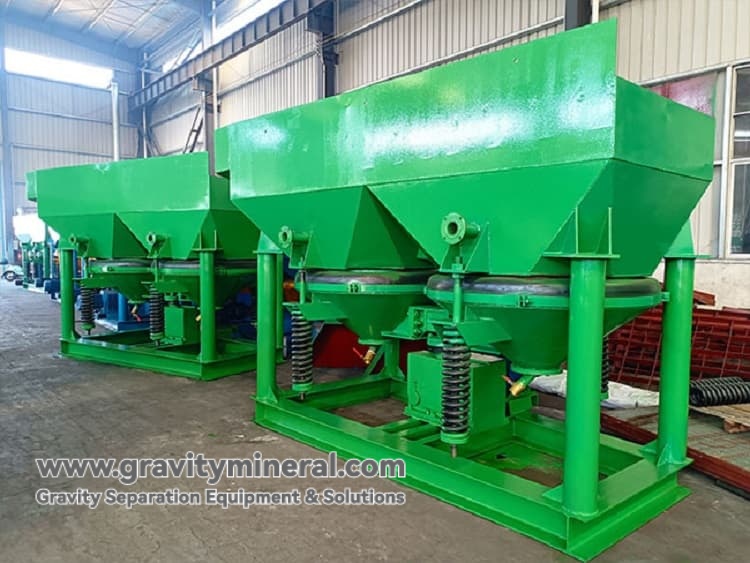
- Equipment: Sawtooth-wave jig (main unit) or a set of spiral chutes.
- Key Selection Criteria: Jigging machines are highly adaptable to wide-grained feed material and are suitable for alluvial feed containing a mixture of coarse and fine particles; they offer high throughput and can handle a high proportion of tailings, thereby freeing up processing capacity for gold-bearing material. Multiple units connected in parallel can match the throughput requirements of the entire line.
4. Sweep Selection Stage
- Equipment: Spiral chutes.
- Selection Criteria: Simple structure, no power consumption, and small footprint. The fiberglass-reinforced plastic (FRP) construction with an alumina lining ensures wear and corrosion resistance, enabling the recovery of medium- and fine-grained heavy minerals from the roughing tailings and further reducing the tailings grade.
5. Concentration Section
- Equipment: 6-S shaking table / multi-stage lifting shaking table.
- Selection Criteria: High separation accuracy, producing qualified gold concentrate in a single pass; multi-deck shaking tables multiply throughput while maintaining the same footprint, making them suitable for plants with limited space. The number of shaking tables in the concentrate stage and their configuration depend on the volume of rough concentrate and the target concentrate grade, and must be calculated by the process engineering team.
6. Fine-Grain Recovery Section (Mandatory for alluvial deposits)
- Equipment: Centrifugal mineral separators, supplemented by suspended vibrating belt thickeners, agitated chutes, and gold-adhering chutes.
- Key Selection Considerations: Alluvial gold particles vary widely in size, and sub-0.074 mm fine gold is difficult to recover using conventional gravity separation equipment. The centrifugal ore separator utilizes centrifugal force to enhance separation, serving as the final step to ensure complete recovery.Many alluvial placer gold plants struggle to achieve high recovery rates because their fine silt section lacks a bottom-trapping device.
7. Dewatering Section
- Equipment: Dewatering screen.
- Selection Criteria: Dewater the gold concentrate to meet transportation requirements; dry tailings discharge is a mandatory environmental compliance requirement, so equip the plant with thickeners and other equipment as required by local environmental regulations.
III. Gravity Separation Process Scheme: Multi-stage gravity separation—“Recover as early as possible and extract every last bit”
Alluvial placer gold deposits typically require only a single gravity separation process (since the gold is already individually liberated, eliminating the need for flotation or cyanidation). The key lies in the configuration of processing stages and equipment integration:
Raw ore → Trough feeder → Drum washer → Cylindrical screen (to separate large gravel) → Sawtooth jig(roughing and tailings removal) → spiral chute (sweep selection) → 6-S shaking table/multi-deck shaking table (gold concentration) → centrifugal concentrator (recovery of fine-grained gold) → dewatering screen → gold concentrate
The process design adheres to three principles:
- Thorough ore washing: The washing section is configured for maximum silt content conditions to ensure the feed meets the requirements for gravity separation;
- Multi-stage gravity separation with early recovery: Roughing produces high-volume tailings, scavenging recovers medium- and fine-grained particles, fine selection yields qualified concentrate, and the fine slurry centrifuge serves as a safety net; processing capacities across all stages are aligned to prevent material blockages or idle operation in intermediate stages;
- Process-Equipment Integration: The same team is responsible for the configuration of processing stages, equipment integration, and production capacity balancing—since the equipment is manufactured in-house and the process is designed internally, there are no interface conflicts.
IV. Reference Processing Capacity Ranges
Alluvial gold processing plants can be configured in a modular fashion based on the scale of the ore body:
| Hourly Processing Capacity Ranges | Typical Configuration |
|---|---|
| 30–80 t/h | Trommel washer + jig roughing + spiral chute scavenging + 6-S shaking table concentrating + centrifugal concentrator |
| 80–150 t/h | Large-capacity trommel washer + jig (multiple units in parallel) + spiral chute assembly + multi-deck shaking table + centrifugal concentrator + dewatering screen |
| 150–300 t/h | Modular parallel configuration of multiple roughing–sweeping–concentration stages; complete process package including dry tailings disposal |
For small-scale operations, a single jig and shaking table can serve as a starting point, with gradual expansion of the line in later stages; the initial design should include provisions for future expansion. The actual equipment selection depends on the grade of the ore, clay content, gravel proportion, gold particle size distribution, and site conditions.
V. Why Alluvial Gold Processing Lines Are Better Suited for EPC Turnkey Projects
The complexity of alluvial ore bodies lies in the fluctuations in clay content, gravel proportion, and gold particle size distribution, which result in an extremely low margin for error in matching production capacities and coordinating interfaces between equipment.Under a decentralized model, where the ore washing machine manufacturer, jig manufacturer, and shaking table manufacturer each manage a separate segment, an undersized ore washing machine can cause blockages downstream, while mismatched processing capacities between the jig and shaking table result in idle operation in the middle. Once performance targets are not met, the parties tend to shift blame onto one another.
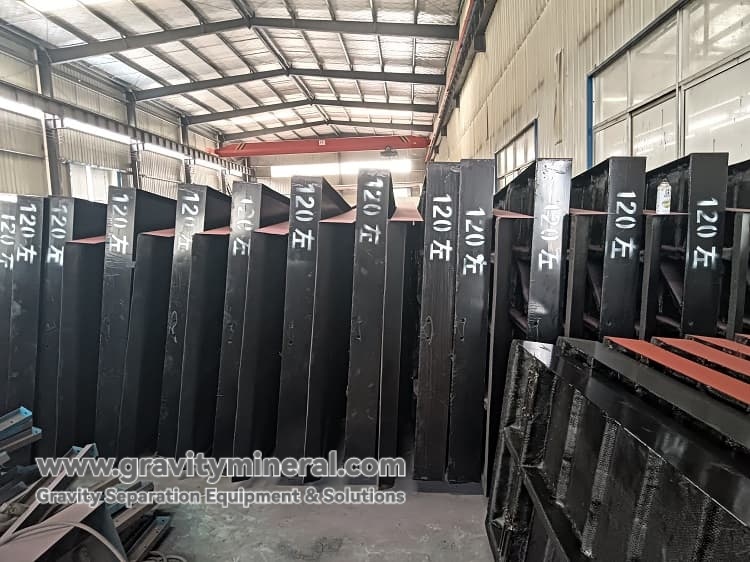
GravityMineral\'s EPC turnkey model ensures a closed-loop process where equipment, design, and on-site operations are managed by a single team:Mineral processing tests to determine ore properties → Process flow design and equipment selection → Production scheduling at our two in-house manufacturing bases → On-site installation guidance and integrated commissioning by engineers → Staff training until the production line runs smoothly and performance indicators are stable. The total cycle for a typical project is 7–12 months.
VI. Next Steps: Send a Sample First, Then Finalize the Configuration
The configuration plan for alluvial placer gold deposits will ultimately be based on the actual test data from your ore samples. Please provide: ore type and gold grade, target processing capacity, feed particle size and clay content, gravel proportion, site conditions, destination country, and budget range.Sending representative ore samples for beneficiation testing will yield a more precise process flow and equipment configuration plan; testing fees can be offset against the cost of equipment or an EPC contract signed at a later date.
To obtain a preliminary proposal and quotation, please provide: ore type and gold grade, target processing capacity, feed particle size and clay content, gravel proportion, site conditions, destination country, and budget range.