How to Choose a Gold Extraction and Beneficiation Plan and a Complete Set of Equipment?
How to Choose a Gold Extraction and Beneficiation Plan and a Complete Set of Equipment?
The core logic behind sand gold extraction can be summed up in one sentence: Gold in riverbeds has already undergone a preliminary sorting process by nature based on specific gravity, making gravity separation the most direct and economical method of recovery.However, “being able to use gravity separation” does not mean “you can recover gold by simply throwing together a few pieces of equipment”—even for the same type of placer gold, variations in mud content, gravel proportion, and gold particle size can lead to significant differences in processing plans and equipment configurations. This article explains how to determine a processing plan for placer gold extraction, how to select a complete set of equipment, and what common pitfalls to avoid.
I. Determine the Plan First, Then Select the Equipment: The Four-Step Decision-Making Process for Placer Gold Extraction
Step 1: Understand the Ore Characteristics (Determines the Direction of the Plan)
Before selecting equipment, four parameters must be confirmed, as these directly determine the equipment configuration:
Silt content
Determines the specifications of the ore washing section. In ore with high silt content, the gold particles are coated in slurry, rendering gravity separation ineffective—ore washing equipment must be selected based on the maximum silt content operating conditions, not the average value;
Gravel Proportion and Particle Size
Determines the screen aperture size of the trommel screen and the gravel discharge capacity; if gravel does not discharge smoothly, the throughput of the entire line will be limited;
Gold particle size distribution
Coarse free gold is recovered early by jigging machines or chutes, while ultrafine gold (-0.074 mm) must be captured by a centrifugal separator. No single piece of equipment can cover the entire particle size range;
Raw Ore Grade
Determines the ratio of roughing to rejection and the scale of the concentrating stage; for low-grade ore, it is essential to reject a large proportion of material to reduce subsequent processing costs.
Submitting representative ore samples for beneficiation testing and deriving the process flow from actual data is the most effective step to mitigate investment risks. GravityMineral\'s testing fees can be offset against the cost of subsequent equipment or EPC contracts.
Step 2: Determine the Process Flow (Placer gold typically uses a single gravity separation process)
A typical characteristic of placer gold is that the gold is already liberated as individual particles; in the vast majority of cases, a single gravity separation process is sufficient, without the need for flotation or cyanidation (unless the gold is present as fine-grained inclusions, in which case a combined process is required). The standard main flow is:
Feed → Ore washing and screening → Roughing and tailings rejection → Sweeping → Concentration and gold recovery → Fine-grain recovery → Dewatering → Gold concentrate
Step 3: Select Equipment by Process Stage (Not Based on the “Quality of Individual Machines”)
Each stage has a different task, and the logic for equipment selection varies accordingly—see the next section for a detailed breakdown.
Step 4: Determine the processing capacity range
Alluvial gold processing lines—ranging from 10 t/h pilot lines to large-scale lines exceeding 300 t/h—can be configured using a modular approach. Small-scale operations can start with a single jig and shaking table, with gradual expansion later on; design should include provisions for future expansion from the outset. The scale of the operation affects the number and specifications of equipment but does not affect design or process standards.
II. How to Select the Complete Equipment Set: A Section-by-Section Breakdown
1. Feeding Section
- Equipment: Vibrating feeder / Trough feeder.
- Selection Criteria: For ore with high clay content or sticky, wet ore, prioritize trough feeders, which are specifically designed to prevent clogging. If the feed section becomes blocked, the entire line will either idle or experience material overflow—rendering even the highest throughput useless. The feed section must also have buffering and adjustment capabilities to accommodate fluctuations in ore grade.
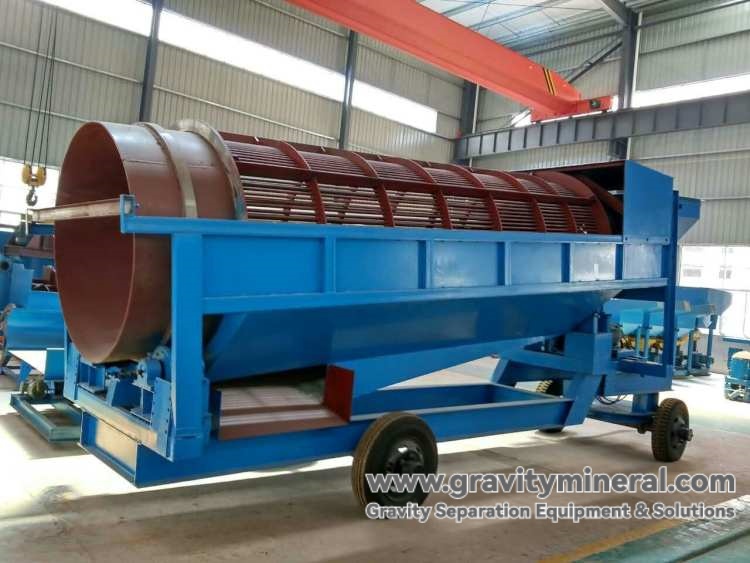
2. Ore Washing and Screening Section (Determines the Success or Failure of the Placer Gold Line)
- Equipment: Trommel washer (cylindrical washer) + cylindrical screen / trommel screen.
- Selection Criteria: Select the ore washer based on operating conditions with the highest mud content; add a scrubbing stage if necessary. Determine the mesh size of the cylindrical screen based on the gravel size distribution, and allow for a margin in discharge capacity. The thoroughness of ore washing directly determines the success or failure of the gravity separation process—this is the first critical step in the sand gold line\'s recovery rate.
3. Roughing and Tailings Disposal Section
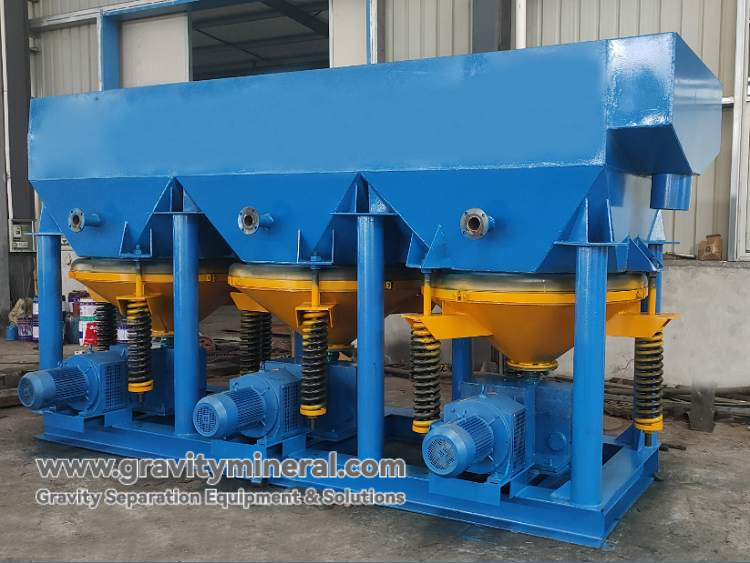
- Equipment: Sawtooth-wave jig (main unit) or spiral chute assembly.
- Selection Criteria: Sawtooth-wave jigs feature a more optimal water flow pulsation curve, strong adaptability to wide-grained feed materials, and significantly improved processing capacity per unit area, making them suitable for feed containing a mixture of coarse and fine particles; spiral chutes have a simple structure, require no power consumption, and have a small footprint.with a fiberglass-reinforced plastic body and corundum lining that offers wear and corrosion resistance, making them suitable for the humid, high-salinity environments of coastal sand mines. The task of the roughing stage is to reject a large proportion of light gangue, thereby freeing up processing capacity for gold-bearing material.
4. Sweep Section
- Equipment: Spiral chutes.
- Selection Criteria: To recover medium- and fine-grained heavy minerals from the roughing tailings and further reduce the tailings grade. Multiple chutes are connected in series, with the number of stages determined by the required tailings grade.
5. Concentration Section
- Equipment: 6-S shaking table / multi-stage lifting shaking table / Yunnan Tin shaking table.
- Selection Criteria: The 6-S shaking table is the most widely used concentrate recovery equipment globally, offering high separation precision and producing qualified gold concentrate in a single pass; multi-deck shaking tables multiply throughput while occupying the same floor space, making them suitable for processing plants with limited space.The number of shaking tables in the fine selection section and their configuration depend on the volume of rough concentrate and the target concentrate grade; these must be calculated by the process engineering team and cannot be determined arbitrarily.
6. Fine-Grain Recovery Stage (The “Last Mile” of Recovery Rate)
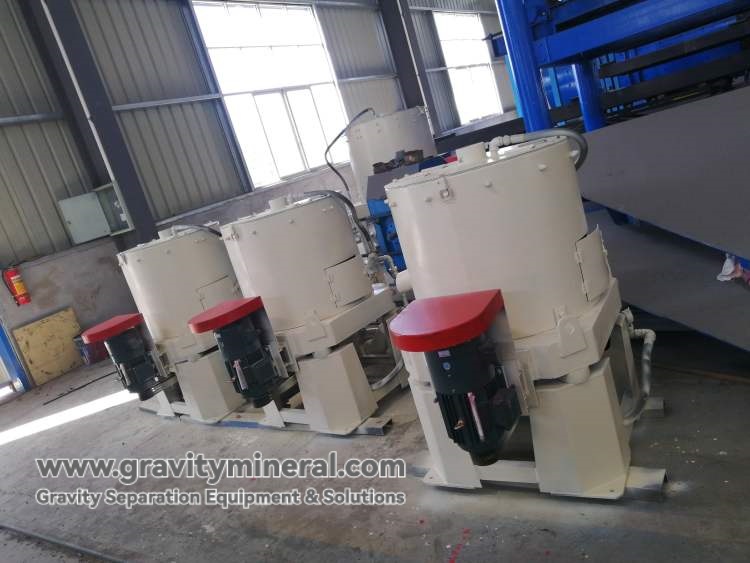
- Equipment: Centrifugal mineral separators, supplemented by suspended vibrating mat thickeners, agitated chutes, and gold-retaining chutes.
- Key Selection Criteria: Conventional gravity separation equipment struggles to recover ultrafine gold particles smaller than -0.074 mm. Centrifugal ore separators utilize centrifugal force to enhance separation, significantly improving ultrafine recovery rates, and serve as the final link in the process to ensure “complete recovery.”Many placer gold plants struggle to achieve high recovery rates because their fine-silt section lacks catch-all equipment, causing ultrafine gold to be lost with the tailings.
7. Dewatering Section
- Equipment: Dewatering screen.
- Selection Criteria: Dewater the gold concentrate to meet transportation requirements; dry tailings discharge is a mandatory environmental compliance requirement, so equip the plant with a thickener or other necessary equipment according to local regulations.
III. Three Common Pitfalls in Equipment Selection
Pitfall 1: Selecting a ore washer based on average silt content.
Alluvial and rainy-season ores exhibit significant fluctuations in clay content. A washing machine selected based on average values will fail to clean the ore thoroughly under peak operating conditions, allowing gold-laden slurry to enter the gravity separation stage. This causes a sharp drop in jig efficiency and tailings loss on shaking tables, resulting in hidden yet widespread losses in recovery rates.
Pitfall 2: Mismatched processing capacities between jigs and shaking tables.
If the roughing jig\'s throughput exceeds that of the concentrating shaking table, material will back up in the intermediate stages; conversely, the shaking table will run idle. In a piecemeal, ad-hoc setup where each equipment manufacturer focuses only on its own segment, interface conflicts and production capacity imbalances ultimately result in the customer bearing the cost.
Pit 3: Lack of catch-all equipment in the fine slurry stage.
With only a jig and a shaking table, all ultrafine gold (-0.074 mm) is lost with the tailings. When fine-grained gold accounts for a significant proportion of placer gold deposits, recovery losses from this issue can reach more than ten percentage points.
IV. Why We Recommend an EPC Turnkey Approach Over a Pieced-Together Solution
Gold-in-sand processing lines have a low margin for error: the processing capacities of each stage—ore washing, roughing, scavenging, concentrating, and fine-grain recovery—must be aligned, and the interfaces must fit seamlessly.In a piecemeal approach, the ore washing equipment manufacturer, jig manufacturer, and shaking table manufacturer each manage a separate stage. If the system fails to meet performance standards, equipment manufacturers and construction teams are prone to shifting blame onto one another.
The core of GravityMineral\'s EPC turnkey model is a closed-loop approach where equipment, design, and on-site operations are managed by a single team:
In-house manufacturing facilities
Production is scheduled across two manufacturing bases (Guzhang Industrial Park in Shicheng County, Ganzhou, and Shahe Industrial Park in Zhanggong District), ensuring controllable delivery times and supporting custom-made wear-resistant and corrosion-resistant equipment;
In-house design team
Mineral processing tests, process flow design, equipment selection and configuration, plant layout, and civil engineering drawings are all completed in-house—no design outsourcing, no stacked costs, and no buck-passing;
On-site commissioning by in-house engineers
On-site technical briefings, individual and integrated commissioning, and personnel training are provided until the production line is running smoothly and performance indicators are stable—only then is the project considered complete.
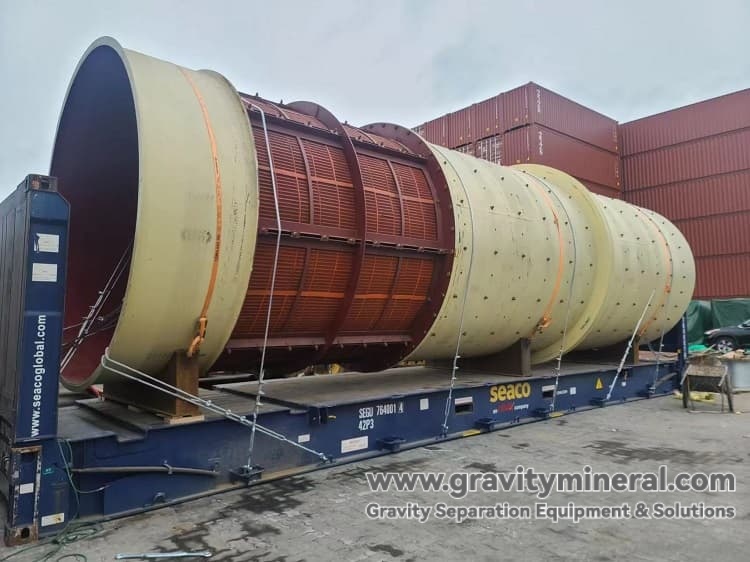
The total cycle for a standard turnkey placer gold project is 7–12 months: 40–60 days for equipment manufacturing, 30–60 days for ocean freight, and 60–150 days for on-site installation and commissioning, with additional buffer time allocated for customs clearance and coordination between stages.
V. Next Steps: Please send us your ore samples and site conditions
The alluvial gold extraction plan and equipment selection will ultimately be based on the actual test data from your ore samples.Please provide: ore type and gold grade, target processing capacity, feed particle size and clay content, gravel proportion, site conditions, destination country, and budget range. Sending representative ore samples for beneficiation testing will yield a more precise process flow and equipment configuration plan.
To obtain a preliminary proposal and quotation, please provide: ore type and gold grade, target processing capacity, feed particle size and clay content, gravel proportion, site conditions, destination country, and budget range.