How to Configure a Flavial Alluvial Gold Ore Beneficiation Production Line? Complete Equipment and EPC Solutions
How to Configure a Fluvial Alluvial Gold Ore Beneficiation Production Line? Complete Equipment and EPC Solutions
Alluvial placer gold deposits are formed by the transport and deposition of sediment by seasonal water flows and flash floods. They typically occur in fan-shaped or banded distributions. These deposits are characterized by high and fluctuating clay content, high gravel content, a mixture of coarse and fine gold particles, and significant variations in grade and thickness.The production line configuration for this type of ore body cannot simply replicate the standard line for riverbed placer gold; instead, it must be specifically designed around the principles of “thorough ore washing, early recovery of coarse particles, retention of fine particles, and rapid discharge of gravel.” This article provides a complete equipment configuration and an EPC turnkey solution for alluvial placer gold production lines.
I. Main Production Line: Segmented Configuration with Seamless Integration
The standard process flow for an alluvial placer gold production line is as follows:
Raw ore → Feeding → Washing and Screening → Rough Concentration and Tailings Discharge → Sweep Concentration → Fine Concentration and Gold Recovery → Fine-Grain Recovery → Dewatering → Gold Concentrate (Dry Tailings Discharge)
1. Feeding Section
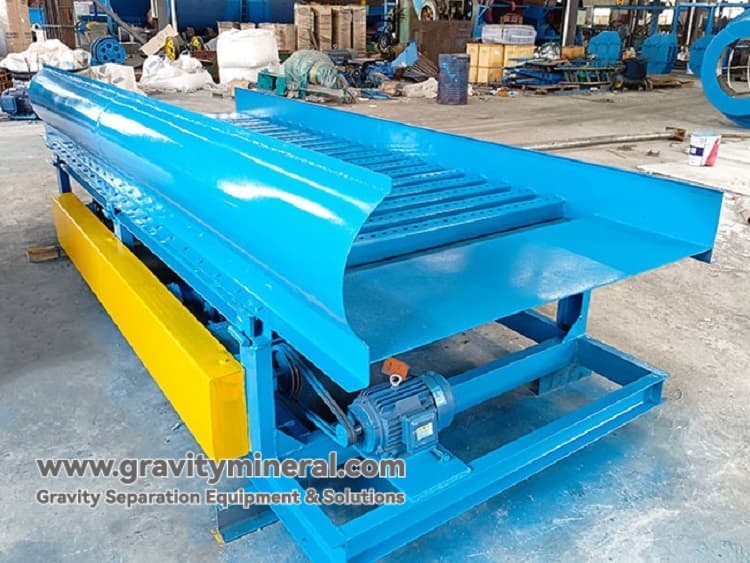
- Equipment: Vibrating feeder or trough feeder.
- Configuration Key Points: Alluvial ore is high in clay content and is sticky and wet; a trough feeder is preferred to prevent blockages caused by sticky, wet ore. The feeding section must have buffering and调节capacity to accommodate fluctuations in feed rate caused by variations in ore body grade and thickness.
2. Ore Washing and Screening Section (Key Section for Alluvial Ore)
- Equipment: Trommel washer (cylindrical washer) + cylindrical screen/trommel screen.
- Configuration Key Points: Select the ore washer size based on the maximum silt content conditions, not the average value; if necessary, add a scrubbing stage or extend the washing drum; determine the cylindrical screen aperture size based on the gravel size distribution, and allow for a margin in gravel discharge capacity.In alluvial deposits, if ore washing is incomplete, gold particles coated in slurry enter the gravity separation section, causing a sharp drop in jig separation efficiency and tailings loss on shaking tables—ore washing serves as the first line of defense for recovery rates in alluvial placer gold processing lines.
3. Roughing and Tailings Removal Section
- Equipment: Sawtooth-wave jig (main unit) or a set of spiral chutes.
- Configuration Highlights: Jigging machines are highly adaptable to a wide range of particle sizes, making them suitable for alluvial feed containing a mixture of coarse and fine particles; they offer high throughput and can produce a large proportion of tailings. Multiple units are connected in parallel to match the total line throughput. Spiral chutes feature a simple structure, require no power, and have a small footprint; those made of fiberglass-reinforced plastic with an alumina lining are wear- and corrosion-resistant.
4. Sweep Selection Section
- Equipment: Spiral chutes.
- Configuration Highlights: Recovers medium- and fine-grained heavy minerals from the roughing tailings to further reduce the tailings grade; the number of stages is determined based on tailings grade requirements.
5. Concentration Section
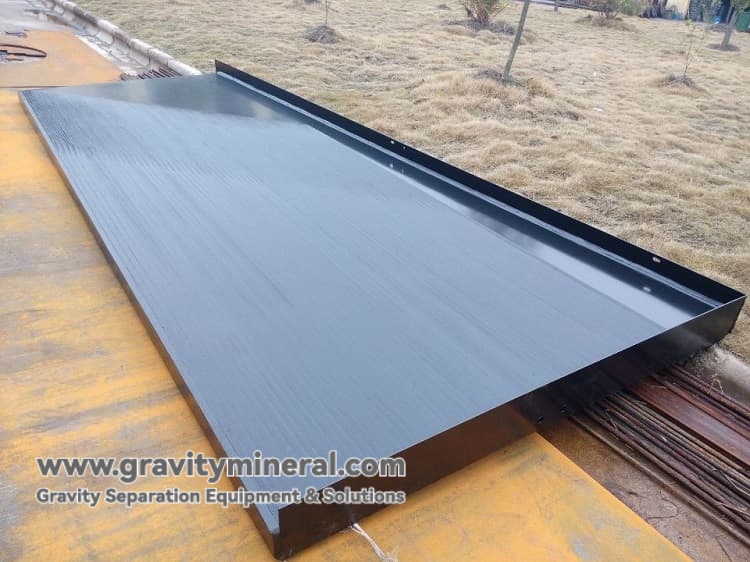
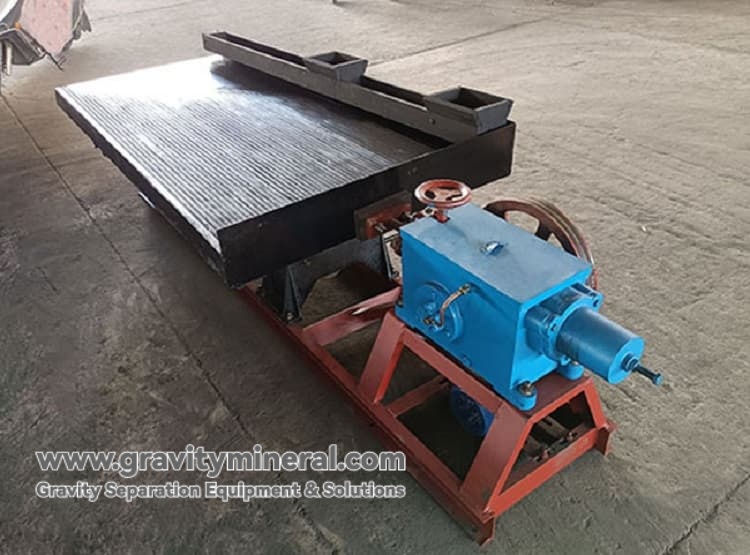
- Equipment: 6-S shaking tables / multi-stage lifting shaking tables.
- Configuration Highlights: High separation precision, producing qualified gold concentrate in a single pass; multi-deck shaking tables multiply throughput while maintaining the same footprint, making them suitable for plants with limited space. The number of shaking tables in the concentrate stage and their configuration depend on the volume of rough concentrate and the target concentrate grade, and must be calculated by the process engineering team.
6. Fine-Grain Recovery Section (Mandatory for alluvial deposits)
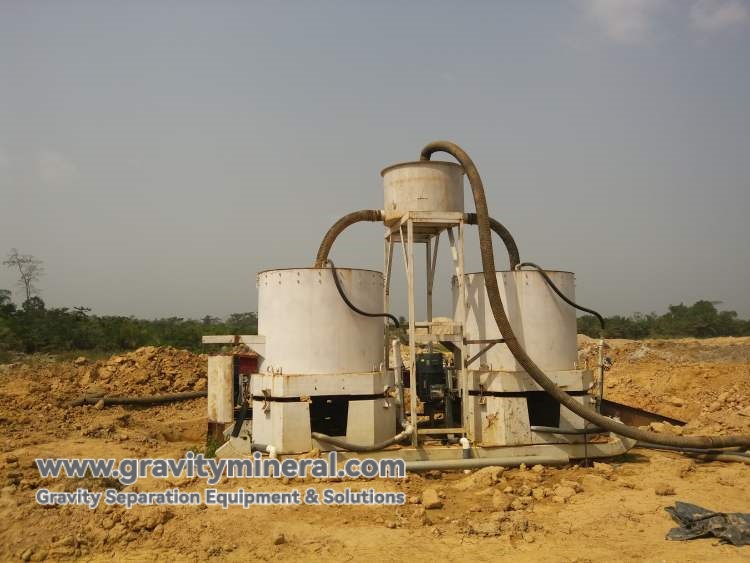
- Equipment: Centrifugal mineral separators, supplemented by suspended vibrating belt thickeners, agitated chutes, and gold-retaining chutes.
- Configuration Key Points: Alluvial gold particles vary widely in size, and sub-0.074 mm fine gold is difficult to recover using conventional gravity separation equipment. The centrifugal ore separator utilizes centrifugal force to enhance separation, serving as the final step to ensure complete recovery.Many alluvial placer gold plants struggle to achieve high recovery rates because their fine silt section lacks a bottom-trapping device.
7. Dewatering and Tailings Section
- Equipment: Dewatering screen; for tailings, a thickener and a dry tailings discharge system are installed in accordance with local environmental regulations.
- Configuration Key Points: Dewater gold concentrate to meet transportation requirements; dry tailings discharge is a mandatory environmental compliance requirement.
II. Reference Processing Capacity Ranges
| Hourly Processing Capacity Ranges | Typical Configuration |
|---|---|
| 30–80 t/h | Trommel washer + jig for roughing + spiral chute for scavenging + 6-S shaking table for fine selection + centrifugal concentrator |
| 80–150 t/h | Large-capacity trommel washer + jig (multiple units in parallel) + spiral chute assembly + multi-deck shaking table + centrifugal concentrator + dewatering screen |
| 150–300 t/h | Modular parallel configuration of multiple roughing–sweeping–concentration stages; complete process line including dry tailings disposal |
For small-scale operations, a single jig and shaking table can serve as a starting point, with gradual line expansion later on; initial design should include provisions for future expansion. Actual equipment selection depends on the grade of the ore, clay content, gravel proportion, gold particle size distribution, and site conditions.
III. EPC Turnkey Solution: A single team manages equipment, design, and on-site operations in a closed-loop process
The complexity of alluvial ore bodies lies in the fluctuations in clay content, gravel proportion, and gold particle size distribution, which result in an extremely low margin for error in matching production capacities and coordinating interfaces between equipment.Under the decentralized model, the ore washing machine manufacturer, jig manufacturer, and shaking table manufacturer each manage a separate segment. If the ore washing machine is undersized, it causes blockages downstream; if the jig and shaking table processing capacities are mismatched, intermediate stages idle; and when performance targets are not met, the parties tend to shift blame onto one another.
GravityMineral\'s EPC turnkey solution covers the entire process:
1. Mineral processing testing and mineral analysis
Mineral sample testing and recoverability tests are conducted to determine the process route based on real data; testing costs can be offset against the subsequent equipment or EPC contract;
2. Process Design and Drawings
Flow diagrams, equipment lists, plant layout plans, civil engineering requirement drawings, and technical briefings—all designed in-house, eliminating the need for external design firms and associated fees for medium-to-large projects;
3. Equipment Manufacturing and Turnkey Supply
Production is scheduled at our two in-house manufacturing bases (Guzhang Industrial Park in Shicheng County, Ganzhou, and Shahe Industrial Park in Zhanggong District), with full-process quality control under ISO 9001; we support custom-made wear-resistant and corrosion-resistant equipment;
4. Shipping and Logistics
We provide container loading plans, export documentation, and international logistics coordination; our products have been exported to over 50 countries;
5. On-Site Installation Guidance
Engineers provide on-site technical briefings, while general installation workers are organized locally by the customer—ensuring construction standards are met while saving on international labor costs;
6. Commissioning and Training
Individual unit commissioning, integrated trial runs with water and feedstock, and personnel training until the production line operates smoothly and performance metrics are stable;
7. After-Sales Service and Spare Parts Supply
We assume responsibility for quality during the warranty period and provide long-term spare parts supply, technical consultation, and process optimization.
Delivery Schedule: The total duration for a standard project is 7–12 months—40–60 days for equipment manufacturing, 30–60 days for ocean freight, and 60–150 days for on-site installation and commissioning, with an additional buffer of approximately 30 days each for customs clearance and coordination between phases.
IV. Next Steps: Send a Sample First, Then Finalize the Configuration
The configuration plan for alluvial placer gold deposits will ultimately be based on the actual test data from your mineral samples.Please provide: ore type and gold grade, target processing capacity, feed particle size and clay content, gravel proportion, site conditions, destination country, and budget range. Sending representative ore samples for beneficiation testing will yield a more precise process flow and equipment configuration plan.
To obtain a preliminary proposal and quotation, please provide: ore type and gold grade, target processing capacity, feed particle size and clay content, gravel proportion, site conditions, destination country, and budget range.