







15–20 metric tons per hour Gold Gravity Concentration Production Line: Complete Equipment Solution for Gravity Concentration, Thickening, and Enrichment
- Project Overview: A gold ore processing line centered on gravity separation, with a processing capacity of 15–20 metric tons per hour, covering the entire process from crushing and grinding to jig roughing, centrifugal concentrating, and shaking table scavenging.
- Target Applications: Small- and medium-sized rock gold mines, residual resources from mature mining areas, and tailings pond reuse projects, primarily involving quartz vein and altered rock ore types.
- Core Logic: The jig recovers coarse-grain gold early on, the centrifuge effectively recovers fine-grain gold, and the shaking table produces qualified concentrate, with the three stages working in tandem to achieve enrichment.
- Prerequisites: Ore processability test data serves as the basis for equipment selection; the grinding fineness and grain size distribution determine whether the line can achieve expected performance indicators.
- Value Proposition: Physical separation, chemical-free processing, and a relatively simple flow sheet make this approach realistically feasible for small- to medium-scale operations in terms of environmental compliance and capital investment.
I. What Is This Solution?
The 15–20 metric tons per hour gold gravity separation production line performs only one function from the ore feed inlet to the concentrate outlet: enriching gold by exploiting the density difference between gold and gangue.
The processing capacity is set at 15–20 metric tons per hour. This scale is neither too large nor too small, falling precisely in the middle ground between “too small for small-scale operations” and “too insignificant for large-scale processing plants.” Many township-level rock gold mines, residual resources from old mining areas, and tailings pond recycling projects in China operate within this capacity range.
The key terms for this complete solution are “gravity separation, concentration, and beneficiation”—first, gravity separation is used to recover the gold; then, concentration is applied to improve the grade; and finally, beneficiation is performed to produce gold concentrate suitable for sale or on-site smelting.There is no flotation and no cyanidation, making the process relatively clean. The core equipment of this gold ore gravity separation process consists of a combination of jigs, centrifugal separators, and shaking tables.
II. What Problems Does It Solve?
This situation is common in actual projects: the ore body is not large, reserves are sufficient for only a few years of mining, and the payback period for building a flotation plant is not feasible; while attempts to implement cyanidation are thwarted by environmental impact assessment requirements. Furthermore, the gold in the ore is not too finely disseminated, and after single-particle liberation, a portion can clearly be recovered using gravity separation.
This 15–20 metric tons per hour gold ore gravity separation plant is specifically designed for such projects.
It specifically addresses issues on three levels. First, early recovery of coarse-grained gold. A jig is integrated into the grinding circuit to intercept already liberated coarse-grained gold before it enters subsequent processing stages, preventing it from being overground or turned into slurry in the grinding cycle. Second, the loss of fine-grained gold in the tailings.The centrifugal concentrator demonstrates excellent capture efficiency for gold in the -0.074 mm size fraction, enabling a high concentrate enrichment ratio. Third, concentrate grade. A shaking table is used for final concentration, further upgrading the coarse concentrate from the centrifuge and jig to produce a concentrate ready for direct shipment to the smelter.
The applicable scenarios are clear: quartz vein-type gold deposits, altered rock-type gold deposits, and oxidized zone ores containing gold-bearing sulfides.Production lines of similar scale are currently operating at several small- and medium-sized gold deposits in Zhaoyuan, Shandong; Southwest Guizhou; and Yunnan. For Carlin-type ores where gold is tightly encapsulated within the host rock, this gravity separation, concentration, and beneficiation scheme alone is insufficient; it must be combined with flotation or pre-oxidation.
III. Core Components and Principles
Let\'s walk through the process step by step to get a clear picture.
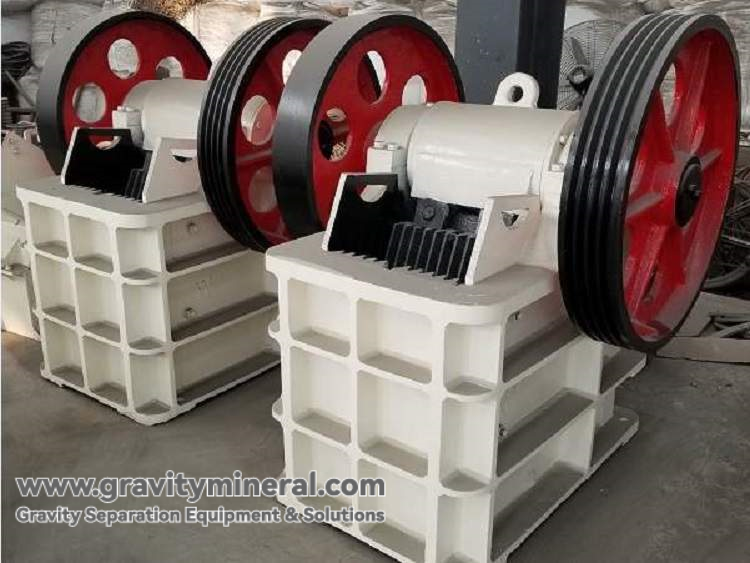
Stage 1: Crushing. A jaw crusher is used for primary crushing, paired with a fine jaw crusher or a double-roll crusher for secondary crushing.For a throughput of 15–20 metric tons per hour, one stage of coarse crushing followed by one stage of fine crushing is sufficient; the particle size of the fine-crushed product should be controlled at around -10 mm. A three-stage closed-circuit configuration is unnecessary, as it would be overly heavy for this scale.
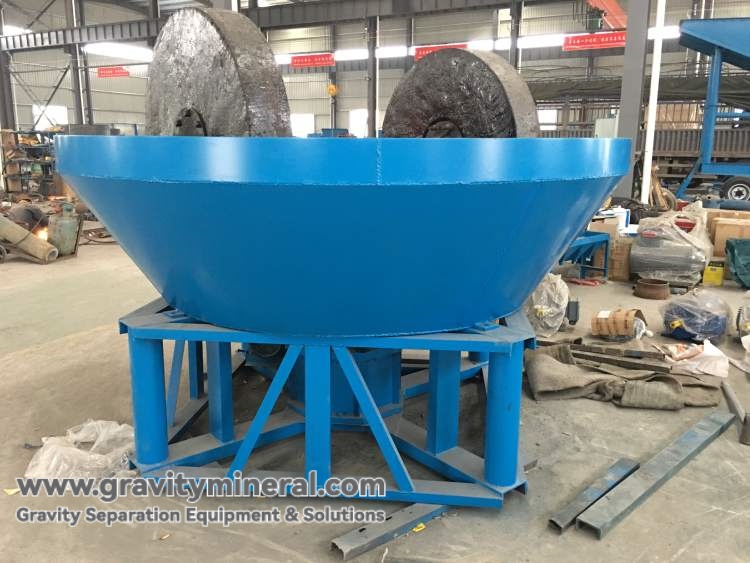
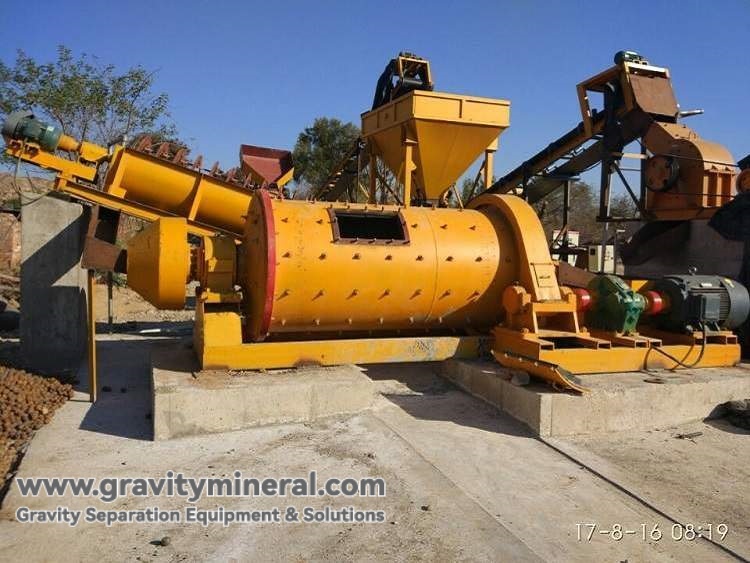
Second stage: grinding. A ball mill paired with a spiral classifier forms a closed-circuit system. Grinding fineness is the key variable. From a gravity separation perspective, achieving a distribution where 70%–75% of the product is -200 mesh is a practical target.If the grinding is too coarse, gold liberation will be insufficient; if it is too fine, the amount of fine slurry will increase, and gravity separation efficiency will decrease.Grid-type ball mills produce coarser discharge, which places a heavier load on the classifier; overflow-type mills produce finer discharge but are prone to over-grinding. For a scale of 15–20 metric tons per hour, a grid-type ball mill paired with a high-weir classifier is the more common combination.
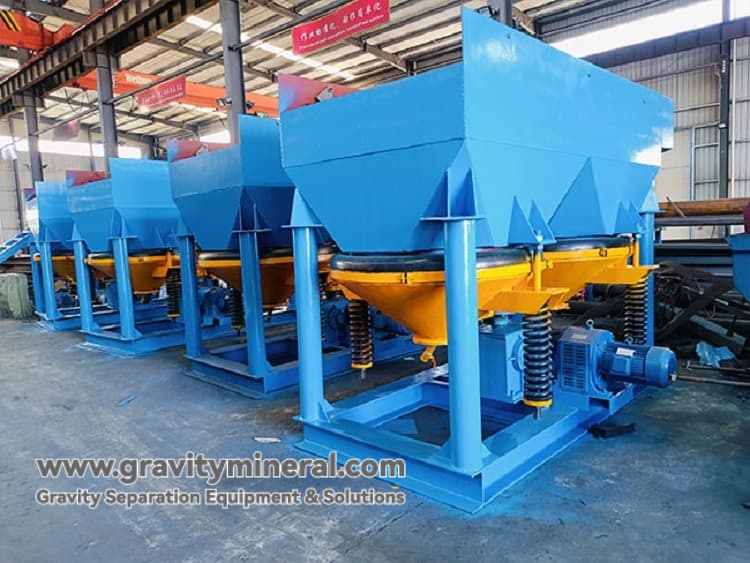
Stage 3: Rough Concentration. A jig is installed at the ball mill discharge. Whether the jig is placed before or after the classifier yields different results. Placing it at the ball mill discharge—to capture gold particles while they are freshly liberated and before they have a chance to be overground—is the more reasonable approach.The concentrate from the jig is fed to the shaking table, while the tailings are sent to the classifier. Sawtooth-wave jigs are better suited for materials with a wide particle size distribution than traditional jigs.
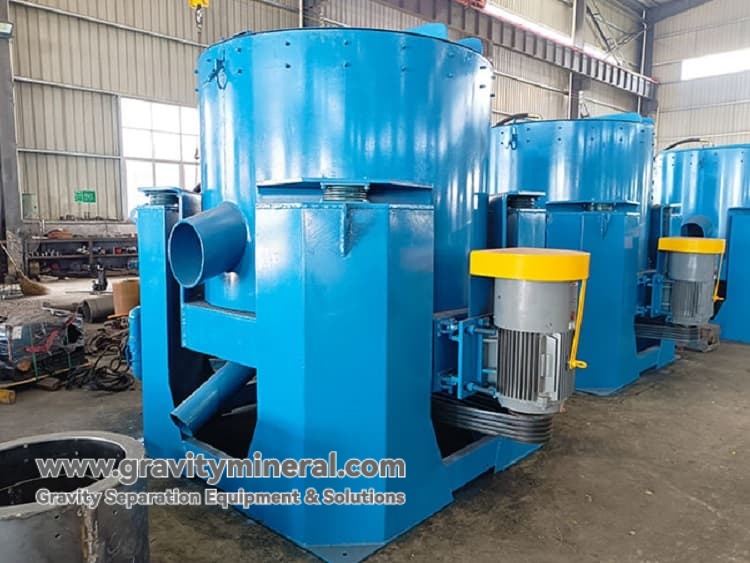
Stage 4: Fine-Grain Recovery. The overflow from the classifier feeds into a centrifugal concentrator. The concentrate produced by the centrifuge already has a relatively high grade, but it typically still contains some heavy minerals, which require further enrichment using a shaking table.The feed concentration of the centrifuge is a sensitive parameter; if the concentration is too high, separation efficiency suffers, and if it is too low, throughput cannot be maximized. Operators must monitor and adjust this parameter closely.
Fifth Stage: Fine Selection and Sweep Selection. The jig concentrate and centrifuge concentrate are combined and fed into the shaking table. The 6-S shaking table produces final gold concentrate at its concentrate outlet; the middlings are returned to the grinding mill or to the shaking table for re-processing, while the tailings are sent to a sweep chute or blanket chute for final recovery.Coarse concentrate from the blanket chute is periodically removed and returned to the shaking table for reprocessing. The stroke and frequency of the shaking table, as well as the bed slope, must be adjusted according to the feed particle size; parameters for coarse sand beds differ from those for fine sand beds and must not be interchanged.
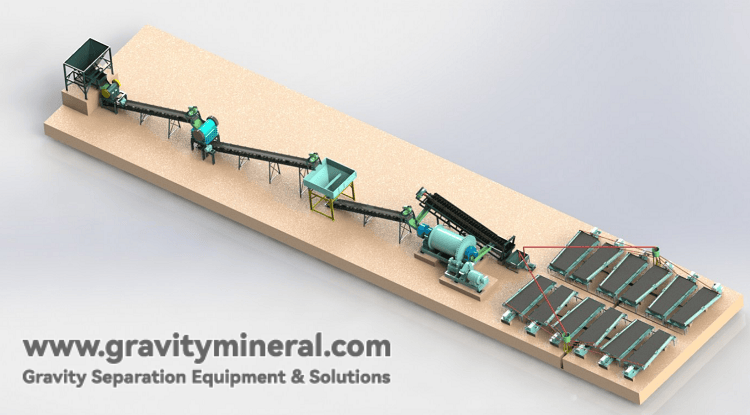
Process Flow Diagram
The raw ore is fed into a jaw crusher for primary crushing; the primary crushed product is then sent to a fine jaw crusher or a double-roll crusher for secondary crushing, with the final particle size controlled at approximately -10 mm.The fine-crushed product is fed into a ball mill and a spiral classifier to form a closed-circuit grinding circuit, with the grind size controlled so that 70%–75% of the product is -200 mesh.The ball mill discharge first passes through a sawtooth-wave jig for rough selection and early recovery; the jig concentrate is sent to a shaking table for fine selection, while the jig tailings are fed into a spiral classifier for classification. The underflow from the classifier is returned to the ball mill for regrinding, and the overflow is fed into a centrifugal concentrator for fine-grain recovery.The centrifugal concentrate and jig concentrate are combined and fed to a 6-S shaking table for final concentration. The shaking table concentrate constitutes the final gold concentrate; the middlings are returned for reprocessing, and the tailings are sent to a blanket chute for scavenging. The coarse concentrate from the blanket chute is periodically removed and returned to the shaking table for further processing.
In traditional flotation processes operating at a scale of 15–20 metric tons per hour, the payback period is often quite long; this gold gravity separation production line features a more streamlined equipment configuration and requires only water as a medium from feed to concentrate output.
When the grinding reaches a size where 75% of the material is -200 mesh, the jig captures the coarse gold, the centrifuge captures the fine gold, and the shaking table elevates the grade—each of these three stages handles a specific part of the process; no single piece of equipment is expected to do the entire job.
IV. Why Choose It
Advantage 1: Relatively streamlined investment structure. For a 15–20 metric tons per hour gold ore gravity separation line, the core equipment consists of a jaw crusher, ball mill, jig, centrifugal separator, and shaking table.There is no flotation reagent system, no large land area required for thickener tailings water treatment, and no need for impermeable linings or tailings detoxification facilities associated with cyanide leaching.Compared to a combined flotation and cyanidation process of the same scale, the initial investment for a gravity separation line is typically lower; however, the specific amount is greatly influenced by equipment selection, site conditions, and the degree of automation, and must be calculated on a project-by-project basis.
Advantage 2: Significantly lower environmental compliance pressures. The entire line does not use any chemical reagents. The tailings consist solely of finely ground gangue, and the clear water resulting from sedimentation can be recycled. For projects facing roadblocks in environmental approval processes, this feature is sometimes more critical than the recovery rate. Particularly for mining sites located near water sources or ecologically sensitive areas, gravity separation is often the viable solution.
Advantage 3: Reasonable tolerance for fluctuations in ore properties. The flotation process is relatively sensitive to changes in ore oxidation levels, clay content, and reagent regimes; even a slight deviation in operation can cause performance indicators to fluctuate. Gravity separation relies on density differences, so as long as ore properties fluctuate within a reasonable range, the separation efficiency of jigs and centrifuges will not suddenly collapse.Jig stroke and frequency are adjustable, and shaking table incline is adjustable, providing operational flexibility. Of course, this does not mean that gravity separation does not require precise operation; rather, it has a relatively wider margin for error.
Advantage 4: Low concentrate transportation costs. Gravity separation concentrates typically have a grade significantly higher than flotation concentrates and contain no significant residual reagents. For a plant operating at 15–20 metric tons per hour, daily concentrate output is limited; a higher grade and fewer impurities result in more favorable settlement terms from the smelter.
That said, gravity separation lines have one unavoidable limitation: a cap on the recovery rate of ultrafine gold particles. No matter how powerful the centrifuge, the recovery rate for gold particles smaller than -10 μm drops significantly.If the vast majority of gold in the ore is embedded in particles smaller than 5–10 μm, this process line will not achieve ideal performance metrics. In such cases, one must either employ flotation or consider a combined “gravity separation + flotation” process—where gravity separation is used for roughing and tailings rejection, and flotation is used to capture the fine-grain gold.
V. Applicable Scenarios and Limitations
Suitable Applications:
In terms of ore type, quartz vein-type and altered rock-type gold deposits are the best matches. Gold exists as free particles in the fissures or intergranular spaces of quartz and pyrite; grinding to approximately 70% -200 mesh can liberate a significant proportion of free gold.Production data from numerous small and medium-sized mines in the Zhaoyuan area of Shandong Province indicate that a viable approach for this type of ore is to use gravity separation to recover coarse-grained gold, followed by other methods to process the fine-grained fraction.
In terms of scale, a processing rate of 15–20 metric tons per hour falls precisely at the intersection between “not worth using flotation” and “requiring a certain recovery rate.” For processing plants handling 200 to 300 metric tons per day, using gravity separation as the main process ensures that equipment configuration is not too basic, while also eliminating the need to maintain a team knowledgeable in flotation reagents.
This approach is also suitable for old tailings recovery projects. Some tailings ponds left over from mining and processing operations in the last century still contain gold grades worth recovering, but the particle size is already quite fine. In such cases, using hydrocyclones for classification—with the coarse fraction fed into the gravity separation line and the fine fraction handled on a case-by-case basis—is more economical than feeding the entire stream directly into flotation.
Situations where this approach is not suitable:
Karlin-type gold deposits, where gold is encapsulated within the crystal lattices of pyrite or arsenopyrite alongside arsenic and sulfur; no matter how finely ground, gravity separation cannot recover it. For Karlin-type ores in Southwest Guizhou, recovery rates are improved through pressurized pre-oxidation, not gravity separation.
Ore with exceptionally high clay content or extremely high oxidation levels: Fine clay particles interfere with separation during gravity separation, reducing the efficiency of both jigs and centrifuges. Such ore requires pre-washing to remove clay before determining whether gravity separation remains cost-effective.
When gold is disseminated at an extremely fine grain size—with the vast majority of gold particles measuring less than 10 μm under a microscope—gravity separation recovery rates will be dismal. In such cases, do not force gravity separation; flotation or leaching is the proper approach.
Reference Table: Suitable Ore Types and Limitations
- Quartz vein-type gold deposits: Suitable; gold is well liberated as individual particles, and coarse-grained gold accounts for a high proportion.
- Altered rock-type gold deposits: Suitable; liberation is achieved when ground to approximately 70% passing -200 mesh.
- Oxidation zones in gold-bearing sulfide ores: Testing is required; if the oxidation rate is moderate, it can be attempted; if too high, desliming is necessary first.
- Kalyn-type gold deposits: Not suitable; gold is encapsulated by sulfides and cannot be recovered by gravity separation.
- Fine-grained disseminated gold deposits: Not suitable; high proportion of particles below -10 μm results in low recovery rates.
- Gold-bearing sand deposits with high clay content: Requires ore washing; can be processed after washing and de-silting; direct gravity separation yields poor results.
VI. Implementation Guidelines
Step 1: Ore processability tests. This is the step most often skipped—and the one that should never be skipped. Take representative ore samples and conduct sieve analysis, grinding fineness tests, and gravity separation processability tests.There are two objectives: to determine the grinding fineness and to ascertain the recovery rates achievable through gravity separation. Without supporting test data, equipment selection is nothing more than a guess. Testing costs can typically be offset against the equipment contract later on, so do not skimp on this expense.
Step 2: Process Design. Determine the process flow based on the test results. Decide where to place the jig, how many centrifuges to use, and whether to include a middlings re-concentration circuit for the shaking table. For a scale of 15–20 metric tons per hour, the process should not be too complex; too many units will overwhelm the operators and actually compromise stability.
Step 3: Equipment Selection and Configuration. The ball mill\'s power rating must match the processing capacity; ensure the jig\'s stroke and frequency are adjustable; and when selecting centrifuges, pay attention to processing capacity and feed concentration requirements.Do not skimp on auxiliary equipment: select wear-resistant sand pumps, ensure piping has sufficient access points for maintenance, and choose shaking tables with fiberglass or rust-proof surfaces. Problems with these small components can bring the entire line to a halt.
Step 4: Installation and Wet Commissioning. Gravity separation equipment has specific requirements for levelness and foundation stability. If a shaking table is not level, the water flow across the table surface will be distorted, rendering the separation process ineffective. The foundations for jigging machines and centrifuges must be able to withstand vibrations. First, run a water test to ensure the process flow is unobstructed and verify that pumping, piping, and valves in each section are functioning properly before feeding in the ore.
Step 5: Commissioning and Stabilizing Performance Metrics. After introducing ore, adjust several parameters: the stroke and stroke rate of the jig; the feed concentration and backwash water pressure of the centrifuge; and the bed slope and agitation rate of the shaking table.For a line processing 15–20 metric tons per hour, the commissioning period typically takes two to four weeks to bring performance metrics close to design values. During commissioning, take frequent samples and perform regular sieve analysis; use data to identify deviations in each stage—do not rely on visual guesswork.
Step 6: Operator Training and Handover. Operating a gravity separation line is not difficult, but “not difficult” does not mean “no training is needed.”If the feed concentration to the centrifuge fluctuates too much, the recovery rate drops immediately; if a jig screen becomes clogged and goes unnoticed, coarse gold will be completely lost in the tailings. Compile the key points of daily inspections, parameter adjustment limits, and common troubleshooting procedures onto a single A4 sheet and post it on the control console—this is more effective than any training.
Core Equipment Selection Guidelines
- Sawtooth-wave jig: Feed particle size less than 10 mm; processing capacity ranges from 5 to 20 metric tons per hour; select the model based on ore density and feed rate.
- Centrifugal Mineral Separators: Feed size -0.074 mm; single-unit processing capacity 8–12 metric tons per hour. For a scale of 15–20 metric tons per hour, consider a single large-capacity unit or two units in parallel.
- 6-S Shaking Table: Feed size -0.074 mm; separate tables for coarse and fine sand; processing capacity is cumulative based on the number of units.
- Ball Mill: Feed size less than 25 mm; power should be matched to processing capacity; a grid-type ball mill paired with a high-weir classifier is a common configuration.
The value of a 15–20 metric tons per hour gold gravity separation production line lies not in the sophistication of the equipment, but in the alignment between the process and the ore characteristics. This complete gravity separation, thickening, and concentration equipment solution is suitable for projects with relatively favorable ore characteristics, modest scale, and strict environmental constraints.Before installing this line, send representative ore samples for gravity separation test runs. Once the test data is available, you will have a basis for determining the grinding fineness, expected recovery rates, and equipment selection—and only then can the investment be accurately calculated.There is no one-size-fits-all answer for gold ore gravity separation processes, but one principle is certain: recover as early as possible and recover in stages, allowing each piece of equipment to perform the task it does best.