







How to Choose Between Gravity Re-concentration and Cyanidation Processes? Solutions for Efficient Gold Recovery
Consider a set of laboratory data: while the grade of the ore is within the normal range, the grade of the cyanide tailings has remained consistently high for an extended period, accompanied by a simultaneous increase in reagent consumption. This set of data is not uncommon in vein gold processing plants, and it points to a very specific problem: gold is not being fully leached, yet reagents are being wasted.
When faced with the choice between gravity separation and cyanidation for vein gold, the first instinct of many processing plants is to adjust the chemical regimen and extend the leaching time. This approach may not necessarily be correct. This article addresses the core issue of how to choose between gravity separation and cyanidation for vein gold, systematically outlining solutions for efficient gold recovery—from identifying symptoms and analyzing causes to designing and implementing solutions.
[Quick Reference Table: Problem–Cause–Solution]
| Observed Phenomenon | Root Cause | Recommended Approach |
|---|---|---|
| Visible gold particles in the grinding circuit; excessively high grade in cyanide tailings | Coarse gold particles are circulating in the closed-circuit grinding system and are not entering the leaching system | Install gravity separation equipment at the classifier return point to capture coarse gold early |
| Abnormally high specific consumption of sodium cyanide | Coarse gold particles have a small specific surface area, preventing effective reaction with the reagent | Prioritize the recovery of coarse gold through gravity separation to reduce the cyanidation load |
| The grade of the gravity concentration is acceptable, but the recovery rate is low | Inappropriate particle size matching, resulting in fine slime entering the roughing process | Coarse-fine separation, shaking table concentration, and centrifuge recovery of fine particles |
I. Typical Manifestations of Substandard Recovery Rates in Vein Gold Processing Plants
Recovery issues in vein gold mines are often not caused by a single abnormal indicator, but rather by problems occurring simultaneously across several indicators.
The first manifestation is the presence of visible gold particles in the grinding circuit, yet the cyanide leaching rate fails to increase. When backwash from the grinding and classification circuit is washed, visible gold can be observed on the sifter tray. This indicates that coarse gold particles are circulating repeatedly within the closed circuit formed by the ball mill and classifier, failing to enter the leaching system.
The second indication is a persistently high specific consumption of sodium cyanide. Coarse gold particles have a small specific surface area, resulting in a slow leaching reaction rate. Sodium cyanide is consumed before it has sufficient residence time in the system, leading to ineffective consumption. Although reagent usage increases, the grade of the tailings does not improve accordingly.
The third indication is that the tailings grade has consistently exceeded the design value. Whether for gravity separation tailings or cyanide leaching residue, an elevated grade signifies the continuous loss of valuable metals. For vein gold ores, every interval by which the tailings grade exceeds the design value corresponds to an actual loss of recoverable gold.
These three indicators often occur simultaneously. When a processing plant experiences the above conditions, priority should be given to examining the distribution of coarse-grain gold in the grinding circuit, rather than adjusting cyanidation parameters in isolation.
II. Two Fundamental Causes of Process Failure in Gravel Gold Gravity Separation and Cyanidation
Reason 1: The particle size distribution of gold in the ore is uneven, and coarse-grained gold does not have the opportunity to be liberated.
In quartz vein-type gold deposits, the particle size distribution of native gold spans a wide range. Coarse gold particles often fail to achieve single-particle liberation in a single grinding cycle and are repeatedly recirculated within the closed circuit formed by the ball mill and classifier.Gold particles with higher density settle in the return sand, while fine particles enter subsequent operations via the overflow. If the process lacks a recovery step specifically for coarse gold, this portion of the gold cannot enter the leaching system and ultimately ends up in the tailings.
Reason 2: The cyanidation process has inherent limitations regarding the leaching efficiency of coarse-grained gold.
Cyanide leaching relies on liquid-phase contact reactions; the larger the gold particles, the smaller their specific surface area, and the slower the dissolution rate.Within the typical leaching timeframe, coarse-grained gold is difficult to fully dissolve. This means that even if the cyanidation system operates normally, coarse-grained gold will still remain in the tailings at a relatively high grade. The cyanidation process itself is not suitable for processing coarse-grained gold; feeding coarse-grained gold into the cyanidation system constitutes a misalignment in process configuration.
It must be made clear that gravity separation of vein gold and the cyanidation process are not mutually exclusive options. Gravity separation and cyanidation are each suited for processing gold of different particle sizes; the rational approach is to combine the two in series based on the properties of the ore, forming a combined gravity-cyanidation process. The root of the problem lies not in the reagent regimen, but in the process configuration.
III. The Logical Framework for Selecting Between Gravity Separation and Cyanidation for Vein Gold
The core criterion for selecting between gravity separation and cyanidation for vein gold is the particle size distribution of the gold. The basic logic can be summarized as follows: gravity separation is responsible for the early recovery of coarse-grained gold, while cyanidation is responsible for the leaching of fine-grained gold, with the two processes sequentially linked.
Principle 1: Gravitational separation equipment should be installed in the grinding circuit, not in the leaching plant.
The optimal location for gravity separation equipment is at the discharge end of the ball mill or at the return point of the classifier. The objective is to intercept coarse-grained gold before it enters the cyanidation system.The recovery rate of gravity concentration concentrates is typically low, but it can recover a significant proportion of coarse-grained gold, thereby reducing the grade of the tailings. This configuration aligns with the process principle of “recovering as early as possible and preventing over-grinding.”
Principle 2: Cyanidation treats gravity separation tailings, not the original ore.
After heavy media separation recovers coarse-grained gold in advance, the particle size distribution of the material entering the cyanidation system changes, the specific surface area of the gold increases, and leaching efficiency improves accordingly. This sequence adjustment does not alter the cyanidation process itself but changes the feed conditions of the cyanidation system.
Principle 3: Gravitational separation concentrates are processed separately and are not mixed into the main cyanidation process.
Gravity separation concentrates have a high grade but a low yield; they are suitable for separate further concentration before entering a small-scale leaching operation or for sale as gold concentrate. Mixing gravity separation concentrates back into the main cyanidation process would dilute the already enriched grade and reduce overall efficiency.
Depending on the situation: when the sulfide content in the ore is low, gravity separation tailings can be fed directly into the cyanide leaching process; when the sulfide content is high, gravity separation tailings should first undergo flotation treatment, with the flotation concentrate then fed into the cyanide leaching process or sold separately, while the decision to leach the flotation tailings depends on their grade.This determination must be made during the mineral processing test phase.
Common pitfalls to avoid: If no gold particles are observed during the washing stage of the grinding circuit, and the recovery rate and grade of the concentrate from the gravity separation test are low, this indicates that coarse-grain gold is not the primary issue; attention should then shift to optimizing cyanidation parameters or evaluating flotation schemes.The prerequisite for applying a combined gravity-cyanidation process is the presence of coarse- or medium-sized gold particles in the ore that can be recovered by gravity separation.
IV. Key Points for the Step-by-Step Implementation of High-Efficiency Gold Recovery Solutions
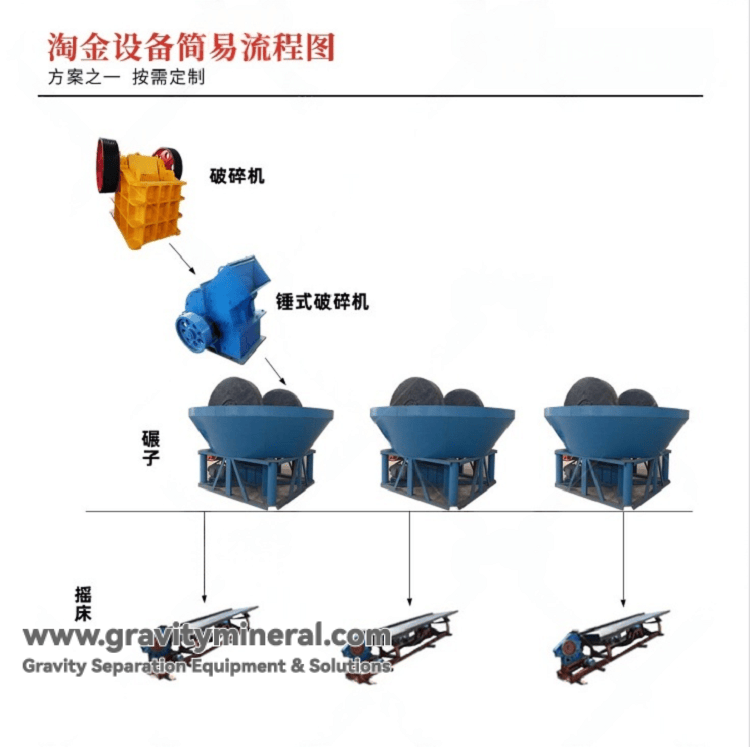
The core of a solution for efficient gold recovery lies in integrating gravity separation and cyanidation as sequential process steps to form a complete ore processing flow for vein gold. The following outlines the key points for step-by-step implementation.
- Step 1: Conduct gravity recovery feasibility tests.
Take samples of the return sand from the grinding and classification circuit or the ball mill discharge and conduct gravity separation tests, focusing on concentrate yield and grade. If the concentrate yield and grade reach recoverable levels, this indicates that coarse-grained gold meets the conditions for recovery via gravity separation.The test results serve as the basis for subsequent equipment selection and process design; equipment should not be configured solely based on experience.
- Step 2: Install gravity separation equipment in the grinding circuit.
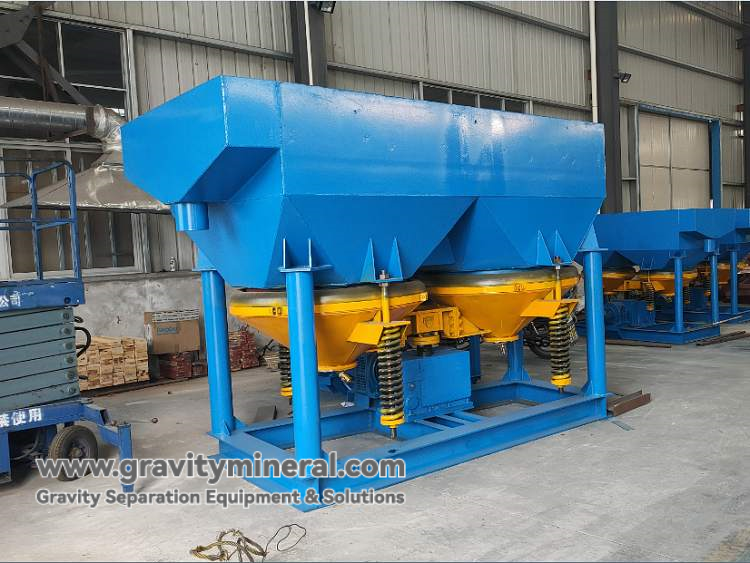
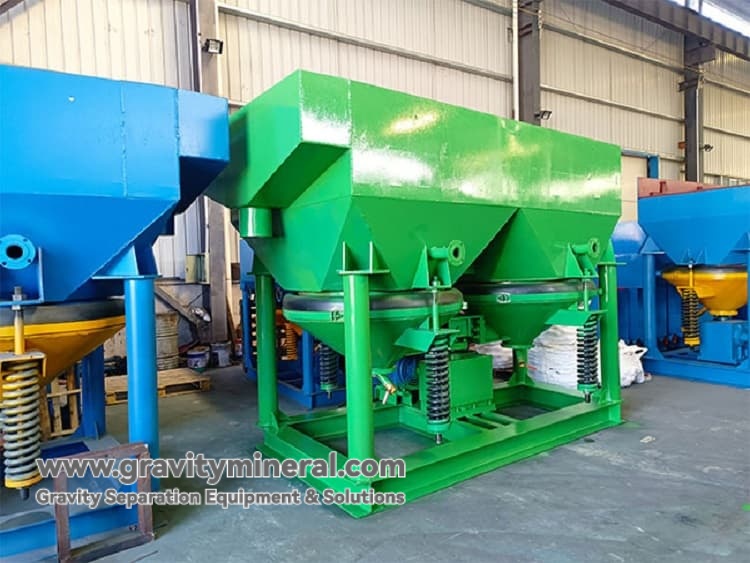
Common configurations include jigs or centrifugal separators. Slurry is drawn from the classifier return pipe or the ball mill discharge box for processing by the gravity separation equipment, and the gravity separation tailings are returned to the grinding circuit or fed into subsequent operations. Slurry concentration and flow rate should be maintained at stable levels to prevent fluctuations in the grinding circuit from affecting separation efficiency.
- Step 3: Separate beneficiation and processing of the gravity separation concentrate.
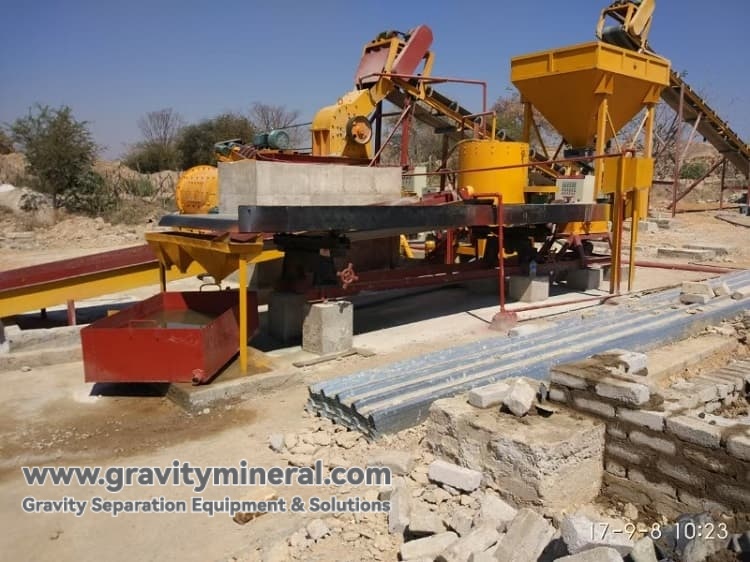
High-grade gold concentrate is obtained by fine-selecting the gravity separation rough concentrate using shaking tables. When the concentrate volume is large, a small leaching tank can be installed for separate processing, with the precious liquid incorporated into the main process; when the concentrate volume is small, it can be accumulated and sold as gold concentrate.
- Step 4: Feed the gravity separation tailings into the cyanidation system and adjust the reagent regimen.
After the gravity separation tailings enter the cyanide leaching process, the grade of the tailings and changes in reagent consumption should be continuously monitored. Due to changes in the feed particle size distribution, the specific reagent consumption may decrease; in this case, adjustments should be made gradually based on laboratory data, and a significant reduction in reagent dosage should not be implemented all at once.
- Step 5: Standardize operating procedures.
Incorporate parameters such as the stroke and frequency of the jig, the slope of the shaking table, and the concentrate discharge cycle into the shift operation manuals to minimize operational variations between shifts and ensure stable performance indicators.
V. Expected Outcomes and Applicable Conditions for the Combined Gravity Separation and Cyanidation Process for Vein Gold
After adopting the combined gravity separation and cyanidation process, the total gold recovery rate typically improves, with the specific increase depending on the proportion of coarse-grain gold in the ore.The yield of gravity concentrate is generally low, but it recovers the majority of coarse-grained gold, resulting in a corresponding decrease in tailings grade; when gravity tailings enter the cyanidation system, leaching efficiency improves, and the ineffective consumption of reagents is reduced. The overall effect is manifested as an increase in recovery rate and a decrease in specific reagent consumption.
It should be noted that the extent of the recovery rate improvement is constrained by the properties of the ore and varies significantly among different mines; therefore, a single numerical value should not be used as a universal expectation. Process design should be based on mineral processing test data.
✅ Applicable Conditions
- Visible gold particles are present in the grinding circuit;
- The concentrate yield and grade from gravity recovery tests reach recoverable levels;
- The sulfide content of the ore falls within the range suitable for direct cyanidation.
❌ Inapplicable Conditions
- Gold particles are extremely fine, and no gold particles were observed during grinding and washing;
- The concentrate yield from gravity separation tests is low, and the grade is insufficient;
- The sulfide content is too high, and no flotation process has been configured.
Special Note: Recovery rates are determined by the ore\'s inherent properties, such as density differences, grain size distribution, and association patterns. Process design should be based on the mineral processing test data from this specific mine; indicators from other mines should not be directly applied.
Returning to the question of how to choose between heavy media separation and cyanidation for vein gold, the answer is clear: the two are not substitutes for one another but rather complementary processes. Heavy media separation is used in the grinding circuit to recover coarse-grained gold early on, while cyanidation is used on the heavy media separation tailings to leach fine-grained gold, thereby forming a complete and efficient solution for gold recovery.To determine suitability, three steps should be completed in sequence: sampling and testing of return sand, verification of tailings grade trends, and observation of gold recovery in the grinding circuit. Process design should be based on experimental data to ensure that the configuration of vein gold gravity separation and the cyanidation process is reasonable and that recovery rates are stable.
If you require a gravity separation recoverability test plan tailored to the properties of this mine\'s ore, or technical support for the configuration of gravity separation equipment in the grinding circuit, please contact our professional technical team to obtain recommendations on mineral processing tests, process design, and equipment configuration.