







Is the efficiency of gold gravity separation from crystal clusters low? This process boosts both recovery rate and grade.
Article Overview
-
In gold gravity separation processes involving crystal clusters, tailings are often not due to insufficient capacity of a single unit, but rather because the process design fails to distinguish between the early recovery of coarse particles and the supplementary recovery of fine particles
-
Without conducting process mineralogy prior to gravity separation, it remains unclear whether gold is liberated and to what extent, leaving parameter adjustments without a solid basis
-
In a comprehensive crystal cluster gold gravity separation test, multiple levels of comparison should be arranged for grinding fineness, stroke and frequency, and feed concentration
-
If test reports do not provide particle size distribution, the relationship between grade and recovery, and the nature of tailings losses, equipment selection lacks a solid foundation
-
If the cluster gold beneficiation process—from testing to commissioning—is分散 among multiple entities, the boundaries of responsibility become blurred when performance indicators fluctuate
Clustered gold is a distinct material in mineral processing laboratories.Unlike uniformly disseminated gold, it occurs in clusters or lumps filling fractures or voids in quartz veins; the coarse particles are visible to the naked eye, while the fine particles are embedded along the edges of sulfides and may not be completely liberated even when ground to -200 mesh.
At some gravity separation sites I\'ve visited, the concentrate grade appears acceptable at first glance, but upon examining the tailings, significant gold loss becomes evident.Operators typically respond by adjusting the shaking tables or replacing the centrifuges, but these repeated adjustments yield limited results. The low efficiency of gravimetric separation for cluster gold often stems not from a single piece of equipment, but from a process design that fails to treat coarse and fine particles differently.
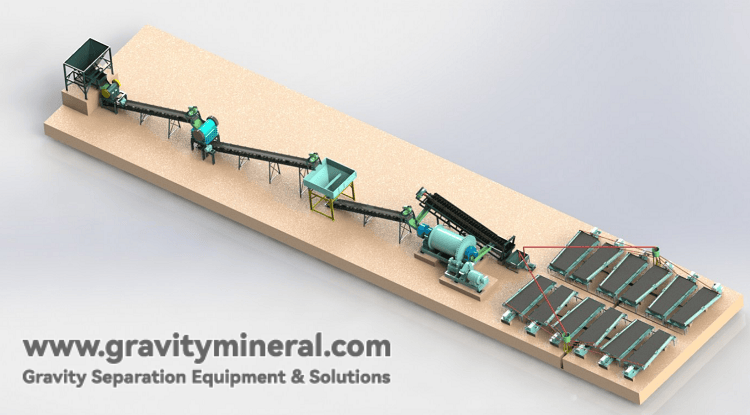
Coarse particles should enter the gravity separation process as early as possible to avoid repeated over-grinding in the milling circuit; fine particles require dedicated equipment to prevent them from being lost as overflow. The grinding fineness and classification points between these two fractions are the key control points in the gravity separation process for cluster gold.
Where Do the Risks Lie When Implementing a Process Without Conducting Mineral Processing Tests?
There was a project where the ore was of the quartz vein type, and the gold particle size was not particularly fine. Based on years of experience, the client configured a process consisting of a centrifuge and a shaking table, and production began immediately upon completion of the plant. As a result, gravity recovery rates remained consistently low, concentrate grades fluctuated significantly, and the proportion of gold in the -0.074 mm size fraction of the tailings was abnormally high.
After submitting samples for sieve analysis, it was discovered that the degree of liberation of gold differed by nearly a factor of two between the coarse and fine particle size fractions. The grinding fineness of the original process was excessive for the coarse particles but insufficient to fully liberate the fine particles. Under these conditions, no matter how capable the gravity separation equipment itself might be, it was unable to effectively separate intergrown particles.
This is the cost of skipping mineral processing tests. While testing costs account for only a limited portion of the project\'s total investment, expenditures on process modifications, equipment replacement, and downtime for commissioning often exceed this amount by several times.Gravimetric separation of cluster gold relies particularly on foundational data: whether the gold is free, in the form of intergrown particles, or encapsulated, and what particle size is required for liberation. Without this information, there is no basis for setting subsequent process parameters.
Two Core Stages of the Crystal Cluster Gold Gravity Separation Process
In the crystal cluster gold gravity separation process, experience suggests focusing on two key points: early recovery of coarse particles and supplementary recovery of fine particles.
Coarse gold particles have high density, and their cluster structure makes them more prone to settling in the grinding circuit than free gold. If they undergo multiple cycles in the ball mill, the risk of overgrinding increases, and they are likely to accumulate in the classifier\'s return slurry, thereby reducing grinding efficiency. Therefore, the gravity separation process should be initiated as early as possible after the discharge from the first-stage grinding circuit.If a jig or centrifuge is used to recover a portion of the coarse-grain gold first, the load on subsequent flotation or secondary grinding will be significantly reduced.
The fine-grain fraction is often overlooked in gravity separation. Shaking tables have limited recovery capacity for the -0.037 mm size fraction, and the fine grains released from the dissociation of crystal cluster gold often contain intergrown particles, resulting in insufficient density differences. In such cases, relying solely on shaking tables is insufficient; the process should include a dedicated stage for the recovery of these fine grains.Centrifugal separators or blanket machines should be positioned in the middlings or tailings re-processing stages to handle the portion not recovered by the shaking tables.
Grinding fineness is a parameter that requires special attention. For cluster gold, finer grinding is not necessarily better; over-grinding can break up the clusters, increasing the proportion of fine-grained gold and actually making recovery via gravity separation more difficult.In exploratory testing, the proportion of -200 mesh material can be increased from 50% to 80%. Test points should be set at regular intervals to observe changes in the distribution of gold across different particle sizes; the point at which recovery performance begins to decline marks the critical range for overgrinding.
The same principle applies to flushing water volume, stroke length, and stroke frequency. For gold clusters with higher specific gravity, a stroke length that is too short provides insufficient agitation, while a stroke length that is too long causes fine particles to be carried away by the water flow. There is no one-size-fits-all answer for these parameters; they must be determined through comparative testing of each set of conditions.
How to Organize Effective Gravity Separation Tests
Ore sampling should not be arbitrary. The distribution of cluster gold within an ore body is typically uneven, and a single sample cannot adequately represent the entire ore body.When conditions permit, samples should be taken separately from different levels and veins, ensuring each sample has sufficient weight to meet the requirements for conditional testing and closed-circuit verification. Samples should be accompanied by information on the sampling location, lithological description, and visually observable gold; these details directly aid in the design of the test plan.
In terms of test types, exploratory tests serve as the foundation. Process mineralogy work should be completed first to understand the gold occurrence, grain size distribution, and degree of liberation. This is followed by conditional tests, in which multiple levels are set for grinding fineness, feed concentration, and wash water volume.Open-circuit tests verify whether the process flows smoothly, while closed-circuit tests evaluate the performance indicators once the process has stabilized. The closed-circuit stage of gravimetric separation of clustered gold should not be omitted; after circulating the intermediate concentrate, fine-grained intergrown particles tend to become enriched, and good open-circuit performance does not necessarily indicate that the closed-circuit process will be equally stable.
Test reports should not focus solely on the final recovery rate. A report of practical value should include at least three components: the distribution of gold across various particle size fractions, the relationship between the grade and yield of the gravity concentrate, and the form of gold loss in the tailings. The absence of any one of these elements leaves equipment selection without reliable support.
In terms of costs, small-scale and conditional tests typically range from 10,000 to several ten thousand yuan, depending on the complexity of the ore and the depth of the testing; costs for closed-circuit and scaled-up tests increase accordingly. Compared to the risks associated with subsequent equipment investments and process modifications, these expenses constitute a necessary foundational investment.
Focus Areas for Gravitational Separation Tests by Ore Type
Crystalline gold is just one type of gold ore. The key points for gravity separation tests on copper, tungsten, and chromite ores differ; the table below summarizes general guidelines based on experience, though specific decisions must still be made based on the properties of the ore.
| Ore Type | Key Parameters for Gravity Separation Testing | Common Misconceptions |
|---|---|---|
| Crystalline Gold/Quartz Vein Gold | Matching grinding fineness with liberation degree; identifying the point for early recovery of coarse particles | Excessive grinding leading to loss of fine-grain gold |
| Tungsten Ore (Black Tungsten) | Grading and Feeding, Shaking Table Stroke and Bed Slope | Fine-grain fraction is directly discarded from gravity separation |
| Chromite | Upper limit of feed particle size, feed concentration in spiral chutes | Adopt the same gravity separation parameters as for iron ore |
| Copper Ore (Associated Gold) | Assessment of the Suitability of Gravity Separation as a Pre-concentration Process for Waste Disposal | Ignoring the impact of the specific gravity difference between copper and gold on separation |
There is still a long way to go from test reports to production parameters
Completing the test and receiving the report does not mean the process is ready for implementation. The report specifies “what particle size to grind to, what process to use, and what performance targets can be achieved”; however, at the engineering stage, determining the mill specifications, the number of shaking tables to be connected downstream of the jig, the method for re-processing concentrate from the spiral chute, and the feasibility of the plant layout are entirely different tasks.If one simply uses the report to commission a design institute to produce drawings, and then uses those drawings to request quotes from equipment manufacturers, any misunderstanding at any stage in between could cause the process to deviate from the original design.
The crystal cluster gold gravity separation process is particularly sensitive to this. The “early recovery of coarse particles” threshold determined during testing must be translated into specific parameters—such as the stroke and frequency of the jig, the slope of the shaking table, and the pitch of the spiral chute—during the equipment selection phase. If design and manufacturing are not managed by the same team, it is not uncommon for the drawings to differ from the actual equipment.
Therefore, for the crystal cluster gold gravity separation process—from testing, design, and equipment manufacturing to on-site commissioning—the ideal scenario is to establish a closed-loop accountability system.It is not that a decentralized approach is necessarily unfeasible, but rather that once deviations in performance indicators occur, accountability tends to become unclear: the equipment supplier points to the design drawings, the design team points to the equipment manufacturer, and the manufacturer points to the on-site installation team. Cluster gold gravity separation is inherently sensitive to particle size transitions, and the time spent on such coordination often directly impacts the pace of production startup.
Taking GravityMineral\'s approach as an example, mineral processing tests, process design, equipment manufacturing, and on-site commissioning are all handled by the same team. The grinding fineness and number of gravity separation stages specified in the test report are directly incorporated into the design drawings; equipment stroke, frequency, and slope are determined based on the test data; and on-site commissioning engineers continue to rely on the same report.Testing costs can be offset against subsequent equipment or EPC contracts, making this a relatively pragmatic arrangement for projects with genuine construction needs.
It should be noted that not all projects require full-process collaboration. For the retrofit of an existing plant involving the replacement of a single shaking table, equipment can simply be procured directly from the manufacturer. However, for ore types like cluster gold—which are sensitive to process integration and require separate processing of coarse and fine particles—the risks arising from a disconnect between preliminary testing and subsequent implementation typically outweigh the price difference of the equipment itself.
Considerations for Selecting a Testing Institution
Different types of testing institutions are suited for different scenarios. Universities and research institutes are well-suited for exploratory testing aimed at assessing ore processability, providing standardized data and clear reports.Equipment manufacturers\' laboratories are highly efficient and suitable for parameter verification once the equipment direction has been determined; however, their conclusions should be viewed with caution, as they reflect the manufacturer\'s perspective. If an unbiased process proposal is needed for design integration or investment decisions, an independent third party or a testing institution not tied to any specific equipment is more appropriate.
On a practical level, one issue warrants consideration: after testing is complete, will the same party be responsible for both process design and equipment selection? If so, the test data can be directly converted into engineering parameters; if not, the conversion must be performed twice, which increases the risk of information loss during transmission.
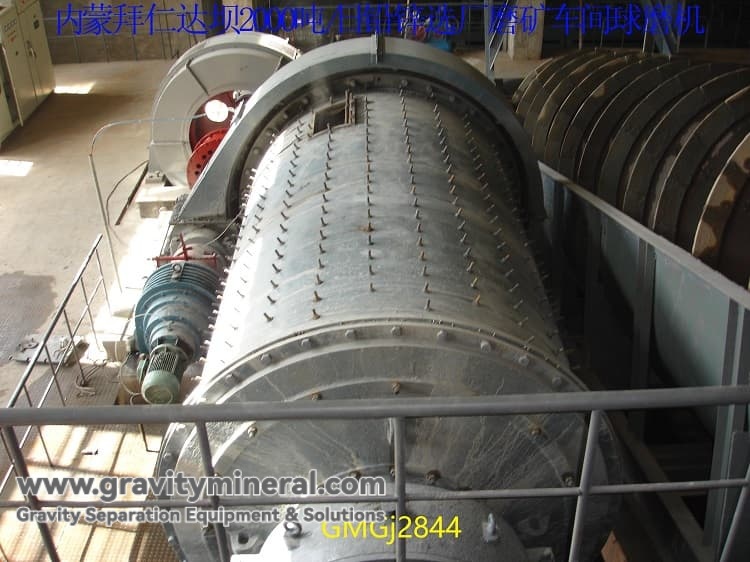
Low recovery efficiency in cluster gold gravity separation is, in most cases, not a matter of equipment capability, but rather a failure of the process design to treat coarse and fine particles differently. The core of the cluster gold gravity separation process is to ensure that coarse gold is recovered at the appropriate stage, while fine gold is captured at stages where it is prone to loss.The specific parameters involved are determined by test data, adjusted based on experience, and ensured by a seamless process that extends from testing through commissioning.
If you have a mineral sample containing cluster gold, or if your gravity separation process is not operating smoothly, you should first arrange for a process mineralogy analysis to clarify the gold\'s occurrence and liberation conditions. Only after the baseline data is clear can the process design and parameter settings for the cluster gold gravity separation process have a reliable starting point.