EPC Turnkey Solution for a Placer Gold Ore Processing Production Line—What Is the Hourly Production Capacity in Metric Tons?
EPC Turnkey Solution for a Placer Gold Ore Processing Line: What Is the Hourly Production Capacity?
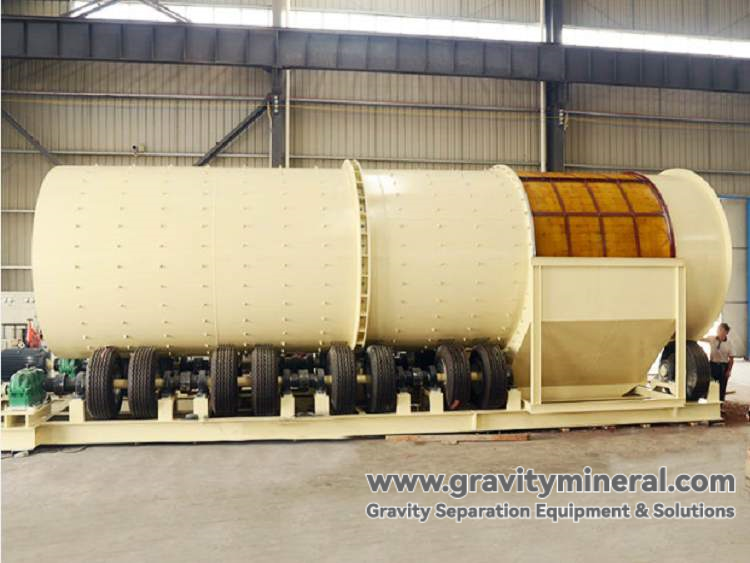
There is no fixed hourly production capacity for a placer gold ore beneficiation production line; instead, it is configured in a modular fashion based on the size of the ore body, gold grade, clay content, and the client\'s investment budget. GravityMineral\'s placer gold gravity separation lines can range from pilot plants (a few metric tons per hour) to large-scale industrial production lines (hundreds of metric tons per hour).with core equipment (jigging machines, spiral chutes, shaking tables, centrifugal separators, and trommel washers) selected based on processing capacity, and initial designs incorporating expansion interfaces. Below are typical configuration schemes categorized by hourly production capacity.
I. Hourly Production Capacity Ranges and Typical Configurations
| Hourly Production Capacity Range | Typical Scenarios | Core Gravity Separation Equipment Configuration | Supporting Equipment |
|---|---|---|---|
| 10–30 t/h | Small-scale riverbed gold mining, pilot production, start-up operations | Sawtooth Jig (Roughing) + 6-S Shaking Table (Scanning) + Centrifugal Concentrator (Fine-Grain Recovery) | Vibrating feeder, small drum washer/drum screen, dewatering screen |
| 30–80 t/h | Small-to-medium-scale terrace gold and ancient riverbed gold | Trommel Washer + Sawtooth Jig (Roughing) + Spiral Chute (Sweeping) + 6-S Shaking Table (Refining) + Centrifugal Concentrator | Cylindrical screen, vibrating feeder, dewatering screen |
| 80–150 t/h | Medium-sized alluvial gold deposits, large-scale riverbank mining | Large-scale trommel screen + jig for roughing + spiral chute for scavenging + multi-deck shaking table/6-S shaking table for concentrating + centrifugal concentrator | Drum screen, trough feeder (anti-adhesion and anti-clogging), dewatering screen, thickener |
| 150–300 t/h | Large-scale placer gold mines, large-scale production lines for dredging or mechanical mining | Multiple jig machines in parallel + spiral chute assembly + shaking table assembly + centrifugal concentrator | Large-scale drum washers, drum screens, feeding systems, dewatering, and tailings treatment |
| 300 t/h and above | Extra-large-scale placer gold mines, combined processing of multiple ore bodies | Multiple sets of roughing—scavenging—concentration stages configured by ore body zone, arranged in a modular parallel configuration | Complete end-to-end process: feeding, ore washing, screening, gravity separation, dewatering, and dry tailings disposal |
Note: The above are reference specifications; actual equipment selection depends on the grade of the ore, gold particle size distribution, clay content, gravel proportion, site conditions, and water and power availability.The ore washing stage is particularly critical in placer gold mining—when clay content fluctuates significantly, incomplete washing directly leads to a decrease in gravity separation recovery rates. Therefore, the specifications of drum washers and cylindrical screens must be selected based on operating conditions with the highest clay content, rather than average processing capacity.
II. Main Process Flow of the Gold Sand Mine EPC Turnkey Project
The standard process flow for a placer gold gravity separation line is as follows:
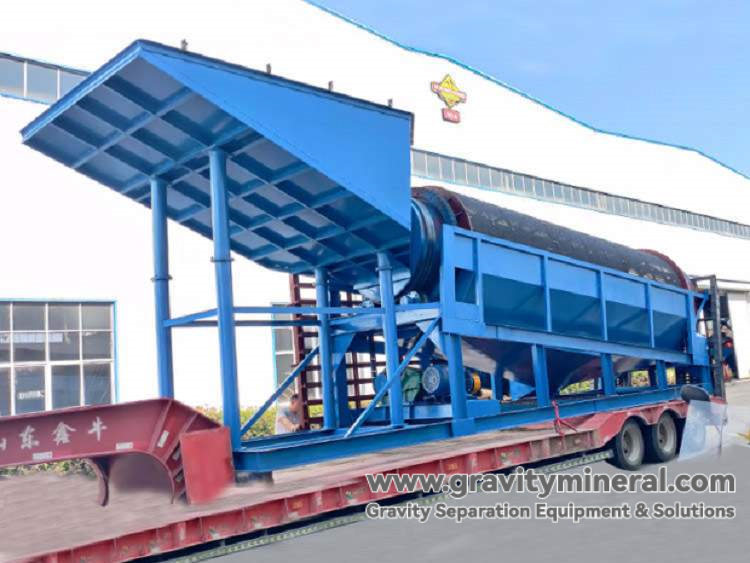
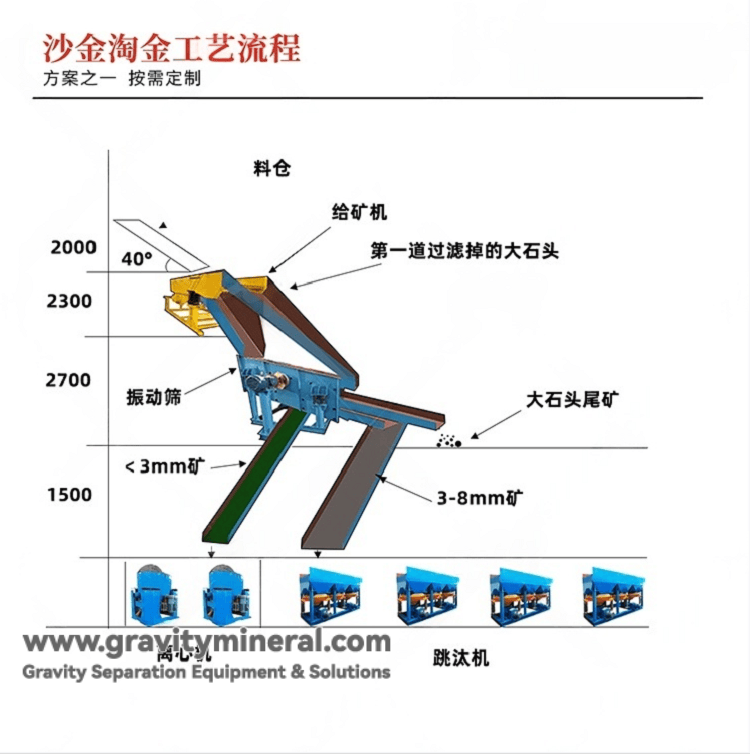
Feed → Ore washing and screening (drum washer/cylindrical screen to separate large gravel) → Roughing and tailings disposal(Sawtooth Jig or Spiral Chute) → Gold Concentration (6-S Shaking Table → Centrifuge for Fine Gold Recovery) → Dewatering (Dewatering Screen) → Gold Concentrate
GravityMineral\'s process logic is as follows: ore washing is key; multi-stage chutes/jigging are used for roughing; shaking tables for concentrating; and centrifuges to recover fine particles.Alluvial gold in riverbeds has already undergone a round of “pre-sorting” by nature based on specific gravity; gravity separation is the most direct and economical recovery method. Typically, a single-stage gravity separation process is sufficient, without the need for flotation or cyanidation (unless the gold is present as fine particles in a host matrix, in which case a combined process is required).
III. What Is Included in an EPC Turnkey Project
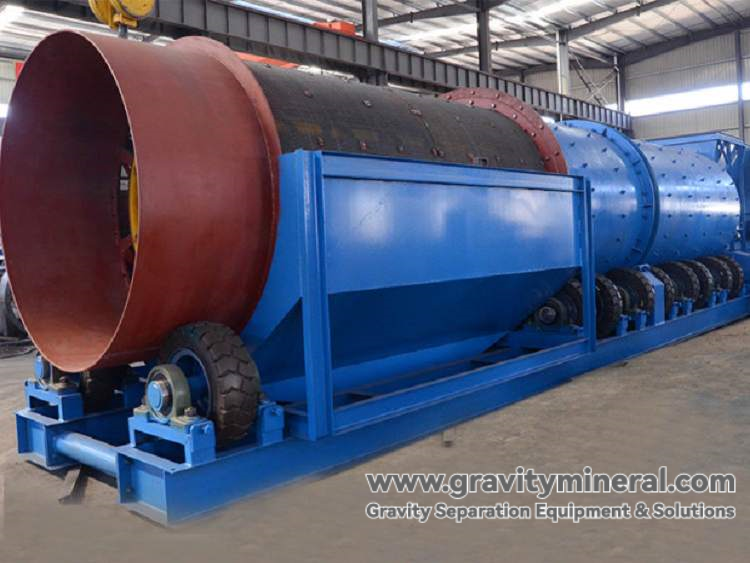
The EPC turnkey package for a placer gold processing line covers: Mineral processing testing and mineral analysis (ore sample testing, recoverability tests) → Process design (flowchart, equipment list, plant layout, civil engineering requirements)→ Equipment Manufacturing and Turnkey Supply (production scheduling at our two in-house manufacturing bases, with full-process ISO 9001 quality control) → Shipping and Logistics (container loading plans, export documentation, and international logistics coordination)→ On-site Installation Guidance (resident engineers provide technical briefings; general installation workers are organized locally by the client) → Commissioning and Training (individual equipment commissioning, integrated trial runs with water and feed material, personnel training, until the production line operates smoothly and performance indicators are stable) → After-sales Service and Spare Parts Supply.
The total duration of a standard turnkey placer gold project is typically 7–12 months: 40–60 days for equipment manufacturing, 30–60 days for ocean freight, and 60–150 days for on-site installation and commissioning, with an additional buffer of approximately 30 days each for customs clearance and coordination between phases.
IV. Information Required Prior to Equipment Selection
To provide an accurate hourly production configuration and quotation, the following must be confirmed: ore type and gold grade, target processing capacity (metric tons per hour or metric tons per day), feed particle size and clay content, gravel proportion, site conditions (availability of existing facilities, water and electricity supply), budget range, and desired start-up date.If representative ore samples are available, sending them for mineral processing tests will yield a more precise process flow and equipment configuration plan; the testing fees can be offset against the cost when signing the equipment or EPC contract later.