







How Can the Gold Ore Gravity Separation + Cyanidation Process Improve Recovery Rates? Professional Solutions to Help You Reduce Costs and Increase Efficiency
Improving the recovery rate in the cyanide leaching process for gold ore has long been a key focus for many integrated processing plants. Three issues—relatively high tailings grades, recovery rates that have remained persistently low, and persistently high per-unit chemical consumption—often occur simultaneously.The Heihe Rock Processing Plant achieved a significant improvement in silver recovery through modifications to its cyanide leaching process; similarly, the Qinghai Dachaidam Processing Plant saw an increase in cyanide leaching efficiency following process optimization.For processing plants within the same system, differences in performance indicators typically do not stem from the age of the equipment, but rather from whether the workflow between the gravity separation section and the cyanidation section is truly seamless. In most cases, the key to improving recovery rates in both gravity separation and cyanidation does not lie in the leaching tanks themselves, but in the coordination between the gravity separation section and the pre-leaching preparation section.
I. Problem Manifestations: Coarse particles escaping from gravity separation and fine particles escaping from cyanidation, resulting in metal loss at both ends
Three on-site indicators can be used to determine whether a combined gravity-cyanidation process is operating in a healthy state.
Abnormal gravity concentrate yield and color. Significant fluctuations in concentrate yield from centrifuges or shaking tables, coupled with dark-colored gravity concentrate (rather than bright yellow), indicate that coarse free gold has not been effectively captured and is entering subsequent processes via the overflow.Once this gold enters the cyanidation system, it is difficult to fully dissolve due to limitations in leaching time and cyanide concentration, ultimately remaining in the tailings and directly lowering the recovery rate of the gravity-cyanidation process.
Loss of fine-grained gold in leaching tailings. If the gold grade in tailings remains consistently high, microscopic examination may reveal fine-grained gold encapsulated by sulfides, or intergrown particles that were not fully liberated during gravity separation.Studies on difficult-to-process gold ores containing arsenic and antimony have shown that a combined process involving Nelson gravity separation—re-grinding and re-processing of the intermediate product—and cyanide leaching of tailings can achieve a high overall gold recovery rate, representing a significant improvement over a single flotation process.If the gravity separation section fails to effectively retain coarse-grained gold, the load on the cyanidation section will increase significantly, leading to a corresponding rise in reagent consumption.
The specific consumption of sodium cyanide rises abnormally. Laboratory re-testing reveals no obvious process abnormalities, yet sodium cyanide consumption continues to rise. At this point, the particle size distribution of the gravity separation tailings should be investigated.Coarse-grained gold dissolves more slowly in the cyanide tanks. Operators often tend to increase the cyanide concentration to improve dissolution efficiency, which results in over-leaching of the fine-grained fraction, leading to chemical waste without a corresponding decrease in tailings grade. This phenomenon is relatively common in combined gravity-cyanide processes.
II. Analysis of Causes: Three Weak Points in the Interface
Gravity separation and cyanidation have distinct roles in the process: gravity separation is responsible for retaining coarse-grained gold that can be liberated as individual particles, while cyanidation is responsible for recovering fine-grained and encapsulated gold. When the interface between these processes is not well-coordinated, both ends bear an additional load, naturally limiting the improvement in recovery rates for the gravity-cyanide process.
First, the grinding fineness does not match the feed conditions for gravity separation. Gravity separation equipment requires “early recovery”; coarser gold particles that can be liberated individually should enter the separation process as early as possible.However, to meet the fineness requirements of cyanide leaching, some processing plants push the grinding fineness to a higher level, resulting in an increased amount of fine slime in the gravity separation feed and a decrease in the separation efficiency of the gravity tables or centrifuges.Experimental data show that the recovery rate of gravity separation peaks when the grinding fineness falls within a specific range; further increasing fineness does not result in a linear increase in the efficiency of the gravity separation process. It is necessary to find a balance between coarse-grain liberation and preventing the loss of fine particles during gravity separation; this is also a key consideration in the selection of gold mine gravity separation equipment and process design.
Second, the slurry conditioning and impurity removal steps prior to cyanidation are missing for gravity separation tailings.Water used in gravity separation operations is often recycled water or leach solution, which carries residual reagents and fine silt. Once fine silt enters the cyanidation tank, it not only adsorbs dissolved gold-cyanide complexes—resulting in an artificially high grade of the leach solution—but also consumes cyanide and lime.If there is no buffering or concentration stage between the gravity concentrate and the cyanidation feed, fluctuations in slurry concentration will be directly transmitted to the leaching tank, resulting in a discrepancy between the nominal leaching time and the actual effective residence time.
Third, secondary losses occur during the transfer and beneficiation of gravity concentrate. Heavy sand produced by shaking tables or centrifuges is subject to spillage, leakage, or dripping during receiving, beneficiation, and transfer; alternatively, an excessively high moisture content in the concentrate can lead to grade dilution.Coarse gold recovered in the gravity separation section incurs virtually no subsequent cyanidation costs; however, lost heavy sand requires several times the amount of reagents and time to compensate for in the cyanidation section. Losses at this stage are often underestimated.
III. Solution: Adjusting Three Parameters to Bridge the Gaps
First, implement staged control of grinding fineness. If the proportion of visible gold and coarse-grained gold in the ore is high, the fineness of the overflow from the first-stage grinding and classification can be appropriately coarsened to ensure that separable coarse-grained gold enters the gravity separation process first.Second-stage grinding should then be adjusted to meet the fineness requirements for cyanide leaching. The specific cutoff point should be determined through raw ore screening tests and calibrated based on the distribution of gold across particle sizes and the degree of single-particle liberation. This approach has a solid track record of practical application in the gravity separation processes for rock gold deposits.
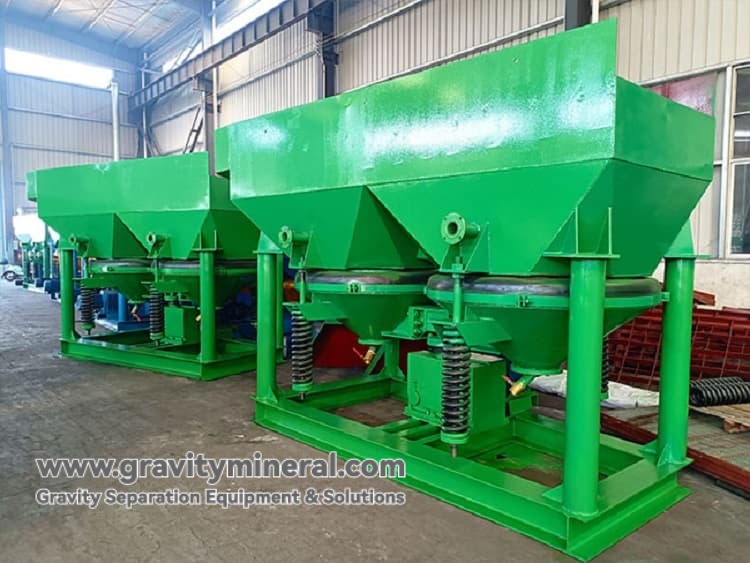
Second, stabilize the feed concentration for gravity separation. The feed concentration to the centrifuge is a key operational parameter affecting separation efficiency.On-site monitoring can be performed using a concentration flask to take samples from the feed pipe. If the concentration remains consistently low, large amounts of fine silt will enter the separation area, causing the grade of the heavy sand concentrate to drop significantly. It is recommended to maintain the feed concentration within the equipment\'s optimal range and to stabilize the grade of the gravity separation concentrate by calibrating the operating parameters.In terms of equipment configuration, the jig is responsible for the rough selection of coarse particles, the shaking table handles the fine selection of fine particles, and the centrifuge recovers ultrafine particles. How these three stages of equipment are matched depends on the particle size distribution of the ore; it is not advisable to simply copy the equipment lists from other processing plants. The selection of gold ore gravity separation equipment should be determined comprehensively based on the properties of the ore and the processing capacity.
Third, a buffer slurry adjustment stage should be added prior to leaching.Before the gravity separation tailings enter the leaching tank, they should be processed through a thickener, with the underflow concentration controlled within an appropriate range and the overflow fine slurry routed separately. This measure effectively ensures adequate leaching time, prevents cyanide ion concentration from being disrupted by adsorption by the fine slurry, and stabilizes lime consumption.If a pre-leaching thickener is not available on-site, a mixing tank can be added to facilitate preliminary settling using a flocculant. This requires limited investment but significantly stabilizes the feed to the leaching process. The contribution of this step to optimizing cyanide leaching recovery is often overlooked.
IV. Implementation Path: Proceed in Process Sequence; Avoid Reversing the Order
Adjustments should follow the sequence of “first gravity separation, then leaching, and finally chemical treatment”; reversing this order will result in unnecessary costs.
Phase 1: Calibrate the gravity separation process. Continuously record the feed rate, feed concentration, and concentrate yield of centrifuges or shaking tables. Simultaneously, take samples from the gravity feed and tailings for sieve analysis, focusing particularly on the distribution of gold in the coarse particle size fraction.If the proportion of gold in the coarse particle size fraction of the gravity separation tailings remains too high, this indicates that there is still room for adjustment in the gravity separation section; at this stage, it is not advisable to alter the cyanidation parameters.
Phase 2: Adjust the grinding and classification process. Based on the data from Phase 1, appropriately reduce the fineness of the overflow from the first-stage grinding and classification to ensure that more coarse-grained free gold is liberated early and enters the gravity separation process. During this adjustment, monitor the concentration of the classifier overflow and the amount of return sand to prevent abnormal mill loading.
Stage 3: Stabilize pre-leaching conditions. Maintain a stable concentration of the thickener underflow, and adjust the cyanide ion concentration based on laboratory data to avoid adding chemicals based solely on experience. After the gravity separation stage retains coarse-grain gold, the load on the cyanidation stage is reduced; under the same cyanide ion concentration, the tailings grade should improve.
Phase 4: Fine-tune the chemical dosing regimen. If the leach tailings grade still fails to meet standards, prioritize investigating the actual leaching retention time and dissolved oxygen levels in the pulp.Tests have shown that appropriately extending the leaching time can reduce the gold grade in the leach residue to a more desirable level. When leaching tank capacity is tight, consider diverting a portion of the gravity separation tailings for separate processing rather than forcing them into a single processing stream.
It is important to note that one should not switch sodium cyanide brands or add leaching aids before the gravity separation section has been properly adjusted. If the integration with gravity separation is not optimized, leaching aids can only recover metal that would not have been lost in the first place, making the cost-benefit ratio unfeasible.
V. Expected Results: Reasonable Range for Improvement in Performance Indicators
Results vary significantly depending on ore properties, process configuration, and operational proficiency; the following are indicative guidelines based on industry practice.
Once the gravity separation section has been properly adjusted, the recovery rate of coarse-grain gold typically improves to a certain extent. Since the coarse-grain gold recovered by gravity separation incurs virtually no additional cyanidation costs downstream, this increase contributes directly to overall profitability.
In the cyanidation stage, once the slurry concentration stabilizes prior to leaching and interference from fine slime is reduced, the specific sodium cyanide consumption typically shows a downward trend. Tailings grade improves simultaneously, and the extent of the increase in overall recovery rate depends on the properties of the raw ore and the baseline of the process.Within the Gold Ore International system, the Heihe Rock Processing Plant\'s cyanidation process modification increased silver recovery by several percentage points, while the Qinghai Dachaidam Processing Plant achieved an improvement of approximately seven percentage points in cyanide leaching efficiency. This demonstrates that, with proper adjustments to process integration, such improvements in performance metrics are indeed feasible.
Overall, the key to improving cyanidation recovery rates in gravity separation processes does not lie in replacing equipment or increasing chemical usage, but rather in properly calibrating the interface parameters between the gravity separation and cyanidation stages.Once these three parameters—grinding fineness, gravity feed concentration, and pre-leaching slurry adjustment—are properly optimized, both recovery rates and chemical costs will benefit simultaneously, enabling the plant\'s cost-reduction and efficiency-enhancement plan to be effectively implemented.
Notes on Applicability: If the gold in the ore is primarily embedded as fine-grained disseminated particles within sulfides or silicates, and the recovery rate of the gravity separation stage itself is limited, the focus should be on optimizing cyanidation conditions or flotation pretreatment, with gravity separation serving only as a supplementary measure.The basis for this determination is the distribution of coarse-grain gold in the raw ore screening analysis; if this proportion is low, the priority of adjusting the gravity separation stage should be correspondingly reduced. The effectiveness of cyanidation treatment of gravity separation tailings also depends on how much coarse-grain gold the gravity separation stage can retain; both factors must be considered holistically.