







How Can the Re-grinding and Cyanidation Process for Rand-Type Gold Deposits Achieve High Recovery Rates?
Gravity Separation Combined with Cyanidation Process for Lande-Type Gold Deposits
Coarse and Fine Grains Mixed · Treat Them Separately — Early recovery of coarse grains via gravity separation, with cyanidation capturing the remaining fine grains: a combined gold extraction process that addresses both coarse and fine gold.
Key Findings at a Glance
- Rand-type gold deposits (including gold-bearing conglomerate deposits) feature relatively coarse gold particles and a high proportion of free gold; a single process struggles to effectively recover both coarse and fine gold.
- The core of the gravity separation and cyanidation process for Rand-type gold deposits lies in the integrated approach of “early recovery of coarse particles via gravity separation, with cyanidation capturing fine particles as a backup.”
- The gravity separation stage involves purely physical separation, requiring low chemical consumption and energy; the cyanidation stage specifically targets fine particles and encapsulated gold, thereby raising the overall recovery rate
- The value of the process depends on the location and ratio of the coarse-to-fine separation; decisions should be based on ore sample test data rather than empirical judgment
I. Why Rand-Type Gold Deposits Deserve a Fresh Look
Following the sustained rise in gold prices, ores that were previously considered uneconomical have re-entered the economic analysis framework. Rand-type gold deposits—specifically gold-bearing conglomerates—are characterized by gold embedded in quartz conglomerates, with the Witwatersrand Basin in South Africa serving as a typical example.The prominent characteristics of this type of ore are: relatively coarse gold particle size and a high proportion of free gold, though the overall ore grade is not necessarily high. The mixed grain size distribution—containing both coarse and fine particles—is precisely what makes its beneficiation so challenging.
Precisely because it contains a mix of coarse and fine particles, a single-process approach inevitably fails to address all aspects effectively. With cyanidation alone, coarse gold particles that cannot be ground sufficiently enter the leach solution, resulting in significant waste of reagents and low leaching efficiency; with gravity separation alone, coarse particles can be recovered but fine particles cannot.The Land-type gold ore process—which combines gravity separation with cyanidation—is a combined solution specifically designed to address these ore characteristics.
Two Core Principles: Pre-concentration First, Enhanced Leaching Second
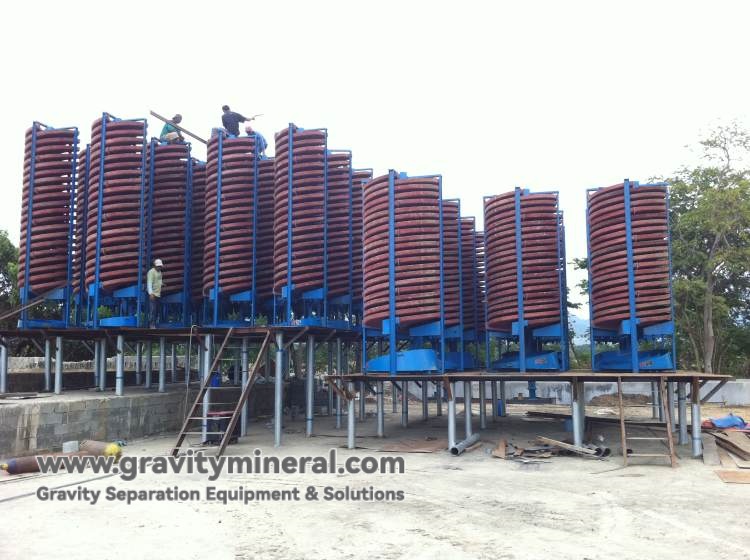
The central logic of the Land-type gold ore gravity separation combined with cyanidation process can be summed up in one sentence: “Gravity separation captures coarse particles early, while cyanidation captures fine particles as a backup.” This is precisely the core concept of the rock gold gravity separation process:First, gravity separation (which utilizes differences in mineral particle density to separate them into layers) is used to recover coarse-grained free gold early on; the gravity separation tailings are then fed into the cyanide leaching process (a hydrometallurgical process that uses sodium cyanide to dissolve metals) to recover fine-grained and entrapped gold.Each process operates independently, without interfering with the other.
This arrangement offers three direct benefits.
Three Direct Benefits
First, it prevents overgrinding. Grinding is a major consumer of electricity and is also the root cause of sludging (where fine particles are overground into mineral sludge that is difficult to recover).If coarse gold is ground too finely too early in the grinding circuit, recovery becomes both difficult and costly. By integrating gravity separation equipment into the grinding circuit—allowing for “early recovery”—the already liberated coarse gold is removed in advance, significantly reducing the grinding load.
Second, it saves on chemicals. During direct cyanidation, coarse gold dissolves slowly and consumes large amounts of cyanide. Since coarse gold is first recovered in the gravity separation stage, only fine particles and encapsulated gold enter the leaching stage, resulting in reduced sodium cyanide consumption and alleviated environmental pressure.
Third, it increases total recovery. Gravitational separation alone cannot effectively recover fine-grained gold, while cyanidation alone is too costly to process coarse-grained gold. The Land-type gold mine\'s gravity-plus-cyanidation process integrates these two methods, raising overall recovery rates and naturally improving the economic performance of the processing operation.
Three-Step Process Flow
Taking a typical medium- to fine-grained Rand-type ore as an example, the complete process can be divided into four stages.
Step 1: Crushing and grinding. The raw ore first undergoes coarse crushing in a jaw crusher, then enters a ball mill. Combined with a spiral classifier, this forms a closed-circuit grinding system that provides a slurry with the appropriate particle size for subsequent separation.
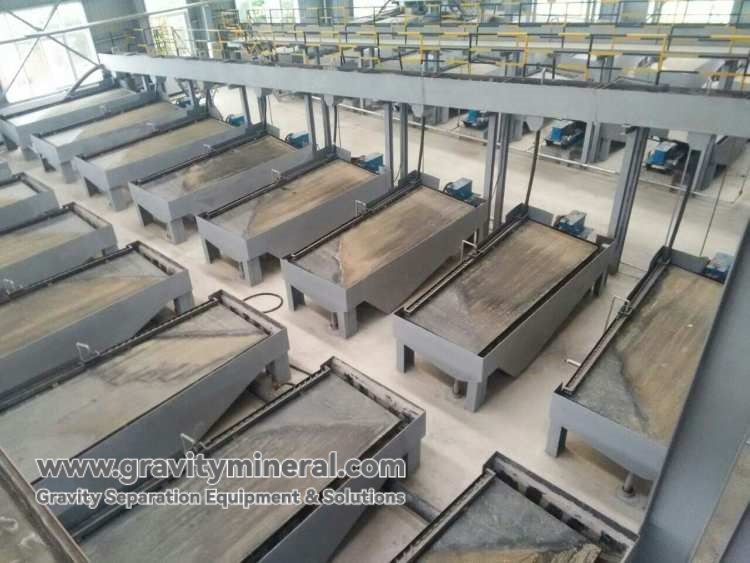
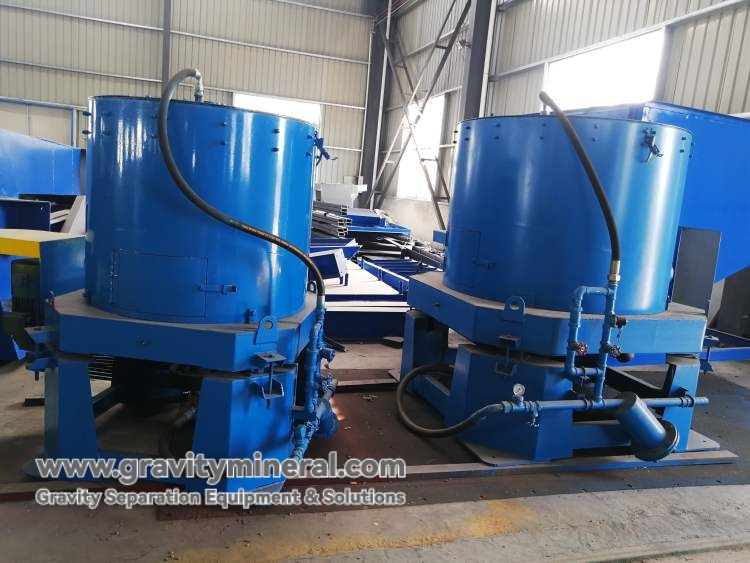
Step 2: Gravity Separation and Early Recovery.The sand fraction from the classifier (coarse particles returned to the grinding circuit) undergoes roughing on a sawtooth-wave jig, followed by fine selection on a 6-S shaking table, directly producing gold concentrate. Finer-grained free gold can be recovered by a centrifugal separator, ensuring multi-stage quality control.
Step 3: Cyanide Leaching.Gravity separation tailings enter the leaching process, typically via CIL (carbon-in-leach, where adsorption by activated carbon occurs simultaneously with leaching) or CIP (carbon-in-pulp, where adsorption follows leaching). Fine-grained free gold and most encapsulated gold dissolve in a sodium cyanide solution and are subsequently concentrated by activated carbon.
Step 4: Gold Stripping and Refining. Gold-bearing carbon is subjected to desorption and electrolysis (using an alkaline solution to desorb the gold from the carbon and electrolytically deposit it) to produce gold slurry, which is ultimately smelted in a metallurgical furnace to produce refined gold.
This process represents the integration of rock gold gravity separation with cyanide leaching—coarse particles are processed by shaking tables, while fine particles are treated with cyanide solutions. The value of the Rand-type gold mine\'s gravity separation combined with cyanide leaching process lies precisely in the integration of these four stages.
Horizontal Comparison of Four Mainstream Approaches
| Comparison Dimensions | Single-Stage Re-selection | Cyanidation Only | Combined Gravitational Separation and Cyanidation |
|---|---|---|---|
| Suitable Gold Particle Size | Primarily coarse free gold | Predominantly fine-grained and encapsulated gold | Separation of coarse and fine particles (typical Rand-type conditions) |
| Coarse-grain gold recovery | High | Relatively low (slow dissolution, high cyanide consumption) | High; early recovery via gravity separation |
| Fine-Grain Gold Recovery | Relatively low (difficult to recover fine particles via gravity separation) | High | High, with leaching serving as a backup |
| Chemical Costs | Negligible | On the high side | Moderate; coarse particles have been diverted |
| Risk of overgrinding and sludge formation | Low | Medium | Low; early recovery is possible |
Specific values vary by ore and cannot be generalized. However, the general trend is clear: for this type of ore with a mixture of coarse and fine particles, a combined processing method is generally the more cost-effective approach.
V. Common Equipment Configurations
The main equipment for the Rand-type gold mine gravity separation and cyanidation process can be summarized in a single list.
| Process Step | Common Equipment | Purpose |
|---|---|---|
| Crushing | Jaw Crusher | Crushes raw ore to a particle size suitable for processing by the mill |
| Grinding | Ball Mill, Spiral Classifier | Grind the ore to a fine size and form a closed-circuit classification system |
| Gravity Separation | Sawtooth jig, 6-S shaking table, centrifugal concentrator | Recovery of coarse and fine free gold |
| Leaching | Leaching tanks, high-efficiency dual-impeller carbon-in-leach tanks | Cyanide Leaching and Gold Adsorption |
| Gold Stripping | Stripping Electrolytic equipment, metallurgical furnaces | Gold Recovery from Gold-Bearing Carbon and Smelting |
| Dehydration | GX-Type High-Efficiency Thickener, Plate-and-Frame Filter Press | Concentrate dewatering, dry tailings disposal |
Here\'s a key point that\'s often overlooked
The location of the diversion point in gravity separation is critical. If placed correctly, it significantly lightens the grinding circuit; if placed incorrectly, it\'s as if the equipment were never installed. The higher the proportion of coarse-grained gold in the ore, the earlier the diversion point should be set—this depends on the assessment of the ore\'s characteristics and liberation degree.
6. Is it economically viable?
The cost structure of the Rand-type gold mine\'s gravity separation combined with cyanidation process is clear.Gravity separation is a purely physical process that requires virtually no chemicals; its main costs are electricity and water. The bulk of the costs for cyanidation lie in sodium cyanide and subsequent environmental treatment. Recovering coarse-grain gold early in the gravity separation stage effectively replaces a large volume of material that would otherwise require chemical treatment with the relatively inexpensive gravity separation process.
Every one-point increase in recovery rate represents a significant gain for this type of ore. Taking a processing plant with a daily capacity of several hundred metric tons and moderate ore grade as an example, the increase in recovery achieved through the combined process—when converted into gold output value—often covers the corresponding equipment investment, with the remainder representing the improved mining profitability.Mines processing similar ores in Inner Mongolia, Liaoning, and other regions are already operating according to this approach.
Equipment investment is not the decisive factor; the key lies in whether the process design is correct. If the process is right, the financials will naturally fall into place.
Seven Common Issues and Solutions
This is not recommended. Gravity separation primarily recovers coarse-grained gold, while fine-grained gold is lost with the tailings. Since fine-grained gold accounts for a significant proportion of this type of ore, failing to incorporate a cyanidation stage is effectively handing this portion of the gold over to the tailings pond.For every increase of a few tenths of a gram in the gold grade of the tailings, the cumulative annual loss is significant.
Not necessarily. If the ore consists primarily of fine-grained encapsulated gold with very little free gold, the benefits of the gravity separation stage are limited; in this case, the focus of the process should shift to leaching. Therefore, the first step in taking on a project should be to collect samples and conduct mineral processing tests, using comparative data from gravity separation and leaching to determine the process flow, rather than making a decision based solely on experience.
After cyanidation, cyanide deactivation treatment must be performed to decompose residual cyanide, and tailings should be dry-stacked (stored after filter press dewatering). Environmental compliance is a mandatory requirement; therefore, cyanide deactivation and dewatering stages should be incorporated into the process design from the outset to avoid having to make remedial adjustments after production begins.
VIII. Conclusion and Recommendations
The fundamental value of the gravity separation plus cyanidation process for Lande-type gold deposits lies in breaking down the challenge of “mixed coarse and fine particles” into two distinct stages, each serving its specific purpose: coarse particles are rapidly recovered via gravity separation, while fine particles are processed by cyanidation as a backup. By effectively addressing both ends of the spectrum, ore recovery rates and processing efficiency naturally improve.
If you have ore of this type awaiting processing, or if you wish to improve recovery rates at an existing production line, please provide us with information on the ore\'s grade, particle size, gold occurrence, and processing capacity.Based on this information, we will conduct a process evaluation and select the appropriate equipment. If necessary, we will request samples to conduct beneficiation tests and use the data to determine a process plan combining gravity separation and cyanidation for alluvial gold deposits. With a well-designed process, subsequent recovery rates and cost control will have a reliable foundation.