







How can we maximize recovery rates through gravity separation of coarse-grained gold from alluvial deposits combined with cyanidation of tailings?
Gravity separation of coarse-grained gold from alluvial deposits, followed by cyanidation of tailings
First, let\'s cover a few key points
- The core logic behind the combination of gravity separation of coarse-grained alluvial gold and tailings cyanidation is this: gravity separation first recovers sufficient coarse-grained gold while preventing over-grinding, and cyanidation then makes up for any fine-grained gold that was missed.
- There are two major risks in the gravity separation of coarse gold: over-grinding and inconsistent feed concentration; the biggest risk in cyanidation is that the fine gold in the tailings is not treated at all.
- Maximizing recovery rates depends on the seamless integration of the three process stages, not simply stacking individual pieces of equipment on top of each other.
- First, determine the particle size; then, define the process; finally, select the equipment. Reversing this order is a waste of money.
Why Alluvial Gold Is Often “Underestimated”
Alluvial-colluvial gold deposits belong to the alluvial-colluvial type of placer gold deposits. With relatively coarse gold grains and good individual liberation, they are among the ore types where gravity separation yields the most consistent results. Logically, this should be the easiest type of ore to process, yet in reality, the overall recovery rates at many processing plants are less than ideal.
The reason often lies not in the ore itself, but in the understanding of the processing flow. Many people assume that “gravity separation will handle the bulk of the recovery, and cyanidation can be set up haphazardly,” so they allocate most of their funds to downstream cyanidation equipment, yet their recovery rates remain consistently low.Gravity separation of coarse-grained alluvial gold combined with tailings cyanidation may seem like simply joining two processes together, but the real challenges lie entirely at the interfaces—how fine to grind the ore, where to position the gravity separation stage, and how to adjust the slurry for feeding into the cyanidation process. If any of these steps are mishandled, the recovery rate will stall at a mediocre level.
This article avoids technical jargon and, following the actual sequence of process integration, breaks down and clearly explains the key steps in the process of combining alluvial gold, coarse gold gravity separation, and tailings cyanidation.
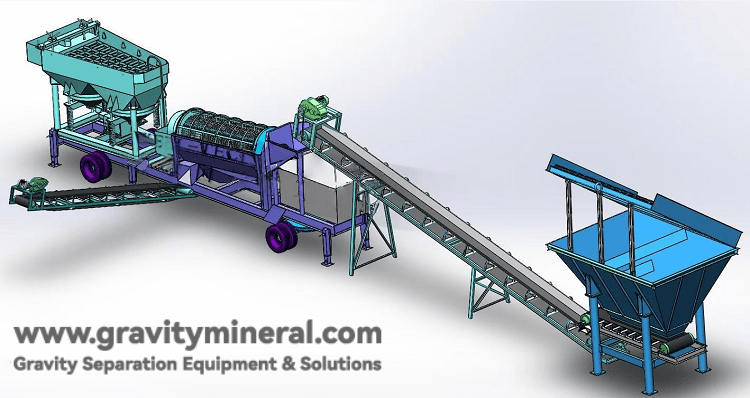
Key Takeaway: Conduct tests first, determine the process flow next, and finally install the equipment
Having been in this industry for a long time, the one thing I want to emphasize most is: don\'t rush into discussing which equipment to use. Alluvial gold may be easy to recover, but that “ease” depends entirely on having the right process. If the process isn\'t set up correctly, the more expensive the equipment, the greater the loss.
Alluvial gold consists of relatively coarse particles with a high proportion of free gold, which naturally gives gravity separation a head start. Precisely because of this, the details in the middle of the process are often the most easily overlooked: how fine to grind the ore, where to position the gravity separation stage, and how to adjust the slurry before the tailings enter the cyanidation process. If any of these points are misaligned, the performance metrics will not improve.
The prudent approach is to first conduct a particle size analysis to determine the proportions of coarse- and fine-grained gold and identify the specific particle size fractions in which they are concentrated. If coarse-grained gold accounts for a high proportion, the gravity separation stage should be moved earlier in the process and the grinding should be coarser; if fine-grained gold predominates, multiple gravity separation stages should be connected in series, and the cyanidation load must be recalculated.Only once the process flow is accurately defined does equipment selection make sense.
In-Depth Breakdown: The Three Stages Must Be Seamlessly Integrated
Alluvial gold deposits contain a high proportion of coarse, free gold, so the earlier it is captured, the better. Once coarse gold is ground into fine particles during the grinding process, it becomes unrecoverable by gravity separation and must be passed on to the cyanidation process—a slow and chemical-intensive process. Therefore, gravity separation equipment should be integrated into the grinding circuit to ensure that coarse gold is processed first.If gravel and clay are present upstream, using a trommel screen for ore washing and screening before feeding into the gravity separation process will yield much more stable results. You can also refer to the overall layout of the “ore washing—screening—gravity separation” approach used in placer gold gravity separation production line designs.
Alluvial gold deposits have highly variable clay content; if the cylindrical ore washer fails to adequately remove clay, the subsequent chutes and jigs will essentially be processing slurry. If the feed rate becomes erratic, the bed stratification in the sawtooth jig will immediately collapse, and coarse gold will not settle properly.This stage may seem unremarkable, but it is the true cause of high tailings volumes at many alluvial gold processing plants.
Recovering fine-grain gold from gravity separation tailings relies entirely on the cyanidation process. Only by stabilizing these three factors—feed concentration, sodium cyanide concentration, and leaching time—can fine-grain gold be effectively extracted.In many plants, the inability to lower tailings grade isn\'t due to insufficient chemical dosage, but rather to fluctuating feed concentrations and inadequate leaching time. Adding a buffer stage before cyanidation to stabilize the concentration is often more effective than simply increasing chemical dosage.
Only when these three stages are linked together does a complete processing line for alluvial and coarse gold gravity separation followed by tailings cyanidation come into being. If any one stage fails, the overall recovery rate will not improve. This is the practical reason why “seamless process integration is more important than advanced equipment.”
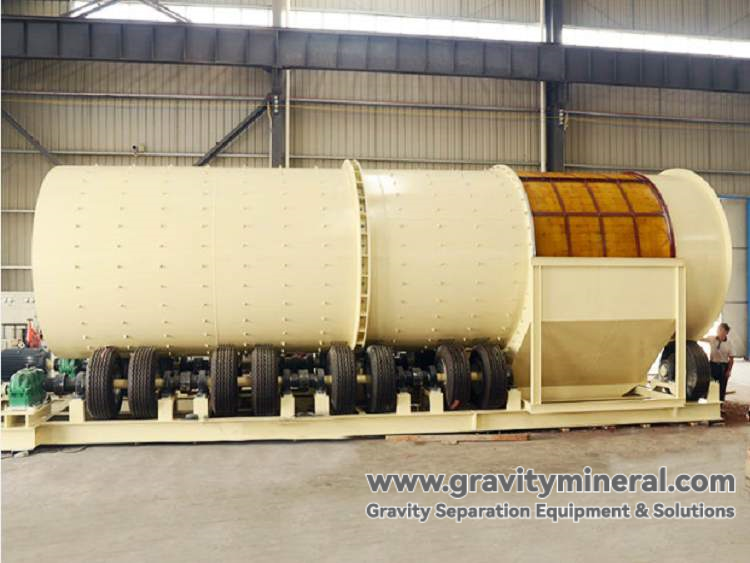
Grinding Fineness: The Most Common Pitfall in Coarse-Grain Gold Processing
Grinding fineness is the stage in alluvial gold gravity separation where things most easily go awry. Conventionally, people believe that the finer the grind, the more thoroughly the gold is exposed and the cleaner the recovery. However, for coarse-grained gold, this logic is exactly the opposite.
The finer the grinding, the more coarse-grained gold is reduced to fine particles, making it difficult for gravity separation to retain them; they end up flowing all the way into the downstream cyanidation stage. Cyanidation dissolves coarse-grained gold slowly and consumes large amounts of cyanide, effectively forcing gold that would otherwise be easy to recover into the most labor-intensive processing channel.
Therefore, the grinding principle for alluvial gold is “just enough”—allowing gold particles to be liberated when needed, rather than blindly pursuing finer particle sizes. Setting the grinding particle size accurately reduces the burden on both subsequent gravity separation and cyanidation.
A Comparative Case Study
At a mine in Yunnan, where alluvial gold predominates and coarse-grained gold accounts for a significant proportion, the situation prior to the renovation was quite typical: the grinding was too fine, and while the recovery rate from gravity separation appeared satisfactory, the gold grade in the cyanidation tailings could not be reduced, leaving the overall performance stuck in a middle-of-the-road range.
The adjustment strategy focused on two key areas. First, the grinding fineness was appropriately coarsened, and gravity separation equipment was integrated earlier into the grinding circuit to capture coarse-grain gold first and reduce over-grinding. Second, a buffer slurry adjustment stage was added before the tailings entered the cyanidation process to stabilize the feed concentration.
Following these adjustments, both the gravity separation and cyanidation stages operated smoothly, the overall recovery rate improved, and the gold grade in the tailings dropped significantly.Looking back, the key lay not in how much equipment was replaced, but in resolving the three bottlenecks—grinding fineness, diversion points, and feed concentration. This also illustrates that the success of processing alluvial and coarse-grain gold through gravity separation followed by tailings cyanidation largely depends on attention to process details.
Three Common Misconceptions
Misconception 1: Assuming that finer grinding leads to higher recovery
For coarse-grained gold in alluvial deposits, the opposite is true. The finer the grinding, the less effective gravity separation becomes; coarse-grained gold is ground into fine particles and ends up in the “slow lane” of the cyanidation process, resulting in slow recovery and high reagent consumption. Coarse-grained gold should be recovered as early as possible—don\'t subject it to an extra grinding step.
Misconception 2: Feeding tailings directly into the cyanidation process without adjusting the concentration
If the feed concentration fluctuates wildly, leaching results are purely a matter of luck. Adding a buffer to stabilize the concentration is often more effective than simply increasing the amount of reagent. This point is frequently overlooked, yet it directly affects the recovery of fine-grained gold.
Misconception 3: Focusing Only on Gravity Separation Recovery Rates
Focusing on one aspect of gravity separation may cause you to miss two aspects in the cyanidation process. Only by evaluating both stages together can you get a clear picture. Even if the data for a single stage looks good, overall efficiency may not be optimal.
Approach to Segmented Equipment Configuration
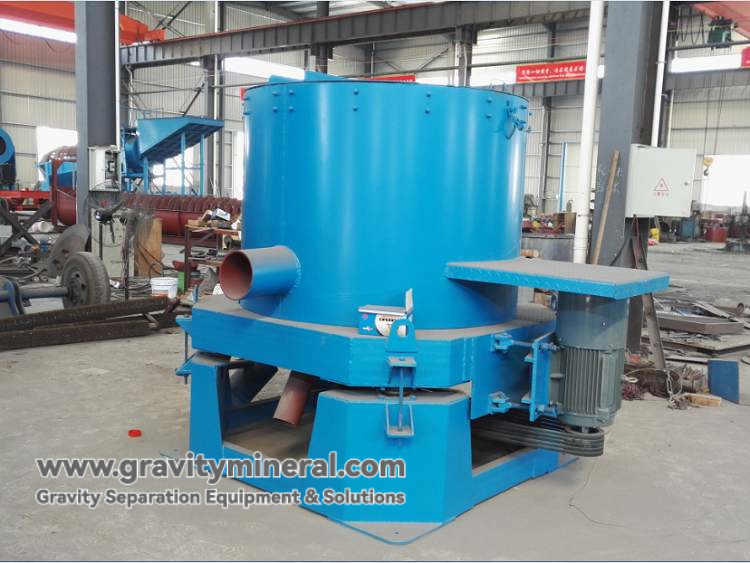
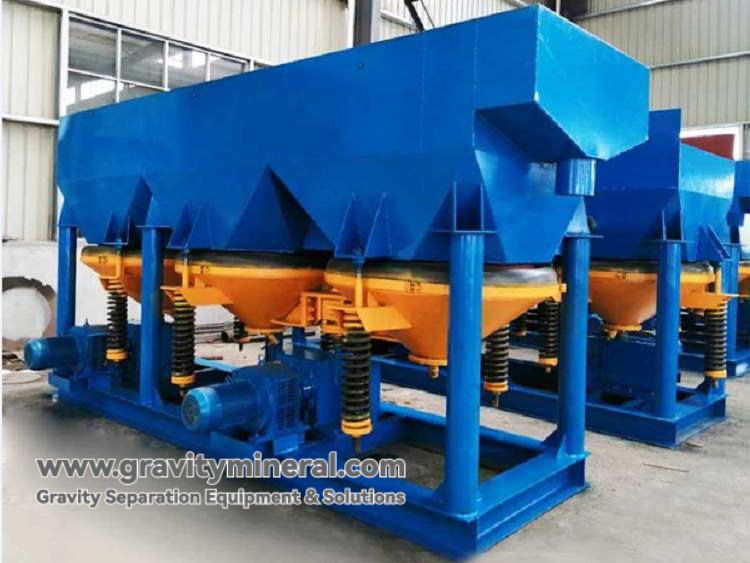
Configuring equipment in stages based on particle size is the more reliable approach for gravity separation of alluvial gold.In the coarse-grain stage, use a jig for initial recovery; in the medium- and fine-grain stages, use a 6-S shaking table for fine selection and a centrifugal concentrator to recover fine free gold; for ultrafine particles, use a suspended vibrating mat machine as a backup for sweep selection;When the slurry content is high or the load on the fine-grain section is heavy, a pulsating chute can also be added to assist in retaining fine-grain gold.
Do not skimp on the dewatering stage; a high-efficiency thickener paired with a plate-and-frame filter press ensures both dry tailings disposal and concentrate transportation are properly addressed. The processing capacities of the equipment must be properly matched; mismatched jig and shaking table capacities are the most common flaw in haphazardly assembled systems, resulting in either material jams or idle operation.Therefore, the sequence and interfaces must be aligned during the design phase; do not wait until the equipment arrives on-site to make changes. If the ore has unique properties, conduct beneficiation tests on ore samples first if necessary, and use the data to finalize the circuit configuration.
My Recommendation
If your ore also contains a high proportion of alluvial gold and coarse-grained gold, don\'t get bogged down by equipment models right from the start. First, determine the particle size distribution and clarify the feed conditions for gravity separation and cyanidation; only then should you discuss equipment selection. The process flow is the skeleton, and the equipment is the flesh and blood; if the skeleton is crooked, no amount of flesh and blood will keep it standing.
Looking back, the maximum recovery rate for alluvial and coarse-grained gold—achieved through gravity separation followed by cyanidation of the tailings—does not depend on how expensive the equipment is, but rather on whether the feed entering each stage is suitable for that stage—if the particle size is correct and the concentration is stable, the gold will naturally not escape.
Consulting and Collaboration
If you have alluvial gold ore awaiting processing, or if you wish to further improve the recovery rate of your existing production line, please provide us with information such as the ore grade, particle size distribution, and current tailings grade.Based on this information, we will analyze process matching and equipment selection. If necessary, we will request samples to conduct beneficiation tests and use the data to determine the optimal process for coarse-grain gold recovery via gravity separation combined with tailings cyanidation for alluvial gold deposits. With a well-designed process in place, subsequent recovery rates and cost control will have a reliable foundation.