







How Does Interstitial Gold Gravity Separation Improve Recovery Rates? Professional Processes Enable Efficient Gold Extraction
The challenge in improving recovery rates for interstitial gold gravity separation lies not in the equipment itself, but in matching the process flow to the properties of the ore. In ores containing interstitial gold, gold particles exist both as coarse, free-floating grains and embedded within the interstices of sulfides such as pyrite, resulting in a wide range of particle sizes.Coarse gold circulates within the grinding circuit, while fine gold is lost with the tailings; the intermediate particle size fraction falls into a gray area, and a single gravity separation unit often struggles to effectively handle all three.To improve recovery rates in interstitial gold gravity separation, the key is to address the issue of “segmented recovery”—early recovery of coarse-grained gold, bottom-trapping of fine-grained gold, and liberation of embedded gold through combined processes.Based on practical equipment selection, this article compares three common process routes for interstitial gold recovery. It breaks down each aspect—including investment, recovery rate, operating costs, and operational complexity—to help processing plants identify gold recovery solutions suited to their specific ore conditions and raise the ceiling for interstitial gold recovery rates.
I. What Are the Root Causes of Low Recovery Rates in Interstitial Gold Re-selection?
Low recovery rates for interstitial gold are often not due to incorrect equipment selection, but rather to a failure to segment the process by particle size.The occurrence characteristics of interstitial gold mean that a single set of parameters cannot be applied universally: coarse-grained free gold is best intercepted early in the grinding circuit; fine-grained gold requires an enhanced recovery centrifugal field; and gold tightly embedded in sulfides must be liberated through flotation or combined processes.
Based on actual ore sample data, coarse-grained and fine-grained gold often account for roughly equal proportions in interstitial gold ores; in some ores, coarse-grained gold constitutes nearly half, while fine-grained gold accounts for about 30 percent.This particle size distribution implies that relying solely on shaking tables results in significant losses of the fine-grain fraction, while relying solely on flotation causes coarse-grain gold to be repeatedly tumbled in the grinding circuit, exacerbating its pulverization. Neither of these extremes can prevent a decline in the recovery rate of interstitial gold through gravity separation.
Therefore, the first step in selecting a process is not to compare prices, but to accurately determine the distribution of gold across the two particle size fractions: the proportion of coarse-grained gold versus fine-grained gold, and the nature of sulfide embedding. Once these three data points are established, the direction of the interstitial gold gravity separation process becomes half as clear. The following three schemes correspond to different particle size distributions and embedding characteristics.
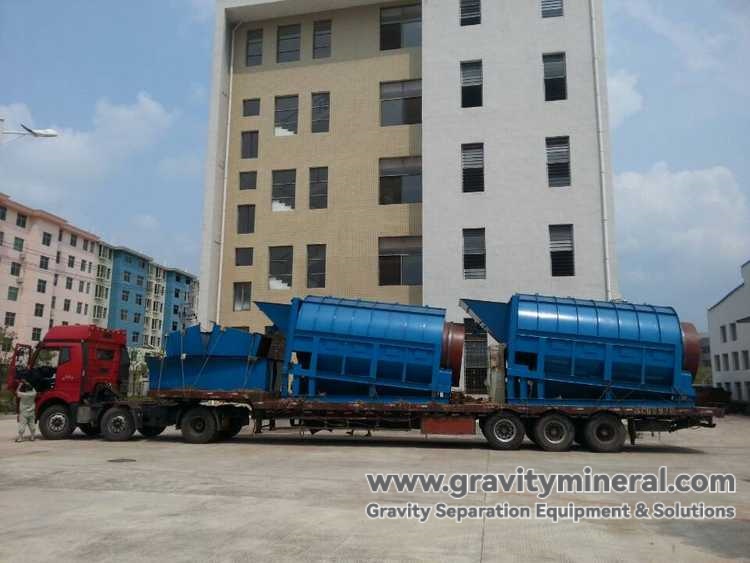
II. Option A: A Single Gravitational Separation Process Centered on Shaking Tables
Shaking tables are classic equipment for the concentration stage of gravity separation, achieving density stratification through the asymmetric reciprocating motion of the table surface. For coarse-grained interstitial gold, the separation efficiency of shaking tables is reliable; the process is short, the operational threshold is low, and operators at small-scale processing plants can become proficient after just a few days of training.
The applicability of this approach is fairly well-defined: it is suitable for plants with a daily throughput on the lower side, where coarse-grained gold dominates the ore and fine-grained gold is not the primary source of loss. While the investment in a single shaking table is not high, the total investment remains within a manageable range once feeding, classification, intermediate product return, and piping and civil engineering are fully accounted for.The real hidden costs lie in land use and labor—since shaking tables have limited processing capacity, larger-scale operations require a long row of units, which in turn increases the number of personnel needed for monitoring.
The shortcoming of the shaking table solution in improving the recovery rate of interstitial gold lies in the fine-grain fraction.Fine-grained gold settles slowly on shaking tables and is carried away by the water flow before it can be stratified. If only a single stage of shaking tables is used—without returning intermediate products or classifying by particle size—fine-grained gold will end up in the tailings after a single pass through the process, naturally preventing the recovery rate of interstitial gold from improving.The recommended improvement is to incorporate hydraulic classification, separating coarse and fine particles for separate processing—with coarse particles fed into the shaking tables and fine particles treated using other enhanced methods. Adding this supplementary configuration will increase both investment costs and operational complexity, which must be factored in during the selection process.
III. Option B: Centrifuge-Enhanced Gravity Separation Process
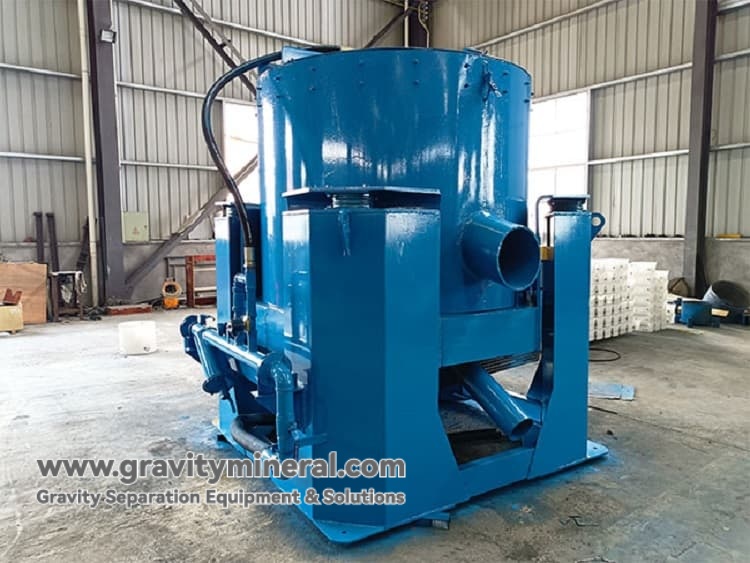
The concept behind centrifuge-enhanced gravity separation is to replace part of the gravitational settling process with a centrifugal force field, thereby opening up the recovery window for fine-grain gold. The equipment generates high centrifugal forces through high-speed rotation; fine-grain gold particles are flung toward the drum wall in the strong centrifugal field, and concentrate is periodically discharged.Compared to shaking tables, centrifuges demonstrate significantly greater capture efficiency for fine-grain interstitial gold, while coarse-grain gold can be intercepted earlier in the grinding circuit, thereby reducing over-grinding and slime formation.
A typical configuration consists of two stages: the first-stage centrifuge intercepts coarse-grained gold after the grinding circuit, with the concentrate fed to a shaking table for fine selection; the second-stage centrifuge processes the classification overflow or scavenging tailings to recover fine-grained gold. The role of the shaking table shifts from being the primary recovery unit to refining the concentrate; with this reduced load, its efficiency becomes more stable.The improvement in recovery rates for interstitial gold in this configuration is primarily reflected in a reduction of losses in the fine-grain fraction.
The investment required for the centrifuge solution is significantly higher than that of a single shaking table; unit equipment costs, backwash water consumption, and monitoring of operating parameters all represent additional costs. Its advantage lies in the balance between process stability and fine-grain recovery capacity, making it suitable for processing plants with a high proportion of fine-grain gold and a heavy circulation load in the grinding circuit.The drawback lies in operation: feed concentration, water pressure, and discharge cycles all require close monitoring; even a slight deviation in parameters can cause fluctuations in concentrate grade. Backwash water consumption is high, so on-site water treatment must keep pace. The improvement in recovery rates for interstitial gold through gravity separation comes at the cost of more precise operational requirements.
IV. Option C: Combined Gravitational Separation–Flotation Process
When interstitial gold is closely embedded with sulfides, gravity separation alone is insufficient; a combined gravity-flotation process is therefore a necessary supplement.The logic behind the combined process is stepwise recovery: the grinding circuit first feeds into gravity separation to intercept coarse-grained gold and easily liberated gold as early as possible; gravity separation tailings then enter flotation, where collectors are used to float gold-bearing sulfides, recovering gold embedded deep within the crystal interstices.
The value of this division of labor lies in each process focusing on its specific particle size range. If only gravity separation is used, the recovery rate for gold-bearing sulfides is effectively lost; if only flotation is used, coarse gold is overground in the grinding circuit, resulting in poor flotation recovery.The combined process integrates the early recovery of coarse-grained gold via gravity separation with the comprehensive recovery of fine-grained gold via flotation. By combining the recovery rate of interstitial gold from gravity separation with that of the flotation stage, the overall recovery rate is significantly improved.
The investment calculations for the combined process are the most complex. While the gravity separation section depends on the specific configuration, the flotation section requires agitation, flotation, reagent preparation, and concentrate dewatering; consequently, the total investment is significantly higher than that of a pure gravity separation route.Its applicable scenarios are also clear: when gold is tightly embedded in sulfides within the ore, the sulfur content is relatively high, or flotation tests indicate a high proportion of gold-bearing sulfides.The key to improving the recovery rate of interstitial gold in the combined process lies not in the equipment list, but in the fine-tuning of grinding fineness—if the ore is ground too coarsely in the gravity separation stage, insufficient liberation occurs during flotation; if ground too finely, coarse gold particles are overground and turned into slime. Only when the two grinding stages each cater to their respective particle size ranges can the combined process operate smoothly.
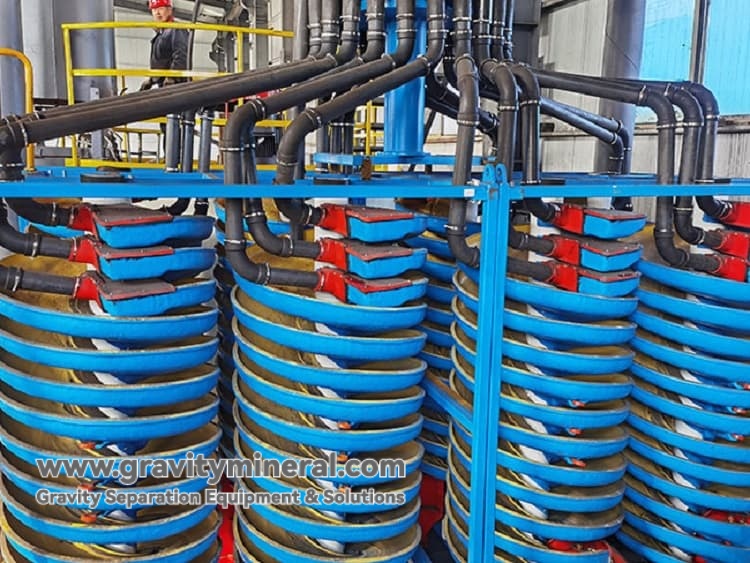
V. Multidimensional Comparison of the Three Schemes
The three intergranular gold re-selection process routes each involve trade-offs in terms of investment, recovery rate, operating costs, and operational complexity.The table below provides a level-playing-field comparison of key dimensions, enabling processing plants to identify the most suitable option based on their specific conditions. It should be noted that the table presents relative assessments; actual values for specific projects may vary significantly depending on ore properties, processing scale, and equipment configuration, and should be determined based on mineral processing tests and design specifications.
| Comparison Dimensions | Option A: Single-stage Shaking Table Re-selection | Option B: Centrifuge-Enhanced Gravity Separation | Option C: Combined Gravity Separation and Flotation |
|---|---|---|---|
| Investment Level (200 metric tons per day processing capacity) | Low | Moderate to high | Highest |
| Gold Recovery Rate from Interstitial Gold via Gravity Separation (Relative Level) | Reliable in the coarse-grain fraction; significant losses in the fine-grain fraction | Improved recovery in the fine-grain fraction; overall performance is relatively stable | Gravity separation combined with flotation as a backup yields the highest overall recovery |
| Coarse-Grain Gold Recovery | Good | Good (early interception in the grinding circuit) | Good (captured in the gravity separation section) |
| Fine-grain gold recovery | Poor | Moderate to Good | Good (flotation as a backup) |
| Operating Cost per Metric Ton of Ore | Low (primarily electricity and labor) | Moderate (relatively high water and electricity consumption) | High (reagents and electricity consumption for flotation) |
| Operational Difficulty | Low | Medium | High |
| Ore Adaptability | Narrow (primarily coarse-grained) | Medium | Wide (suitable for both coarse and fine grains) |
| Flexibility for Expansion | Poor (shaking tables require a large footprint) | Moderate | Fairly good (the flotation section is easy to expand) |
A comparison shows that while Option A saves on investment, the maximum recovery rate for interstitial gold in gravity separation is limited by the fine-grain fraction; the additional investment in Option B buys fine-grain recovery capacity and process stability; Option C requires the highest investment but addresses the embedded gold that cannot be recovered by gravity separation.None of the three options is inherently superior or inferior; the difference lies solely in how well they match the specific ore conditions.
VI. How to Select a Interstitial Gold Gravity Recovery Process: Matching the Process to Ore Conditions
The statement most likely to derail a selection meeting is, “Our budget is limited, so let\'s go with the cheapest option first.” When calculating the recovery rate for interstitial gold gravity separation, one must not focus solely on the initial investment but consider the entire lifecycle. The money saved on investment will often be paid back double in the form of lower tailings grades over the next few years.
If laboratory test results show a low proportion of fine-grain gold, coarse-grain gold is the dominant fraction, daily processing capacity is low, and on-site operating personnel are limited, Option A is a reasonable choice. By optimizing classification and ensuring proper return of the intermediate product, the recovery rate for interstitial gold can be stabilized at an acceptable level, making it a viable option for small plants.
If fine-grain gold accounts for a significant proportion, or if the grinding circuit has a heavy circulation load of coarse-grain gold, Option B is a more prudent choice.The centrifuge opens up the recovery window for fine-grain gold, while the shaking table focuses on concentrate production, keeping operational complexity manageable. The additional investment can typically be recouped within a few years based on the annual revenue generated by the improved recovery rate; the exact timeframe depends on the gold price, processing capacity, and the actual increase in recovery rate.
If the gold in the ore is tightly embedded in sulfides, the sulfur content is relatively high, or flotation tests indicate a high proportion of gold-bearing sulfides, Option C is a necessary configuration.Whether to use a shaking table or a centrifuge in the gravity separation stage depends on the proportion of fine-grained gold; the flotation stage should be designed according to conventional sulfide ore flotation practices. The combined process offers the greatest improvement in recovery rates for interstitial gold in gravity separation, provided that the grinding fineness is precisely controlled and the roles of the two grinding stages are clearly defined.
A general indicator for evaluation is the gold grade in the gravity separation tailings. If the tailings grade cannot be reduced, it indicates that fine-grain gold is being lost, and the necessary centrifuges or flotation stages must be added. Optimizing the recovery rate of interstitial gold through gravity separation essentially involves continuously narrowing the tailings grade.
VII. Key Process Considerations for Improving the Recovery Rate of Interstitial Gold
In addition to process selection, several technical details directly impact the final performance of interstitial gold recovery.
First is “more crushing, less grinding.” Interstitial gold is brittle, and over-grinding during the grinding process accelerates muddification. Once fine-grained gold becomes muddified, it is difficult to recover via both gravity separation and flotation. Reducing particle size as much as possible in the crushing stage and controlling residence time in the grinding stage are the first line of defense for maintaining interstitial gold recovery rates.
Second is early recovery. By integrating gravity separation equipment into the grinding circuit, already liberated coarse-grain gold can be captured early, preventing it from being recirculated repeatedly through the mill. This approach often contributes more directly to the recovery rate of interstitial gold than adding a subsequent concentrate recovery stage.
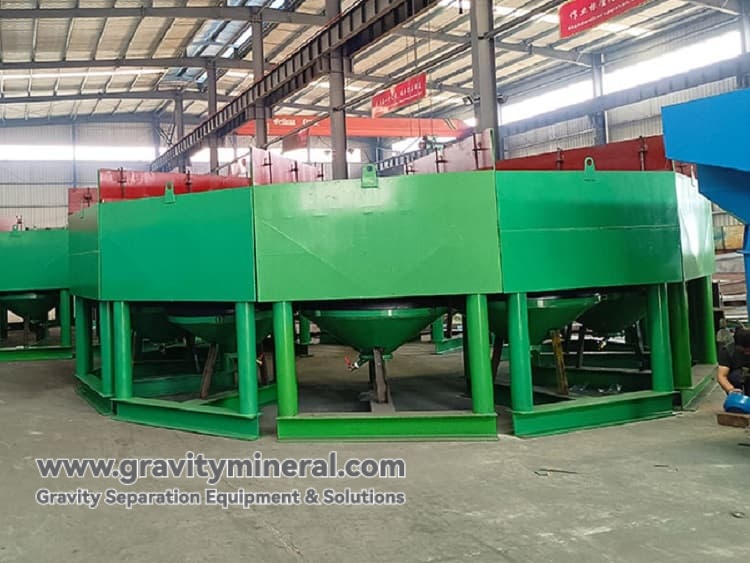
Third is particle size matching.Gravity separation equipment is highly sensitive to particle size; mixing coarse and fine particles results in poor separation efficiency. Proper classification must be performed before feeding the ore: coarse particles should be sent to jigs or shaking tables, while fine particles should be sent to centrifuges or flotation. Only when equipment in each stage operates within its optimal particle size range can the overall recovery rate of interstitial gold through gravity separation be improved.
Fourth is the closed-loop process. The return of intermediate products, the re-processing of swept concentrate, and the re-sweeping of tailings—these closed-loop designs determine how much gold circulates within the process and how much is ultimately lost. The difference in recovery rates for interstitial gold is often hidden in these closed-loop details.