







How should I set up small-scale gravity gold processing equipment for low-grade placer gold deposits?
01 What Is the Problem?
It depends on the situation: First, determine whether your mining site falls into the category of “plenty of material but low gold content.”
Why can\'t you capture the gold in the tailings, and why does the recovery rate keep stalling? Low-grade placer gold typically presents itself like this: you dig up truckload after truckload of riverbed material, and while the processing volume looks substantial, there\'s only so much gold in a metric ton of ore. Even a slight loss makes it difficult to turn a profit overall.
With low-grade placer gold deposits, the challenge isn\'t how advanced the equipment is, but rather the “thin margins”—every fraction of a percentage point in recovery rate directly affects profitability. Small mining sites often cobble together equipment haphazardly; if desliming isn\'t thorough enough at the front end or the particle size isn\'t right at the back end, the gold simply flows straight into the tailings.
If this situation drags on, even the largest ore reserves will be mined in vain. To set up a small-scale gravity gold recovery system properly, you must first identify the root of the problem.
02 Why Does This Problem Occur?
It depends on the situation: Losses in low-grade placer gold mining usually stem from three main causes.
Reason 1: Incomplete Debrudding During Ore Washing
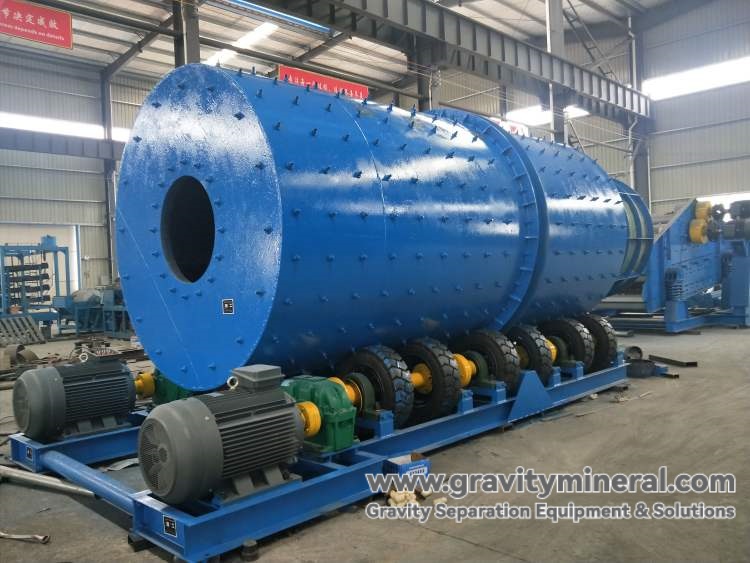
The mud content in placer gold varies widely; clumps of mud carry gold particles downstream, and no matter how hard the sluice boxes and jigs work, they can\'t retain the gold. If a cylindrical washing machine isn\'t used in the front end to break up the mud, the entire downstream process is just working for the mud slurry.
Reason 2: Lack of Segregation by Particle Size
Low-grade placer gold contains a mix of coarse and fine gold particles. If a single set of equipment covers only one particle size range, the gold at the other end of the spectrum will be lost. If coarse gold isn\'t recovered early enough and fine gold isn\'t captured at the end—with no buffer in between—losses will compound.
Reason 3: Mismatch Between Equipment and Ore Volume
A common mistake at small mining sites is “aiming too high.” If equipment is oversized, it runs below capacity, leading to inflated costs per metric ton of ore; if undersized, it clogs up as soon as operations begin and cannot operate at full capacity. With low-grade ore already yielding slim margins, even a slight misalignment in equipment sizing makes the numbers even harder to balance.
Quick Reference Chart: Problems—Causes—Solutions
| Problem Symptoms | Root Cause | Countermeasures |
|---|---|---|
| Inability to Recover Gold from Tailings | Incomplete ore washing and desliming | Upstream cylindrical ore washer; drum screening of gravel |
| Loss of Fine-Grained Gold | Lack of Coarse-Fine Segregation | Segregation by particle size; add fine-grain recovery equipment |
| Cost per metric ton of ore is too high | Mismatch between equipment capacity and ore volume | Select equipment based on actual processing capacity; don\'t go for oversized units |
03 What Is the Solution?
It depends on the situation: For small-scale gravity gold processing of low-grade placer gold, the key principles are “wash the ore first, separate coarse and fine fractions, and scale equipment to your capacity.”
First is the ore washing and screening stage. For sand gold with high clay content, use a cylindrical ore washer in the initial stage to break up clay clumps, then use a trommel screen to separate out the gravel; only the undersize material should then enter the gravity separation process. Only by thoroughly executing this stage can the subsequent gravity separation be truly efficient.
Next is the coarse-grain gravity separation stage. Coarser free gold is processed by a jig (which uses pulsating water flow to separate particles by density), allowing for early recovery and capturing large particles first. Chute-type equipment is suitable for coarse screening and initial processing, as it offers high throughput and a simple design.
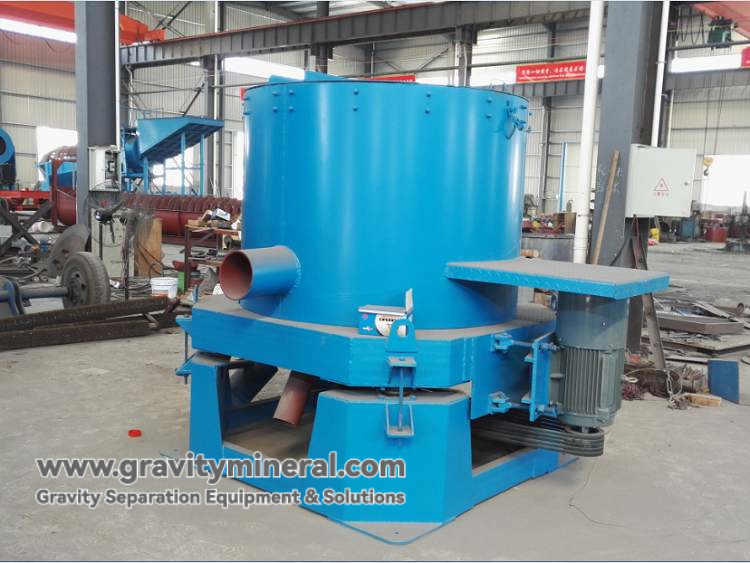
Next is the fine-grain recovery section. Medium- and fine-grain gold is processed using a 6-S shaking table for concentration, while fine and ultrafine grains are further recovered by a centrifugal concentrator. Since small mining sites have limited throughput, the feed rate for this section must be balanced with the preceding section to prevent the shaking table from becoming overloaded.
Finally, the dewatering stage. Both concentrate and tailings are dewatered; this makes the concentrate easier to transport, while the tailings are dry-discharged, effectively reducing both environmental impact and transportation costs.
Put together, this forms a small-scale gravity separation line following the sequence: “ore washing—coarse-grain gravity separation—fine-grain recovery—dewatering.” The overall framework can be based on a sand gold gravity separation production line design, scaled down according to your specific ore volume.
04 How to Implement the Plan
It depends on the situation: From prototyping to production, even small mining sites should proceed step by step—don\'t rush to equip everything at once.
Stage 1: Understand the ore characteristics. Take representative ore samples and perform a particle size analysis to determine the coarseness of the gold particles and the clay content—this forms the basis for equipment selection. Skipping this step means the rest of the process is purely a matter of luck.
Second Stage: Configure the ore washing and screening system. If the ore has a high clay content, start with a cylindrical ore washer; if there\'s a lot of gravel, use a trommel screen. This stage forms the foundation of the entire processing line—get it wrong, and the whole operation is doomed.
Stage 3: Configure the main gravity separation equipment. Determine the specifications of the jig and sluice boxes based on the ore volume. If the ore consists mainly of coarse particles, prioritize jigging; if it contains many fine particles, prioritize shaking tables and centrifuges. For small-scale lines, there\'s no need to aim for a complete set—just ensure it\'s sufficient for the task.
Stage 4: Fine-Grain Recovery. For small processing volumes where fine particles are prone to being lost, add an agitating chute or a suspended vibrating belt machine for scavenging to recover the gold that is most likely to be lost.
Stage 5: Dewatering and Transportation. Concentrates must be dewatered via thickening and filter press to keep transportation costs under control. For small mining operations, profitability is often compromised by these seemingly insignificant details.
Schematic of Stage Configuration for Small-Scale Gravity Gold Processing Equipment
| Processing Stage | Main Equipment | Function |
|---|---|---|
| Ore Washing and Screening | Cylindrical Ore Washer, Trommel Screen | Break up mud clumps, screen gravel |
| Coarse-Grain Gravity Separation | Jig, chute | Early Recovery of Coarse-Grain Free Gold |
| Fine-Grain Concentration | 6-S shaking table | Medium- and Fine-Grain Gold Concentration |
| Fine-Grain Recovery | Centrifugal separators, carpet machines | Fine and Ultrafine Gold Recovery |
| Dewatering | Thickeners, Filter Presses | Concentrate moisture control, dry tailings discharge |
05 How effective is it?
It depends on the situation: After streamlining the process according to the “de-silting—segmentation—blending” principle, the results depend on the properties of the ore.
For low-grade placer gold, once the ore washing process is thoroughly optimized and the coarse-to-fine classification stages are properly configured, the overall recovery rate typically improves significantly, increasing by 6–9 percentage points (depending on the ore\'s properties); the gold grade in the tailings decreases accordingly, while the concentrate grade remains stable.
When investing in this area, the advantage of small-scale mining operations is their modest size, which allows for a phased approach. Start with ore washing, screening, and coarse-grain gravity separation to lay a solid foundation. Once recovery rates show tangible results, add a fine-grain recovery stage. This ensures funds are spent wisely, and the pressure to recoup the investment is reduced.
Actual results depend on three factors: whether the desliming process is thorough enough, whether the process stages are properly configured, and whether the equipment is appropriately matched to the ore volume. If these aspects are properly addressed, even low-grade placer gold deposits will not be mined in vain.
One more point should not be overlooked: for small mining sites with large volumes of tailings, the dewatering stage must incorporate a high-efficiency thickener combined with a filter press for dry discharge. Only then can transportation and environmental compliance be effectively managed. Once these processes are optimized, low-grade placer gold mining can transition from “low profit margins” to “consistent profitability.”
06 Consultation and Cooperation
It depends on the situation: Send us your ore data, and we\'ll first assess the ore characteristics and process capacity before discussing equipment and configuration.
When dealing with low-grade placer gold deposits, the key to configuring small-scale gravity gold processing equipment lies in ensuring the ore characteristics align with the project scale. If you have a low-grade placer gold deposit ready for development, or if you wish to improve the recovery rate of an existing small-scale production line, please provide us with data on grade, particle size distribution, clay content, and target processing capacity.Based on this information, we\'ll analyze process matching and equipment selection. If necessary, we\'ll request samples to conduct mineral processing tests and use the resulting data to determine the optimal configuration for your small-scale gravity gold processing equipment. Only when the process and ore volume are properly aligned can we reliably ensure high recovery rates and effective cost control.