







How to Choose Gold Concentration Equipment? Mineral Processing Equipment Manufacturers Provide Customized Complete Production Line Solutions
How to select gold gravity separation equipment is the first question many mining companies must address when launching a project. While the equipment may be readily available, it\'s often not until the plant is up and running that one can determine whether it meets the required performance metrics.This article focuses on the selection logic, process configuration, and overall production line solutions for gold heavy media separation equipment. It clearly explains what mineral processing equipment manufacturers can provide and what mines should prioritize, serving as a reference for those currently undertaking gold heavy media separation projects.
01 How to Select Gold Gravity Separation Equipment: Assess the Ore Before Considering the Equipment
When selecting gold gravity separation equipment, the first step is not to consult the equipment catalog, but to examine the ore. Gold has a much higher density than common gangue minerals, and gravity separation exploits this difference by allowing the heavier particles to settle while the lighter ones are washed away.The principle is similar to washing rice: sand settles to the bottom, while rice grains float away with a stir. However, the particle size, degree of liberation, and clay content of gold vary significantly across different mines, so equipment configurations naturally differ.
In placer gold deposits, the gold is generally already liberated and has a coarser grain size; a combination of sluices and a centrifuge offers high processing capacity at a relatively low cost.In rock gold deposits, the gold is embedded in the rock and must first be crushed and ground to achieve single-particle liberation. Gold gravity separation equipment is generally incorporated into the grinding circuit to capture coarse gold particles and prevent their loss due to over-grinding. For oxidized ores with high clay content, feeding them directly into a shaking table can easily cause clogging; therefore, de-silting must be performed first, or equipment with strong adaptability to clay-rich conditions must be selected.
Before selecting equipment, at least three factors must be clarified: the approximate coarseness of the gold particles, the degree of individual liberation, and the clay content of the ore. Without clarity on these three points, there is no basis for selecting any equipment.When mineral processing equipment manufacturers get involved, they typically ask for these parameters first and then provide preliminary guidance based on historical experience with similar ore types; if representative ore samples are available, conducting mineral processing tests to obtain data provides a solid foundation for process design.
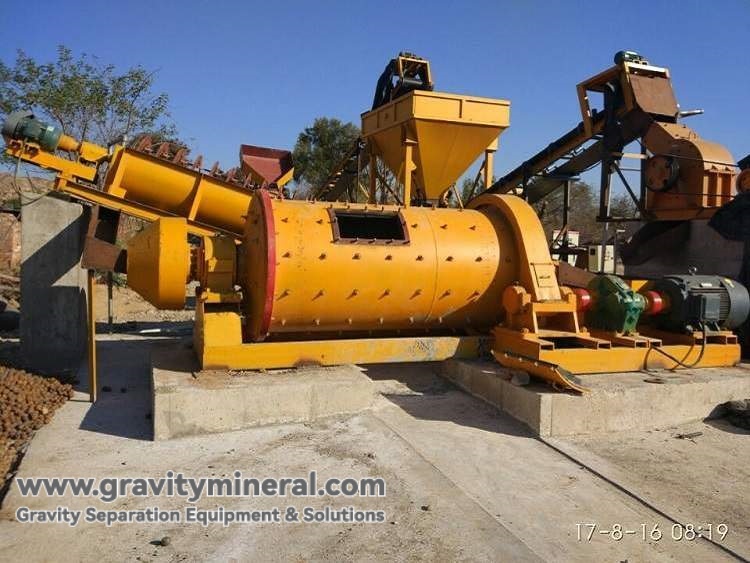
02 Main Types of Gold Gravity Separation Equipment and Their Applications
Gold gravity separation equipment is categorized by process stage, with each component serving a specific role; incorrect placement in any stage will compromise the efficiency of the entire line.
are the mainstay of the roughing stage, suitable for processing coarse-grained materials with high throughput. Sawtooth-wave jigs feature a more optimal water flow pulsation curve, offering greater adaptability to a wide range of particle sizes. They are commonly used as the first stage in the processing of placer gold, placer tin, chromite, and barite.
is the core of the fine-selection stage. It offers high sorting precision and can produce qualified concentrate in a single pass, making it suitable for fine-grained gold, tungsten, tin, tantalum, and niobium. The 6-S shaking table is the most widely used, while multi-deck shaking tables can increase throughput while maintaining the same footprint.
With a simple structure and no power consumption, spiral chutes are suitable for materials with high throughput and low grade, offering high efficiency in rough selection and tailings disposal. They are commonly used for the rough selection of beach sand deposits, titanium-zirconium sand deposits, and chromite.
Specializing in the recovery of ultrafine heavy minerals, these machines use centrifugal force to enhance the separation of fine-silt-grade gold that conventional equipment cannot capture, serving as the final step in the “complete recovery” process.
Such as pulsating chutes and gold-binding chutes, these feature simple structures and easy maintenance, making them suitable for placer gold processing lines—especially for riverbank or ancient riverbed placer gold with high throughput and fine gold particles.
None of these gold gravity separation devices is a one-size-fits-all solution; the key lies in combining them according to ore particle size and process stages. Roughing increases throughput, scavenging completes the process, and concentrating improves grade. Determining the optimal number of stages and how to integrate the equipment is precisely what an integrated production line design aims to address.
03 The Complete Process Chain of a Gold Gravity Separation Production Line
A gold gravity separation production line is not just about a single piece of equipment; it involves the entire chain from “feed—crushing—screening—washing—gravity separation—dewatering—tailings.”
- Feeding Section
The raw ore must be fed into the system uniformly and steadily. Ore with high clay content or that is sticky and wet is prone to clogging; trough feeders provide more stable performance under such conditions.
- Crushing and Screening Section
Break large ore chunks down to the appropriate particle size and screen out the oversize material to prevent qualified particle sizes from idling in the crusher. If this step is not controlled properly, no amount of effort in the subsequent gravity separation stage can make up for it.
- Grinding and Classification Section
This stage determines whether the gold will be recovered. If the grinding is too coarse, the gold remains trapped in the rock; if it is too fine, the ore is prone to sludging.The industry adages “crush more, grind less” and “recover early when possible” refer to placing gravity separation equipment earlier in the grinding circuit to extract already liberated coarse-grain gold first. For brittle minerals such as tungsten and tin, rod mills are more effective than ball mills at preventing over-grinding.
- Gravity Separation Section
This is the core. Rough selection quickly recovers concentrate; scavenging recovery recovers a second pass to reduce tailings; and concentrate re-selection further improves grade. The number of stages and equipment integration must be calculated based on the properties of the ore.
- Dehydration Section
Reduces the moisture content of the concentrate to facilitate transportation; dry tailings disposal is also a strict environmental compliance requirement.
- Tailings Section
Depending on the situation, this stage may involve flotation or leaching to recover fine-grain gold—the process isn\'t complete once gravity separation is finished.
Throughout the entire process chain, particle size, water volume, and processing capacity must be properly matched; a disconnect in any one link will affect performance metrics. This is precisely where the value lies for mineral processing equipment manufacturers in providing comprehensive production line solutions—they take responsibility for the material flow across the entire line, rather than simply selling individual machines and calling it a day.
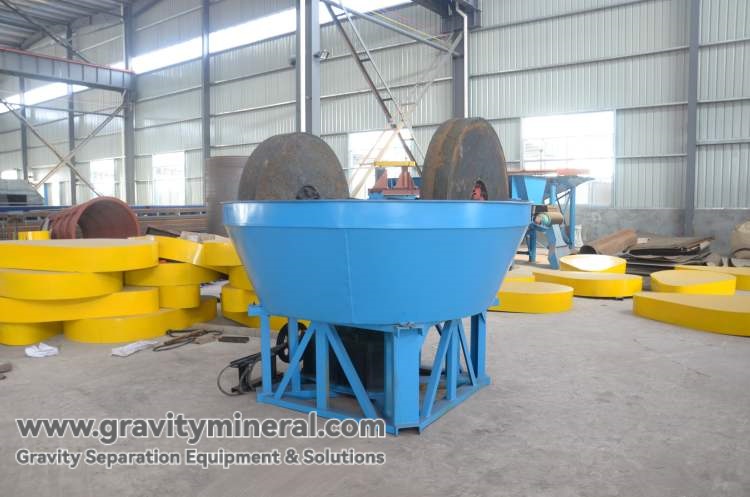
04 The Difference Between Piecing Together Individual Machines and an Integrated Production Line Solution
A common practice in the industry is to source components separately: one supplier for crushers, another for shaking tables, yet another for screening, and a separate contractor for installation. While each piece of equipment may seem adequate on its own, problems arise when they\'re connected.
Incompatible interfaces are the primary issue.If the throughput of the jig does not match that of the shaking table, the intermediate stages will either experience material blockages or run idle. Particle size coordination is even more critical; it is not uncommon for coarse particles to be recovered while fine particles are entirely lost as tailings. Once the system fails to meet performance standards, equipment manufacturers and construction crews tend to shift blame onto each other, resulting in blurred lines of responsibility.
The logic behind an integrated production line solution is different. Equipment manufacturing, process design, and on-site commissioning are managed as a closed-loop process by a single team, with the same party responsible for ensuring interface compatibility and production capacity alignment.Design is not outsourced, ensuring that drawings match the equipment—the stroke and frequency of the jig are determined based on test data, the slope of the shaking table is set according to feed particle size, and the pitch of the spiral chute is selected based on differences in mineral density, thereby reducing the disconnect caused by “design drawings not matching equipment dimensions.”
For mining operations, this model saves more than just coordination costs. In medium- to large-scale projects, if design institutes, equipment manufacturers, and construction teams are engaged separately, design fees alone represent a significant expense, and the losses from rework caused by misalignment between design and equipment are even harder to estimate. An integrated solution consolidates this responsibility, resulting in greater certainty in project execution.
05 Common Mistakes in Selecting Gold Concentration Equipment
The more expensive the equipment, the better. While high-priced equipment may indeed perform well, if it is not matched to the ore\'s particle size, it will not perform to its full potential no matter the cost. Equipment selection should focus on compatibility, not the price tag.
Focusing solely on the recovery rates advertised by manufacturers. Recovery rate metrics are often measured under specific conditions; actual results can vary significantly depending on feed characteristics, water quality, and operational proficiency. A responsible mineral processing equipment manufacturer will not promise absolute figures divorced from the specific ore conditions but will clearly explain what kind of process can be designed for those specific ore conditions.Asking about the actual operating conditions at similar mines is more useful than looking at data in brochures.
Don\'t neglect the tailings after gravity separation is complete. The loss of fine-grain gold in tailings is a common occurrence, and re-processing the tailings often yields additional recovery potential; therefore, interfaces should be incorporated into the process design from the outset.
Building a plant blindly without test data. The selection of gold gravity separation equipment relies heavily on three parameters: density difference, particle size distribution, and clay content. Selecting equipment without representative ore sample data carries significant risk. Conducting mineral processing tests before finalizing the process is a fundamental step in mitigating investment risks.
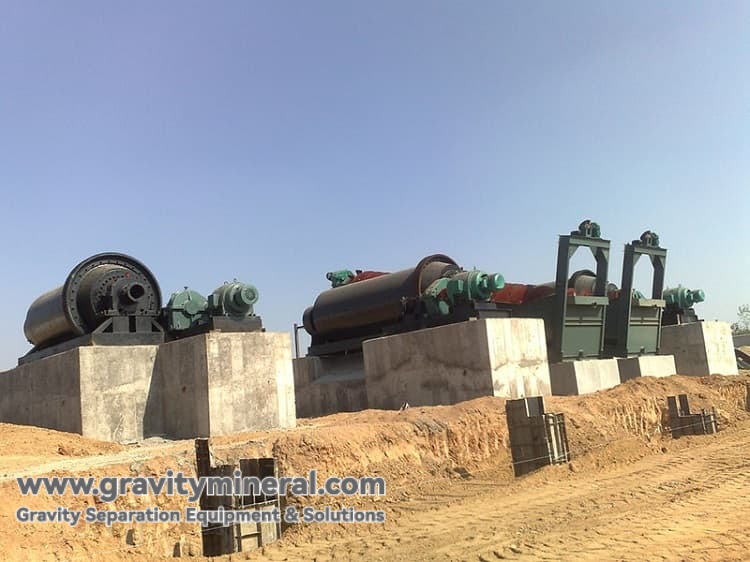
06 Which ore types are suitable for gold gravity separation, and how should combined processes be configured?
Gold gravity separation equipment is not limited to gold mines. As a low-cost pre-concentration method with minimal environmental impact, gravity separation has a place in the processing of many mineral types.
For rock gold ores, gravity separation is used early in the grinding circuit to recover coarse-grained gold, with the tailings subsequently processed via flotation or leaching as a backup.Primary tin ores undergo multi-stage gravity separation, with grinding and separation conducted in separate stages, followed by desulfurization and impurity removal from the rough and concentrate. Black tungsten ore, which is extremely dense, brittle, and friable, is processed using multi-stage jigging combined with shaking tables, with the fine slurry fraction recovered via centrifuges.For chromite and ilmenite, gravity separation is used to concentrate the ore by discarding the tailings, followed by magnetic separation for purification. Zircon-ilmenite ore follows a typical “gravity separation + magnetic separation + electrostatic separation” combined process, with gravity separation for pre-concentration, magnetic separation for grouping, and electrostatic separation for purification—all three stages are indispensable.There are also corresponding gravity separation solutions for placer gold, placer tin, beach sand deposits, tantalum-niobium sand deposits, barite, antimony ores, as well as tailings reprocessing and solid waste recycling.
For ores that cannot be processed by gravity separation alone, combined processes are used to supplement the process. If pure gravity separation is sufficient, no additional steps are needed; magnetic and electrostatic separation are employed only when density separation is insufficient, and flotation is used as a backup for extremely fine particles or associated sulfide ores. This selection logic serves as a benchmark for determining whether a mineral processing equipment manufacturer truly understands the process.
07 What Mineral Processing Equipment Manufacturers Can Provide: From Selection to Commissioning
A comprehensive, integrated production line solution typically covers several stages.
Understand the ore type, processing capacity, feed particle size, and site conditions. If necessary, send samples for beneficiation testing to derive the process flow based on data rather than making decisions based solely on experience.
We determine the process flow, prepare equipment selection proposals and quotations, and clearly present the process, equipment, and budget in a single document. Process flow diagrams, equipment lists, site layout plans, and civil engineering requirement diagrams are all prepared by the same team.
Production is scheduled at our in-house manufacturing facility, ensuring controllable delivery times and quality; custom solutions are available for special operating conditions. Core and auxiliary equipment come from the same system, ensuring seamless integration.
Engineers provide on-site guidance for equipment positioning and piping connections, lead individual unit commissioning and integrated trial runs with actual feedstock, and train operators until the production line runs smoothly and performance metrics stabilize. General installation workers are organized locally by the mine, with engineers stationed on-site to provide technical guidance—ensuring both project quality and control over labor costs.
We assume responsibility for equipment quality during the warranty period and provide long-term support—including spare parts supply, technical consultation, and process optimization—after the warranty expires.
This process can be implemented on a point-by-point basis or entrusted entirely to the manufacturer. Whether you choose to purchase only the equipment, commission only the design drawings, or hire an engineer solely for commissioning—all options are available; alternatively, full-process collaboration is also possible for building a line from scratch or expanding production capacity as a whole. We adapt to your project timeline and funding arrangements without imposing any mandatory bundling.
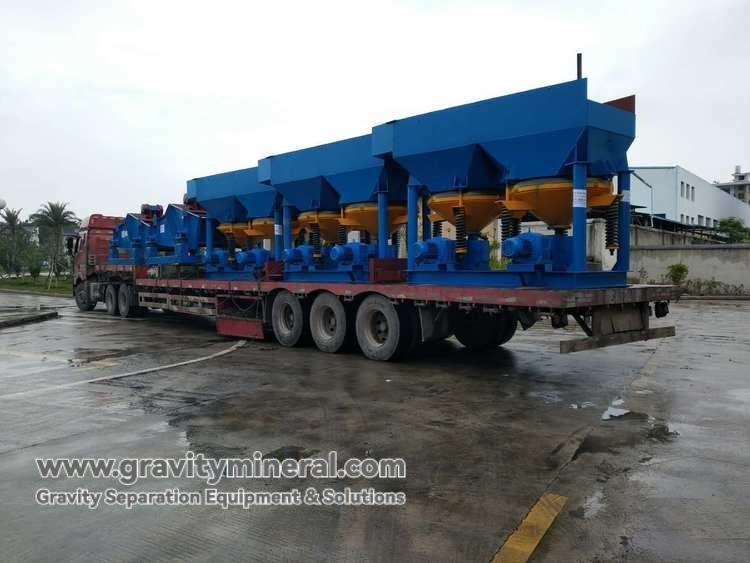
08 How to Choose Gold Concentration Equipment: Keep These Points in Mind
Let\'s return to the original question. How to select gold heavy media separation equipment? The answer can be summarized in a few straightforward points.
First, thoroughly understand the properties of the ore. If you\'re unclear about the three key factors—particle size, liberation degree, and clay content—don\'t rush to select equipment. Match equipment to specific processing stages: roughing, scavenging, and concentrating each have their own roles; don\'t expect a single piece of equipment to handle everything.A cheap single machine doesn\'t mean the entire line will be cost-effective; interface compatibility and production capacity alignment account for the bulk of hidden costs. If possible, prioritize comprehensive production line solutions provided by mineral processing equipment manufacturers, ensuring that equipment, design, and commissioning are managed by a single team in a closed-loop process, with no gaps in accountability.Take manufacturers\' promises with a grain of salt; be wary of those who discuss recovery rates without considering the specific characteristics of your ore.
Ultimately, choosing gold and heavy-metal separation equipment isn\'t about the spec sheets—it\'s about the ore itself and the compatibility of the entire production line. Only by thoroughly understanding the ore and optimizing the entire line can your investment in gold and heavy-metal separation equipment yield tangible results, and only then will the value of a comprehensive production line solution truly be realized.