







Is the gravity concentration equipment suitable for coarse-grained or fine-grained gold? Mineral Processing Plan
Can\'t Boost Recovery Rates? Don\'t Replace Your Equipment Just Yet—First,
Determine Whether Your Gold Is Coarse-Grained or Fine-Grained
Gravity concentration isn\'t just “one piece of equipment,” but a series of units working in sequence based on particle size. Assign one unit each for coarse, medium, fine, and micro particles, so that each piece of equipment does only what it does best.
What\'s the problem?
🔀 It depends on the situation: First, determine whether the gold in your ore is coarse-grained, fine-grained, or a mixture of bothMany people assume that buying a single gravity concentration unit will recover all the gold. The result is that after purchasing the equipment, recovery rates just won\'t improve—sometimes coarse-grained gold is missed, and other times fine-grained gold slips through.
⚠️ Typical Scenario ①
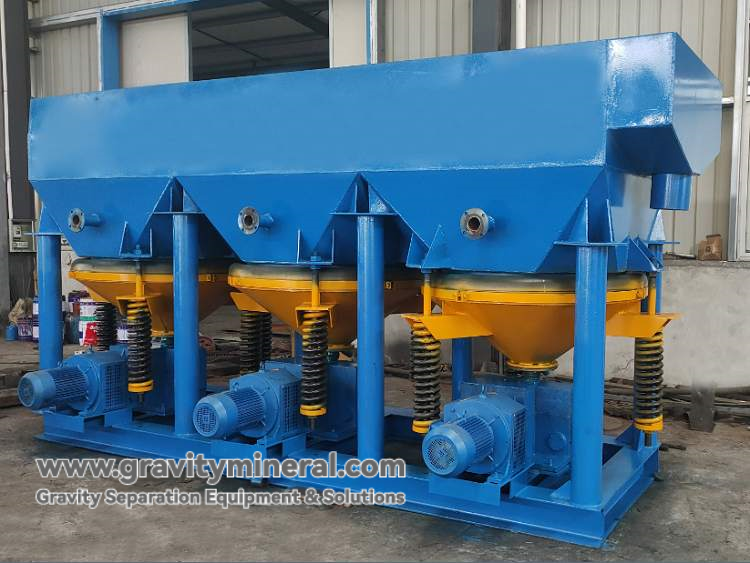
A jig (which uses pulsating water flow to separate particles by density) does a good job of recovering coarse-grained gold, but fine-grained gold continues to escape into the tailings.
⚠️ Typical Scenario ②
A centrifuge is designed to recover fine-grain gold, but the coarse-grain gold has already settled to the bottom in the preceding stage.
The equipment wasn\'t chosen incorrectly; the problem lies in the mismatched particle sizes.
Why Does This Problem Occur?
🔀 It depends on the situation: The root cause usually lies not in the equipment, but in the assessment of the gold particle size distributionLack of understanding of the particle size distribution
Without conducting ore sample analysis to determine the proportions of coarse-grained free gold and fine-grained gold in the ore, equipment is selected based solely on intuition. When the purchased equipment is designed for the wrong particle size, it naturally fails to recover the gold.
Uneven particle size distribution
In some ores, coarse-grained gold makes up the majority, while in others, fine and ultrafine-grained gold predominates. Since a single set of equipment covers only one particle size range, the gold at the other end of the spectrum is simply lost.
Grinding disrupts the particle size distribution
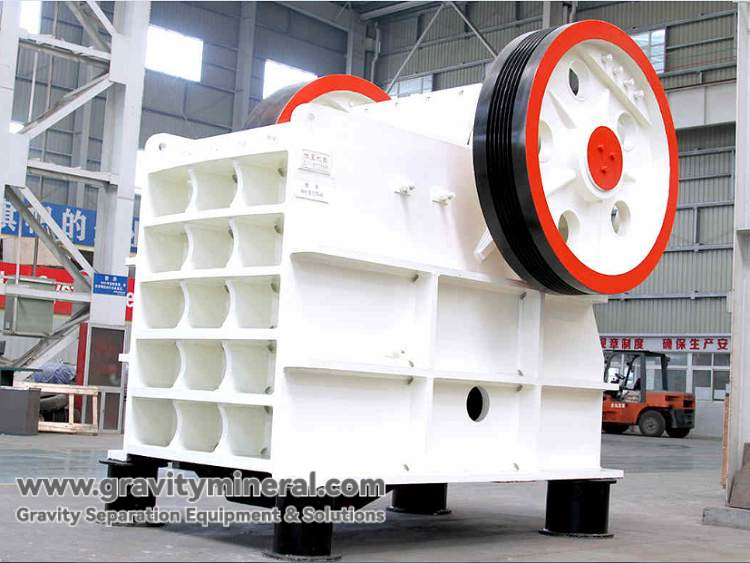
If the grinding is too coarse or too fine, it can alter the form of gold that should be in the coarse fraction. The classification efficiency of a ball mill paired with a spiral classifier—which separates by particle size and returns coarse particles for regrinding—directly determines whether the particle size distribution is uniform and whether gravity separation can effectively capture the gold it\'s meant to recover.
To be honest, in most cases where “recovery rates won\'t go up” that I\'ve seen, it\'s not because the equipment is inadequate—it\'s because the particle size control hasn\'t been managed properly.
What is the solution?
🔀 It depends on the situation: Configure equipment in stages based on particle size, so that each stage is responsible only for the particle size range it handles bestGravity concentration equipment isn\'t a single unit, but rather a combination that forms a “particle size relay.” Handle the coarse particles with the equipment best suited for them, the fine particles with another unit, and pass the ultrafine particles on to the next stage.
Sawtooth Jig
Suitable for recovering coarser free gold; it features high throughput and early recovery, making it ideal for integration into the grinding circuit to intercept coarse particles early on.
View Equipment →6-S Shaking Table
A concentrating machine that utilizes the oscillation of the table surface and water flow; suitable for concentrating medium- and fine-sized particles, and capable of further refining concentrate produced by roughing.
View Equipment →Centrifugal Mineral Separator
Utilizes centrifugal force to enhance density separation; specifically designed to recover fine-grain free gold, serving as a critical step in fine-grain recovery.
View Equipment →Agitated Chute · Suspended Vibrating Belt
Utilizes vibration and the belt surface to trap particles, making it suitable for the scavenging and recovery of ultrafine gold.
The core of this solution can be summed up in one sentence:
First, determine the particle size distribution; then, configure the system in stages—one unit each for coarse, medium, fine, and ultra-fine particles—so that each piece of equipment operates exclusively within its optimal size range.
Changing your approach is better than changing equipment—first determine the particle size, then decide which unit to use.
| Ore Type | Particle Size Characteristics | Gravity Concentration Solutions |
|---|---|---|
| Predominantly coarse-grained free gold | High proportion of coarse-grained gold | Jig + shaking table, early withdrawal in the grinding circuit |
| Mixture of coarse and fine particles | Separation of coarse and fine particles | Jig for coarse recovery + centrifuge/chute for fine recovery |
| Predominantly fine-grained | High proportion of free gold in fine particles | Centrifugal concentrator + agitated chute + blanket machine |
| Predominantly bound gold | Gold embedded in sulfide ore | Gravity separation starts by discarding the tailings; fine-grained material is sent to flotation or cyanidation |
How to Implement the Plan
🔀 It depends on the situation: From initial assessment to production line launch, make sure to follow these steps clearly before proceeding- 1
Conduct a particle size analysis
Take representative ore samples to determine the proportions of coarse, fine, and ultrafine particles—this information serves as the basis for equipment selection.
- 2
Determine the Stage Configuration
Based on the particle size distribution, determine which stage will be the primary stage and which will be the supplementary stage. If coarse particles predominate, the primary equipment should consist of jigs and shaking tables; if fine particles predominate, the focus should be on centrifuges and chutes. Refer to the stage-by-stage approach outlined in the rock gold gravity separation process scheme.
- 3
Determine the Diversion Points
If coarse-grain gold constitutes a high proportion, place the diversion point earlier in the circuit and integrate it into the grinding circuit for early recovery; if fine-grain gold predominates, move the diversion point further downstream and arrange multiple stages in series.
- 4
Pilot Testing Before Scaling Up
First, conduct laboratory or semi-industrial trials to verify recovery rates; once the data is stable, scale up to the entire production line. If alluvial gold is the primary ore type, adjust the ore washing and screening stages by referencing the production line design for alluvial gold gravity separation.
- 5
Capturing Fine-Grained Gold
No matter how high the recovery rate from gravity separation, ultrafine particles may still slip through the cracks. Connecting a flotation or cyanidation process downstream ensures that fine-grain gold is thoroughly recovered, thereby completing the closed-loop process.
How Effective Is It?
🔀 It depends on the situation: After segmenting the process by particle size, the increase in recovery rate depends on the properties of the oreActual results also depend on whether grinding and classification are fine enough and whether the tailings are adequately captured in the downstream stage. When the equipment is properly matched to the particle size, the gold grade in the tailings drops significantly, and the concentrate grade remains stable.
Whether the problem can be completely resolved depends on three factors: the accuracy of the particle size assessment, the correctness of the multistage configuration, and whether the downstream stage effectively captures the gold.
📌 Additional Notes
🔀 Case-by-case analysis: This article focuses on rock gold. For placer gold, since the particles are already individually liberated and the clay content fluctuates significantly, the primary process typically involves ore washing—jigging—shaking tables—centrifugation; however, the principles of particle size classification still apply.
Consulting and Partnerships
🔀 Case-by-case approach: Send us your ore data so we can first conduct a particle size analysis, then discuss the optimal configuration.
If you\'re unsure whether your ore is predominantly coarse-grained or fine-grained, simply send us the grade, particle size, gold occurrence, and processing scale. If verification is needed, send samples for mineral processing tests; use particle size distribution data to determine equipment configuration, rather than purchasing equipment based on guesswork.
We handle both process design and equipment manufacturing, ensuring a seamless chain of responsibility.