







Is the recovery efficiency of gold ore low? This gravity separation process significantly improves recovery rates.
In actual production, the gravity separation of raw gold ore is often treated as a mere “formality.”
The shaking tables are spinning, the centrifuges are humming, and material is indeed coming out of the concentrate discharge. But when a process audit is conducted, it becomes clear that gravity separation contributes little to the recovery rate—more coarse-grain gold is lost in the tailings than fine-grain gold. Where does the problem lie?
It\'s not that the gravity separation method itself is flawed. When it comes to recovering coarse-grain gold, gravity separation outperforms both flotation and leaching. The real culprits are the invisible gold deposits in the grinding circuit, incorrectly set discharge cycles on the centrifuges, and the fact that particles that should be recovered at the ball mill discharge end never even make it to the gravity separation equipment.Low efficiency in the gravity separation of gold ore often stems from the process design rather than the equipment specifications.
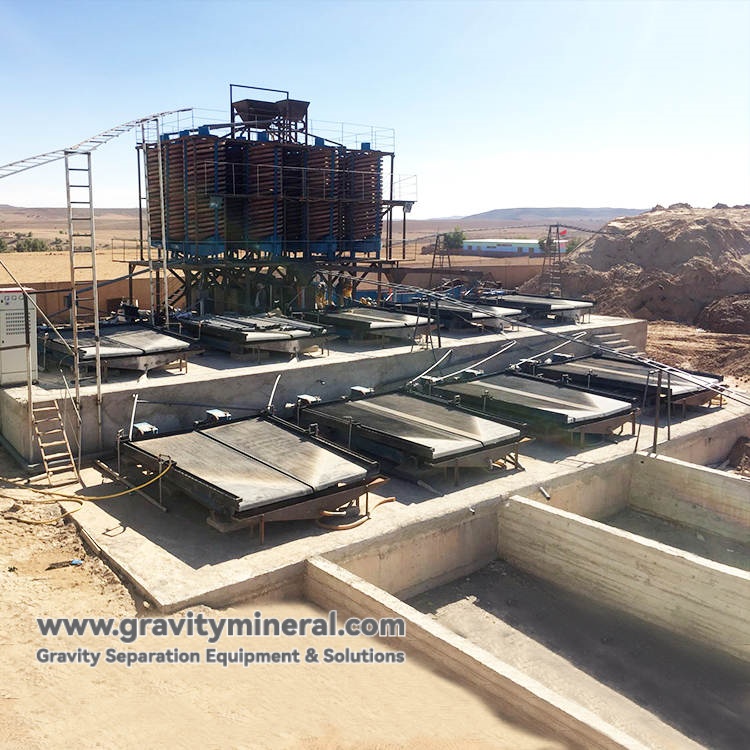
What Kind of Gold Is Actually Recovered in Raw Gold Ore Gravity Separation?
First, let\'s clarify a premise: gravity separation is not a panacea; it only excels in the specific stage it is designed for.
Based on grain size distribution, if coarse and medium-sized gold particles in gold ore can be liberated during the grinding process, gravity separation can capture them.As for fine-grained and ultrafine gold, gravity separation is largely ineffective—that is the job of flotation or leaching. The purpose of the gold ore gravity separation process is to “recover as early as possible” within the grinding circuit, extracting coarse free gold in advance to prevent overgrinding and slime formation.
A typical phenomenon can be observed in process evaluations.In the feed to the gravity separation equipment, the proportion of the fine-grain fraction is relatively high, while the proportion of the coarse-grain fraction is actually quite low. This indicates that some of the coarse-grain gold in the grinding product that is recoverable by gravity separation has already “disappeared” before entering the gravity separation equipment. Where has it gone? Inside the ball mill shell, at the bottom of the pump sump, and in the return pipeline of the hydrocyclone\'s sand discharge.
Gold accumulation in ball mills and pump tanks is one of the primary factors preventing high recovery rates in the gravity separation of gold ore. This gold circulates within the system but never enters the effective separation zone of the gravity separation equipment.No matter how high the centrifugal force is set or how new the equipment is, it cannot be captured. Therefore, to address the low efficiency of gold ore gravity separation, the first step must be process diagnostics, not equipment selection.
The core logic of this gravity separation process: early recovery in coarse grinding, closed-circuit recirculation, and parameter matching
Breaking down the gold ore gravity separation process, its core logic can be summarized in three points.
“Coarse grinding and early recovery” refers to removing liberated coarse-grain gold from the grinding circuit as early as possible. Once gold spends a few extra revolutions in the ball mill, it is either ground too fine to retain its gravity recovery value or becomes trapped in dead zones of the pump sump and begins to accumulate.Feeding the discharge from the first-stage grinding directly into the gravity separation equipment results in a significantly higher recovery rate for coarse gold than feeding it after classification by a hydrocyclone.
Closed-circuit recirculation addresses the “overlooked portion.” Gravitational separation tailings are fed into a hydrocyclone for classification; the underflow is returned to the second-stage grinding circuit, while the overflow proceeds to flotation. This configuration itself is not novel; the key lies in the direction of the underflow recirculation: it is returned to the feed of the first-stage gravity separation circuit, rather than directly back to the ball mill.The coarse, intergrown gold particles entrained in the underflow are thus given another opportunity to be liberated and captured by the gravity separation process.
Parameter matching is the aspect most easily overlooked. The enrichment time, discharge interval, and fluidization water pressure of the Nelson concentrator are three parameters that must be finely tuned to work in tandem.A common issue encountered in the field is that discharge occurs too frequently; ore is discharged before the fluidization water pressure has stabilized, resulting in an uncompacted bed layer and the loss of fine-grain gold through the backwash water. By appropriately extending the enrichment time and waiting for the pressure to stabilize before discharging, the recovery rate and grade of the gravity separation concentrate will improve—even with the same equipment and the same ore.
These three points are not isolated technical details, but rather represent the overarching philosophy of a gravity separation process: ensuring that particles intended for gravity separation actually enter the process, and that particles entering the process are effectively separated.
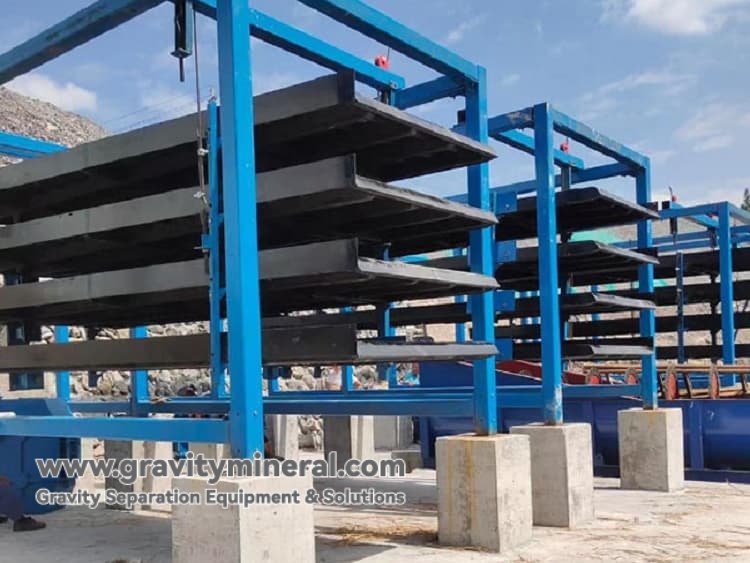
Gold Ore Gravity Separation Process Flow: A Step-by-Step Explanation
Step 1: Discharge from the first-stage grinding circuit goes directly to gravity separation
The discharge from the grid-type ball mill is screened, and the undersize is fed directly into the Nelson concentrator. The oversize material is sent to a spiral classifier; the tailings are returned to the grinding circuit, while the overflow also enters the gravity separation process. The core of this step is to shorten the residence time of coarse-grained gold in the process, which is the focal point of the “early recovery” principle in the gravity separation process for gold ore.
Step 2: Nelson Concentrate Feeds into Shaking Tables for Enrichment
The Nelson concentrator produces a coarse concentrate, which is fed into a 6-S shaking table for selective concentration to obtain the final gravity concentration.The middlings from the shaking table are returned to the Nelson feeder, while the tailings are sent to flotation or leaching. The stroke and frequency of the shaking table must be adjusted according to particle size: a long stroke and low frequency are used for the coarse sand bed, while the opposite applies to the fine sand bed. This step determines the final grade of the gravity concentration.
Step 3: Classification of Nelson Tailings; Closed-Circuit Recirculation of Settled Sand
The Nelson tailings are fed into a hydrocyclone. The underflow is sent to the secondary grinding stage; once ground to the required fineness, it is returned to the feed of the primary gravity separation. The overflow is sent to flotation. This closed-circuit process is a step in the gold ore gravity separation process that is often omitted but has a significant impact on recovery rates.
Step 4: Flotation Recovery of Fine-Grained Gold
In the flotation section processing the gravity separation tailings, the feed rate is reduced by the amount of material previously removed during gravity separation, resulting in lower reagent consumption. A common configuration for combined gravity-flotation processing of gold-bearing ore involves early recovery of coarse-grained gold via gravity separation, with fine-grained gold recovered as a backup via flotation.
Key Equipment and Parameters: Don\'t Blame the Mineral Processor
| Process Stage | Equipment/Parameters | Recommendations | Function |
|---|---|---|---|
| Grinding | Grate-type ball mill discharge particle size | Control the sieve-pass size to prevent over-grinding | Expose coarse-grained gold as early as possible |
| Gravity Separation | Nielsen Concentration Time | Extend appropriately until the bed is compacted | to minimize the loss of fine-grain gold with backwash water |
| Gravity Separation | Fluidization water pressure | Wait until the fluidization water pressure reaches a stable value before discharging the ore | Ensure the bed remains in a state suitable for separation |
| Gravity Separation | Gravity G-value | Set according to the density difference of the ore | Thorough separation of light and heavy minerals |
| Enrichment | Shaking Table Stroke (Fine Sand Bed Surface) | Short stroke, high stroke frequency | Tailored to the stratification requirements of fine-grained material |
| Classification | Cyclone Sand Recirculation Point | Returns feed to the first-stage gravity separation | Re-liberation and recovery of intergrown gold |
| Flotation | Concentration of tailings fed to the gravity separation stage | Appropriately increased | Coarse particles have been removed by gravity separation |
The logic behind this configuration is straightforward: ensure that the gravity separation process performs its intended function effectively, preventing coarse-grain gold from circulating idly through the system. The success or failure of a gravity separation process for gold ore often hinges on these specific parameter details.
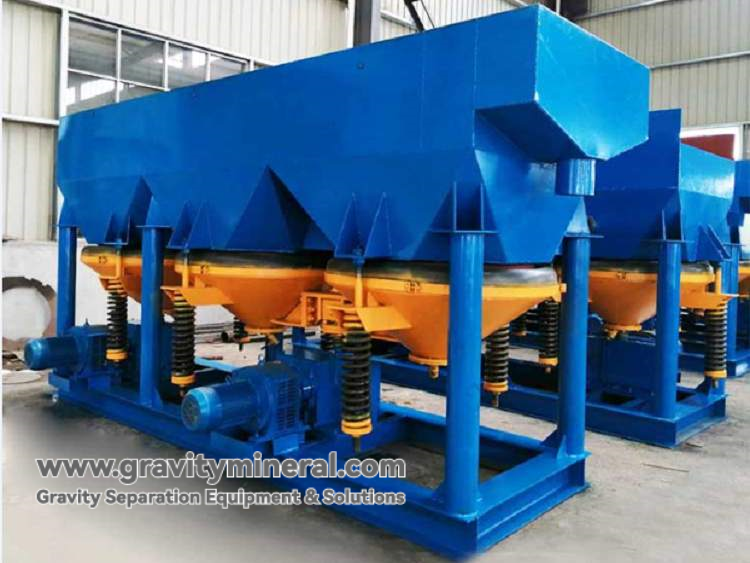
Solution Comparison: What Was Changed, and Where Are the Differences?
Taking the retrofit of a certain gold mine as a reference.The original process consisted of a Nelson mill combined with a shaking table for gravity separation, followed by flotation. Gravity separation contributed only marginally to recovery rates, and the tailings grade was relatively high. The retrofit plan diverted the first-stage grinding overflow into the Nelson mill, adjusted operating parameters, and established a closed-circuit gravity separation process. This resulted in a significant improvement in gravity recovery rates and a corresponding decrease in tailings grade.
Another aspect to consider is the use of reagents. After the heavy media separation process removed coarse-grained gold in advance, the feed volume to the flotation circuit decreased, leading to a corresponding reduction in the consumption of collectors and frothers.Test data from a certain quartz vein-type gold mine show that the Nelson gravity separator handles the primary recovery task, while the fine-grain fraction from the gravity tailings is reprocessed via flotation, maintaining a high overall recovery rate. Gravity separation accounts for the lion\'s share of recovery, with flotation required only to process the remaining fine-grain fraction.
| Comparison Dimensions | Before Retrofit | After the Upgrade | Direction of Change |
|---|---|---|---|
| Gravity Recovery Rate | Low | Improved | Positive |
| Re-selection Tailings Gold Grade | Too high | Decrease | Positive |
| Flotation Reagent Consumption | High | Decrease | Positive |
| Total Recovery Rate | Baseline | Slight increase | Positive |
While the absolute values vary significantly across different ores, the trend is consistent: once the process is optimized and the parameters are correct, the performance of the gold concentrate gravity separation process exceeds many people\'s expectations. It should be noted that the specific increase in recovery rate depends on the properties of the ore, the grain size of the gold particles, and on-site conditions, so no generalizations can be made.
Several Common Questions from the Field
Why does the grade of the Nelson concentrate fluctuate so much?
First, check the ore discharge intervals. If the enrichment time is insufficient and ore is discharged before the bed is fully compacted, the concentrate will be mixed with a large amount of light minerals, causing the grade to naturally fluctuate. Next, examine the feed concentration; excessive fluctuations will affect the stability of the separation process.Another point that\'s often overlooked: the time required for the fluidization water pressure to reach a stable value. It takes some time for the pressure to stabilize after startup; discharging ore before this point is essentially a waste of effort.
There\'s still coarse gold in the gravity separation tailings—does this mean the concentrator isn\'t performing properly?
Not necessarily. Take a sample of the tailings for sieve analysis to determine whether the coarse-grained gold is free or intergrown. If it is intergrown, this indicates insufficient liberation; the problem lies with the grinding process, not the gravity separation. If free gold appears in the tailings, check two things: whether the feed rate is excessive and whether the backwash water pressure is too low.The key is that the particles must enter the separation cone.
The shaker concentrate grade is sufficient, but the recovery rate is low. What should be adjusted?
First, check whether the correct trough type has been selected for the bed surface. Use a shallow trough for coarse sand and a deep trough for fine sand; selecting the wrong one results in a significant difference in gold loss in the tailings.Next, adjust the stroke length and frequency: use a short stroke and high frequency for fine-grained material, and the opposite for coarse-grained material. The transverse slope also affects separation efficiency; the slope requirements differ between fine-sand and coarse-sand bed surfaces.
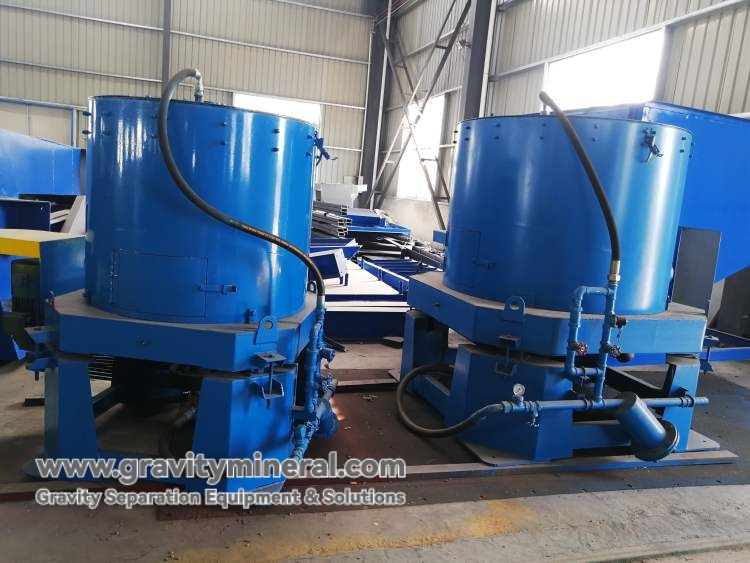
Implementing a Gold Ore Gravity Separation Process: What Else Is Needed Beyond the Equipment?
The parameter adjustments and process modifications mentioned above are one thing; implementing them on-site is quite another. Even if you purchase the right equipment and have beautifully drawn blueprints, if no one calibrates the system after installation, the problem of low gold ore gravity separation efficiency will remain unsolved.
Common on-site scenarios include: the enrichment time on the Nelson concentrator remaining at the factory default, the shaker\'s slope being arbitrarily set by the installer, and the sand return pipe on the hydrocyclone being connected in the wrong direction without anyone noticing.Even with high-quality equipment, if the line isn\'t running smoothly, recovery rates won\'t improve. This is why, when evaluating a gold ore beneficiation project, one must look beyond the equipment list and consider who will handle the process design and on-site commissioning.
If equipment manufacturing, process design, and on-site commissioning are handled by three different suppliers, they are likely to pass the blame onto one another when problems arise. The crusher manufacturer might claim the discharge particle size is fine, while the shaking table manufacturer might argue that the feed concentration is incorrect—ultimately, the pressure falls on the mining company.GravityMineral\'s approach in this regard is worth noting: gravity separation equipment is manufactured in-house, process design is completed by an in-house team, and engineers are stationed on-site to lead the commissioning.Core gravity separation equipment—such as jigs, shaking tables, spiral chutes, and centrifugal separators—are all produced on in-house production lines. Mechanical engineers are fully aware of upstream feed rates and downstream separation requirements during the manufacturing process, ensuring a higher degree of interface compatibility.
GravityMineral has specialized in gravity separation for 20 years, holding approximately 35% of the domestic market share. Its products are exported to more than 50 countries, with a cumulative total of over 500 gravity separation projects. The practical value of this accumulated experience lies in the ability to quickly draw upon historical experience from similar scenarios when faced with a new ore type, thereby reducing the risk of trial-and-error for the mine operator.The R&D center established in collaboration with Jiangxi University of Science and Technology also ensures that equipment iterations benefit from technical input from the university. In terms of service models, we support both the supply of individual units and the full process—from mineral processing testing, process design, and equipment manufacturing to on-site installation and commissioning.Mineral processing test fees can be offset against the cost of subsequent equipment purchases or EPC contracts, making this an ideal option for mine owners still assessing project feasibility to first determine the properties of their ore.
Conclusions and Recommendations
The low recovery efficiency of gold concentrate in gravity separation is not due to the gravity separation process itself being inadequate, but rather to a lack of alignment among three key elements: process configuration, equipment parameters, and on-site commissioning.The value of the gold concentrate gravity separation process lies in the early recovery of coarse-grained free gold at a relatively low cost, thereby reducing the burden on subsequent flotation or leaching operations. Whether this gravity separation process can achieve the targeted recovery rate depends on whether the grinding circuit achieves “early recovery,” whether the sand tailings are “recycled,” and whether the parameters are “properly matched.”
Here are two practical suggestions. First, conduct a process assessment: take a sample of the grinding circuit discharge and a sample of the gravity separation tailings, and perform a sieve analysis on each to determine where the coarse-grain gold is distributed.If gold is present in both the mill discharge and the tailings, the equipment is failing to capture it; if it is scarce in the discharge, it is accumulating in the grinding circuit. Once you\'ve identified the correct direction, then discuss equipment configuration. Second, when selecting a partner, prioritize process design and on-site commissioning capabilities on par with equipment specifications.