EPC Turnkey Project for Placer Gold Gravity Concentration, Price for 2,400 Metric Tons Per Day Processing Capacity
EPC Turnkey Project for Placer Gold Gravity Concentration, Price for 2,400 Metric Tons Per Day Processing Capacity
A 2,400-metric-ton-per-day alluvial gold processing plant equates to an hourly throughput of approximately 100 metric tons (calculated based on 24 hours of continuous operation per day; if calculated based on 20 hours of effective operation, the hourly throughput would be approximately 120 metric tons, falling within the 80–150 metric tons per hour range).This scale represents a large-scale production line for a medium-sized alluvial gold deposit. The price is not a single fixed figure but rather a range determined by a combination of ore body conditions, equipment configuration tier, automation level, and site and logistics conditions. Below is GravityMineral\'s explanation of the configuration logic and pricing structure for projects of this scale.
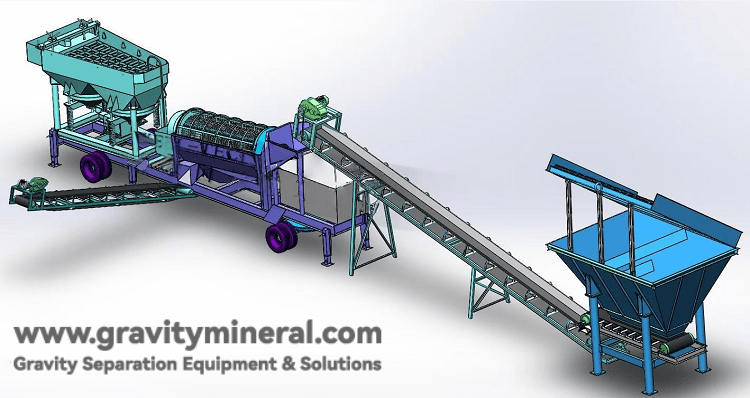
I. Typical Configuration for a 2,400-metric-ton-per-day Alluvial Gold Processing Line
Based on a processing capacity of 100–120 metric tons per hour, the standard gravity separation main line configuration is as follows:
| Processing Stage | Equipment | Function |
|---|---|---|
| Feed | Vibrating Feeder/Trough Feeder | Ensures uniform feed; the trough-type feeder is specifically designed to prevent blockages caused by sticky, wet ore |
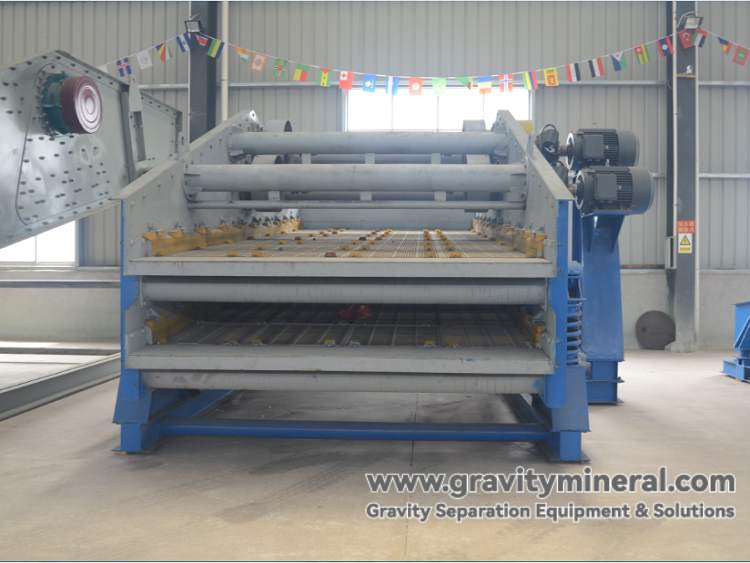
| Ore Washing and Screening | Large-Capacity Trommel Washer + Cylindrical Screen | Removes mud and separates large gravel; the thoroughness of ore washing directly determines the recovery rate |
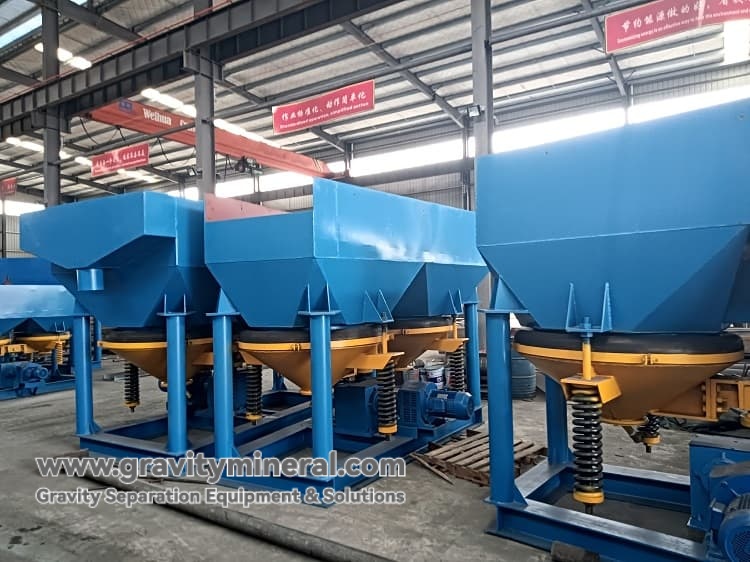
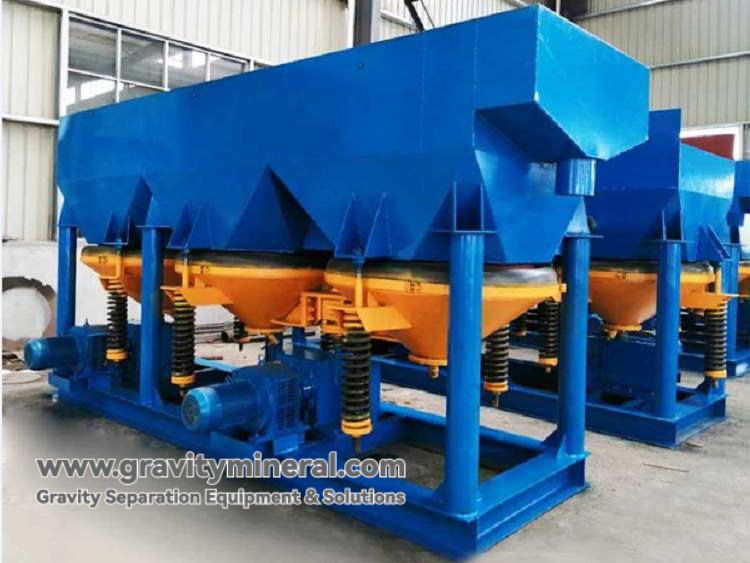
| Roughing and Tailings Discharge | Sawtooth-wave jig (multiple units in parallel) or spiral chute assembly | High-capacity rough selection to discard large amounts of light gangue |
| Sweep Selection | Spiral Chutes | Recovery of medium- and fine-grained heavy minerals from the roughing tailings |
| Concentration | 6-S shaking table/multi-deck shaking table | Direct production of qualified gold concentrate |
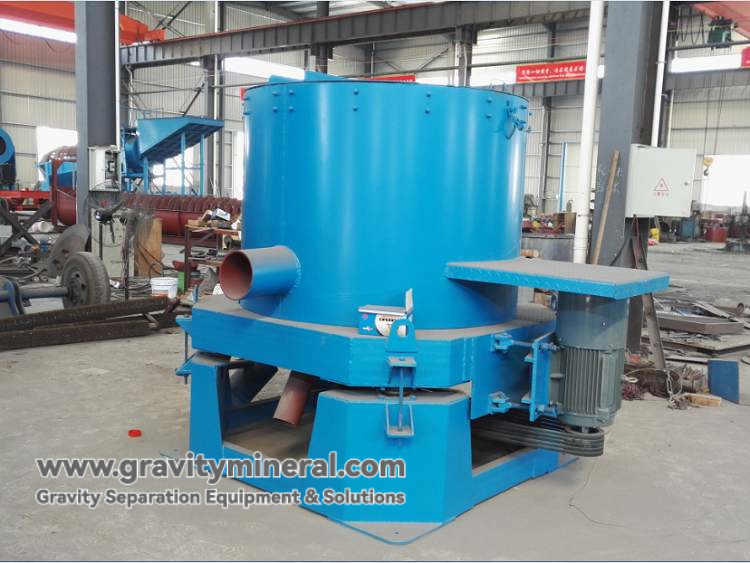
| Recovery of ultrafine particles | Centrifugal mineral separator | Recovers sub-0.074 mm fine gold—leaves nothing behind |
| Dehydration | Dewatering Screen | Dehydration of gold concentrate to meet transportation requirements |
| Tailings | Tailings Dry Discharge/Thickener | Environmental Compliance |
Key Variables: The clay content determines the specifications of the ore washer (selection must be based on the maximum clay content operating conditions rather than the average value); the gravel proportion determines the screen aperture size and discharge method of the drum screen;The particle size distribution of gold particles determines the configuration ratio of centrifuges and shaking tables. Differences in these parameters result in significant variations in the number and specifications of equipment, causing prices to fluctuate accordingly.
II. Price Composition: What Costs Are Included in an EPC Turnkey Project
Quotes for alluvial gold gravity separation EPC turnkey projects typically include the following modules, rather than simply the “total equipment cost”:
- Mineral processing testing and mineral analysis fees: ore sample testing, recoverability tests, and process validation (testing fees may be offset against the cost of equipment or the EPC contract upon subsequent signing);
- Process design and drafting fees: flowcharts, equipment lists, plant layout diagrams, civil engineering requirement drawings, and technical briefings—in-house design capabilities eliminate the need to engage external design institutes for medium-to-large-scale projects;
- Equipment Manufacturing and Turnkey Supply Fees: Production scheduling for core equipment at our two in-house manufacturing bases, including custom modifications (wear-resistant/corrosion-resistant treatments, motor power adaptation);
- Export Documentation and International Logistics Coordination Fees: Container loading plans, documentation support, and ocean freight coordination (freight charges billed based on actual costs at the port of destination);
- On-site Installation Guidance and Commissioning Training Fees: On-site technical briefings by engineers, individual and integrated commissioning, and personnel training (general installation workers are organized locally by the client, saving on international labor costs);
- Spare Parts and After-Sales Service: Quality assurance during the warranty period and long-term spare parts supply.
III. Why We Cannot Provide a “Fixed Price” Upfront
Price variations for placer gold processing lines primarily stem from four variables:
Ore Body Conditions
Ore with high clay content, abundant gravel, and fine-grained gold requires heavier equipment configurations for the ore washing and fine-grain recovery sections, resulting in a higher price;
Configuration Level
There is a significant price difference between standard configurations and high-end configurations (multi-deck shaking tables, automated control, and diesel-powered units suitable for remote mining areas);
Site Conditions
Whether a thickener or a tailings dry-discharge system is required depends on local environmental regulations and site area;
Logistics and Tariffs
Due to differences in shipping distances and customs clearance policies across destination countries (Africa, Southeast Asia, South America, etc.), CIF costs vary significantly.
Therefore, industry practice is to first send samples for testing to confirm the process flow and equipment list before issuing a transparent quote. GravityMineral\'s quotes clearly outline “the process used, the equipment provided, and the cost,” with no hidden charges.
IV. Information Required to Obtain an Accurate Quote
To obtain an accurate quote for a 2,400 metric tons per day placer gold processing line, please provide:
- Ore type and gold grade (original ore grade);
- Confirmation of the target processing capacity (number of hours corresponding to 2,400 metric tons per day: 24-hour or 20-hour operation);
- Feed particle size and clay content;
- Gravel content;
- Site conditions (availability of existing facilities, water and electricity supply, site area);
- Destination country and port (affecting logistics and customs clearance costs);
- Budget range and expected start-up date.
If representative ore samples are available, submitting them for beneficiation testing will yield more precise equipment configurations and quotations; testing fees may be offset against the cost of equipment or EPC contracts signed subsequently.
V. Reference Delivery Schedule
A capacity of 2,400 metric tons per day is classified as upper-mid-sized; the typical total turnkey EPC cycle is 7–12 months: 40–60 days for equipment manufacturing, 30–60 days for ocean freight, and 60–150 days for on-site installation and commissioning, with an additional buffer of approximately 30 days each for customs clearance and coordination between phases.Production is scheduled at our own manufacturing base, so delivery times are minimally affected by external supply chain factors.
VI. Next Steps
The price of a turnkey EPC project for placer gold gravity separation is essentially a function of “ore conditions + configuration tier + scope of services.”Rather than asking for a vague total price, please send us ore samples and site conditions first. We will provide an equipment selection plan and a transparent quote, allowing you to see the process, equipment, and budget all in a single document.