







Guide to Selecting Sand Gold Processing Equipment for Re-processing Plants | Solutions for High Recovery Rates and Low Operating Costs
Guide to Selecting Placer Gold Processing Equipment: From the Symptom of Excessively High Tailings to Process-Matching Solutions
Problems at gravity separation plants rarely occur in isolation—only by working backward through each stage—ore washing, roughing, and concentrating—can one identify the true root cause of equipment selection errors.
1. Typical Manifestations of Improper Gold Mining Equipment Selection
Problems in gold sand gravity separation plants rarely manifest in isolation. Operators may observe abnormally high tailings grades and unstable concentrate yields, but by tracing the process backward, they will discover that the root causes are scattered across various stages of equipment selection—including ore washing, roughing, and concentrating.
The clay content in riverbed and terrace placer gold varies significantly with the seasons and the depth of the ore layer. If the selected ore washing equipment is undersized or the washing time is insufficient, clumps of clay will enter the screening stage without being fully disaggregated, and the undersize material will carry sticky clay into the gravity separation stage.The water flow in the jig cannot penetrate the mud layer, so gold particles, encased in mud, are discharged with the tailings. Grayish, turbid tailings water is the most easily overlooked indicator in the selection of placer gold processing equipment.
The particle size distribution of gold in placer gold determines the selection criteria for roughing equipment. Spiral chutes offer high throughput and low operating costs but have an upper limit on the recovery of very fine gold particles;Jigging machines have a wider range of particle size adaptability; however, if the stroke and frequency are not calibrated based on the actual feed, recovery efficiency for both coarse and fine particles will be compromised. Such selection errors may not become immediately apparent but will be consistently reflected in the tailings parameters.
During the transfer of rough concentrate from the roughing equipment to the shaking table, any miscalibration—whether in feed concentration, pipeline conveyance method, or the coordination between the shaking table\'s incline and stroke—will result in fluctuations in concentrate grade or recovery losses.In some gravity separation plants, coarse concentrate accumulates while awaiting processing by the shaking tables, resulting in the loss of gold particles during pumping and retention.
There is a proportional relationship between the processing capacity of the roughing stage and that of the concentrating stage. If the roughing stage operates too quickly and the concentrating stage cannot keep up, rough concentrate will accumulate; if the roughing capacity is insufficient, the concentrating equipment will run idle. This mismatch in the configuration of placer gold processing equipment is particularly common in makeshift gravity separation plants, resulting in hidden increases in operating costs.
2 Root Cause Analysis: Three Critical Flaws in the Selection of Sand Gold Re-selection Equipment
The core advantage of placer gold gravity separation lies in the significant density difference between gold and gangue. The specific gravity of native gold is far higher than that of quartz-based gangue; this physical difference makes gravity separation a cost-effective and environmentally friendly technology for placer gold recovery. However, whether this density advantage can be fully realized depends on the alignment of the following three factors.
The clay content, gold particle morphology, and particle size distribution of placer gold ore directly influence the selection of placer gold processing equipment.Flake gold faces greater resistance to settling in a fluidized bed, fine-grained gold requires enhanced recovery through centrifugal force, and ore with high clay content places higher demands on the ore washing stage. If equipment parameters are set according to standard factory defaults, discrepancies between these settings and the actual properties of the ore are inevitable.
The screen aperture size of the ore washer determines the upper limit of feed particle size for the jig; the jig\'s processing capacity determines the number of shaking tables required; and the concentrate yield from the shaking tables determines the specifications of the dewatering equipment.When gold recovery equipment from different sources is pieced together, it is difficult to standardize interface heights, slurry flow rates, and particle size transitions. As a result, gold particles may accumulate or be lost at intermediate stages; the more complex the process, the more points of loss there are.
Feed conditions for placer gold deposits are not constant. Changes in ore bodies, fluctuations in clay content, and adjustments to processing capacity all require corresponding adjustments to the jig\'s stroke and frequency, the shaking table\'s slope, and the feed concentration of the spiral chute.A common management gap in the placer gold processing workflow is that, after equipment delivery, no one calibrates or monitors the systems, leaving parameters set at their initial values for extended periods.
The root cause of a problem is often not where it appears to be. While abnormal recovery rates may be apparent on the shaking table, the root cause may lie in the ore washing process; poor performance of the jig may simply be due to unstable feed concentration. The selection of gold ore processing equipment must be viewed from the perspective of the entire production line, rather than on a unit-by-unit basis.
3. Solution: Configuring a Placer Gold Gravity Concentration Line Based on Ore Properties
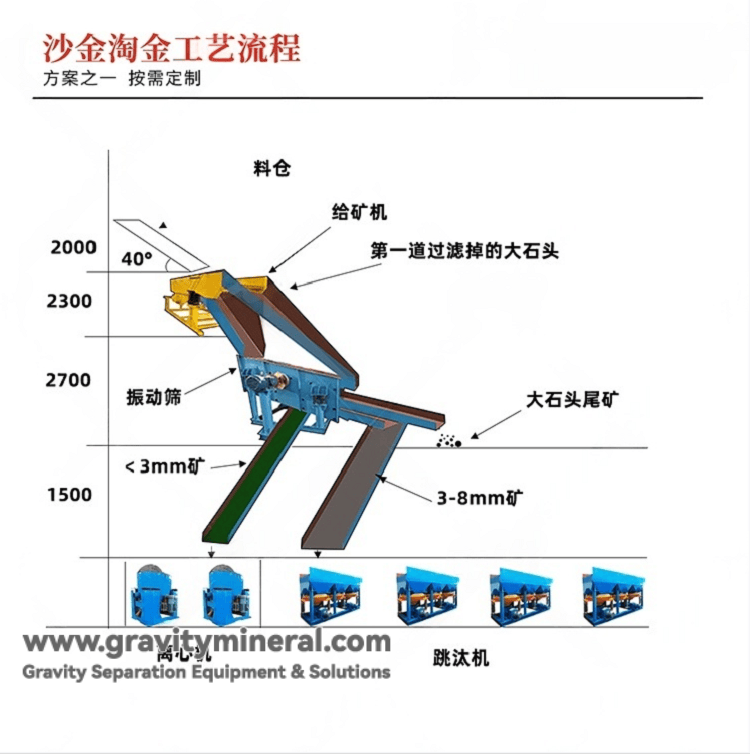
The configuration logic for gold sand gravity separation can be summarized in three principles: thorough ore washing, early recovery in roughing, and precise recovery in concentrating. The specific equipment configuration depends on the ore properties and processing capacity.
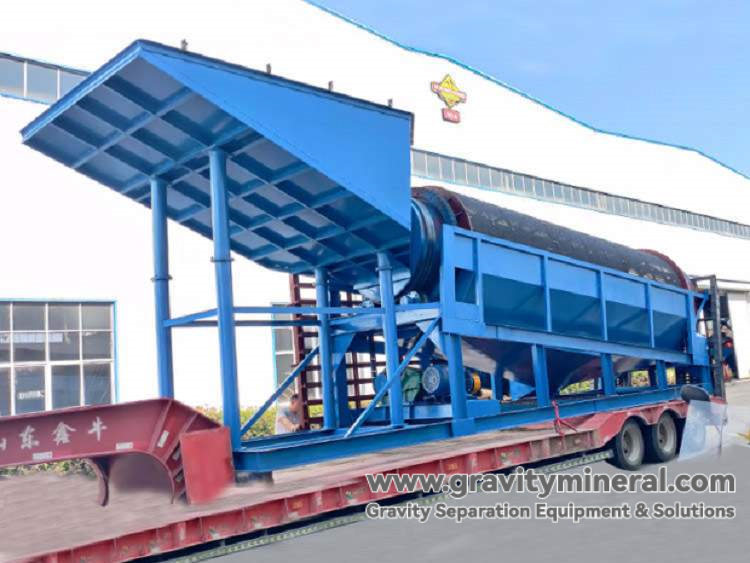
The clay content varies significantly among riverbed, terrace, and ancient river channel placer gold deposits. The selection of ore washing equipment primarily depends on the clay content and the plasticity of the clay. For ore with low clay content, a cylindrical ore washer paired with a trommel screen can meet the requirements;for ore with high silt content and sticky clay, a combination of a spiral washer and a washing screen is recommended. The key lies in the washing time; the ore must remain in the washer long enough for the mud clumps to fully break apart. If this step is not carried out properly, even the most powerful subsequent gold gravity separation equipment will struggle to perform effectively.
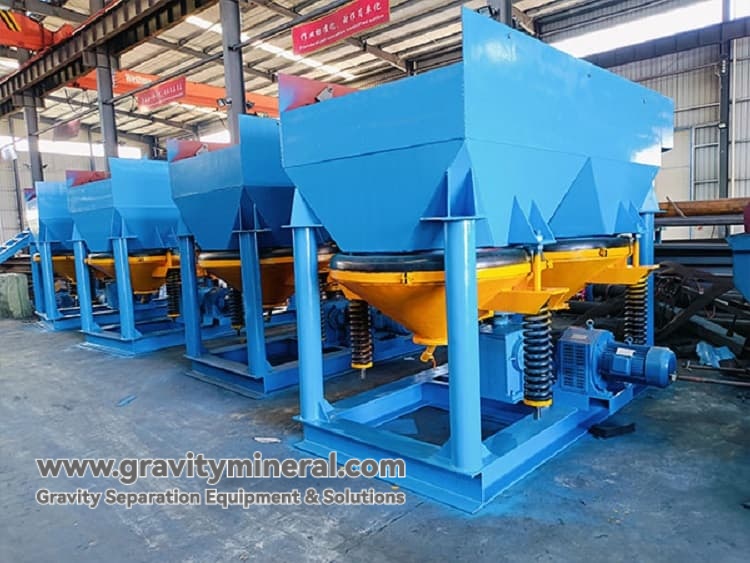
Sawtooth-wave jigs are the primary equipment for the roughing stage of placer gold processing. The pulsation curve of the sawtooth-wave water flow is more optimal than that of traditional jigs, offering greater adaptability to materials with a wide particle size distribution.Equipment selection is based on matching the jig chamber area to the daily processing capacity, and the upper limit of feed particle size is generally controlled within a reasonable range. The stroke length and frequency must be calibrated based on the screening results of the undersize material; when the proportion of coarse-grained gold is high, the stroke length should be appropriately increased and the frequency reduced, while the opposite adjustment is made when the proportion of fine-grained gold is high—factory default values should not be applied without modification.Spiral chutes are suitable for the rough selection and rejection of placer gold with low clay content and relatively coarse grain sizes. They offer high throughput and require no power consumption; however, the tailings from the chutes should undergo secondary screening or be fed into a centrifugal concentrator for further processing.
The coarse concentrate is fed into a 6-S shaking table for fine selection; the three parameters—slope, stroke, and feed concentration—are interdependent. Feed concentration should be maintained within a reasonable range; if too high, stratification on the bed surface becomes unclear, while if too low, throughput is limited.If the rough concentrate contains fine-grained gold, the shaking table tailings are further processed in a centrifugal separator, which uses centrifugal force to enhance separation and recover fine-grained gold that the shaking table cannot capture. This serves as the final safeguard for improving the overall recovery rate in the placer gold beneficiation process.
A corresponding relationship must be maintained between the yield of the jig rough concentrate and the processing capacity of the shaking tables. When the rough concentrate yield is high, the number of shaking tables should be increased or multi-deck shaking tables should be used; when the rough concentrate yield is stable, a single shaking table is sufficient.It is advisable to maintain an appropriate margin of capacity in the washing section to prevent insufficient washing capacity from hindering the throughput of the entire sand gold gravity separation line.
The most common error in gold-in-sand equipment configuration is selecting a mineral washing machine with insufficient capacity. Insufficient washing capacity causes all subsequent gold-in-sand gravity separation equipment to operate under material backlog conditions, compromising both throughput and recovery rates. It is better to leave some margin in the mineral washing section than to allow slurry to become the bottleneck of the entire line.
4. Implementation Path: From Ore Samples to Stable Operation
Equipment selection is only the starting point. Only by integrating ore data, process design, interface alignment, parameter calibration, and personnel training into a comprehensive implementation path can performance metrics be stabilized.
- Step 1: Ore Property Analysis
Collect representative ore samples and conduct sieve analysis, clay content measurement, and gold particle size distribution analysis to identify the primary grain size range where gold is concentrated and the fluctuation range of clay content. Without this data, there is no basis for selecting placer gold processing equipment.
- Step 2: Determine the Placer Gold Processing Flow Sheet Based on Ore Samples
If coarse-grained gold accounts for a high proportion, increase the stroke of the jig appropriately; if fine-grained gold accounts for a high proportion, connect a centrifugal separator downstream of the jig. For ore with a high clay content, add equipment to the washing section or extend the washing time. The process flow must be derived based on the ore data and should not be copied directly from other projects.
- Step 3: Align Equipment Selection with Process Interfaces
The screen aperture size of the ore washer corresponds to the upper limit of the jig\'s feed particle size; the jig\'s processing capacity corresponds to the number of shaking tables; and the shaking table concentrate yield corresponds to the specifications of the dewatering equipment. By aligning the capacity, particle size, and concentration at each interface item by item, resistance during on-site installation and integrated commissioning will be significantly reduced.
- Step 4: Installation and Commissioning Based on Parameter Calibration
The stroke and stroke rate of the jig, the slope and stroke of the shaking table, and the feed concentration are calibrated one by one during the commissioning phase. Test runs with actual feed are conducted continuously, and samples are collected for laboratory analysis; commissioning is considered complete only after the indicators stabilize. The goal of commissioning is not merely to get the equipment running, but to ensure that the indicators meet the specified standards.
- Step 5: Operator Training
Clearly define the adjustment procedures and troubleshooting sequence when feed rate varies, clay content fluctuates, or concentrate grade declines. Daily operation of a placer gold gravity separation line is not complicated, but operators must understand the logic behind adjustments rather than merely mechanically performing fixed actions.
5. Expected Results and Cost Considerations
The actual performance of a placer gold gravity separation line is influenced by multiple factors, including ore properties, equipment configuration, commissioning quality, and operational management. Significant variations exist between different projects, so it is not appropriate to summarize performance with a single figure.
From the perspective of recovery rates, a gold gravity separation plant with a well-designed equipment configuration and properly calibrated parameters achieves relatively thorough recovery of coarse-grain gold. Fine-grain gold is additionally recovered via a centrifugal separator, resulting in a comprehensive recovery rate that is typically noticeably higher than that of haphazardly assembled configurations. The grade of the tailings correspondingly decreases, reducing resource loss.
From the perspective of operating costs, placer gold gravity separation itself does not involve the consumption of chemicals; the primary costs are electricity, water, and labor.With well-matched equipment, jigging machines do not need to operate at overload, keeping electricity consumption under control; thorough ore washing eliminates the need for repeated recirculation in the gravity separation section, thereby reducing water consumption. The cost optimization resulting from the rational selection of placer gold equipment is reflected in long-term operation rather than short-term financial figures.
From the perspective of operational stability, a gravity separation plant with a margin of capacity in the ore washing section and aligned production capacities for roughing and concentrating is more likely to reach its design capacity. This narrows the range of fluctuations in performance indicators and reduces the impact of operational variations among work crews on these indicators. This is of practical significance for the continuous and stable operation of the placer gold beneficiation process.
It should be noted that specific values for recovery rates and operating costs are closely related to ore properties, processing scale, equipment configuration, and on-site management levels.Any absolute promise made without considering specific ore conditions has no practical value. The goal of selecting placer gold processing equipment is to achieve an optimal balance between recovery rate and operating costs under given ore conditions through reasonable equipment configuration and parameter calibration.
6 Key Considerations for Selecting Placer Gold Equipment
During the equipment selection phase for a placer gold gravity separation plant, the following key points should be reviewed item by item.
Checklist
- Has the ore washing section been selected based on the mud content and clay properties, and is the washing time sufficient?
- Is the roughing equipment matched to the gold particle size distribution, and have the stroke and frequency of the jig been calibrated based on ore samples?
- Have the slope, stroke, and feed concentration of the shaking table in the fine-selection section been debugged and calibrated?
- Are the production capacities of the roughing and concentrating stages aligned, and are there any bottlenecks or idle time in the intermediate stages?
- Are the particle size, concentration, and throughput at the interfaces between individual units uniformly designed?
- Do operators understand the logic behind parameter adjustments and the sequence for troubleshooting common issues?
The above points cover the key aspects of gold-in-sand equipment selection, configuration of gold-in-sand gravity separation equipment, and the gold-in-sand beneficiation process. Checking each item systematically can reduce recovery rate losses and rising operating costs caused by improper equipment selection.