







How to Choose a Gravity Separation Method for Processing Red Soil Gold Ore? Check Out These High-Efficiency Recovery Solutions Here
- What This Solution Is: A physical gold extraction process centered on ore washing, desliming, and multi-stage gravity separation, specifically designed to address the issues of gold entrapped in clay and the mixture of coarse and fine grains in laterite gold deposits.
-
What pain points does it address: Highly viscous laterite clogging equipment; gold-encased mud clumps being lost in tailings; incomplete recovery of coarse-grained gold; and severe loss of fine-grained gold.
-
Core Logic: First, the clay is broken up to expose the gold particles; then, jigging and centrifuges are used to recover the gold in separate fractions based on particle size, ensuring that coarse gold is recovered early and fine gold is not lost.
-
How to Interpret the Metrics: Specific recovery rates and concentrate grades vary by deposit and must be determined through ore testing; in industry practice, recovery rates for red soil gold ore processing via washing and gravity separation typically fall in the upper-middle range.
-
Who It\'s For: Processing plants handling lateritic or oxidized gold ores with high clay content, uneven gold particle sizes, and a predominance of free gold—especially small- to medium-scale projects seeking to avoid complex chemical processing flows.
- I. What Is This Solution?
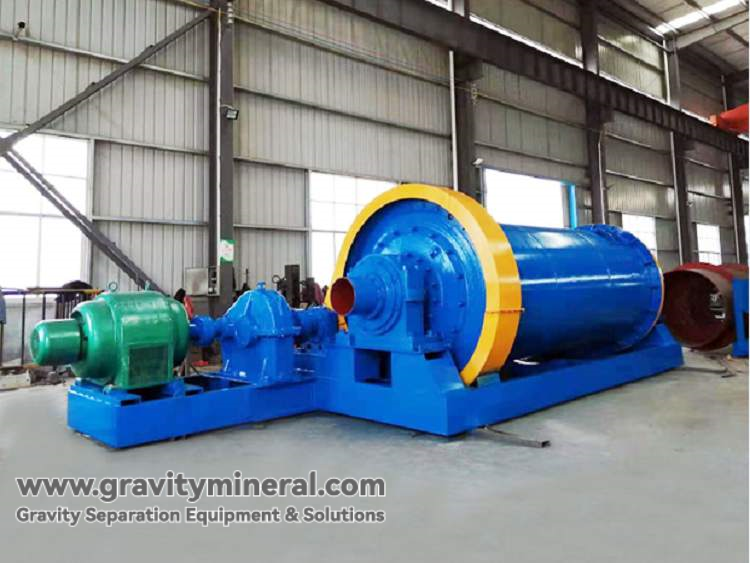
- First, the core concept: This is a physical gold recovery process that involves washing the clay first, followed by size-segregated gravity separation. The core equipment consists of a ore washer, a jig, and a centrifuge.
- In essence, the washing and gravity separation of lateritic gold ore relies on the density difference between gold, soil, and quartz for separation, without using chemical reagents.The raw ore first passes through the ore washer to break up the red soil clumps enveloping the gold particles; the fine screen undersize is fed into the centrifuge to recover fine-grain gold, while the coarse screen oversize is crushed and then passed through the jig to recover coarse-grain gold. The jig tailings are then ground and re-processed.The logic behind the entire gravity separation process for laterite gold ore can be summarized in one sentence: “Thoroughly wash the mud, recover the coarse particles early, and retain the fine particles.”
- II. What Problem Does It Solve?
- This process addresses the following question: How should the clay in laterite gold deposits be processed to ensure that the gold is not discarded along with it?
- The challenge with laterite gold deposits lies not in the gold itself, but in the mud. The ore has a high clay content, significant fluctuations in moisture content, and high viscosity; as a result, it sticks to the walls of the feed hopper, clogs the screen openings, and forms mud clumps in the feed chutes.More critically, many gold particles are trapped within these mud clumps; unless the clumps break apart, the gold particles cannot be released, and no matter how advanced the downstream equipment is, they cannot be recovered.
- The gold ore washing and gravity separation process is specifically designed to address this scenario. It places ore washing as the first step, using the vigorous agitation of trough-type or drum-type washers to break up the clay and expose the gold particles trapped inside.At the same time, the process separates large gravel from fine silt: the fine silt is routed to the fine-grain recovery line, while the coarse sand is sent to the crushing and gravity separation line, each following its own path without interfering with the other.
- Who needs it most? If the ore is lateritic or oxidized—crumbling at the touch and turning to mud when wet—and consists primarily of free native gold with particle sizes ranging from coarse to ultrafine, then this lateritic gold ore processing flow is designed specifically for such ores.
- III. Core Components and Principles
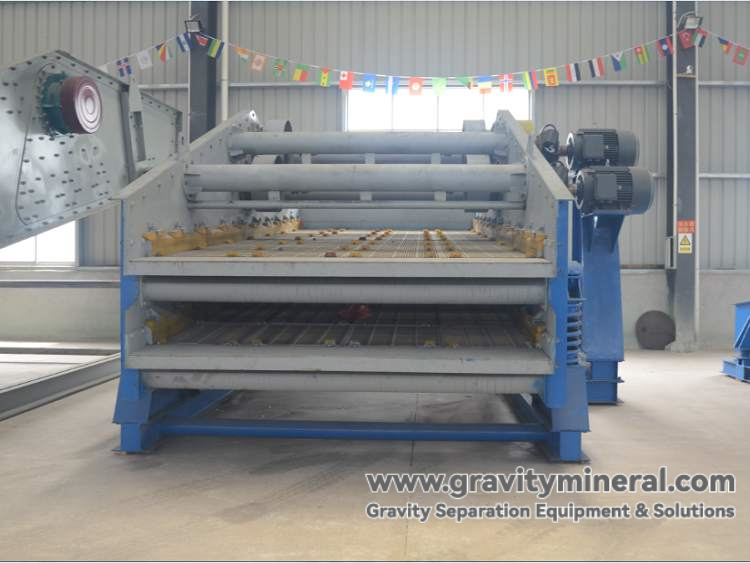
- First, the core: five stages form a continuous process—ore washing and desliming, coarse material crushing, jigging roughing, grinding and classification, and centrifugal and shaking table fine selection.
- [Process Flowchart (Text Version)]
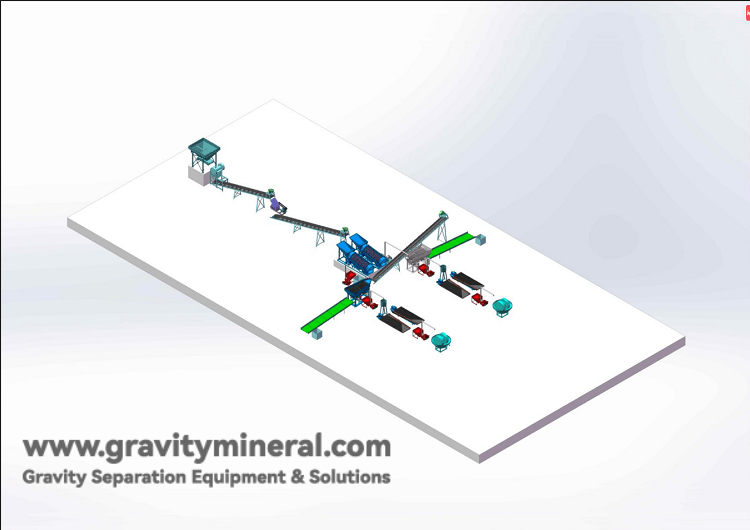
- The raw ore enters the ore washing and desliming stage, where it is processed by a cylindrical or trough-type ore washer and divided into two streams. The undersize fines proceed directly to centrifugal beneficiation, followed by shaking table concentration; the oversize coarse material is first crushed and then sent to jig roughing.The concentrate from jig roughing proceeds to shaking table fine selection, while the jig tailings are ground and classified before being fed into the centrifugal beneficiation stage. The concentrate from centrifugal beneficiation also proceeds to shaking table fine selection, where it ultimately combines with the shaking table concentrate from jig roughing to produce gold concentrate.
- First stage: ore washing and desliming. This forms the foundation of the entire line. Trough-type or drum-type ore washers use rotating drums and high-pressure water jets to break up and crush red clay clumps while simultaneously screening out large pieces of waste rock. The thoroughness of this washing directly determines how much gold can be recovered in subsequent gravity separation processes.
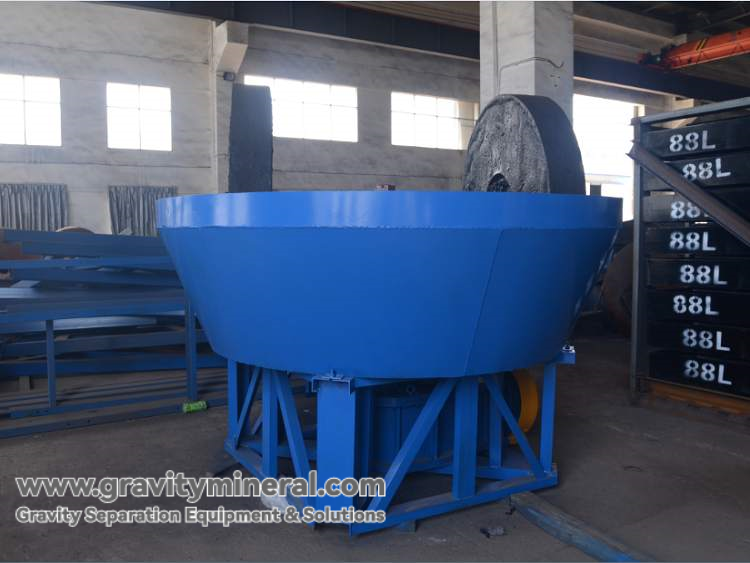
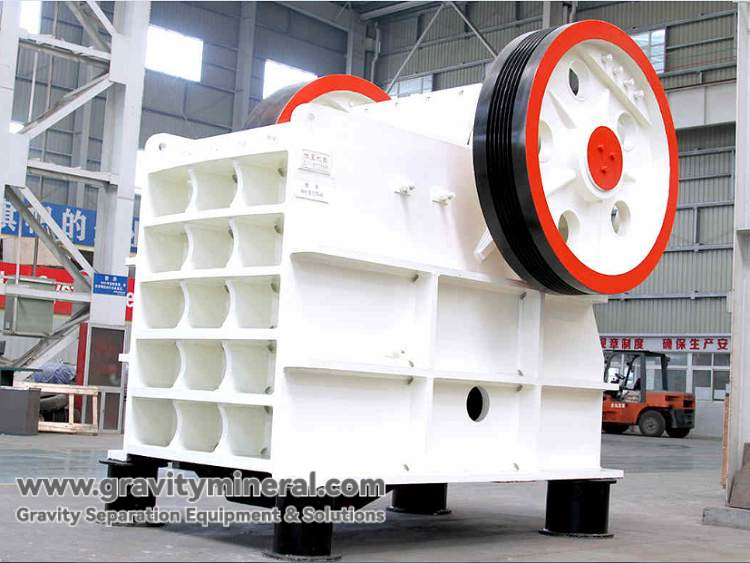
- Second stage: coarse material crushing. Coarse material larger than a few millimeters, as screened out, enters the crusher to break up gold-bearing veins and liberate coarse gold particles. Some processes use a two-stage hammer crusher, while others employ a combination of a jaw crusher and a gold-crushing mill. The goal is singular: to break open the rock and expose the gold.
- Third stage: Jigging rough selection. The crushed ore slurry enters the jig. Jigging offers high throughput and strong capture capacity for coarse free gold, allowing a portion of the coarse gold concentrate to be recovered in advance of grinding, thereby reducing the load on subsequent grinding operations. This step is key to achieving early recovery.
- Fourth, grinding and classification. The jig tailings are fed into a ball mill for grinding, forming a closed circuit with a spiral classifier. Coarse particles are returned for regrinding, while slurry that meets the fineness requirements proceeds to the next stage. The goal of grinding is not to achieve the finest possible particle size, but rather to grind medium- and fine-grained gold to the point of single-particle liberation; over-grinding will actually result in slurry contamination.
- Fifth: Centrifuge and Shaking Table. The fine-grained slurry enters the centrifuge, where high centrifugal forces fling the microfine gold particles against the inner wall of the rotor for enrichment. The centrifuge concentrate is then sent to a shaking table for further concentration; the shaking table\'s high enrichment ratio can raise the grade of the coarse concentrate to a level suitable for shipment or smelting.
- The selection of gravity separation equipment is not a matter of guesswork. The stroke and frequency of a jig are determined based on test data; the slope of a shaking table is determined by the feed particle size; and the pitch of a spiral chute is selected based on differences in mineral density. If equipment parameters and process design do not align, coarse particles will be recovered while fine particles will all end up in the tailings.
- This gravity separation process for washing lateritic gold ore only addresses the recovery of free gold; it is ineffective for recovering microscopic gold encapsulated within sulfides.
- IV. Why Choose It
- Let\'s start with the core: three reasons—no more clogging, early recovery of coarse gold, and dedicated equipment to ensure recovery of fine gold.
- Advantage 1: Pre-processing is integrated upfront, eliminating blockages at the source. If laterite ore isn\'t pre-processed, it leads to nothing but trouble down the line. The pre-processing machine breaks up the clay while screening out large chunks; once the slurry\'s flowability improves, the jig and centrifuge can operate stably.At a certain laterite gold mine project in West Africa, the ore had a relatively high moisture content. The traditional process suffered from material blockages and sticky hoppers, resulting in intermittent production; the ore washing and desliming step is indispensable.
- Advantage 2: Jigging recovers coarse gold early, reducing losses from over-grinding. The longer coarse free gold remains in the grinding circuit, the more likely it is to be ground into flakes or even reduced to a slurry, making recovery through gravity separation more difficult. Placing the jigging stage before grinding removes recoverable coarse gold first, thereby reducing the grinding load and minimizing unnecessary circulation of gold within the circuit.
- Advantage 3: Centrifuges outperform sluices in recovering ultrafine gold particles. Traditional sluices rely on gravitational settling, resulting in a significant drop in recovery efficiency for fine gold particles smaller than 0.074 mm.Centrifuges rely on a high-g gravitational field to capture even finer gold particles. In tests conducted at a laterite gold mine in Yunnan, the recovery of fine-grain gold after enrichment by a centrifuge was significantly better than that achieved by a single-chute process.
- Traditional sluices rely on water flow, while centrifuges rely on centrifugal force. The difference in fine-grain gold recovery lies precisely in this force.
- V. Applicable Scenarios and Limitations
- What you need to know: The effectiveness of this solution depends 70% on the properties of the ore and 30% on the process configuration.
- Best-case scenario: The ore consists primarily of free native gold, with a particle size distribution ranging from coarse to ultrafine grains; it has a high clay content, but the gold is not tightly encapsulated by sulfides or silicates. Lateritic and oxidized gold deposits are highly weathered, with relatively good gold particle liberation, offering significant potential for gravity separation.In trials conducted at a lateritic-oxidized gold deposit in western Yunnan, the gold consisted primarily of fine-grained native gold. After ore washing and classification, the gold grade in the coarse sand showed significant enrichment, indicating that ore washing and desliming are effective separation methods for this type of ore.
- Situations where gravity separation is not recommended: When gold is primarily enclosed within sulfides such as pyrite and arsenopyrite, or exists as micro- or submicroscopic gold within the crystal lattices of silicate minerals, gravity separation recovery rates will be very low.Such ores fall under the Kalin-type or difficult-to-process gold ore category and require processes such as flotation, roasting, or bio-oxidation; gravity separation can only serve as an auxiliary pre-concentration method and cannot be the primary process.
- Another limitation is water availability. Both ore washing and gravity separation require water throughout the process; in arid or water-scarce regions, either a recirculation system must be constructed or dry pre-concentration alternatives must be considered. This is not an issue with the process itself, but rather a matter of adapting to on-site conditions.
- VI. Common Configurations and Key Considerations for Washing and Gravity Separation of Lateritic Gold Deposits
- What you need to know: Although both are referred to as ore washing and gravity separation, the configuration logic for daily processing capacities of tens of metric tons versus hundreds of metric tons is entirely different; equipment selection must be based on the properties of the ore.
- How to select ore washing equipment. Cylindrical ore washers are suitable for laterite ores with high clay content and high viscosity; the rotating cylinder combined with high-pressure water washing provides intense scrubbing. Screw ore washers are suitable for ores with moderate clay content where both desliming and classification are required. Selection depends on two factors: clay content and maximum feed particle size.
- Where to Position the Jig. Placing the jig before grinding aims to recover coarse free gold early on and reduce over-grinding; placing it after grinding focuses more on processing already liberated medium-sized gold particles. For laterite-type gold deposits, it is generally recommended to position the jig upstream, as coarse gold is already well liberated in laterite, so the earlier it is recovered, the better.
- How to configure centrifuges. Processing capacity and feed particle size are key factors in selecting centrifuges. If the proportion of fine-grained gold is high, centrifuges are essential; if the proportion of fine-grained gold is low and coarse-grained gold predominates, chutes or jigs can be used for rough selection first, with centrifuges serving as a sweep selection and backup.
- Do not overlook the dewatering stage. Low-moisture gravity concentrate is easier to transport, and dry tailings disposal is a mandatory environmental compliance requirement. Space for thickeners and filter presses must be reserved during the design phase.
- How to assess ore suitability. High-silt-content lateritic gold ores, where gold is primarily free native gold, are highly suitable; the standard process involves ore washing, desliming, followed by jigging and centrifugation.Oxidized gold ores, with gold particles of varying sizes, have high suitability; coarse particles are recovered early via jigging, while fine particles are captured by centrifugation as a backup; lateritic gold ores containing small amounts of sulfides require a combined process, with gravity concentration for pre-enrichment followed by flotation to treat the sulfides;Gold encapsulated within sulfide or silicate crystal lattices is incompatible; gravity separation yields low recovery rates, so flotation or leaching is required; In arid, water-scarce regions, adjustments are necessary, such as installing a water recirculation system or considering dry pre-concentration.
- VII. How to Implement the Process
- What you need to know: From ore testing to finalizing the process flow, follow a four-step approach—there\'s no room for haste.
- Step 1: Conduct an ore characterization analysis. Don\'t rush to select equipment. First, clarify three key factors: the particle size distribution of gold, the form in which gold is present, and the clay mineral content. Screening and hydrometallurgical analysis are fundamental; without knowing which particle size fraction the gold is concentrated in, process design is nothing more than guesswork.
- Step 2: Conduct ore washing and gravity separation tests. Take representative ore samples and run ore washing and desliming, jigging, and centrifugal separation tests under laboratory or semi-industrial conditions.Focus on two key indicators: the gold loss rate in the fine slime after ore washing, and the concentrate grade and recovery rate for each particle size fraction during gravity separation. Case study data from others can only serve as a reference; your ore may not be the same, so your test data is what truly matters.
- Step 3: Process Design and Equipment Selection. Based on the test results, determine three key decisions: whether to use a trough-type or drum-type ore washer; whether to place the jig before or after grinding; and the processing capacity of the centrifuge. The daily processing capacity and ore properties dictate the configuration logic—do not simply copy solutions from large-scale plants.
- Step 4: On-site Commissioning and Performance Optimization. The gravity separation process is sensitive to operating parameters. The water flow and rotational speed of the ore washer, the stroke and frequency of the jig, and the backwash pressure of the centrifuge—each of these factors affects recovery rates. During the first three months of operation, monitor performance indicators daily to fine-tune the parameters to the optimal settings for your specific ore.
- VIII. The Equipment Supporting This Solution
- It is important to note that no matter how well-designed the process is, if equipment interfaces do not align or production capacities do not match, the entire line will still not operate smoothly.
- In the above washing and gravity separation process for laterite gold ore, the core equipment includes a cylindrical or spiral ore washer, a sawtooth-wave jig, a 6-S shaking table, and a centrifugal concentrator. Supporting equipment includes a vibrating feeder,jaw crushers or hammer crushers, spiral classifiers, thickeners, and filter presses. If this equipment is pieced together from different manufacturers, the most common issue is interface conflicts—for example, when the processing capacity of the jig does not match that of the shaking table, leading to either material buildup or idle operation in intermediate stages.
- GravityMineral has been in the gravity separation field for 20 years, and core gravity separation equipment such as jigs, shaking tables, spiral chutes, and centrifugal separators are their specialty. Their approach involves manufacturing the equipment themselves, designing the processes in-house, and having engineers perform on-site commissioning—creating a closed-loop system where all three aspects are managed by a single team.Equipment manufacturing and process design are seamlessly integrated; mechanical engineers building the equipment clearly understand both the upstream feed rate and downstream sorting requirements, ensuring that interface compatibility and capacity alignment are managed by the same team.
- For ore types like laterite gold deposits—which are particularly sensitive to ore washing and particle size classification—this seamless integration of process and equipment is more critical than the specifications of any single piece of equipment. The company\'s equipment holds a significant market share in China\'s gravity separation sector and is exported to multiple countries. It has accumulated a vast number of global case studies, with equipment adaptability repeatedly validated across different ore types and operating conditions.
- If only a single jig is needed to replace outdated equipment, we support single-unit supply; if a complete line is required—from ore washing to gravity separation to dewatering—we can manage the entire process from mineral processing testing and process design to equipment manufacturing, on-site commissioning, and personnel training.We handle all design in-house, saving you the cost of hiring an external design institute for medium- to large-scale projects; our engineers conduct on-site commissioning, and the project is considered complete only when the production line is running smoothly and performance indicators are stable.
- IX. Determining Whether This Heavy Media Separation Solution for Laterite Gold Deposits Is Right for You
- Here\'s what you need to know: If three or more of the following points apply to your situation, this gold ore washing and gravity separation process is worth serious consideration.
- The ore has a high clay content, making wet screening prone to screen and chute blockages;
- Gold particles consist primarily of free native gold, with a low proportion of gold encapsulated in sulfides;
- Gold particles range from coarse to fine, making it difficult to achieve complete recovery using a single chute or a single shaking table;
- The project is small to medium in scale, and you wish to avoid complex chemical treatment processes and the pressure of environmental approval procedures;
- Basic water supply is available on-site, or you are willing to install a water recirculation system.
- Conversely, if the gold is primarily embedded in sulfides, the ore is difficult to process, or there is an extreme shortage of water on-site, this alluvial gold ore beneficiation process will need to be adjusted or replaced with a combined process.