







How to Choose a Washing and Gravity Separation Process for Muddy Gold Ore? Check Here for High-Efficiency Recovery Solutions
Key Conclusions
- The core challenge in the washing and gravity separation of muddy gold ore lies not in the “separation” but in the “washing.” If the mud is not thoroughly removed, subsequent gravity separation equipment will struggle to achieve the expected separation efficiency.
- Ore washing is not a simple rinsing process. When the clay content exceeds 10%, scrubbing equipment must be introduced; when it exceeds 15%, the design of the ore washing section directly determines the upper limit of the recovery rate for the entire line of washing and gravity separation of clay-bearing gold ore.
- The key to the gravity separation stage is “differentiated treatment.” Coarse particles should be processed using chutes or jigs, while fine particles require centrifuges; it is unrealistic to expect a single piece of equipment to cover the entire particle size range.
- The overall recovery rate for the washing and gravity separation of clay-bearing gold ore is greatly influenced by the ore\'s properties; there are significant variations among different schemes, so fixed figures should not be applied indiscriminately. Instead, data from ore sample tests should serve as the basis.
Gold Trapped in Mud: An Often Underestimated Aspect of Washing and Gravity Separation of Mud-Bearing Gold Ore
Clay-bearing gold ore is difficult to process, and many people\'s first reaction is that the gold particles are too fine. While fineness is indeed an issue, the primary problem—one that takes precedence over fineness—is the clay.
Clay minerals do not remain stationary in water. They form a clay film on the surface of gold particles, lowering the apparent density of the gold to a level close to that of quartz sand. How do gravity separation devices work? They rely on density differences. When these density differences are reduced, even the most sophisticated equipment cannot achieve thorough separation.Field experience shows that when the clay content in the slurry is too high, the recovery rate of conventional gravity separation equipment drops significantly—the exact extent varies greatly depending on the properties of the ore. Losses of this magnitude cannot be compensated for by switching to any other model of shaking table.
What\'s more troublesome is that the silt also causes blockages.The bed layer of a jig, the slats of a chute, and the fluidized bed of a centrifuge—all these structures are highly sensitive to fine silt. When silt accumulates, the bed layer becomes compacted; the pulsating water flow cannot penetrate it, heavy minerals cannot sink, and light minerals cannot be discharged, causing the entire separation process to grind to a halt.
Therefore, when processing muddy gold ore through washing and gravity separation, the sequence must not be reversed. Washing serves as the “pre-treatment” stage, while gravity separation is the “gold recovery” stage. If the pre-treatment is not done properly, the amount of gold recovered later depends entirely on luck. This is also why, when designing a processing plan for muddy gold ore, the first step is to confirm the mud content and the nature of its occurrence.
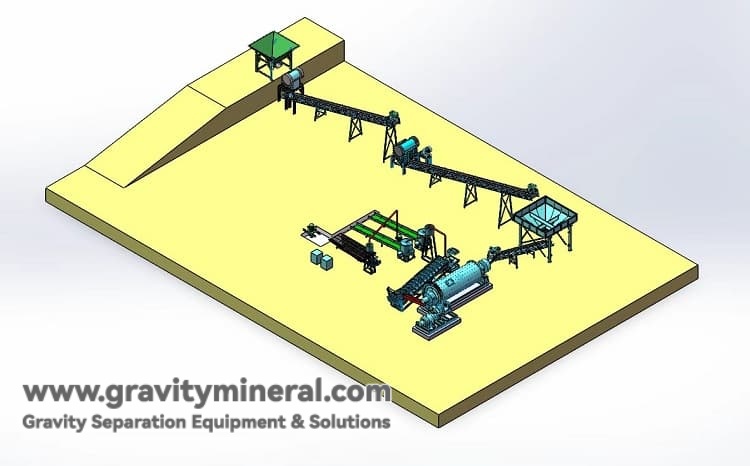
The configuration of the ore washing section depends on the clay content
There is no one-size-fits-all solution for selecting ore washing equipment. A 5% clay content and a 25% clay content require completely different approaches.
For clay content below 5%, adding a row of high-pressure water spray nozzles above the screen surface is sufficient. Water pressure should be controlled at 0.3–0.5 MPa, with the spray angle directed at the screen surface to wash away the loose clay from the surface of the sand particles. Clay at this level has limited impact on subsequent gravity separation and does not require dedicated scrubbing equipment.
When the mud content falls within the 5%–15% range, a spiral washer is a common configuration. The spiral blades vigorously agitate and scrub the material inside the tank, stripping clay from the surface of the sand grains, while fine mud is discharged via the overflow.When selecting a model, pay attention to the rotational speed: too fast causes excessive wear, while too slow results in inadequate cleaning. Generally, a speed of 15–25 r/min is appropriate.
When the clay content exceeds 15%, a screw washer is no longer sufficient. Clay at this level is often in a cemented state and cannot be broken up by agitation alone.A trommel washer must be used; the rotating drum lifts the material to a certain height before it falls, and in combination with high-pressure rinse water, the dual effects of impact and friction break up the clumps of clay. Alluvial gold deposits generally have a high clay content, and trommel washers demonstrate superior washing efficiency compared to similar equipment.If the mud clumps are particularly sticky or severely agglomerated, a scrubber must be added upstream for intensive treatment.
Here is a detail that is easily overlooked: the water consumption and water quality for ore washing. If the wash water is too dirty, fine silt will reattach to the ore particles during recirculation, rendering the washing process ineffective.It is best to treat the return water from the washing section separately; the overflow from the thickener after sedimentation should be recycled for reuse to prevent fine silt from accumulating in an endless cycle. In the process design for washing and gravity separation of silty gold ore, this aspect often poses more challenges than equipment selection.
Gravity Separation Section: Separate Lines for Coarse and Fine Particles
After de-silting during ore washing, the material\'s particle size distribution is already very broad. Coarse particles can reach several millimeters, while fine particles can be smaller than 0.02 mm. Relying on a single piece of equipment to handle the entire range will inevitably result in acceptable recovery of coarse particles but significant loss of fine particles in the tailings.
For the coarse-grain section (roughly +0.074 mm), it is more reliable to use chutes or jigs for roughing.Agitated chutes are well-suited for material containing clay; the periodic agitation of the chute floor creates a pulsating water flow, preventing the bed from becoming compacted. This allows fine-grain gold to settle and concentrate in the gaps between the chute bars much more reliably than in fixed chutes.A jig can also be used, but care must be taken to match the stroke and frequency; when the clay content is high, the stroke should be appropriately increased to prevent the bed from becoming clogged.
The ultrafine fraction (–0.074 mm) is the primary source of recovery loss for clay-bearing gold ore. The degree of gold liberation in this fraction is typically sufficient, but the particles are too fine to be captured by conventional gravity separation equipment.Centrifuges are the primary equipment for this particle size range. When the gravity multiple and fluidization water volume are properly matched, their ability to capture ultrafine gold is significantly superior to that of sluices. Specific recovery rates fluctuate depending on the properties of the ore; test data should be used as a reference, and fixed values should not be applied indiscriminately.
Although the centrifuge produces a small volume of concentrate, its grade is high, so it can be fed directly to a shaking table for fine selection.The intermediate product from the shaking table is returned for reprocessing, while the tailings are either sent for scavenging or discarded directly, depending on their grade. This combination of “chute roughing + centrifuge scavenging of fine particles + shaking table fine selection” is a practical approach for the washing and gravity separation of clay-bearing gold ore.
| Processing Section | Core Equipment | Primary Function | Key Control Parameters |
|---|---|---|---|
| Ore Washing and Desliming | Trommel Washer/Scrubber | Breaks up clumps of clay to release entrapped gold | Adjust the flushing water pressure and slurry concentration according to the clay\'s viscosity |
| Coarse-Grain Pre-Concentration | Agitated Chute / Jig | Recover gold in the +0.074 mm size fraction | Match the stroke and frequency to the feed rate to prevent bed compaction |
| Fine-Grain Sweeping | Centrifugal Separator | Recovery of sub-0.074 mm fine-grain gold | Maintain stable gravity multiples and fluidization water pressure |
| Concentrate Refining | Shaking Table | Purification of rough concentrate to produce qualified gold concentrate | Stroke, stroke frequency, and bed slope are adjusted according to material density |
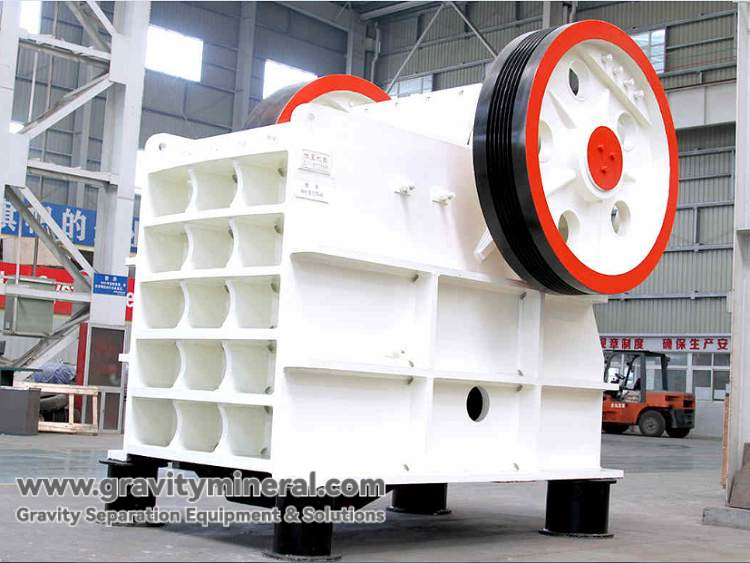
A Practical Configuration Approach
Let\'s be more specific. Suppose a mining company has a silty gold deposit in Yunnan or Guizhou. The ore has a relatively high clay content, a medium-to-low gold grade, and consists primarily of fine-grained gold particles with uneven grain sizes.
Do not rush to feed the ore into a mill in the crushing and grinding stage. First, feed the ore into a drum washing machine to disperse the clay; the screen undersize is then sent to a classification unit.For the coarse fraction, if the gold has already been liberated, feed it directly into a pulsating chute for rough selection; if the gold is still trapped in the gangue, feed it into the grinding mill, but the grinding circuit must be equipped with a classifier to promptly overflow the qualified particle size fraction—do not allow it to be over-ground in the mill.The cost of over-grinding clay-bearing ore is far greater than that of ordinary ore; an excess of secondary clay renders all prior ore washing efforts futile.
The fine-grain fraction is fed into a centrifuge, and the concentrate is sent to a shaking table. The tailings from the shaking table and the centrifuge are combined; depending on the grade, they are either sent to a scavenging chute or directly to the tailings pond.This process is not complicated and requires relatively few pieces of equipment, yet it is far more adaptable to clay-bearing gold ores than the traditional “crushing–grinding–full-size-range gravity separation” approach.
The practical experience from a fine-grained disseminated gold deposit in Guizhou serves as a useful reference: the raw ore had a relatively high clay content and fine-grained gold distribution. By adopting an approach of ore washing to remove clay followed by graded gravity separation, the comprehensive recovery rate in the gravity separation section reached a high level compared to similar mines, and the concentrate grade met the requirements for on-site smelting or external sale.Specific figures vary from mine to mine; no absolute guarantees are made here.
| Project | Traditional Full-Grain-Size Gravity Separation | Ore Washing + Graded Re-selection | Explanation of Differences |
|---|---|---|---|
| Grinding Energy Consumption | Relatively high; silty ores are prone to overgrinding | Relatively controllable; coarse particles are rejected early, and fine particles are recovered early | Grinding is performed as needed after ore washing, reducing unnecessary grinding |
| Gravity Separation Feed Conditions | Significant interference from clay content; unstable bed layer | Silt has been removed, resulting in a cleaner sorting environment | Significant improvements in the efficiency of centrifuges and shaking tables |
| Recovery of fine particles | Excessive tailings loss in the chute | Dedicated scavenging using the centrifuge | The recovery gap for the fine-grain fraction is quite significant |
| Overall Recovery Rate | Varies depending on ore properties | Varies depending on ore properties | Subject to test data from ore samples |
Equipment is only half the story; the other half lies in process design and on-site commissioning
For this ore washing and gravity separation line, selecting the right equipment is only half the battle. I\'ve seen many projects where individual pieces of equipment perform well on their own, but when connected, the system just doesn\'t run smoothly.The problem often lies in the interfaces: the processing capacity of the ore washer doesn\'t match that of the screening equipment, causing material blockages; the feed concentration to the centrifuge fluctuates too much, resulting in inconsistent concentrate grades; or the chute slope is adjusted according to the manual, but the actual water flow on-site falls far short of the design value.
Mud-bearing gold ore is even more sensitive to process coordination than ordinary ore. Any fluctuation in the amount of mud causes the water balance of the entire line to shift.If the ore washing section uses even a little more water, the thickener downstream can\'t handle the load; if the washing section uses a little less water, the mud isn\'t washed out thoroughly. This balance cannot be calculated from blueprints alone—it must be fine-tuned on-site.
This is why, for gold ore processing projects involving mud-bearing ore, it is best to have both equipment supply and process design handled by a single team. That way, the team knows exactly who manufactured the equipment and where the parameter limits lie, allowing for confident on-site adjustments.GravityMineral\'s approach in this area combines an in-house manufacturing facility with an in-house design team. Since the ore washing equipment, gravity separation equipment, and process design all come from a single source, the same team is responsible for ensuring interface compatibility and aligning production capacity.Our gravity separation engineers visit the site to lead individual equipment commissioning and integrated trial runs with actual feed material, and the project is not considered complete until the production line is running smoothly and performance indicators are stable. For operations involving muddy gold ore—where “a fluctuation in the ore washing section causes the entire line to wobble”—this model of integrated responsibility is far more reliable than simply selling equipment and walking away.
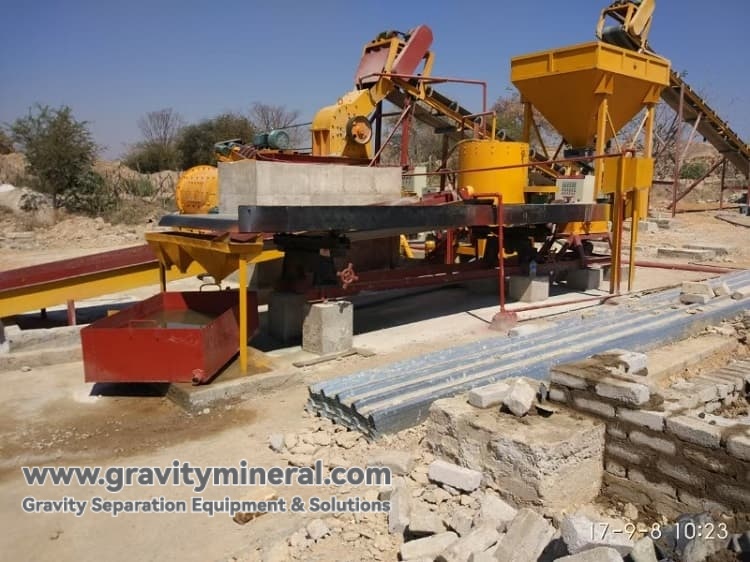
Common Technical Issues
Not recommended. If the fine silt in the ore washing overflow is directly returned to the washing section, it\'s equivalent to pouring back the silt that has already been separated. The fine silt will re-coat the ore particles, causing washing efficiency to decline with each cycle. At a minimum, run it through a thickener once; reuse the clarified overflow, and process the underflow separately.
First, check the de-sliming effectiveness in the ore washing section. Centrifuges are highly sensitive to fine slime in the feed; excessive slime destabilizes the fluidized bed, causing both concentrate grade and recovery rate to fluctuate. If the ore washing process is functioning properly, then examine the centrifuge\'s fluidization water pressure and feed concentration—significant fluctuations in these parameters will also prevent achieving good performance metrics.
Perform a sieve analysis on the tailings. If the gold is concentrated in the coarse particle size fraction, it indicates a problem with bed management in the chute or jig; if it is concentrated in the very fine particle size fraction, it is most likely due to improperly adjusted centrifuge parameters or oversize loss in the washing section—some fine-grained gold was carried away with the overflow during washing and never entered the gravity separation process.
Conclusion and Recommendations
The process of washing and gravity separation of clay-bearing gold ore is, at its core, a matter of “matching.” The intensity of the washing process must match the clay content; the gravity separation equipment must match the particle size distribution; and the water volume must match the recirculation conditions. Only when all three are properly matched can recovery rates be guaranteed; if even one is mismatched, the entire line will be held up.Solutions for the washing and gravity separation of clay-bearing gold ore vary greatly; both recovery rates and investment scales depend on the ore\'s properties, site conditions, and production capacity targets. Conducting preliminary feasibility tests using ore samples is far more reliable than relying on any empirical figures.
If you would like to learn more about equipment configurations and process designs for the washing and gravity separation of clay-bearing gold ore, please submit data on the ore\'s clay content, gold particle size distribution, and grade to us to receive tailored recommendations.