







How to Choose Slope-Accumulation Gold Re-concentration Equipment? A Comparison and Selection Guide for Three Processes: Chutes, Jigging, and Shaking Tables
When selecting equipment for the reprocessing of alluvial deposits, a common misconception is to view chutes, jigs, and shaking tables as mutually exclusive alternatives—as if one must be chosen over the others.With three quotes on the table—the chute being the lowest, the jig in the middle, and the shaking table seemingly not too expensive—decisions based solely on price often lead to significant discrepancies between actual recovery rates and expectations once the equipment is installed.
The problem lies not with the equipment itself, but with its incorrect placement in the processing flow. Alluvial gold deposits have high clay content, fine gold particles, and dispersed ore bodies; it is difficult for any single gravity separation device to independently complete the entire process from raw ore to qualified concentrate.Selecting the right heavy-medium separation equipment for alluvial gold essentially boils down to answering three questions: What equipment should be used in the roughing stage to handle high throughput? What should be used in the concentrating stage to maintain grade? And what should be used in the fine-grain stage to improve recovery?This guide to selecting alluvial gold separation equipment breaks down and compares three processes—chutes, jigs, and shaking tables—and explains their respective application limits item by item.
I. Decision-Making Issues to Address When Selecting Equipment for the Re-selection of Slope-Deposited Gold
Alluvial gold deposits are the result of primary ore weathering and subsequent short-distance transport and accumulation along slopes, falling between residual and fluvial deposits. Their typical characteristics include poor roundness, irregular gold particle shapes, significant fluctuations in clay content, and widespread instances of gold particles being encapsulated by clay.
Feeding this type of ore directly into gravity separation equipment presents two problems. First, clay clogs the troughs or bed layers, disrupting separation conditions; second, fine gold particles are carried by the water flow into the tailings, resulting in a significant drop in recovery rates.Therefore, when selecting equipment for the gravity separation of alluvial gold deposits, one must not focus solely on the price and nominal processing capacity of individual units, but rather configure the system according to the division of labor among process stages: the roughing stage handles tailings rejection and concentration; the scavenging stage focuses on grade enhancement; and the fine-grain stage addresses any gaps in separation.
The logical approach to configuring a placer gold reprocessing process is to assign each piece of equipment to the stage where it excels. Below, we examine the actual performance of chutes, jigs, and shaking tables in placer gold applications.
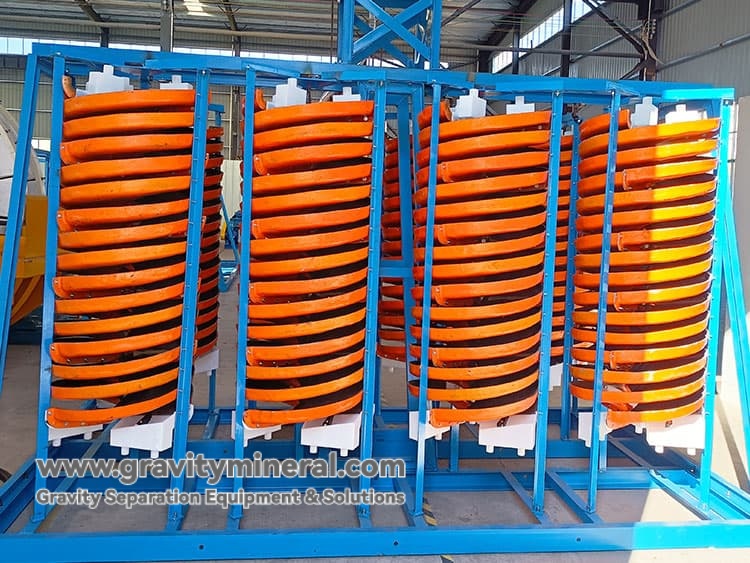
II. Chutes: A Low-Cost Solution for Rough and Sweep Concentration of Alluvial Gold
Chutes are the simplest type of equipment used in alluvial gold gravity separation. The slurry flows down an inclined chute, with denser gold particles settling into the felt mats or grating laid at the bottom of the chute, while lighter sand and gravel are carried away by the water flow.In alluvial gold applications, agitated or peristaltic sluices are commonly used; these incorporate a reciprocating agitation motion at the bottom of the trough to process gold particles encapsulated in clay.
In terms of advantages, sluices have a low investment threshold. While there is a wide price range between standard sluices and agitating sluices, they generally represent one of the more cost-effective options among gravity separation equipment. The equipment requires no electric power or only a low-power motor; in remote mining areas, it can operate using a diesel engine to drive a water pump.Their simple structure allows operators to become proficient after only a short training period. For alluvial gold deposits with dispersed ore bodies that require frequent relocation, the chutes are easy to assemble and disassemble, resulting in low relocation costs.
The shortcomings are equally clear. Conventional fixed sluices have limited recovery capacity for ultrafine gold particles, whereas alluvial gold deposits consist primarily of fine and ultrafine particles.Improved agitated chutes have enhanced the recovery of fine-grained gold, but performance depends on feed size control, mud content management, and operational parameter adjustments; performance fluctuates significantly when site conditions are not optimal. Additionally, the chutes produce a crude concentrate with a relatively low grade, which must be processed through supplementary concentration equipment to yield a qualified product.
Application Scope: The roughing and scavenging stages of alluvial gold deposits, or as a roughing module for mobile integrated washing and beneficiation units. The ore must be washed and de-silted prior to feeding; otherwise, sludge buildup on the chute surface will significantly impair separation efficiency.
III. Jig: The High-Throughput Choice for the Coarse-Grain Section of Alluvial Gold
Jigging machines rely on vertical alternating water flow to stratify ore particles by density. The rising water flow loosens the bed layer, while the descending water flow causes heavy minerals to settle at the bottom and light minerals to be carried out with the water flow. With high processing capacity and a wide feed size range, jigging machines are one of the primary options for the roughing stage in alluvial gold gravity separation processes.
In the alluvial gold gravity separation process, the optimal position for a jig is in the front-end roughing stage.After the ore is screened following washing, the undersize material enters the jig, which rapidly removes a large amount of gangue and concentrates coarse-grained gold and some medium-grained gold into a coarse concentrate. For alluvial gold deposits with a high proportion of coarse-grained gold, the jig plays a significant role in recovering coarse-grained gold early in the process, thereby reducing over-grinding and loss in subsequent stages.
The limitations of the jig are concentrated in the fine-grain fraction. Fine gold particles have difficulty effectively settling to the bottom during the jigging process and are easily discharged along with light minerals into the tailings. This loss is determined by the sorting principle of the equipment; adjusting operating parameters can only mitigate it, not eliminate it entirely.Additionally, jigging machines have relatively high water consumption; mining areas with limited water resources must assess water supply capacity in advance.
Application Scope: The roughing stage of alluvial gold deposits, particularly suitable for ore with a high proportion of coarse-grained particles. When the raw ore has a high clay content, a washing and desliming process must be installed upstream of the jig; otherwise, the bed layer will be disrupted by clay, leading to reduced separation efficiency. Equipment investment falls within the moderate range, depending on specifications and configuration.
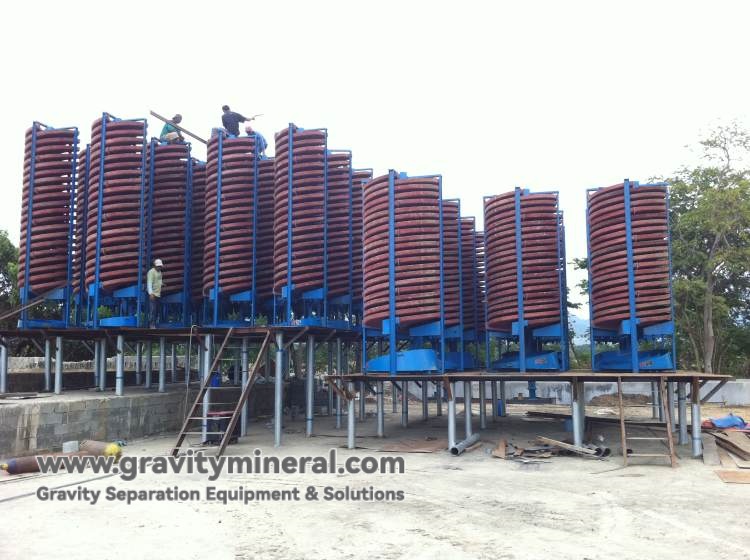
IV. Shaking Tables: Equipment for Ensuring Grade in the Concentration Stage of Alluvial Gold Deposits
Shaking tables are among the most precise separation devices in gravity separation equipment. The inclined bed surface, combined with asymmetric reciprocating motion, causes mineral particles to form distinct zones on the bed surface based on density, with concentrate, middlings, and tailings discharged separately. Shaking tables offer a high enrichment ratio and can produce high-grade concentrate in a single pass.
In the gravity separation process for alluvial gold, the shaking table is positioned at the final concentration stage. Coarse concentrate produced by chutes or jigs enters the shaking table for further purification, raising the concentrate grade to a level that meets sales or smelting requirements.For alluvial gold deposits, where the yield of coarse concentrate is low, the low throughput of the shaking table no longer constitutes a bottleneck—since the amount of material processed in the fine selection stage is inherently limited.
The primary limitation of shaking tables is their processing capacity. Since the feed capacity of a single shaking table is limited, feeding raw ore directly into them would require a large number of units, occupy a significant amount of space, and involve complex management—making it economically unfeasible. Shaking tables are only suitable for processing small quantities of pre-concentrated material; this must be clearly understood when selecting equipment for the gravity separation of alluvial gold.At the operational level, parameters such as bed slope, stroke, stroke frequency, and feed concentration must be adjusted according to the properties of the ore; operational proficiency directly impacts separation efficiency.
Application Scope: The fine-selection stage for alluvial gold, processing coarse concentrate from sluices or jigs. The feed particle size should be kept within a relatively fine range; it is best to feed the material into the shaking table after classification, as feeding a wide range of particle sizes will affect the banding effect.
V. Multidimensional Comparison of Chutes, Jigging Machines, and Shaking Tables
| Comparison Dimensions | Chutes (Agitation Type) | Jig | Shaking Table |
|---|---|---|---|
| Effective Recovery Particle Size | Fine to medium grains; the agitation type offers improved recovery of ultrafine grains | Primarily medium to coarse particles; recovery of fine particles is relatively weak | Primarily fine particles; results are even better after classification |
| Processing Capacity | Moderate, depending on specifications | High; suitable for the roughing stage | Relatively low; suitable for the roughing stage |
| Concentrate Grade Capacity | Relatively low; requires supplementary fine sorting | Moderate; requires supplementary fine sorting | High; can produce final concentrate |
| Investment level | Low | Moderate | Moderately low; configured based on the number of units |
| Operating Cost Characteristics | Low power consumption; simple manual maintenance | Relatively high water consumption | Low power consumption, but requires more skilled operation |
| Sensitivity to sludge content | High; requires pre-mineral washing | Moderate; requires pre-treatment to remove sludge | Moderate; feed material should be relatively clean |
| Position in the alluvial gold processing flowchart | Roughing, scavenging | Roughing (coarse-grain section) | Concentration (final purification) |
| Major Weaknesses | Unstable recovery of fine-grained gold; low grade | Loss of fine-grain gold; high water consumption | Low processing capacity and relatively high operational complexity |
This comparison table illustrates a fundamental principle: in the gravity separation process for alluvial gold, chutes, jigs, and shaking tables operate in a relay-like sequence. A reasonable configuration for alluvial gold gravity separation involves using chutes or jigs for roughing after ore washing and desliming, with the rough concentrate then fed into a shaking table for fine selection.Relying on a single piece of equipment to handle the entire process will result in either substandard grade or unsatisfactory recovery rates.
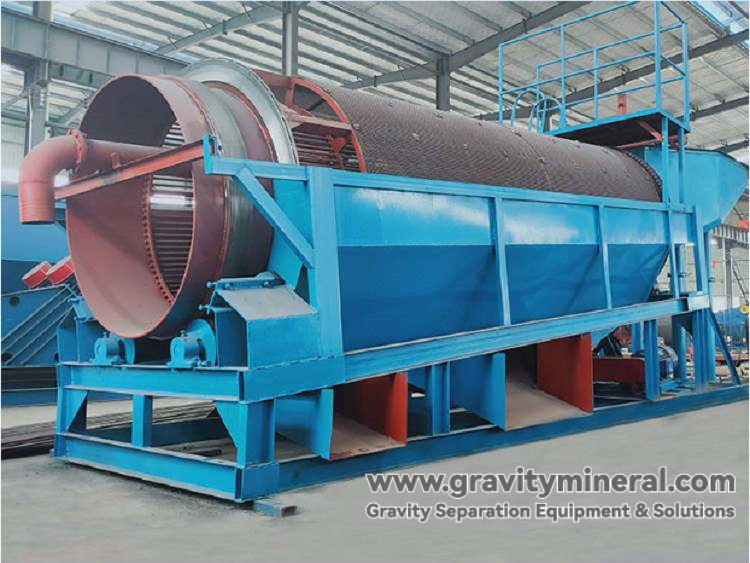
VI. Recommendations for Selecting Alluvial Gold Re-concentration Equipment
In situations where the ore body is dispersed, frequent relocation is required, and the budget is limited, a mobile configuration centered on vibrating chutes can serve as a starting solution. Vibrating chutes are quick to assemble and disassemble and do not require a fixed foundation; once the rough concentrate is consolidated, it is sent to a shaking table for fine concentration or sold to a processing plant with fine concentration capabilities.The key to this approach is thorough ore washing prior to feeding, with the agitation frequency adjusted appropriately based on the size of the gold particles.
For medium-scale operations with relatively fixed mining sites and a high proportion of coarse gold, a configuration using jigging machines for roughing and shaking tables for fine selection is more appropriate. The jigging machines handle tailings rejection and concentration, while the concentrate volume is reduced to a level that the shaking tables can handle.A mineral washing and desliming unit must be installed upstream of the jig; if the mud content is high and the ore is fed directly without desliming, the sorting conditions of the jig bed will be compromised.
When gold particles are predominantly fine or ultrafine, the recovery efficiency of both sluices and jigs is limited. In such cases, consideration should be given to introducing gravity separation equipment designed for fine and ultrafine particles, such as centrifugal separators, with shaking tables serving as a supplementary means of fine selection.For this type of ore, it is recommended to first conduct a particle size analysis to determine the distribution of gold particles across different size fractions before finalizing the combination of gravity separation equipment for alluvial gold deposits, thereby avoiding blind configuration based solely on experience.
General Principle: Investment in the ore washing and desliming stages for alluvial gold deposits should not be cut back. For raw ore with high clay content, feeding it directly into any gravity separation equipment without prior desliming will result in lower recovery rates.Clay must first be liberated to ensure stable sorting conditions for subsequent gravity separation equipment. The key to selecting gravity separation equipment for alluvial gold deposits lies not in comparing the prices of individual units, but in placing each piece of equipment in the correct position within the process flow.
VII. Common Issues in Selecting Alluvial Gold Gravity Separation Equipment
Q: Is it possible to start production with just one piece of alluvial gold gravity separation equipment?
A: It depends on the product requirements. Purchasing only a chute or a jig can produce a rough concentrate, but its grade will be low, typically requiring it to be sold externally or undergo secondary concentration. To directly produce a qualified concentrate, the shaking table concentration stage generally cannot be omitted.Operating a single piece of equipment is suitable as a transitional solution; for long-term operation, it is recommended to configure a process involving both roughing and concentrating stages.
Q: What should be prioritized when selecting equipment for alluvial gold deposits with high clay content?
A: Selecting ore washing and de-silting equipment takes priority over selecting gravity separation equipment. When clay content is high, the performance of all three types of equipment—chutes (where the chute surface becomes clogged), jigs (where the bed layer becomes disordered), and shaking tables (where zone separation becomes unclear)—will be compromised.A more reliable sequence is to first use a trommel washer or scrubber to liberate the clay, and then select roughing equipment based on the properties of the undersize material.
Q: Both jigs and sluices can be used for roughing. How should one choose between them?
A: It depends on the gold particle size and processing scale. When coarse gold accounts for a high proportion and the processing volume is large, jigging machines offer better enrichment efficiency and tailings disposal capacity.When the ore body is dispersed, site changes are frequent, or investment is limited, the flexibility of agitated sluices is more prominent. The two are not mutually exclusive; some alluvial gold gravity separation processes combine jigs for roughing and sluices for scavenging.
Q: Shaking tables have a low processing capacity, so why include them?
A: The value of a shaking table lies in grade, not throughput. In alluvial gold beneficiation processes, the amount of rough concentrate produced by roughing equipment is limited, so the shaking table\'s low throughput does not create a bottleneck; rather, it offers a level of separation precision that neither sluices nor jigs can match.Incorporating a shaking table into the fine selection stage is a key component in enhancing the value of the final product within a colluvial gold beneficiation setup.
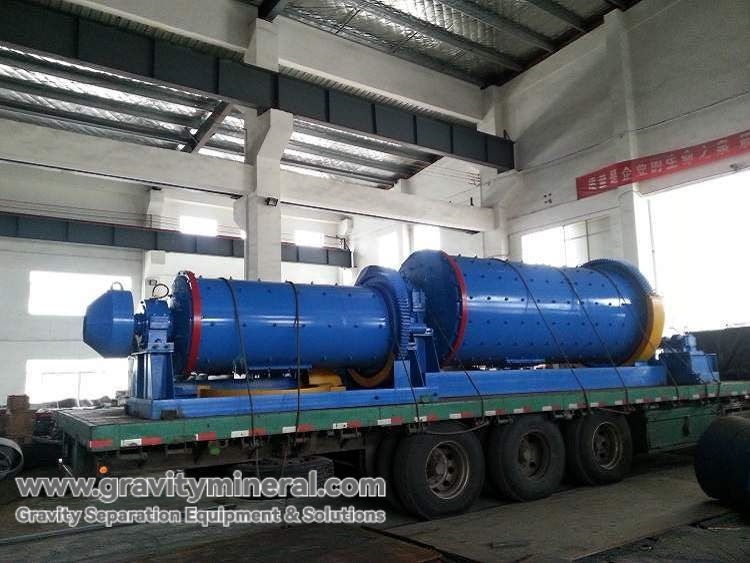
Returning to the question of how to select equipment for alluvial gold gravity separation, the answer lies not in the quotation sheet, but in the properties of the ore and the process configuration. Chutes are suitable for roughing and scavenging; jigs excel at enriching the coarse-grain fraction; and shaking tables ensure the grade in the fine-selection stage. Each of these three processes has its place, and the key to selection is ensuring they each fulfill their specific roles.
A reliable three-step approach to selecting alluvial gold recovery equipment is as follows: take representative ore samples for particle size analysis to determine the distribution of gold particles; determine the roughing equipment based on processing capacity and ore body conditions;conduct fine-selection tests using rough and concentrate samples to verify whether the final grade meets specifications. There is no one-size-fits-all template for alluvial gold gravity separation processes; a equipment combination tailored to the specific conditions of the ore deposit is the only reasonable selection outcome.