







How to Design a 200-metric-ton-per-day Gold Gravity Concentration Plant? A Continuous Production Line Solution for Gravity Concentration, Thickening, and Enrichment
- The key to a 200-metric-ton-per-day gold gravity concentration plant lies not in individual pieces of equipment, but in the seamless integration of the entire production line. If the jig, spiral chute, and shaking table each operate independently—with mismatched production capacities—the operation will not be profitable, no matter how high the recovery rate.
- The gold gravity separation process emphasizes “early recovery.” The primary principle in designing a gravity separation production line is to intercept coarse free gold early in the grinding circuit to prevent over-grinding and sludging.
- The most problematic stage in a continuous gravity concentration and beneficiation production line is the thickening process. Since the feed from gravity concentration fluctuates significantly, if slurry buffering and adjustment are not handled properly, issues such as turbidity in the thickener or rake jamming are bound to occur.
- Grinding fineness cannot simply be copied from flotation plant standards. Gravity separation equipment for gold requires better liberation than fine particle size; over-grinding actually results in the loss of coarse-grain gold.
- It is best to manage equipment, processes, and commissioning as a single, integrated system. Piecing together disparate components from different suppliers risks interface conflicts, and when performance issues arise, it becomes difficult to determine responsibility.
Gold gravity separation is not a new process. The density difference is clear: gold at 19.x, gangue at 2.x. Water flows to wash and settle—it\'s physical separation that requires no chemicals.The principle is simple, but getting a 200-metric-ton-per-day gold gravity separation plant running smoothly from start to finish depends not on the principle itself, but on the seamless integration of every step.
There was a placer gold mine owner who set up two production lines over time.For the first one, he pieced it together himself: buying the jig from one company, the shaking table from another, sourcing the thickener from a third, and having someone draw up the blueprints. Once it was installed and running, the concentrate produced by the jig in one hour took the shaking table two hours to process, and the pump in between kept clogging every other day.For the second line, he took a different approach: he had a single company handle the process design, equipment supply, and on-site commissioning, and it was up and running smoothly within three months. He made a candid observation: “The gravity separation equipment itself isn\'t bad; what\'s lacking is someone who can string these pieces together into a line that actually works.”
This observation is particularly apt when applied to a 200 metric tons per day gold gravity concentration plant.
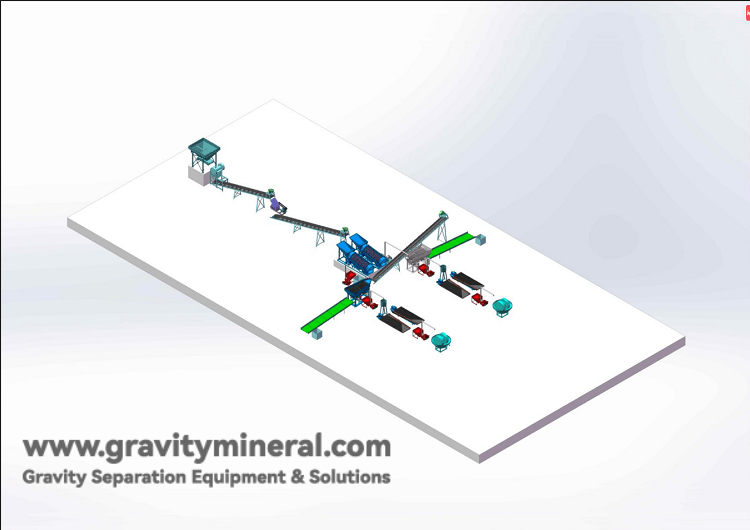
I. For a 200 metric tons per day gold gravity concentration plant, the biggest fear is that individual machines work fine but the entire line falls apart when connected
A 200 metric tons per day capacity translates to an hourly throughput of eight to ten metric tons. This scale—neither too large nor too small—makes it particularly easy to make two common mistakes when selecting equipment.
One is selecting equipment based on the mindset of a large-scale plant. While a high-capacity jig may sound appealing, opting for a large-area model outright often results in insufficient feed rates—the bed layer cannot be properly formed—and the separation efficiency ends up being worse than that of a smaller, more stable machine.The other is purchasing equipment for each stage separately—crushing is handled as a standalone process, and gravity separation as another. This leads to mismatches between the discharge size of the jig and the feed size of the shaking table, as well as between the concentrate output of the spiral chute and the processing capacity of the shaking table. When the entire gravity beneficiation line is operational, the interfaces are riddled with bottlenecks and idle time.
In a gold gravity concentration plant, production capacity balance has a greater impact on final performance metrics than the sorting efficiency of any single piece of equipment.Gravity separation is like a relay race: if the jig runs too fast, the shaking table can\'t keep up, causing coarse concentrate to accumulate in the middle of the circuit and fine-grain gold to be lost in the overflow; if the jig runs too slow, downstream equipment is starved of feed, the line\'s total throughput remains low, and the cost per metric ton of ore cannot be reduced.
Therefore, the configuration logic for a 200 metric tons per day gold gravity separation plant is not to purchase the most expensive equipment for each unit, but to ensure that each unit is properly matched with the upstream and downstream processes.Process design and equipment manufacturing should be carried out by a single team. When manufacturing a jig, it is essential to clearly understand how many shaking tables will follow it and what the feed concentration should be, ensuring that interfaces and production capacity are aligned in advance—this is the organizational approach that should be prioritized when selecting equipment for gold gravity separation.What you should be purchasing is not just a collection of individual pieces of equipment, but a continuous production line capable of processing ore from start to finish—covering gravity separation, thickening, and concentration.
II. Gold Heavy Media Separation Process Flow: Early Recovery of Coarse Particles, Retaining Fine Particles for Later Stages
The boundaries of gold gravity separation are clear: the gold must be liberated and of sufficient size.
Jigging machines are suitable for feed sizes ranging from approximately 0.2 to 20 millimeters and are highly effective at processing coarse, free-standing gold. Shaking tables handle a finer range—from 0.074 to 2 millimeters—achieving higher concentrate grades but with lower throughput per unit.Spiral chutes fall in between; they are suitable for large-scale roughing and tailings removal, but with a low enrichment ratio, producing a coarse concentrate that still requires further processing by shaking tables. These three methods complement each other rather than competing with one another.
For a 200 metric tons per day operation, a practical gravity separation process for gold mining is as follows: the jig serves as the primary roughing stage, the spiral chute performs sweeping, and the shaking table handles the fine selection.The crushing and grinding stage follows the principle of “more crushing, less grinding.” A jig is incorporated into the grinding circuit to recover coarse free gold in advance, thereby reducing losses due to over-grinding and slime formation.
However, no matter how effectively coarse-grained gold is recovered, there will always be a portion of gold in the ore that is fine-grained or tightly associated with sulfides—gold that cannot be separated by gravity. The fate of this gold must be clearly defined during process design.Taking rock gold ore as an example, the gravity separation section is followed by flotation or leaching to handle the tailings, with coarse-grain gold recovered early in gravity separation and fine-grain gold recovered later via flotation or leaching—a two-pronged approach. For placer gold deposits, the focus is on ore washing and screening; when clay content fluctuates significantly, the thoroughness of the washing process directly determines the success or failure of gravity separation.
The core consideration in designing a gold ore gravity separation process is determining what percentage of the total gold the gravity separation section can recover. This figure must be based on mineral processing tests—it cannot be decided on a whim.
III. Continuous Production Line for Gravity Concentration and Refining: The Concentration Stage Is a Hidden Minefield
Although the project name specifies a “Continuous Gravitational Concentration and Enrichment Production Line,” many people focus entirely on the gravity separation stage. In reality, the concentration stage is where problems most frequently arise on this line.
Gravity concentrate and flotation concentrate are two entirely different things. Flotation concentrate is scraped off as foam, with stable concentration and uniform particle size. But what about gravity concentrate? Jig concentrate is discharged intermittently, in bursts, with concentration fluctuating wildly; shaking table concentrate is even smaller in volume, sometimes coming out in a trickle.When fed directly into the thickener, the liquid level surges in bursts; if too little flocculant is added, the slurry becomes turbid, and if too much is added, the underflow pump gets clogged.
A more reliable approach is to install a buffer agitation tank before the gravity concentrate enters the thickener; its volume should be sufficient to hold two to four hours\' worth of feed.First, merge the concentrates from the jig and shaking table into the tank, add water to adjust the slurry consistency, stabilize the concentration within a reasonable range, and then feed it uniformly into the thickener. This step requires minimal investment but can significantly reduce the failure rate of the thickening section.
There is another point that is easily overlooked. Gravitational concentrate often contains heavy mineral intergrowths such as pyrite and arsenopyrite, which have high density and settle along with the gold. These materials settle rapidly and tend to accumulate and form crusts near the underflow outlet. Sufficient design margin must be allowed when selecting the thickener underflow pump; this is not an area where costs should be cut.
The concentration stage also requires room for adjustment. The slope, stroke, and stroke frequency of shaking tables are adjustable; the stroke and stroke frequency of jigs are adjustable; and spiral chutes can be replaced with models of different pitches—the operational tolerance of a continuous gravity concentration and concentration production line relies precisely on the flexibility provided by these adjustable parameters.
IV. Equipment Configuration and Investment Logic for Gold Gravity Concentration Plants
The equipment configuration for a 200 metric tons per day gold gravity concentration plant, organized by processing stage, is roughly as follows.
| Process Stage | Main Equipment | Configuration Highlights |
|---|---|---|
| Feeding and Washing | Vibrating feeder, drum washing machine | When the mud content is high, ensure thorough washing to produce feed material that meets the requirements for gravity separation |
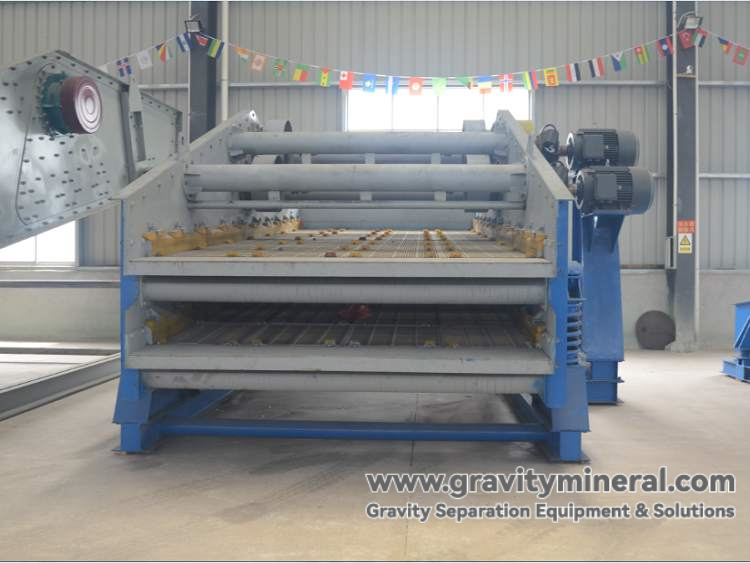
| Crushing and Screening | Jaw Crushers, Fine Crushing Equipment, Vibrating Screens | A two-stage, closed-circuit process is usually sufficient; for hard ores, a three-stage process may be required |
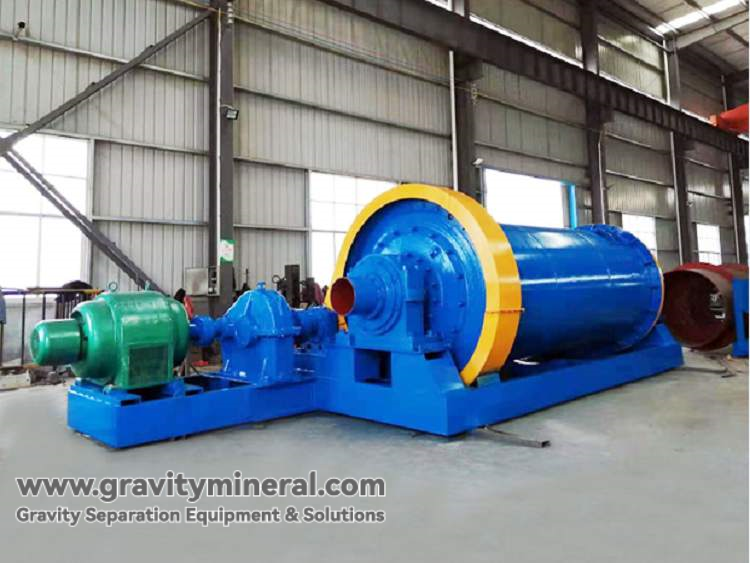
| Grinding and Classification | Ball mills or rod mills, spiral classifiers | Prioritize rod mills for brittle minerals to prevent overgrinding |
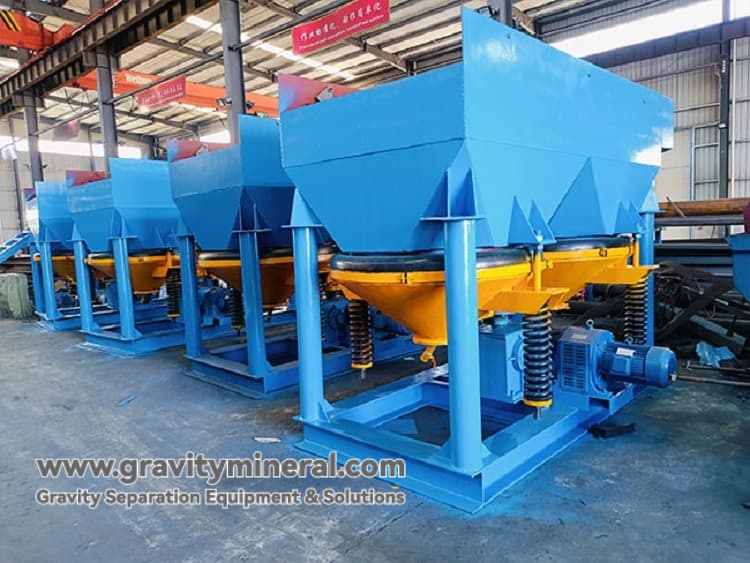
| Gravity Separation—Roughing | Sawtooth-wave jig | Early recovery of coarse-grained gold in the grinding circuit; stroke and frequency determined based on test data |
| Gravity Sweep Concentration | Fiberglass spiral chute | High throughput, no power consumption; used for tailings disposal |
| Gravity Concentration | 6-S shaking tables and centrifugal concentrators | Shaking tables produce the final concentrate; centrifuges recover fine particles |
| Concentration and Dewatering | Buffer agitation tank, thickener, filter press | Buffer tanks ensure stable feed; underflow pumps provide sufficient capacity |
| Tailings Management | Flotation cells or leaching equipment (selected based on ore characteristics) | Recovery options for fine-grain and intergrown gold |
In terms of investment, the total cost of a 200 metric tons per day gold gravity concentration plant varies significantly depending on ore properties, site conditions, equipment materials, and the level of automation; therefore, no absolute figures are provided here.However, a general framework can be provided: the main gravity separation unit accounts for only a small portion of the total investment in the plant; the bulk of the cost lies in the crushing, grinding, thickening, and dewatering sections. Therefore, when allocating the budget, funding for grinding and thickening should not be cut; instead, the model of the main gravity separation unit should be selected based on test data, and it is better to allow a 10% margin based on processing capacity rather than blindly oversizing the unit.
In terms of operating costs, gravity separation requires no reagents, and electricity consumption is concentrated in the crushing and grinding stages; the cost per metric ton of ore is typically lower than that of a flotation plant of the same scale. However, this advantage is contingent upon not excessively pursuing fine grinding.The key to gold gravity separation equipment is liberation, not fine grinding. Coarse-grained gold can be liberated at a relatively coarse grind size; grinding too finely not only consumes more electricity but may also pulverize already liberated coarse-grained gold, causing it to slip through the jig screen.
V. Which Ores Are Suitable for Gold Gravity Concentration Plants, and Which Require Caution
It is important to note upfront that gold gravity separation plants are selective about the ores they process.
Suitable ores are those with coarse gold particles, good individual liberation, and relatively low clay content.For quartz vein-type gold deposits and certain altered rock-type gold deposits, the gravity separation stage can yield good results. For placer gold deposits, after washing and screening, a combination of jigging and shaking tables is a well-established method. For rock-type gold deposits, the gravity separation stage combined with flotation or leaching as a backup is also a common approach.
Caution is warranted for ores in which gold is disseminated as very fine grains within sulfides or gangue. In such ores, the recovery rate achievable through the gravity separation stage is limited; the main process must rely on flotation or leaching, with gravity separation serving only as an auxiliary pre-concentration step.
The assessment method is straightforward: take a representative ore sample and conduct a gravity separation probe test. Grind the sample to the target fineness and run it through a shaking table or centrifuge to determine the proportion of gold in the gravity concentrate relative to the total gold content.If the proportion is high, the gravity separation line is worthwhile; if it is low, seriously consider a combined gravity-flotation process rather than insisting on gravity separation alone. Any recovery rate promise that ignores the nature of the ore is unreliable; conducting tests before finalizing a plan is a prudent starting point for gold ore gravity separation projects.
VI. From Equipment Selection to Commissioning: Timeframe Expectations for Gold Ore Gravity Concentration Projects
For a 200 metric tons per day continuous gravity concentration and beneficiation production line, the time from initial discussions to production start-up varies significantly depending on the complexity of the ore type, the extent of equipment customization, logistics distance, and on-site conditions. A general reference framework can be provided.
Requirement discussions and plan finalization typically take one to three weeks, though this may take longer for complex ore types or cases requiring sample testing. The equipment manufacturing cycle depends on the model and degree of customization; standard gravity separation equipment is relatively quick to produce, while production lines incorporating large-scale grinding equipment or non-standard customizations will take correspondingly longer.On-site installation and commissioning are heavily influenced by the progress of civil engineering work and the skill level of local workers, making them the primary source of schedule fluctuations.
Planning ahead and allowing sufficient buffer time for transitions is more practical than trying to compress the time for individual stages. Commissioning is not the end goal; the gold gravity concentration plant is only considered fully delivered once commissioning meets standards, performance indicators are stable, and the operations team can operate the facility independently.
VII. Some Observations on Equipment Suppliers
There are many domestic manufacturers capable of producing gold gravity separation equipment; the structures of jigs, shaking tables, and spiral chutes are not complex. What truly sets them apart is the degree of integration between the equipment and the process, as well as whether on-site commissioning can successfully get the line up and running.
Take GravityMineral as an example: with two decades of experience in gravity separation, the company manufactures its core equipment at its own production facilities. Process design and equipment manufacturing are handled by the same team, and engineers are stationed on-site to guide installation and integrated commissioning.The value of this organizational structure lies in its closed-loop accountability: the equipment is manufactured in-house, the process is designed in-house, and on-site commissioning is handled in-house. When interfaces are mismatched or performance targets are not met, there is no room for passing the buck.
Their service model is also flexible: they can handle individual equipment replacements, provide design drawings only, or send engineers for on-site commissioning—without requiring the purchase of a complete package. For a 200 metric tons per day operation undergoing retrofitting, replacing just one or two core gravity separation units is often sufficient to achieve results, eliminating the need to completely overhaul the entire line.
It\'s important to note that any equipment manufacturer\'s case studies are for reference only; the final solution must be based on test data from the client\'s own ore samples. The rationality of a gold ore gravity separation process relies half on experience-based matching and half on experimental validation—neither can be overlooked.