







Is Re-processing Gold Ore Costly? Uncover the 5 Key Strategies for Reducing Mineral Processing Costs
Cost issues at gravity gold processing plants are rarely caused by any single piece of equipment. Rather, they result from the accumulation of a series of small inefficiencies: over-grinding, incomplete ore washing, improperly adjusted jig stroke, loss of fine-grain gold in tailings, and overly frequent replacement of wear parts.While each of these issues may seem insignificant on its own, when combined, they erode profit margins. With the goal of reducing processing costs in mind, we will now break down the cost structure of a gravity gold processing plant across five dimensions and provide actionable strategic recommendations.
Key Findings at a Glance:
- The bulk of gravity separation costs stems from grinding and fine-particle loss, not the jig itself
- “Recover as early as possible” is the first principle of cost reduction in gravity separation; moving the jig upstream into the grinding circuit is a representative measure
- Inadequate ore washing and screening/classification prevent downstream gravity separation equipment from achieving optimal separation efficiency
- Having a single team manage both equipment and processes ensures interface compatibility and production capacity alignment, thereby reducing systemic waste
- In-house design and on-site commissioning by engineers—hidden costs warrant closer scrutiny than the equipment price itself
I. Where Exactly Do the High Costs in Gravity-Based Gold Processing Plants Lie?
Many processing plants focus solely on electricity costs when calculating expenses. Since gravity separation plants do not use chemicals, electricity costs do indeed account for a significant portion; however, several other factors are what truly drive the difference in cost per metric ton of ore.
Over-grinding is the number one hidden cost. In rock gold ores, the grain size distribution of free gold is uneven. If coarse-grained gold is not recovered early in the grinding circuit, it will be repeatedly ground in the ball mill until it becomes ultrafine particles that are difficult to recover via gravity separation.The finer the grinding, the higher the electricity consumption—yet the recovery rate from gravity separation actually decreases. This loss isn\'t visible on the books, but it manifests as a discrepancy in concentrate yield. For gravity separation gold plants, the grinding stage is often the first area where efforts to reduce processing costs should be focused.
Gold loss from fine slurry ranks second. Shaking tables and spiral chutes have clear lower limits for particle size; for ultrafine gold particles smaller than -0.074 mm, the recovery efficiency of conventional gravity separation equipment drops significantly. If there is no centrifugal separator in the process to capture these particles, this portion of the gold ends up in the tailings.
Incomplete ore washing is particularly evident in placer gold deposits and oxidized rock gold ores with high silt content. Silt coats heavy minerals, reducing the sorting efficiency of jigs. If the drum washer is undersized or water supply is insufficient, subsequent equipment ends up processing ore mixed with silt.
Mismatched equipment interfaces are the most unfortunate issue. Crushers, screens, jigs, and shaking tables come from different manufacturers; while each unit performs well on its own, their combined throughput does not match expectations, leading to material blockages or idle operation in intermediate stages. Electricity costs continue to be paid, but processing capacity remains low, naturally resulting in a high cost per metric ton of ore.
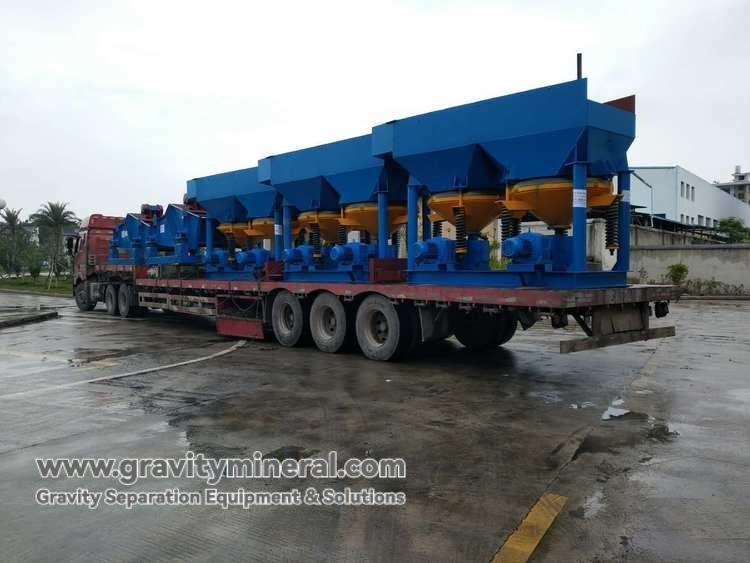
II. Strategy 1: Move the jig upstream into the grinding circuit to capture valuable minerals earlier
This is a representative cost-saving measure for rock gold gravity separation plants, yet it is often overlooked.
The conventional process is crushing, ball milling, classification, and gravity separation.Gold remains in the ball mill for too long, causing coarse-grained gold to be ground into fine or even ultrafine particles that cannot be recovered by the shaking table and must be sent to flotation or leaching as a last resort. Flotation requires reagents, and leaching requires sodium cyanide, thereby altering the cost structure.
By adopting the “recover early” process: the sand from the classifier first passes through a sawtooth-wave jig, where coarse free gold is captured before entering the ball mill; the jig concentrate is sent directly to the shaking table for fine selection, while the jig tailings are returned to the grinding circuit.The grinding load decreases, overgrinding is reduced, and the yield of gravity concentration concentrate actually increases.
Taking the retrofit of a rock gold mine in Yunnan as an example, after installing the jig upstream, the grinding fineness was appropriately relaxed, resulting in a noticeable decrease in ball mill power consumption and a positive improvement in the recovery rate of the gravity concentration gold concentrate.Such modifications do not require overhauling the existing process; the core change involves adding a jig and an accompanying sand pump to the grinding circuit. For gold mines currently evaluating ways to reduce processing costs, the cost-benefit ratio of this measure is typically quite clear.
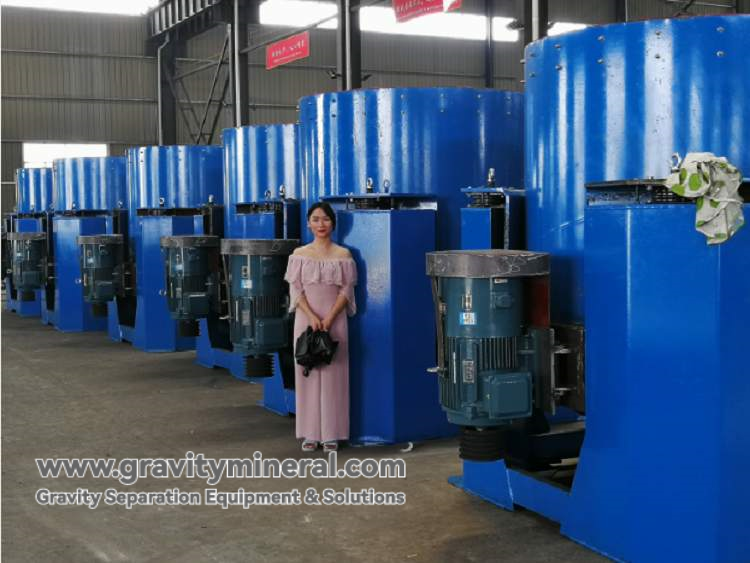
III. Strategy Two: Ensure Thorough Ore Washing and Screening—Don\'t Let Slurry Undermine Gravity Separation
For placer gold deposits and oxidized rock gold ores with high silt content, the ore washing section is the bottleneck of the gravity separation process. If this bottleneck becomes clogged, the entire subsequent process is rendered useless.
The selection of a drum washing machine is based on clay content and throughput; it cannot be estimated based on experience alone. For placer gold ores with high clay content, direct screening using a cylindrical screen has limited effectiveness; the ore must first pass through a drum washing machine to break up the clay clumps, and the undersize material is then fed into a jig or spiral chute.Sufficient water supply is essential; if water pressure and flow in the ore washing section are inadequate, the mud cannot be washed away, and the heavy minerals will be carried along by the slurry, making it difficult to establish a stable bed in the jig.
Screening and classification are equally critical. Gravity separation is extremely sensitive to particle size distribution; if coarse and fine particles are mixed during separation, while the coarse particles are recovered, the fine particles are likely to be lost as tailings. By incorporating hydraulic classification or vibrating screen classification before the spiral chute to control the feed particle size within the equipment\'s operating range, separation efficiency can be stabilized.
The investment here is modest—a drum washing machine plus a circular vibrating screen—yet the benefits are reflected in the recovery rates of all subsequent gravity separation equipment. The money saved on ore washing and screening is often spent twofold in subsequent stages. When gold mining plants calculate ways to reduce processing costs, this stage is often underestimated.
IV. Strategy 3: Capture Fine-Grain Gold—Do Not Skimp on Centrifugal Separators
The fine-grain fraction that shakers and spiral chutes struggle to process is precisely where the centrifugal concentrator excels.
A common source of loss in gravity separation plants is ultrafine gold in the -0.074 mm size fraction. The recovery efficiency of shaking tables for this size fraction drops significantly, and that of spiral chutes is even lower. Without a centrifugal separator in the process, this portion of the gold essentially ends up in the tailings. Yet, ultrafine gold often accounts for a significant proportion of gold in rock-type gold deposits.
The configuration logic is straightforward: instead of sending the tailings from shaking tables and the overflows from spiral chutes directly to the tailings pond, they are first processed through a centrifugal concentrator.Centrifugal concentrators utilize centrifugal force to enhance the separation of fine-grained heavy minerals; when the backwash water pressure is properly adjusted, recovery efficiency improves significantly. The centrifugal concentrate is then returned to the shaking table for final concentration or processed separately.
The operating costs of a centrifugal concentrator are low, with limited electricity and water consumption, yet it serves as the final link in the gravity separation process that ensures “every last bit is extracted.”Skipping this piece of equipment may save a small amount of money, but it results in the loss of concentrate. For gold mining plants pursuing lower beneficiation costs, whether or not to implement this fine-grain recovery step makes a significant difference in the long run.
V. Strategy 4: Assign a Single Team to Manage Both Equipment and Processes to Avoid Conflicts at Interfaces
This point does not involve specific process parameters, but it affects the underlying structure that determines the cost per metric ton of ore.
Equipment for a gravity separation line often comes from different manufacturers—crushers, screens, jigs, shaking tables, and dewatering screens are all purchased separately—and the coordination of interface dimensions and capacity matching relies entirely on the operator\'s own efforts.A common outcome is that the jig\'s throughput exceeds that of the shaking tables, leading to material buildup in the intermediate buffer stages; or there are not enough shaking tables, causing a backlog of jig concentrate and forcing the plant to operate at reduced capacity. Electricity costs remain the same, but throughput is compromised.
When process design and equipment manufacturing are handled by the same team, mechanical engineers building the equipment have a clear understanding of both the upstream feed rate and downstream separation requirements. Jig stroke and frequency are determined based on test data, shaking table inclines are set according to feed particle size, and spiral chute pitch is selected based on density differences.This ensures interface compatibility and production capacity alignment, reducing the disconnect caused by “mismatches between design drawings and equipment dimensions.”
Medium- to large-scale projects face an additional hidden cost: hiring a separate design institute to handle process and layout design. Design fees are substantial, and often the equipment manufacturer rejects the institute\'s drawings, while the institute refuses to modify them based on the manufacturer\'s requirements—leading to finger-pointing when problems arise. By handling the design in-house, costs are not compounded, and there are no gaps in accountability.This cost calculation becomes clear once it\'s done during plant construction, and it is also a crucial step in controlling total investment and reducing mineral processing costs at a gold ore processing plant.
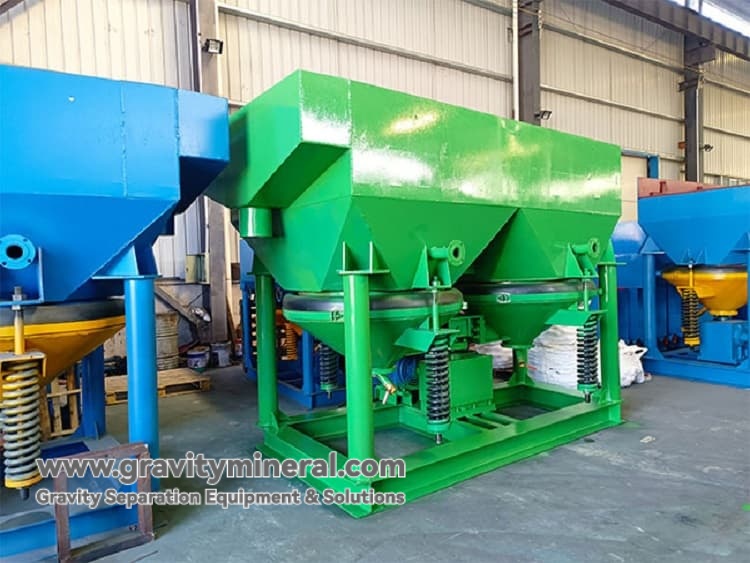
VI. Strategy 5: Wear Parts and Operating Parameters—Don\'t Settle for “Good Enough”
Among the operating costs of gravity separation equipment, the consumption of wear parts and parameter adjustments are two areas where expenses are often handled with a “good enough” approach.
The stroke and stroke rate of a jig are not fixed values. When the feed particle size is coarse and the density range is wide, increase the stroke; when there are many fine particles and the density range is narrow, decrease the stroke and increase the stroke rate.Incorrect parameters lead to lower recovery rates and unstable concentrate grades. The same principle applies to the slope, stroke frequency, and transverse flushing water volume of shaking tables—different particle sizes and density differences require different settings. These adjustments cost nothing but require on-site tuning by personnel knowledgeable in gravity separation.
Regarding wear-resistant components, the replacement cycle is directly determined by the material of the fiberglass-reinforced plastic (FRP) spiral chutes paired with corundum linings, the material of the jig screen plates, and the wear resistance rating of the sand pump\'s flow-through components.Placer gold deposits often contain a high proportion of gravel, leading to rapid wear on the spiral chute liners. Choosing cheap, low-grade wear-resistant parts results in frequent replacements, and the downtime losses far exceed the price difference between the spare parts. In extremely cold, high-altitude, or highly corrosive environments, equipment materials and motor power require non-standard customization; standard models are often inadequate.
VII. Solution Comparison: Piecemeal Assembly vs. Turnkey Delivery
| Comparison Dimensions | Piece-by-Piece Assembly Model | Turnkey Delivery Model |
|---|---|---|
| Equipment Interfaces | Standards vary by manufacturer; on-site adaptation required | Designed and manufactured by the same team; interfaces are compatible |
| Production Capacity Matching | Processing capacities of jigging machines and shaking tables often do not align | Process calculations determine equipment specifications and quantity |
| Design fees | Outsourced to a separate design institute; fees calculated separately | Design completed in-house; no additional fees |
| Allocation of Responsibility | Equipment manufacturers and construction crews may shift blame onto each other | A single entity is responsible for equipment, design, and commissioning |
| Commissioning Meets Standards | Figuring it out on your own or hiring a separate engineer | Engineer on-site to lead integrated commissioning |
| Cost per metric ton of ore | High levels of hidden waste; disproportionately high allocated costs | Seamless process integration, minimal production capacity waste |
This table is not intended to dismiss the bulk-handling model.For small-scale pilot lines or the replacement of individual pieces of equipment at older plants, the bulk model is entirely reasonable. However, for new full-scale lines or expansion and retrofit projects, the cost differences resulting from interface compatibility and production capacity alignment are often greater than the price difference for a single piece of equipment. This table can serve as a reference for gravity gold concentration plants when deciding on strategies to reduce processing costs.
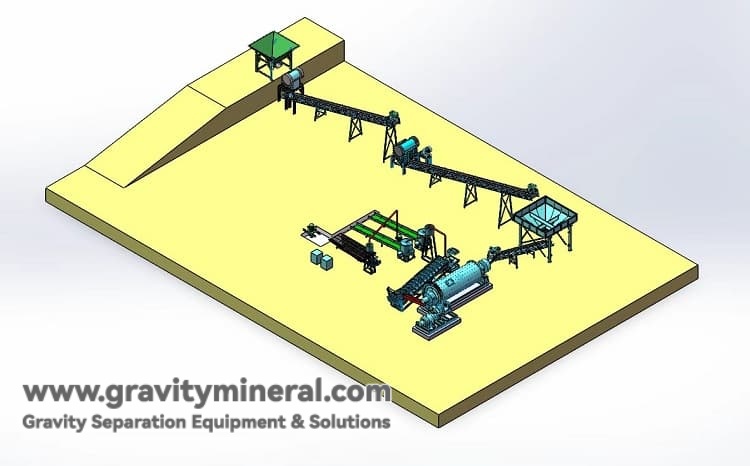
VIII. Common Technical Issues
Q: What is a reasonable recovery rate for gravity separation?
There is no single answer. Recovery rates are determined by differences in ore density, grain size distribution, and mineral associations. For ores with a high proportion of coarse-grained free gold, higher recovery rates can be achieved through gravity separation;for ores with a high proportion of fine-grained embedded or encapsulated gold, it is normal to use gravity separation as a pre-concentration method, with the tailings sent to flotation or leaching for final processing. The key is not to pursue an absolute figure, but to fully recover as much gold as possible through gravity separation given the specific conditions of the ore.
Q: An older plant isn\'t reaching its production capacity—should we replace the equipment or modify the process?
Start with a diagnostic assessment—don\'t rush to replace equipment. Common bottlenecks include incomplete ore washing, inadequate classification, and mismatched throughput between jigs and shaking tables.Collect on-site data: feed particle size distribution, clay content, recovery rates for each processing stage, and equipment operating parameters. Once the bottleneck is pinpointed, the solution may simply be adding a centrifugal separator or adjusting the jig\'s stroke—there\'s no need to start from scratch.
Q: The properties of the ore fluctuate significantly. Can the gravity separation process adapt to this?
Allow for flexibility in the design.Jig stroke and stroke frequency are adjustable; shaking table inclination is adjustable; and spiral chutes can be replaced with models featuring different pitch sizes. The range of ore variability is assessed through comparative testing with different ore samples during the pilot phase, and the operational tolerance limits are clearly communicated to the operating team during training. If fluctuations exceed this range, parameters or specific process steps may need to be adjusted—this does not indicate a failure of the process itself.
IX. Conclusions and Recommendations
The core logic of cost control in a gravity gold processing plant is not to purchase cheap equipment, but to ensure that the recovery rate and throughput are properly matched for each process stage.Placing a jig at the front end reduces power consumption during grinding; thorough ore washing and screening ensure separation efficiency; a centrifugal separator captures fine-grain gold; having a single team responsible for both equipment and process minimizes waste at interfaces; and wear parts and operating parameters are adjusted based on data rather than intuition. If these five principles are followed, reduced processing costs will naturally follow.
If you are conducting a cost analysis for a gravity separation plant or selecting equipment for a new line, please compile and submit your ore data—including ore type, grade, throughput, feed particle size, and clay content—and we will combine this with actual measurement data from gravity separation case studies to provide recommendations on process configuration and cost estimates. We review the data first, then discuss the solution.