







Recommended Manufacturers of Falcon Centrifuges (Gravity Separation) | Guide to Selecting High-Efficiency Mining Gravity Separation Equipment
Key Points
- The Falcon centrifuge is a type of centrifugal gravity separation equipment that uses centrifugal force generated by high-speed rotation to enhance the separation of fine-grain gold. It excels at recovering fine and ultrafine gold particles that conventional gravity separation methods cannot capture.
- When selecting a model, first consider the gold particle size, then the feed concentration and processing capacity, and only then discuss price—if the order is wrong, even a cheap machine is useless.
- The market offers a distinction between “clone models” and “models featuring original manufacturer technology”; distinguishing between these types is more important than simply comparing prices.
- This checklist is organized according to the actual procurement process; following it step by step will help you eliminate most unsuitable manufacturers.
Why Use This Checklist
To be honest, for equipment like the Falcon centrifuge, 80% of whether the performance will be good is determined during the selection phase. If you wait until it\'s installed and running to realize something\'s wrong, making adjustments will be both costly and time-consuming.
The most common mistake when purchasing mining gravity separation equipment is asking about price before asking about specifications. Price, when discussed in isolation from the properties of the ore, is meaningless. A piece of equipment that performs well at another mine may not necessarily work at yours. Therefore, the order of this checklist is: first assess the ore, then select the model, and finally discuss price.
The following five points outline the process step by step.
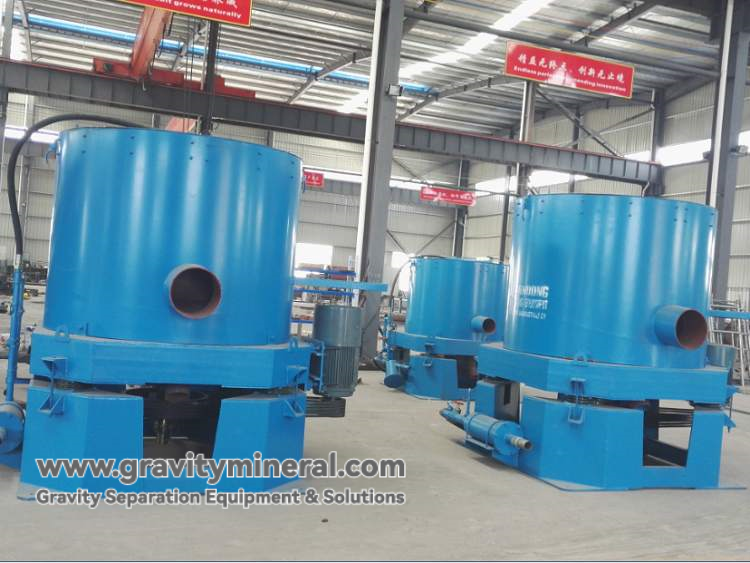
Point One: First, Determine the Particle Size of the Gold
Procedure: Take a representative ore sample and perform a sieve analysis to determine the proportion of fine and ultrafine gold particles and identify the specific particle size fractions where they are concentrated.
Why It\'s Important: The Falcon centrifuge excels at recovering fine-grained gold, but its effective recovery range has upper and lower limits. If the gold particles are too coarse, it can\'t handle them; if they\'re too fine, it may not be able to capture them effectively. Selecting equipment without first determining the particle size is like shooting a basketball with your eyes closed.
Common Mistake: Deciding on a plan based on a visual inspection of a single ore sample. The distribution of gold particles cannot be fully assessed with the naked eye; you must rely on sieve analysis data. If you skip this step, everything that follows is a gamble.
Item 2: Distinguish Between Centrifuge Types—Don\'t Just Go by the Name
Action: Clarify with the manufacturer whether they are providing a continuous-discharge or intermittent-discharge model, and determine the corresponding feed rates and concentrate recovery rates for each.
Why It Matters: Among mining gravity separation equipment, centrifuges come in several generations and structural types, and different designs have vastly different requirements for feed concentration and operating methods. Choosing the wrong type will make subsequent operations very difficult.
Common Mistake: Relying solely on the “Falcon” brand name without inquiring about the internal structure. The market is flooded with imitations and a mix of technical approaches; identical names do not guarantee equivalent performance. To be on the safe side, have the manufacturer clearly explain the structure and operating principles.
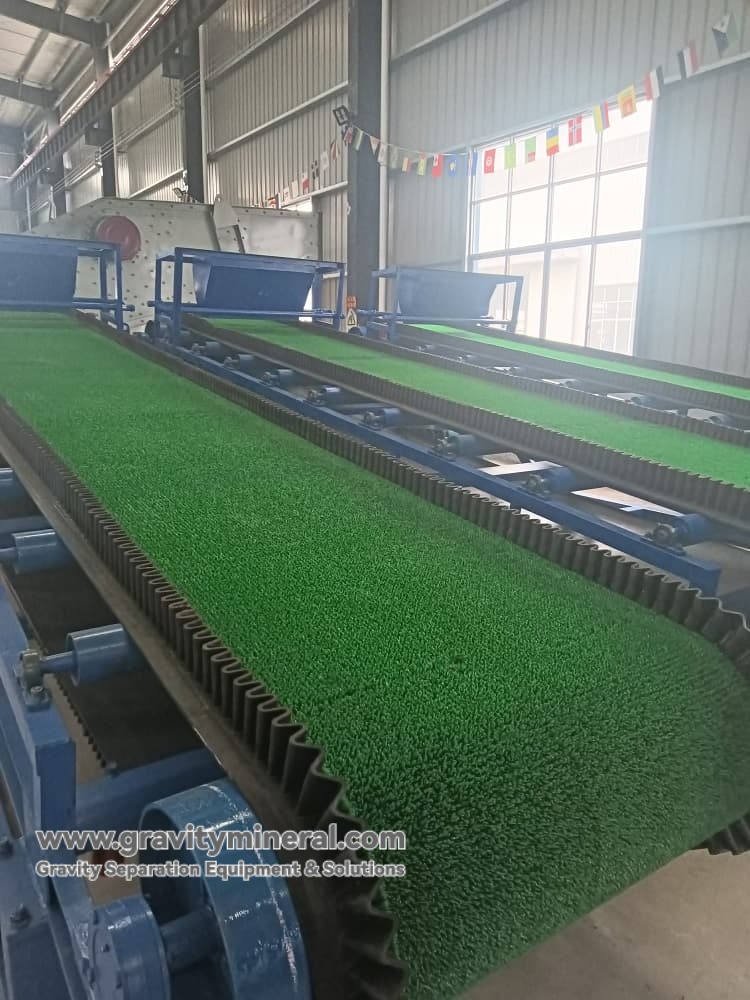
For an extra layer of assurance in fine-grain gold recovery, you can combine it with screening equipment such as suspended vibrating belt machines to form a multi-stage recovery system.
Item 3: Verify Specifications Based on Feed Concentration and Throughput
Procedure: Calculate your actual feed rate (metric tons per hour) and slurry concentration, then compare these figures with the manufacturer\'s stated processing capacity.
Why It Matters: Falcon centrifuges are quite sensitive to feed concentration; if the concentration is unstable, separation performance will fluctuate significantly. If the equipment\'s rated capacity is overstated and it cannot operate at full capacity in practice, the return on investment will be compromised.
Common Mistake: Focusing only on the upper limit of processing capacity without considering the corresponding concentration conditions. Actual operating conditions often fall short of the ideal values shown in the specifications; oversizing the equipment leads to waste, while undersizing prevents it from running at full capacity—both of which drive up the cost per metric ton of ore.
Item 4: Clarify Integration with the Entire Process—Don\'t Buy a “Siloed” System
Action: Confirm what feed enters the centrifuge and what output it produces, and verify whether it can integrate with your existing production line.
Why It Matters: Centrifugal gravity separation equipment is rarely used in isolation; it is typically connected after grinding or rough selection. If the feed and discharge throughput, particle size, and concentration do not match, even the best machine will not operate smoothly within the system.
Common Mistake: Purchasing a single unit only to discover upon installation that the feed particle size is incorrect or that the feed rate doesn\'t match that of the downstream 6-S shaking table, leading to material jams and idle operation. Clarifying the interface requirements before purchase is far less troublesome than having to make adjustments afterward.
Item 5: When Discussing Price, Consider Total Life-Cycle Costs
Action: Compare equipment quotes, wear-part consumption, power consumption, and maintenance complexity—rather than focusing solely on the purchase price.
Why It Matters: For equipment like centrifugal mineral separators, the frequency of wear-part replacements and electricity consumption account for the lion\'s share of long-term costs. If the purchase price is 20% lower but annual operating costs are 10% higher, the investment will actually prove uneconomical over several years.
Common Mistake: Focusing solely on the single figure listed on the quote. The true cost is the total sum of how many years the equipment will be used, how many times parts will be replaced, and how much electricity it will consume.
Tips to Avoid Pitfalls: The Three Most Common Mistakes
Pitfall 1: Applying specifications from major manufacturers\' catalogs directly to your own ore. Catalog data is based on ideal operating conditions, but your ore likely contains clay, coarse particles, and fluctuating concentrations. Applying these specifications directly will almost certainly result in performance falling short of the advertised figures.
Pitfall 2: Treating a “centrifuge” as a universal recovery device. It excels at fine particles; once you exceed its capacity, you\'ll still need to go through other stages of gravity separation. Expecting a single piece of equipment to handle everything is unrealistic.
Pitfall 3: Placing an order without conducting tests. If possible, send a sample for mineral processing tests first and select the model based on the recovery data you receive. The cost of these tests is often far less than the cost of choosing the wrong equipment. If your ore consists mainly of placer gold, start by reviewing the placer gold processing production line design to clarify the overall workflow before determining the specific placement of the centrifuge.
Quick Checklist
Before placing an order, go through this checklist.
| Checklist Items | Items to Confirm |
|---|---|
| Particle Size | Are the gold particle sieve analysis data complete, and do they cover the fine and ultrafine particle size fractions? |
| Type | Continuous or intermittent discharge; does it align with your operating habits? |
| Feed | Are the throughput and concentration calculated based on actual operating conditions? |
| Integration | Do the processing capacities for the front-end grinding and back-end enrichment stages match? |
| Cost | Are wear parts, electricity consumption, and maintenance costs included in the general ledger comparison? |
| Verification | Have sorting tests been conducted, and is there recovery data to support the results? |
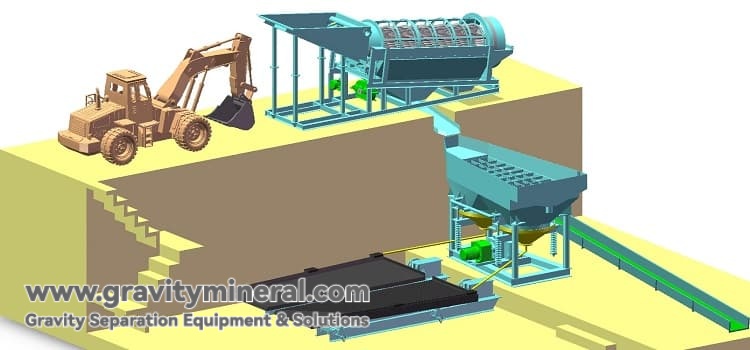
First, for high-efficiency mining separation equipment like the Falcon centrifuge, the value lies not in how advanced a single unit is, but in placing it in the right position within your entire production line. Place it correctly, and you\'ll achieve twice the result with half the effort; place it incorrectly, and even the most expensive unit is a waste of money.
Second, when it comes to manufacturer recommendations, don\'t just look at who runs the most ads. Manufacturers who thoroughly understand the properties of your ore and are willing to conduct trials before proposing a solution are usually more reliable.In a production line, the jig is responsible for early recovery of coarse particles, the centrifuge for recovering fine particles, and the shaking table for refining the concentrate. Each plays its own role, and only when the proportions are right will the performance indicators remain stable.
Consultation and Partnership
If you\'re unsure what size of centrifugal separation equipment is suitable for your ore, send us the grade, particle size distribution, clay content, and target processing capacity. We\'ll first match the process to your needs before discussing specific models and quotes.If you have representative ore samples, you can also send them to us for beneficiation testing. Determining a solution based on data is far more reliable than selecting equipment based solely on experience. If you need the full version of this checklist, please contact us to obtain it.