







Scattered Deposits, with a Focus on Gravity Concentration: How to Build a Modular Gravity Gold Processing Plant?
Gold mining projects with scattered ore sites and a focus on gravity separation often face a dilemma when constructing processing plants: building a separate plant for each site results in a long payback period, while constructing a single centralized plant leads to ore transportation costs that continuously erode profits.Modular gravity gold processing plants offer a solution designed specifically to address this dilemma—by breaking the plant down into process units that can operate independently, be rapidly assembled, and relocated as a whole, the plant follows the ore deposits rather than requiring the ore to be transported to the plant.This article explores the construction logic of modular gravity gold processing plants, systematically covering problem identification, root cause analysis, solution configuration, implementation steps, and applicable conditions, to provide guidance for building gravity processing plants in scenarios with dispersed mining sites.
I. Practical Challenges Faced by Gravity Concentrators in Conditions of Dispersed Mining Sites
In projects with dispersed ore bodies where gravity separation is the primary method, the problem typically does not lie with any single piece of equipment, but rather in the spatial mismatch between the processing plant and the ore bodies.
A typical scenario is as follows: an operator manages two to four ore sites, with each site requiring a daily processing capacity ranging from over 100 metric tons to several hundred metric tons. The ore consists primarily of quartz vein or oxidized types, with a reasonably favorable gold grain size distribution, allowing gravity separation to recover a significant proportion of the gold.However, with mining sites separated by tens or even hundreds of kilometers of mountain roads, building a centralized plant means incurring ongoing transportation costs for every metric ton of ore; conversely, building decentralized plants requires each site to complete a full set of prerequisites—including civil engineering, plant buildings, and tailings facilities—resulting in equipment investment accounting for a relatively small proportion of the total investment.
The consequences of this mismatch are multifaceted. Transportation costs are amplified by fluctuations in ore grade; when grades are low, the proportion of freight costs relative to the value of the ore rises significantly. From an environmental perspective, the difficulty of obtaining approvals for and operating small-scale tailings ponds increases year by year.Staffing is equally challenging; dispersed mining sites struggle to maintain full work crews at each location, and fluctuations in operational proficiency directly affect the stability of gravity separation performance. The gravity separation process itself is highly sensitive to variations in feed particle size and concentration; when ore from diverse sources enters the same fixed processing line, separation efficiency tends to decline.
The dispersion of mining sites is not an anomaly in itself; the real problem lies in managing these dispersed sites using a centralized, fixed-plant approach. The value of modular gravity gold processing plants lies precisely in their ability to address this structural contradiction.
II. Root Cause: The Structural Conflict Between the Traditional Processing Plant Model and Dispersed Mining Sites
First, the cost logic of traditional processing plants is based on the ability to centralize ore. The unit investment in fixed processing plants decreases as scale increases; however, this advantage is contingent upon the ability to transport ore to the plant site at a low cost.When mining sites are dispersed, transportation costs offset the economies of scale, thereby diminishing the economic viability of centralized processing plants. A more pressing issue is that once resources at a single mining site are depleted, the cost of relocating a fixed plant often approaches that of rebuilding it from scratch, and it is difficult to carry over equipment and civil engineering investments as mining sites are rotated.
Second, gravity separation processes require a high degree of stability in feed conditions. Gravity separation relies on density differences for sorting; while the equipment structure is relatively simple, sorting efficiency is highly dependent on the stability of feed particle size and concentration.Ore from different sites varies in clay content and particle size distribution. When fed into the same fixed processing line, it is difficult to adjust the operating parameters of equipment such as jigs and shaking tables to accommodate all feed materials simultaneously, making fluctuations in performance metrics the norm. This is also one of the main reasons why recovery rates in gravity separation are difficult to stabilize when fixed processes are used at dispersed mining sites.
Third, infrastructure and permitting costs account for an excessively high proportion of total expenses at dispersed mining sites. Investments in site grading, slope stabilization, tailings facilities, and power connections in mountainous areas often exceed the cost of the equipment itself. With lengthy approval cycles and increasingly stringent standards for tailings dams, it is becoming increasingly difficult for small-scale processing plants to meet compliance requirements.A significant proportion of the investment goes toward meeting the prerequisites for getting the equipment up and running, rather than toward processes that directly generate beneficiation benefits. The reason modular gravity gold processing plants have garnered attention in the context of dispersed mining sites is precisely because they reallocate this portion of the investment structure.
III. Configuration of Modular Gravity Gold Processing Plants
The core concept of a modular gravity gold processing plant is to divide the plant into several independent modules based on process functions. These modules are connected via standardized interfaces, pre-assembled and pre-commissioned in the factory, and can be put into operation immediately after on-site assembly. When mining at a site is complete, the entire module is hoisted and transported to a new mining site, where it is repositioned and put back into operation.
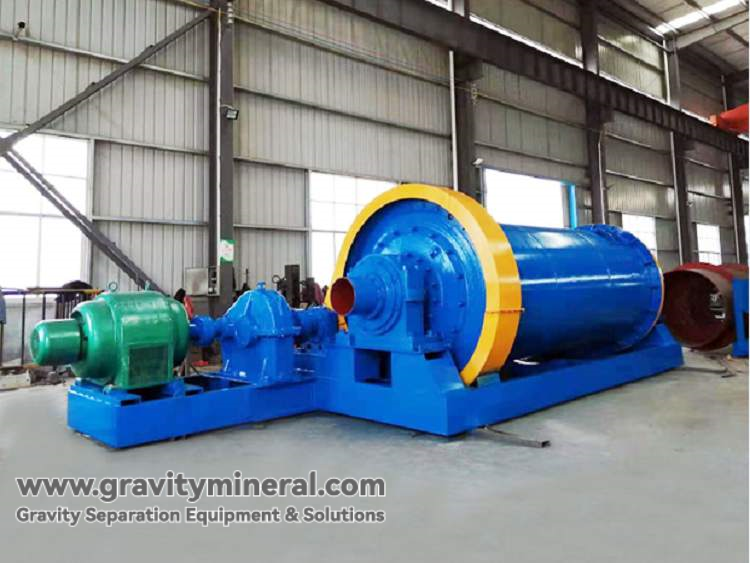
Given the conditions of gold mines—characterized by dispersed sites and a focus on gravity separation—the configuration of a modular gravity gold processing plant typically includes the following functional units:
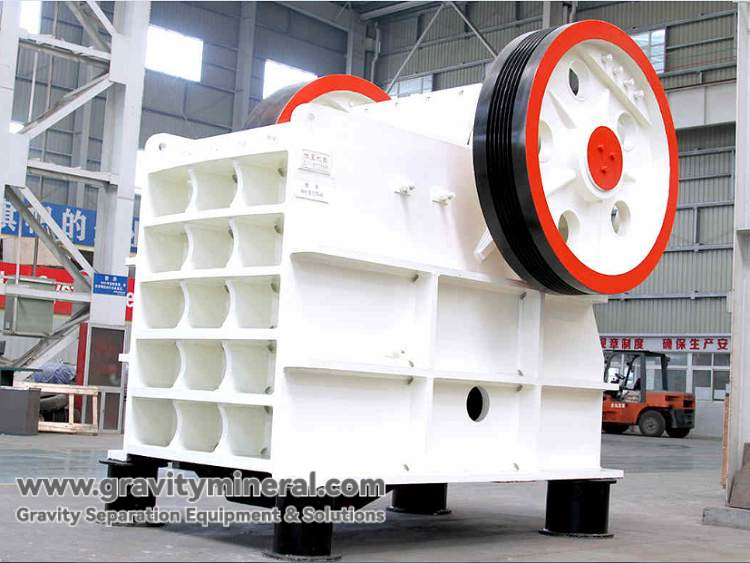
Crushing and Screening Module. This module consists primarily of a jaw crusher or hammer crusher paired with a vibrating screen, integrated onto a steel base frame. Electrical controls and belt connections are completed prior to shipment. Upon arrival at the site, only a hardened ground surface and power connection are required.The discharge particle size is controlled within an appropriate range based on the requirements of downstream gravity separation equipment. Dust collection and noise reduction measures are also incorporated to minimize on-site environmental risks.
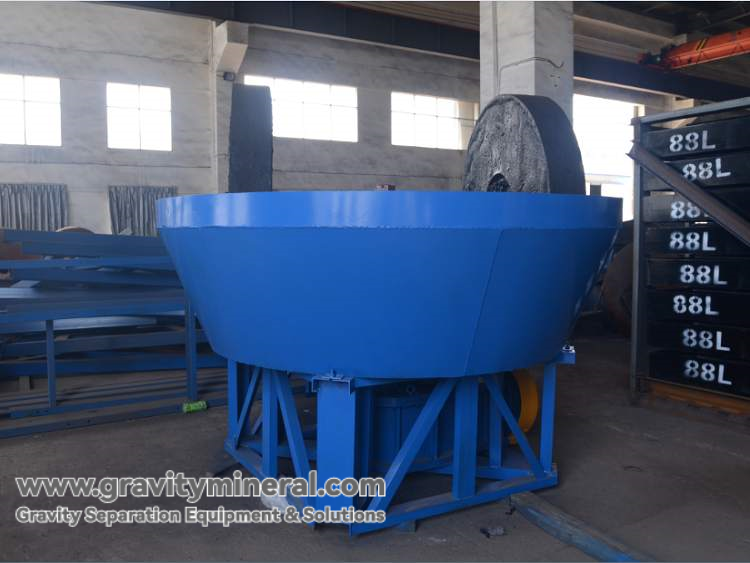
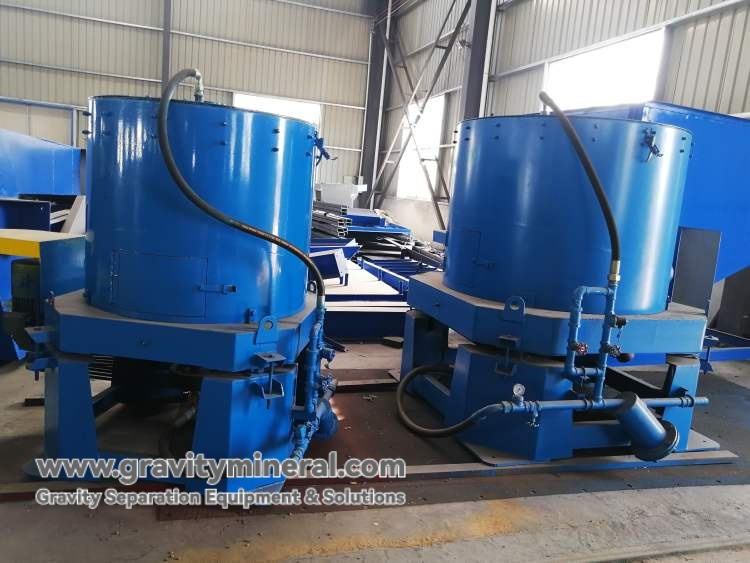
Gravity Concentration (Roughing) Module. The equipment combination is selected based on the characteristics of gold grain distribution. When the proportion of coarse gold is high, a sawtooth jig is suitable as the primary roughing unit, offering high processing capacity and low operating costs; when the proportion of fine gold is high, a centrifugal concentrator is more effective for recovering micro- and fine-grain gold.In actual configurations, a combination of jigging for roughing and centrifugal machines for scavenging is relatively common, as it accommodates the recovery requirements for different particle sizes.
Fine Selection Module. Rough concentrate must undergo fine selection to improve its grade before it becomes viable for shipment or on-site processing. As the fine selection equipment, shaking tables can be arranged in a multi-tiered configuration in a modular layout to meet processing capacity requirements within a limited footprint.
Modules are interconnected using quick-connect systems: slurry piping employs quick-connect fittings for hoses, electrical controls use standard plug-in connectors, and water lines are equipped with quick-opening valves. For a complete modular gravity gold processing plant, the on-site installation period—from arrival at the site to readiness for processing—can be reduced to a matter of days, as the core work has already been completed at the factory.
It is important to note that modularity does not equate to lower specifications. Equipment suitable for modular gravity gold processing plants should be designed with relocation requirements in mind, particularly regarding frame strength, lifting compatibility, and the level of electrical control integration. Simply packing standard stationary equipment into containers makes it difficult to guarantee precision and stability after repeated disassembly and reassembly.During the equipment selection phase, special attention should be paid to verifying whether the equipment is specifically designed for modular applications, rather than being assembled after the fact.
IV. Implementation Steps for Modular Gravity Gold Concentration Plants
- 1
Conduct Gravity Separation Tests on Representative Ore Samples
Collect representative ore samples from each mining site and conduct particle size analysis and gravity separation feasibility tests to determine the distribution of gold particles across different particle size fractions, the degree of individual particle liberation, and the achievable recovery range through gravity separation.Test data forms the foundation for selecting modular equipment and configuring the process flow; skipping this step and selecting equipment directly will result in subsequent adjustment costs far exceeding the investment in testing. For projects with dispersed mining sites, comparative testing of samples from each site also provides a basis for presetting parameters when rotating the use of modules.
- 2
Determining Main Module Specifications and Relocation Plans
Configure a set of main modules based on the site with the highest processing capacity, and rotate the same set of equipment among the remaining sites. The number and size of the modules must balance processing capacity with road transport limitations; they are typically kept within two to three standard frames, with the weight and dimensions of each module meeting the requirements for conventional flatbed truck transport and crane installation.Relocation routes, lifting equipment, and installation sequences should be planned in advance to avoid downtime during the transition between mining sites.
- 3
Keep Site Preparation Simple
The site requirements for a modular gravity gold processing plant are primarily focused on compaction, leveling, and drainage systems; deep foundation work is not required. Where electrical infrastructure is available, the plant should be connected to the municipal power grid; for remote mining sites, diesel generator sets may be installed, and the module\'s electrical control system should include provisions for dual power sources.Tailings disposal plans must still be finalized in advance; settling ponds and dry-stacking facilities should be configured in accordance with environmental protection requirements, and water recycling rates should be maintained at a reasonable level. Simplifying site preparation is one of the key factors in the modular approach\'s ability to shorten the construction cycle.
- 4
Installation and Commissioning Proceed Simultaneously
Upon arrival, the modules are positioned in sequence. First, a no-load test run of the crushing module is completed, followed by connecting the gravity separation module to conduct a slurry test with water. The focus of commissioning is on matching the feed rate with water consumption: the stroke and frequency of the jig are adjusted to ensure the bed layer is appropriately loose, and the backwash water pressure of the centrifuge is set to ensure smooth concentrate discharge.Since pre-commissioning was completed prior to shipment, on-site activities primarily involve verification. Once commissioning meets the standards, the system enters continuous operation to avoid starting production with existing issues.
- 5
Allowing for Future Expansion and Adjustments
The long-term value of a modular architecture lies in its scalability. When ore grades increase or processing demands rise, additional gravity separation modules can be added in parallel; when the mine site is relocated, the entire unit can be hoisted to the new location and reassembled.Investment is released in stages over the life cycle of the mine site, rather than being locked into a single location as a one-time expense. This characteristic gives modular gravity gold processing plants greater resilience to risks in projects where the mining rights period is uncertain.
V. Evaluating the Performance and Applicability of Modular Gravity Gold Processing Plants
The performance of a modular gravity gold processing plant cannot be summarized by a single figure, as the ore properties, gold grain distribution characteristics, and operational levels vary across different mining sites. A reasonable approach to evaluation involves examining the following dimensions:
Traditional fixed-site processing plants typically require several months from civil construction to becoming operational. The modular approach concentrates on-site work on module positioning and interface connections, significantly shortening the construction period. For small- and medium-sized mining sites with a limited service life, savings in time costs directly impact project feasibility.
The core advantage of modular gravity gold processing plants lies in their ability to ensure continuity when moving between mining sites. Traditional fixed plants face equipment idleness or high relocation costs once a site\'s resources are depleted, whereas modular units can be dismantled, transported, and repositioned within a matter of days, ensuring that equipment utilization continues as sites are rotated.
The modular approach shifts the financial focus from civil engineering and plant construction to reusable process modules, thereby reducing sunk costs per mining site. For projects with uncertain mining rights cycles, the risk mitigation provided by this structural adjustment is often more practical than improvements in individual performance metrics.
Modularization does not directly increase gravity recovery rates, but through the flexibility of a “one mine site, one configuration” approach, it enables a better match between the feed conditions and equipment parameters at each mine site. Combined with pre-commissioning at the factory and on-site verification, fluctuations in performance metrics can be kept within manageable limits.
To determine whether a modular gravity gold processing plant is suitable for your project, consider the following three criteria:
- Two or more mining sites
- A limited service life for each individual mining site
- The proportion of gold recoverable by gravity separation in the ore reaches the economic threshold
When all three conditions are met, the advantages of the modular solution in terms of investment flexibility and operational continuity are clear. However, if mining sites are concentrated, have long service lives, and involve large processing capacities, a traditional fixed processing plant may still be the more economical choice. Modular gravity gold processing plants are not a one-size-fits-all solution; their value is best realized in scenarios with dispersed mining sites.
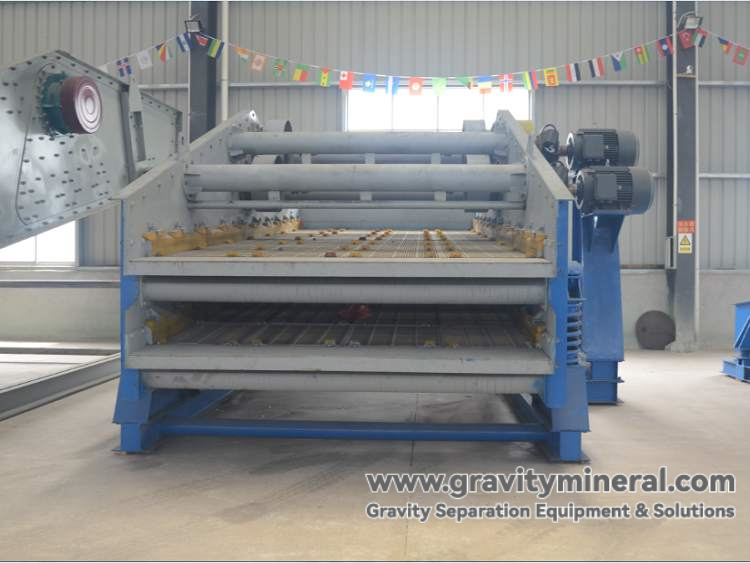
For gold mining projects with dispersed mining sites and a focus on gravity separation, the core of building a modular gravity gold processing plant lies not in the complexity of the equipment itself, but in transforming the processing plant from a fixed facility into a mobile process asset.Starting with ore sample testing, using a main module to cover multiple ore sites, ensuring relocation efficiency through standardized interfaces, and reducing on-site uncertainties through pre-commissioning—the feasibility of this approach has been validated in multiple projects with dispersed ore sites.For mine owners currently evaluating plant construction options, conducting gravity separation tests on representative ore samples is the most direct starting point for determining whether a modular gravity gold processing plant is suitable for their specific ore conditions.Ultimately, the logic behind building a modular gravity gold processing plant is to align the investment timeline of the plant with the mine\'s lifecycle, rather than forcing the mine to adapt to a fixed, immovable facility.