







Selecting Equipment for Placer Gold Mining and Processing: Solutions for Efficient Gold Extraction | Our Professional Team Helps You Improve Recovery Rates
Selecting Alluvial Gold Mining and Processing Equipment and High-Efficiency Gold Recovery Solutions | Our Professional Team Helps You Improve Recovery Rates
The return on investment for placer gold mining has never been about “how expensive the equipment is,” but rather “how much gold can be recovered.” Even when processing the same riverbed placer gold, some operators achieve recovery rates of over 85%,while others barely exceed 60%. The difference often lies not in the gold itself, but in whether the selected equipment matches the ore body conditions, whether the number of process stages is reasonable, and whether fine-grained gold is fully recovered. Starting from the actual pain points of placer gold mining and processing, this article explains how to select equipment, configure the process flow, and maximize recovery rates.
I. Understand the “Ore Characteristics” Before Selecting Equipment
Placer gold deposits may seem simple—the gold in the riverbed has already undergone a preliminary sorting by nature based on specific gravity, making gravity separation the most direct and economical recovery method. However, differences between ore bodies are vast, so four parameters must be confirmed before selecting equipment:
Silt Content
Ore with high silt content cannot be thoroughly washed; the silt coats the gold particles, rendering gravity separation ineffective. Washing equipment must be selected based on the maximum silt content conditions, not the average value;
Gravel Proportion
This determines the screen mesh size of the trommel screen and the method for discharging gravel; excessive gravel will reduce processing capacity;
Gold particle size distribution
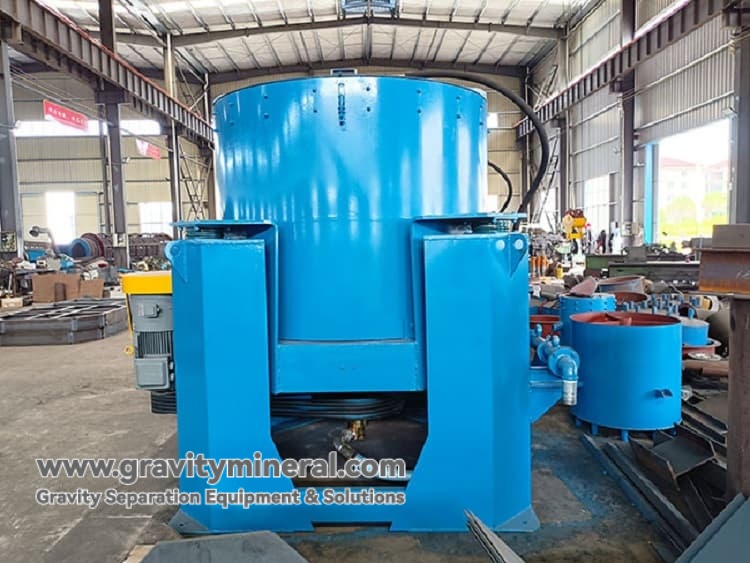
Coarse free gold is recovered early by jigging machines or chutes, while ultrafine gold (-0.074 mm) must be recovered by a centrifugal concentrator. The particle size distribution determines the configuration ratio of the fine concentration stage;
Raw Ore Grade
Determines the ratio of tailings rejection in the roughing stage and the scale of the concentrating stage; for low-grade ore, one must be willing to reject a large proportion of tailings to reduce subsequent processing costs.
Placing an order without fully understanding these four parameters is the greatest risk in placer gold investment. GravityMineral\'s approach is to first send representative ore samples for beneficiation testing and use real data to derive the process flow—we do not use our clients\' investments to experiment.
II. Selection of Placer Gold Mining and Beneficiation Equipment: Configure by Process Stage, Not by “Individual Machine Performance”
The standard main process flow for a placer gold gravity separation line is: feeding → washing and screening → roughing and tailings disposal → scavenging → gold concentration → fine-grain recovery → dewatering. Each stage has a different task, and the logic for equipment selection varies accordingly.
1. Feeding Stage: Uniformity and stability are the top priorities
Vibrating feeders and trough feeders should be selected based on processing capacity. For ore with high clay content or sticky, wet ore, trough feeders are the preferred choice, as they are specifically designed to prevent clogging—if the feed line clogs, the entire line downstream will either idle or overflow, rendering even the highest processing capacity useless.
2. Ore Washing and Screening Section: The Key to the Success or Failure of the Placer Gold Line
Drum washers are responsible for removing mud, while drum screens separate out large gravel.There is one ironclad rule in gold panning lines: the thoroughness of the ore washing directly determines the success or failure of the gravity separation process. If heavy minerals coated in slurry enter the gravity separation section, the sorting efficiency of the jig drops sharply, and the tailings on the shaking table become significantly more pronounced. Selecting the specifications for the ore washing section based on the maximum slurry content conditions is the first critical step in improving recovery rates.
3. Roughing and Tailings Discharge Section: High Throughput, Aggressive Tailings Discharge
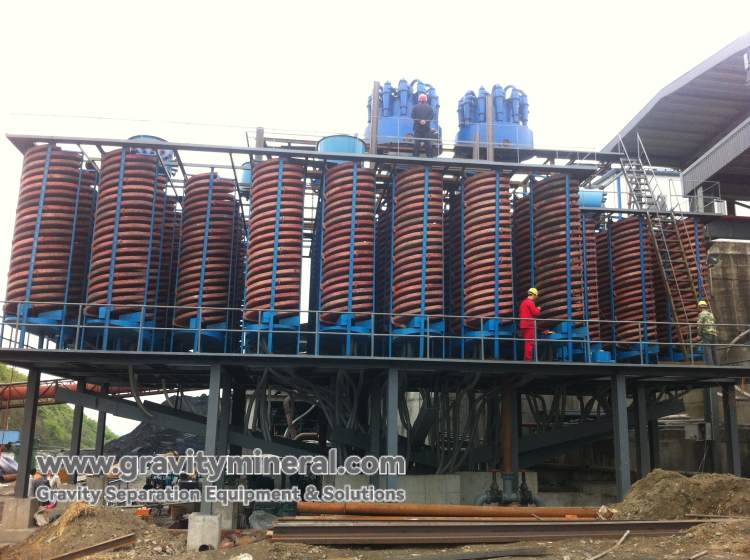
The sawtooth-wave jig is the mainstay of the roughing stage. Compared to traditional jigs, it features a more optimal water flow pulsation curve, offers greater adaptability to wide-grained materials, and significantly increases processing capacity per unit area;Spiral chutes feature a simple structure, require no power consumption, and have a small footprint. Made of fiberglass-reinforced plastic with an alumina lining, they are wear- and corrosion-resistant, making them particularly suitable for the humid, high-salinity environments of coastal sand deposits. The core task of the roughing stage is to discard a large proportion of light gangue, thereby freeing up processing capacity for material that actually contains gold.
4. Concentration Stage: Producing Qualified Gold Concentrate in a Single Pass
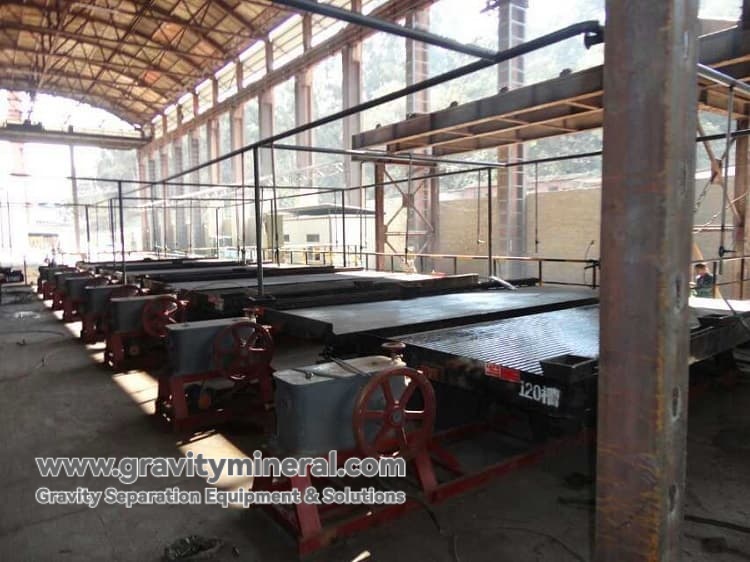
The 6-S shaking table is the most widely used gravity separation equipment globally and offers high separation precision; multi-tiered lifting-type shaking tables multiply throughput while occupying the same floor space, saving plant space; Yunnan Tin shaking tables are suitable for specific particle size ranges.The configuration of the fine selection stage—including the number of shaking tables and their connection sequence—depends on the volume of rough concentrate and the target concentrate grade. This is precisely why the decision regarding “how many shaking tables to connect after the jig” must be made by a team with process expertise.
5. Ultrafine Particle Recovery Stage: The “Last Mile” of Recovery Rate
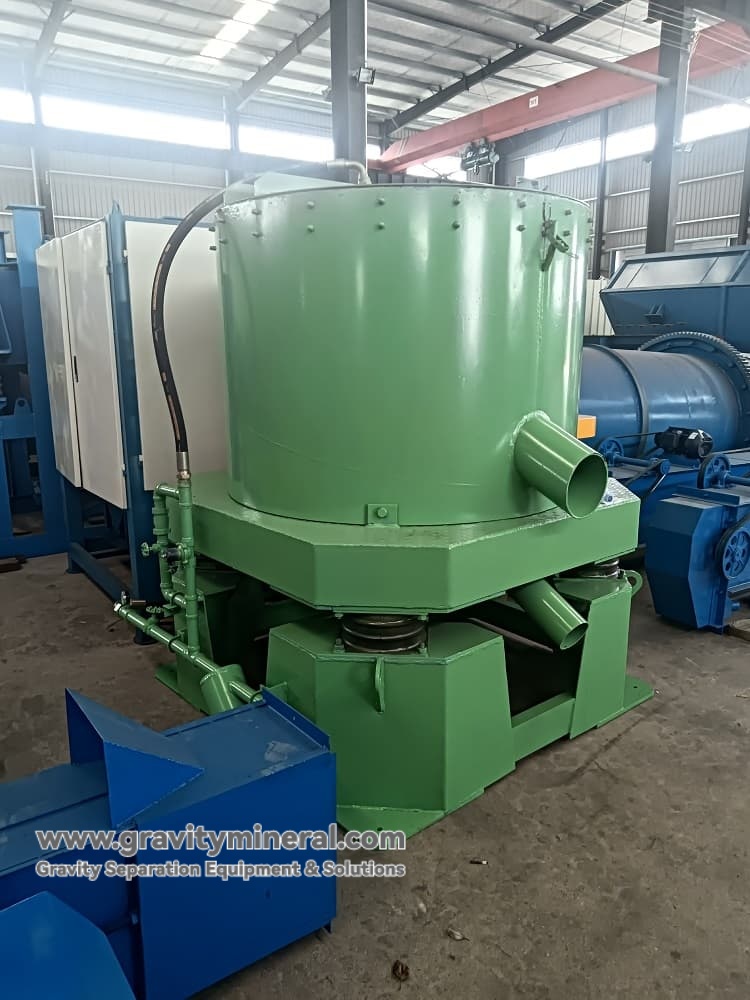
Conventional gravity separation equipment struggles to recover ultrafine gold particles smaller than -0.074 mm. Centrifugal separators utilize centrifugal force to enhance separation, significantly improving ultrafine recovery rates—this is the final step in ensuring “complete recovery.”Many placer gold plants struggle to achieve high recovery rates because their fine-silt section lacks catch-all equipment, causing ultrafine gold to be lost with the tailings. Suspended vibrating mat thickeners, agitated chutes, and gold-binding chutes are suitable for processing large volumes of fine-grained gold from riverbanks or ancient riverbeds, serving as supplementary recovery methods.
6. Dewatering Stage: Ensuring Concentrate Can Be Transported and Tailings Can Be Discharged
Dewatering screens dewater the gold concentrate to meet transportation requirements; dry tailings discharge is a mandatory environmental compliance requirement and requires supporting equipment such as thickeners.
III. High-Efficiency Gold Extraction Solutions: Three Practical Approaches to Improving Recovery Rates
Approach 1: Thorough Ore Washing—The First Line of Defense for Recovery Rates
For ores with significant fluctuations in clay content, it is recommended to use a combination of a drum washer and a cylindrical screen in the ore washing section, adding a scrubbing stage if necessary. Losses in recovery rate caused by incomplete ore washing are often more subtle and widespread than those resulting from incorrect equipment selection.
Approach 2: Multi-stage Gravity Separation—“Recover as Early as Possible and Extract Every Last Bit”
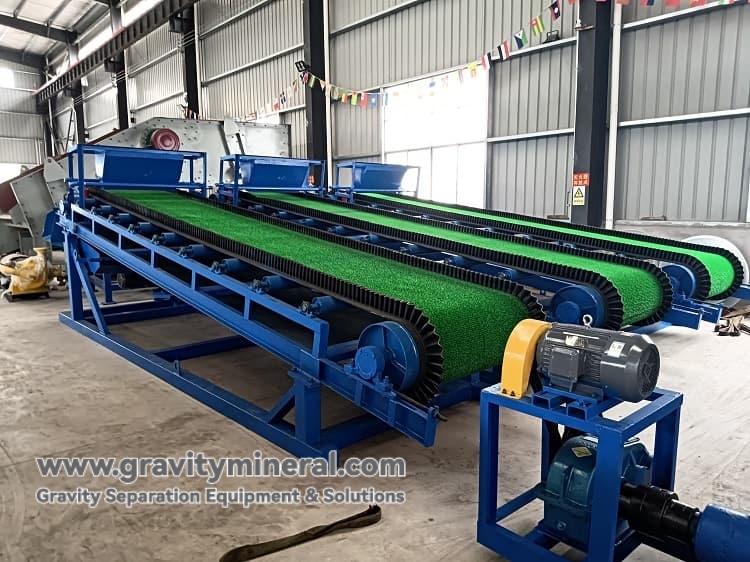
Use jigging machines or high-capacity spiral chutes for coarse rejection; use spiral chutes for scavenging to recover medium- and fine-grained particles; use shaking tables for concentrate production; and use centrifugal separators to capture fine slime.The same team is responsible for configuring the number of stages and coordinating equipment integration, thereby avoiding the piecemeal assembly issues where “the processing capacities of the jig and shaking table do not match, leading to material blockages or idle operation in intermediate stages.”GravityMineral\'s end-to-end gravity separation service—from feed to concentrate, and from gravity separation to dewatering—ensures comprehensive management of the entire line\'s configuration and integration.
Approach 3: Aligning Process and Equipment to Eliminate “Interface Conflicts”
Because we handle both process design and in-house manufacturing, our mechanical engineers clearly understand upstream feed rates and downstream sorting requirements when building equipment.The same team is responsible for ensuring interface compatibility and capacity alignment across all stages—crushing, ore washing, gravity separation, and dewatering. Since we manufacture the equipment and design the process ourselves, there are no conflicting interfaces. This is an unparalleled advantage over the piecemeal approach, where “each party buys their own equipment and shifts blame when problems arise.”
IV. What Can Our Expert Team Do for You?
GravityMineral has specialized in gravity separation for 20 years, serving over 50 countries worldwide with more than 500 global projects,a 35% market share in China, and two in-house manufacturing bases (Guzhang Industrial Park in Shicheng County, Ganzhou, and Shahe Industrial Park in Zhanggong District), as well as a multidisciplinary team comprising mineral processing experts, mechanical engineers, and on-site commissioning engineers.
For placer gold mining and beneficiation projects, we provide:
Mineral Processing Testing and Mineral Analysis
Mineral sample testing and recoverability tests to determine process routes based on real data;
Equipment Selection and Process Design
Flow charts, equipment lists, plant layout diagrams, and civil engineering requirement drawings—all designed in-house, eliminating the need to hire an external design institute and saving on design fees;
Equipment Manufacturing and Turnkey Supply
Core equipment is manufactured at our own facility, ensuring controllable delivery times and supporting custom-made wear-resistant and corrosion-resistant solutions;
On-site Installation Guidance and Commissioning Training
On-site engineers provide technical briefings, perform individual and integrated commissioning, and conduct personnel training until the production line is running smoothly and performance indicators are stable;
Existing Plant Retrofits and Tailings Re-processing
When existing plants fail to reach target production capacity, we provide precise diagnostics and targeted solutions—never blindly scrapping and rebuilding from scratch.
In terms of scale, placer gold processing lines—ranging from 10 t/h pilot lines to large-scale lines exceeding 300 t/h—can all be configured modularly. Small-scale operations can start with a single jig and shaking table, with the option to gradually expand the line later; interfaces are reserved during the initial design phase.
V. Next Steps: Send Us Your Ore Samples and Site Conditions
Recovery rates aren\'t just promises—they result from a combination of test data, equipment configuration, and on-site commissioning. We do not make absolute promises detached from the actual ore conditions. Instead, we commit to designing a process that achieves the highest possible recovery rate under your specific ore conditions through rigorous gravity separation testing, while continuously refining equipment selection and process control.
To obtain a preliminary proposal and quote, please provide: ore type and gold grade, target processing capacity, feed particle size and clay content, gravel proportion, site conditions, destination country, and budget range.